

Clinical cardiology is the part of heart care that focuses on finding, treating, and managing heart conditions. It helps doctors understand how well your heart works and guides daily patient care. Doctors use it to prevent problems, improve health, and support long-term heart wellness.
Have you ever felt a fast heartbeat and wondered what it means?
Heart concerns can feel scary. Many people want clear answers and simple care. That is where clinical cardiology plays a key role. This area of medicine helps doctors check heart health, find problems early, and create treatment plans.
Heart disease affects millions of people in the United States. Early care can make a big difference. Whether you are a patient, caregiver, or student, learning about heart care can help you feel more prepared. Understanding how cardiologists work may also make doctor visits less stressful.
❤️ Understanding Clinical Cardiology
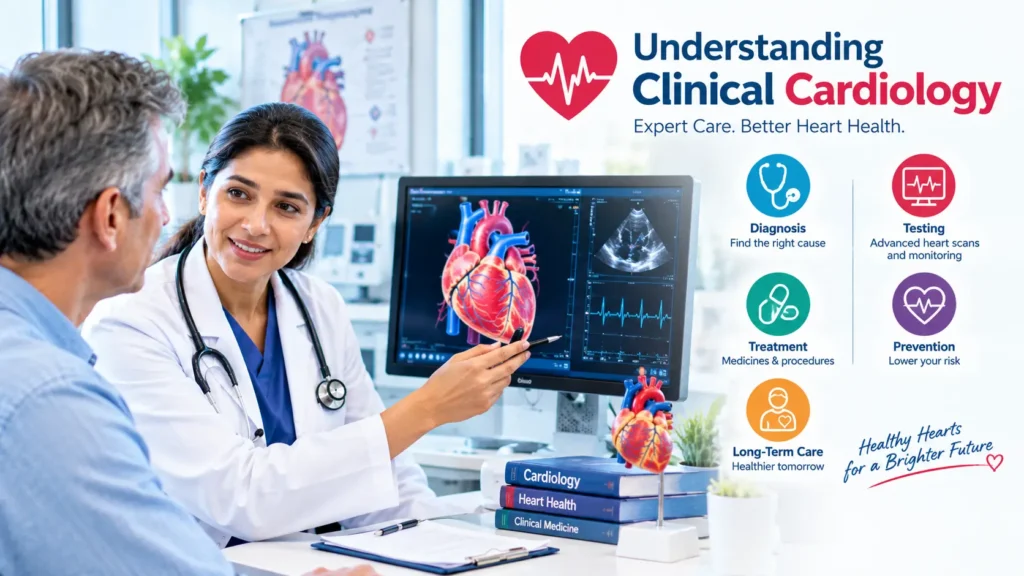
Clinical cardiology focuses on patient care. Cardiologists are doctors who diagnose and treat heart and blood vessel conditions.
These doctors help people with:
- ❤️ High blood pressure
- ❤️ Chest pain
- ❤️ Irregular heartbeats
- ❤️ Heart failure
- ❤️ Heart valve problems
- ❤️ Coronary artery disease
Coronary artery disease happens when blood vessels become narrow.
Many patients first visit a cardiologist after symptoms appear. Others go because of family history or risk factors.
What Happens During a Heart Visit?
A cardiologist often starts with questions.
The doctor may ask about:
- 📋 Symptoms
- 📋 Family history
- 📋 Daily habits
- 📋 Medicines
Next comes a physical exam. The doctor listens to your heart and checks blood pressure.
Common Heart Tests
Doctors often use tests to learn more about your heart.
| Test | What It Does | What Patients Can Expect |
| Electrocardiogram (ECG) | Records heart signals | Small stickers on skin |
| Echocardiogram | Uses sound waves to view the heart | No pain |
| Stress Test | Checks the heart during activity | Walking or medicine |
| Blood Tests | Looks for heart-related markers | Small blood sample |
The American Heart Association (AHA) and American College of Cardiology (ACC) support many of these standard tests.
🩺 Conditions Treated in Clinical Cardiology
Heart conditions vary from mild to serious.
Doctors create care plans based on each person’s needs.
High Blood Pressure
High blood pressure can damage blood vessels over time.
Many people have no symptoms. Regular checks help find it early.
Heart Rhythm Problems
A heart rhythm problem affects the timing of heartbeats.
Some people feel fluttering or skipped beats.
Others may feel:
- ✅ Dizziness
- ✅ Fatigue
- ✅ Shortness of breath
Heart Failure
Heart failure does not mean the heart stops.
It means the heart cannot pump blood well enough.
Doctors often manage this condition with medicine and lifestyle changes.
Coronary Artery Disease
This condition reduces blood flow to the heart.
Patients may feel chest discomfort during activity.
Early treatment may lower the risk of serious events.
⏱️ How Cardiologists Diagnose and Manage Heart Problems
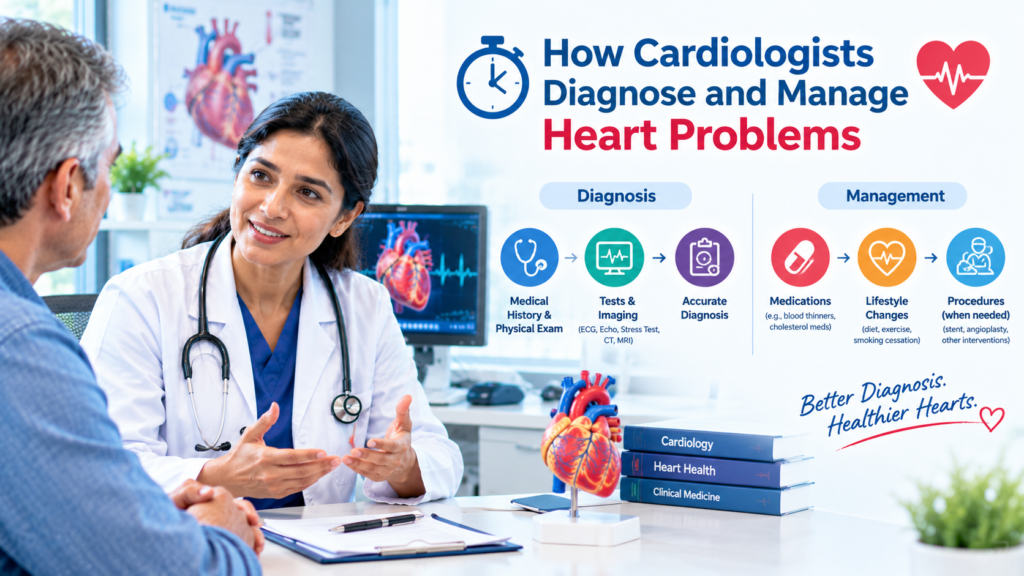
Heart care often involves several steps.
The goal is to understand symptoms and improve quality of life.
Step 1: Risk Assessment
Doctors review risk factors.
These may include:
- 📋 Smoking
- 📋 Diabetes
- 📋 High cholesterol
- 📋 Obesity
- 📋 Family history
Step 2: Testing
Doctors choose tests based on symptoms.
Not every patient needs the same tests.
Step 3: Treatment Planning
Treatment may include:
- ✅ Medicines
- ✅ Exercise plans
- ✅ Diet changes
- ✅ Follow-up visits
Many patients feel nervous before their first visit.
One patient worried about chest discomfort. Testing showed no major blockage. The visit helped ease fears and create a prevention plan.
Step 4: Long-Term Monitoring
Heart care often continues over time.
Regular visits help doctors track progress and adjust treatment.
📚 Learning Resources and Career Paths
Many students and healthcare workers want to learn more about heart medicine.
Several resources support education and research.
Clinical Cardiology Journal
The Clinical Cardiology journal publishes research and reviews about heart care.
Doctors, researchers, and students often read it.
The journal covers topics such as:
- ❤️ Heart disease treatment
- ❤️ New research findings
- ❤️ Patient outcomes
- ❤️ Prevention strategies
Clinical Research in Cardiology
Clinical Research in Cardiology is another respected heart journal.
It focuses on research studies and advances in cardiovascular medicine.
Researchers use these findings to improve patient care.
Clinical Cardiology Books
Many textbooks explain heart conditions and treatments.
Students often use books to learn:
- 📋 Heart anatomy
- 📋 Heart diseases
- 📋 Diagnostic tests
- 📋 Treatment methods
Books provide a strong foundation for future healthcare careers.
Understanding Journal Rankings
Some readers look at journal rankings before using research.
Common measures include:
- ✅ Impact factor
- ✅ Quartile ranking
- ✅ Scimago indicators
These tools help estimate a journal’s influence within medicine.
A higher ranking may suggest wider use by researchers. Still, readers should focus on study quality as well.
✅ Careers, Salary, and Daily Work

Cardiology offers many career paths.
Most people think of cardiologists first.
Yet many other professionals support heart care.
These may include:
- ❤️ Nurses
- ❤️ Physician assistants
- ❤️ Sonographers
- ❤️ Researchers
Clinical Cardiology Salary Overview
Salary depends on training, location, and experience.
The table below shows broad salary ranges in the United States.
| Role | Typical Education | Estimated Annual Salary |
| Cardiologist | Medical degree and specialty training | $300,000–$600,000+ |
| Cardiology Nurse | Nursing degree | $75,000–$130,000 |
| Physician Assistant | Master’s degree | $110,000–$170,000 |
| Cardiac Sonographer | Specialized training | $65,000–$110,000 |
Actual pay varies by employer and region.
A Real-World Example
A caregiver noticed her father’s swelling legs.
She encouraged a heart checkup.
The cardiologist found signs of heart failure. Treatment helped manage symptoms and improve daily comfort.
Stories like this show the value of regular care.
⚠️ Heart Health Tips for Everyday Life
Small habits can support heart health.
You do not need perfect habits to make progress.
Try these steps:
- ✅ Stay active most days
- ✅ Eat more fruits and vegetables
- ✅ Avoid smoking
- ✅ Get enough sleep
- ✅ Manage stress
- ✅ Keep medical appointments
Talk with your doctor before making major health changes.
When Should You See a Cardiologist?
Consider a visit if you have:
- 📋 Ongoing chest pain
- 📋 Shortness of breath
- 📋 Frequent dizziness
- 📋 Strong family history of heart disease
Early care may help identify problems sooner.
FAQ
Q: What is the Clinical Cardiology impact factor?
A: The Clinical Cardiology impact factor is a measure of how often articles receive citations. It changes over time. Researchers often use it when comparing journals.
Q: What does Clinical Cardiology quartile mean?
A: Clinical Cardiology quartile refers to a journal ranking group within its field. A higher quartile often reflects stronger research influence. Rankings may change from year to year.
Q: What is Clinical Cardiology Scimago?
A: Clinical Cardiology Scimago refers to data from the SCImago Journal Rank system. It helps measure a journal’s scientific influence. Researchers often use it alongside other metrics.
Q: What is a Clinical Cardiology APC?
A: APC stands for Article Processing Charge. Some journals require this fee when authors publish open-access research. The amount varies by journal and publisher.
Q: Can students learn clinical cardiology from books?
A: Yes. Many books explain heart diseases, testing, and treatment methods. Students often use them during healthcare training.
Q: Is clinical cardiology only for people with heart disease?
A: No. Doctors also use clinical cardiology for prevention and risk assessment. Many people visit a cardiologist before serious problems develop.
Conclusion
Clinical cardiology helps doctors diagnose, treat, and monitor heart conditions. It supports people with symptoms, risk factors, and long-term heart concerns. Standard tests, regular follow-up visits, and healthy habits all play important roles in care.
Many heart problems respond well to early attention. Learning about heart health can help you make informed choices. Talk to a cardiologist if you have any heart concerns. Small steps today may support better heart health tomorrow.