


Electrophysiology cardiology is a heart specialty that studies and treats the heart’s electrical signals. It helps doctors find the cause of abnormal heartbeats and choose the best treatment. Doctors use it to diagnose, monitor, and manage many heart rhythm problems.
Have you ever felt your heart race, skip a beat, or flutter? Many people notice these feelings at some point. Sometimes they are harmless. Other times they may need medical care.
Electrophysiology cardiology focuses on the electrical signals that control your heartbeat. These signals tell your heart when to squeeze and relax. When the signals do not work well, the heartbeat may become too fast, too slow, or uneven.
Learning about this field can help you feel more prepared. It can also help you understand tests, treatments, and doctor visits. Whether you are a patient, caregiver, or student, knowing the basics can make heart care less stressful.
❤️ What Is Electrophysiology Cardiology?
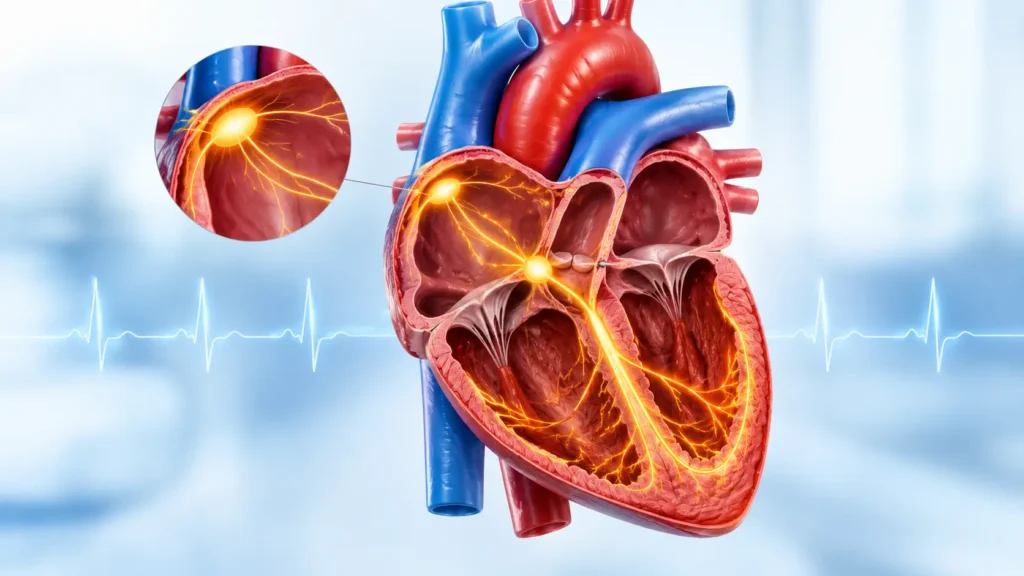
Your heart has its own electrical system. Tiny signals travel through the heart every second. These signals help the heart pump blood throughout the body.
When the signals become disrupted, heart rhythm problems may occur. Doctors call these problems arrhythmias. An arrhythmia means the heartbeat is not following its usual pattern.
Common rhythm problems include:
- ✅ Fast heartbeats
- ✅ Slow heartbeats
- ✅ Skipped beats
- ✅ Irregular heartbeats
A doctor who treats these conditions is called an electrophysiologist. This doctor has special training in heart rhythm care.
How the Heart’s Electrical System Works
The heartbeat starts in a small area called the sinus node. This area acts like the heart’s natural pacemaker.
The signal then moves through the heart. Each part responds in order. This process creates a steady heartbeat.
If a signal starts in the wrong place or moves incorrectly, symptoms may appear.
Common symptoms include:
- ✅ Palpitations, or a feeling of fluttering
- ✅ Dizziness
- ✅ Fainting
- ✅ Chest discomfort
- ✅ Shortness of breath
🩺 Common Heart Rhythm Problems
Many rhythm problems can affect people of all ages.
Atrial Fibrillation
Atrial fibrillation, often called AFib, causes fast and uneven heartbeats. It is one of the most common rhythm disorders.
People with AFib may feel:
- ✅ Heart fluttering
- ✅ Tiredness
- ✅ Shortness of breath
- ✅ Weakness
Supraventricular Tachycardia
This condition causes sudden fast heartbeats. Episodes may start and stop quickly.
Some people feel:
- ✅ Racing heart
- ✅ Lightheadedness
- ✅ Anxiety
Bradycardia
Bradycardia means the heart beats too slowly.
Some people have no symptoms. Others may feel tired or dizzy.
Ventricular Arrhythmias
These rhythm problems begin in the lower chambers of the heart.
They may be serious and often need prompt medical care.
📋 Electrophysiology Study and Other Tests
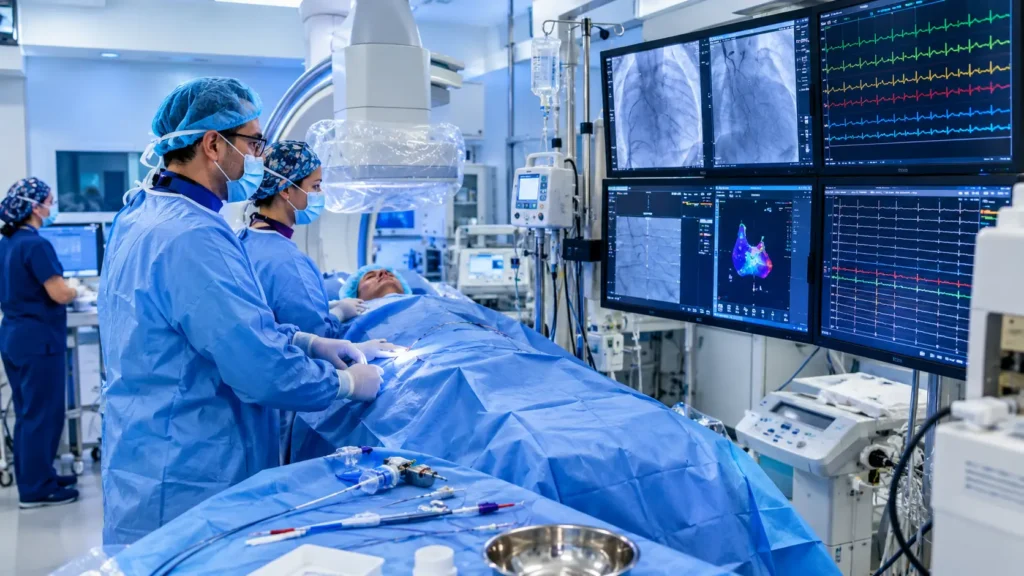
One important test is an electrophysiology study.
An electrophysiology study helps doctors map the heart’s electrical signals. It shows where rhythm problems start.
What Happens During an Electrophysiology Study?
The doctor places thin tubes called catheters into blood vessels. These tubes travel to the heart.
Special equipment records electrical activity.
The test may help doctors:
- ✅ Find the source of an arrhythmia
- ✅ Confirm a diagnosis
- ✅ Plan treatment
- ✅ Decide if a procedure may help
Many patients feel nervous before their first study. Most report that the experience was easier than expected.
Other Tests Doctors May Use
| Test | Purpose |
| Electrocardiogram (ECG) | Records heart signals |
| Holter monitor | Tracks heart rhythm over time |
| Event monitor | Records symptoms when they occur |
| Echocardiogram | Uses sound waves to view the heart |
Groups such as the American Heart Association and American College of Cardiology support evidence-based testing and treatment for rhythm disorders.
⏱️ Cardiac Electrophysiology Procedures
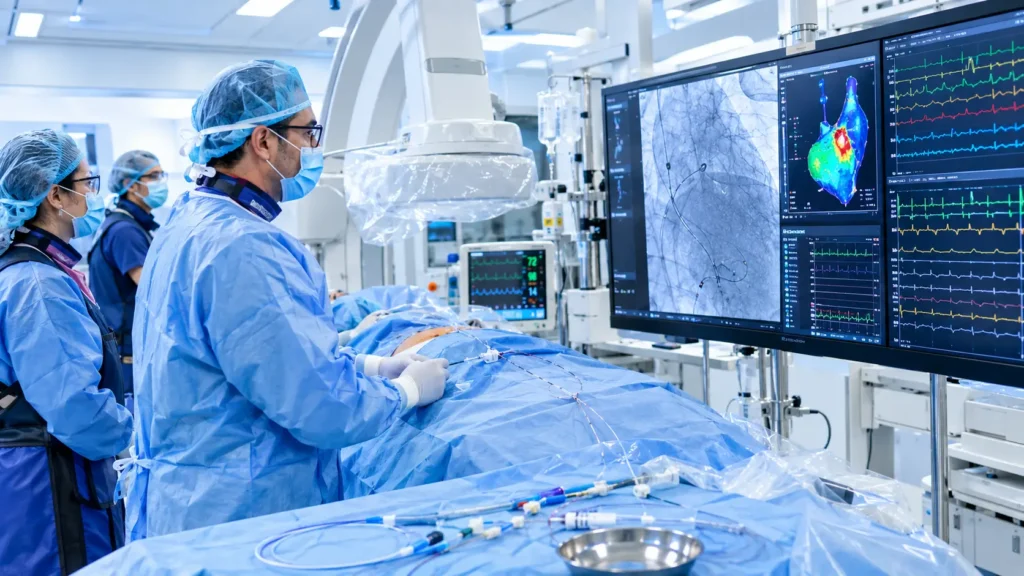
Several procedures can help treat rhythm problems.
Catheter Ablation
Catheter ablation is a common treatment.
The doctor guides thin tubes into the heart. Small areas causing abnormal signals are treated.
Many people return home the same day or after one night.
Pacemaker Implantation
A pacemaker is a small device placed under the skin.
It helps keep the heart from beating too slowly.
Implantable Cardioverter Defibrillator
An implantable cardioverter defibrillator, often called an ICD, monitors the heartbeat.
If a dangerous rhythm occurs, the device may restore a safer rhythm.
Cardioversion
Cardioversion helps reset certain abnormal heart rhythms.
Doctors may use medicine or a controlled electrical shock.
❤️ What to Expect at an Electrophysiologist Appointment
A first visit often feels less stressful than many people expect.
The doctor wants to learn about your symptoms and health history.
Before the Visit
Bring:
- ✅ A list of medicines
- ✅ Recent test results
- ✅ Questions you want answered
- ✅ Details about symptoms
During the Visit
The doctor may ask:
- When symptoms started
- How often they happen
- What makes them better or worse
- Whether family members have heart conditions
The doctor may order tests or discuss treatment choices.
Many patients worry they will need a procedure right away. In many cases, doctors start with testing and monitoring first.
Questions You May Want to Ask
- ✅ What may cause my symptoms?
- ✅ Do I need more tests?
- ✅ What treatment choices exist?
- ✅ What risks should I know about?
- ✅ How often should I follow up?
⚠️ Training, Careers, and Salary in This Specialty
The field of electrophysiology cardiology requires years of education.
After medical school, doctors complete:
- Internal medicine training
- Cardiology training
- An electrophysiology fellowship
What Is an Electrophysiology Fellowship?
A fellowship provides advanced training in heart rhythm care.
Doctors learn to:
- Diagnose rhythm disorders
- Perform specialized procedures
- Read advanced heart tests
- Manage complex patients
Electrophysiologist Salary
Pay varies by location, experience, and workplace.
| Career Stage | Estimated Annual Salary Range |
| Early career | $250,000–$400,000 |
| Mid-career | $400,000–$600,000 |
| Experienced specialist | $600,000+ |
These figures are broad estimates. Actual pay may differ.
Finding Top Cardiac Electrophysiology Doctors
When looking for a specialist, consider:
- ✅ Board certification
- ✅ Experience with your condition
- ✅ Hospital quality
- ✅ Patient reviews
- ✅ Referrals from your cardiologist
A trusted care team often improves the patient experience.
✅ Treatment and Long-Term Care
Many rhythm disorders respond well to treatment.
The best plan depends on the specific condition.
Treatment may include:
- ✅ Lifestyle changes
- ✅ Medicines
- ✅ Monitoring devices
- ✅ Procedures
- ✅ Follow-up visits
The goal is often symptom control and improved quality of life.
A patient with frequent heart fluttering may start with monitoring. Another patient may benefit from ablation after testing. Care plans differ for each person.
The field of electrophysiology cardiology continues to improve. New tools help doctors identify rhythm problems with greater accuracy.
FAQ
Q: What is electrophysiology cardiology and who needs it?
A: It is a heart specialty that focuses on electrical signals in the heart. People with irregular, fast, or slow heartbeats may need evaluation. A doctor can decide whether specialized testing is appropriate.
Q: How much does an EP study cost?
A: Costs vary widely. Insurance coverage, hospital location, and testing needs affect the final amount. Patients should contact their provider and insurance company for estimates.
Q: Are cardiac electrophysiology procedures safe?
A: Yes, many procedures are routinely performed and have strong safety records. Every procedure carries some risk. Your doctor will explain benefits and possible complications.
Q: How do I find top cardiac electrophysiology doctors?
A: Start with referrals from your primary doctor or cardiologist. Look for board certification, experience, and hospital quality. Patient reviews may also help.
Q: What should I expect at my first electrophysiologist appointment?
A: Expect a discussion about symptoms, medicines, and medical history. The doctor may order tests or review past results. Most visits focus on understanding the problem first.
Q: What is an electrophysiology fellowship?
A: An electrophysiology fellowship is advanced medical training after cardiology. Doctors learn specialized skills for diagnosing and treating heart rhythm disorders.
Conclusion
Understanding electrophysiology cardiology can make heart care easier to follow. This specialty focuses on the electrical signals that control every heartbeat. Doctors use tests, monitoring, and procedures to find and manage rhythm problems.
Many people with rhythm concerns receive effective care and ongoing support. Early evaluation may help identify issues before they become more serious.
Talk to a cardiologist if you have any heart concerns. A professional can guide you toward the right next steps for your health.
Medically reviewed for accuracy. Always consult a licensed cardiologist for personal advice.