
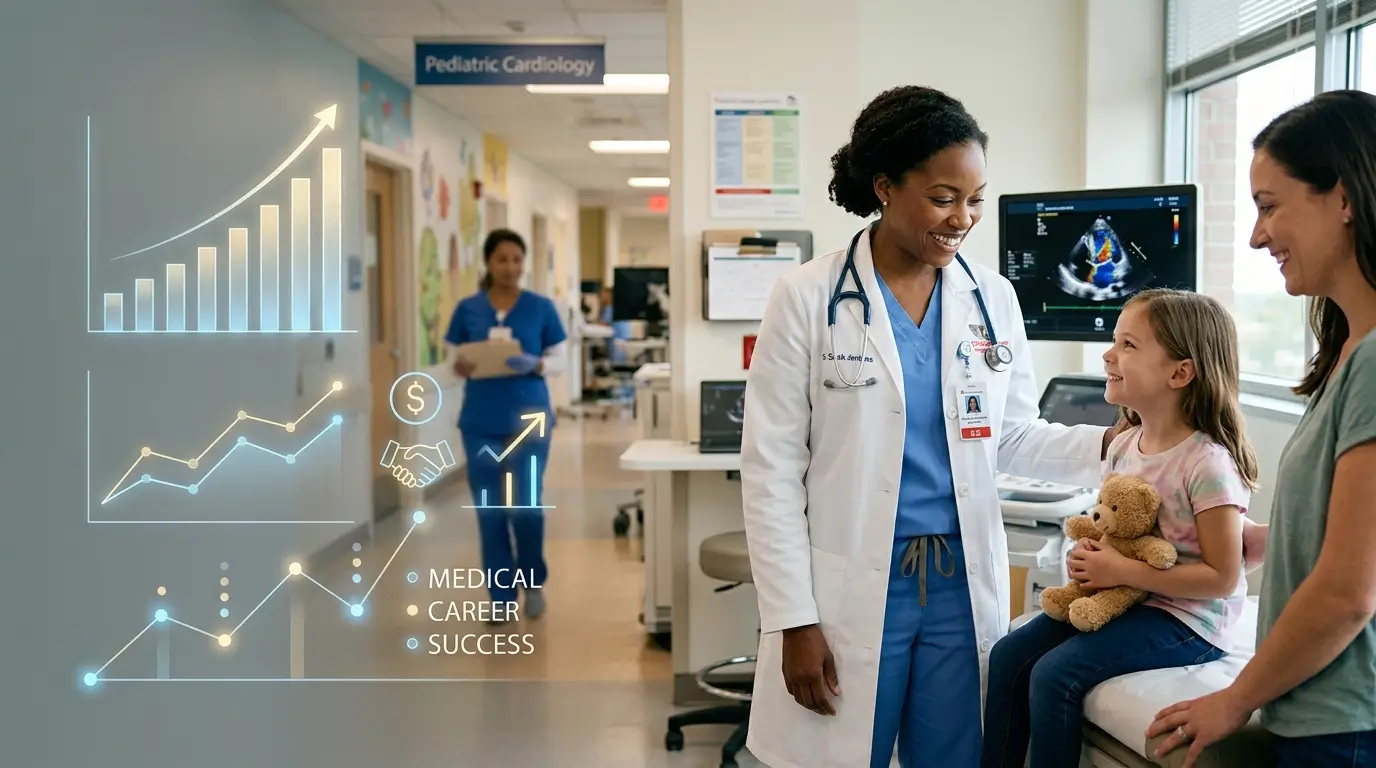

Peds cardiology salary can be very high because these doctors care for children with heart problems. Most pediatric cardiologists earn strong incomes after years of training. Pay often depends on location, experience, and specialty focus.
Have you ever wondered how much a heart doctor for children earns?
Many families meet these doctors when a child needs heart care. Students also explore this field when choosing a career. The topic of peds cardiology salary often comes up because the job needs many years of training.
Pediatric cardiologists help babies, children, and teens with heart conditions. They check heart health, order tests, and guide treatment plans. Their work can make a big difference in a child’s life.
Salary can vary from state to state. Experience also plays a role. Some doctors earn more because they perform special procedures. Understanding these factors can help students and families learn more about this important career.
❤️ Understanding Pediatric Cardiology and Pay
Pediatric cardiology focuses on heart care for children.
These doctors treat heart problems present at birth. They also treat heart issues that develop later.
Many pediatric cardiologists work in:
- 🩺 Children’s hospitals
- 🩺 Academic medical centers
- 🩺 Private clinics
- 🩺 Specialty heart programs
The average salary often falls in the high six figures. Actual pay varies by employer and region.
What Affects Earnings?
Several factors can affect income:
- ✅ Years of experience
- ✅ Geographic location
- ✅ Hospital size
- ✅ Extra skills and procedures
- ✅ Leadership roles
A new doctor may earn less than a senior specialist. A large children’s hospital may also offer higher pay.
Real-World Example
Many parents feel nervous before a child’s first heart visit.
A pediatric cardiologist may spend time explaining test results. They may also answer questions about treatment options. This patient-focused work adds value beyond medical care.
📋 Peds Cardiology Salary by State
Location often has a major effect on income.
States with higher living costs may offer higher salaries. Large medical centers can also raise earning potential.
| State | Typical Salary Range | Notes |
| California | $280,000–$500,000+ | High demand and high living costs |
| Texas | $260,000–$450,000+ | Large health systems and growing population |
| Florida | $250,000–$430,000+ | Strong children’s hospital networks |
| New York | $280,000–$500,000+ | Major academic centers |
| Illinois | $250,000–$430,000+ | Large urban hospital systems |
These figures can change over time.
Individual contracts may differ from averages.
California Earnings
Many people search for peds cardiology salary California.
California often ranks among the higher-paying states. Large cities may offer strong compensation packages. Housing costs are also higher in many areas.
Texas Earnings
Many people also ask about peds cardiology salary Texas.
Texas has several major children’s hospitals. The state often offers competitive salaries and a lower cost of living than some coastal states.
⏱️ Pediatric Cardiologist Salary Per Month
Monthly income helps many people understand earnings more clearly.
A doctor earning $300,000 per year makes about $25,000 per month before taxes.
A doctor earning $400,000 per year makes about $33,333 per month before taxes.
| Annual Salary | Approximate Monthly Pay |
| $250,000 | $20,833 |
| $300,000 | $25,000 |
| $400,000 | $33,333 |
| $500,000 | $41,667 |
Benefits may add more value.
Examples include:
- ✅ Health insurance
- ✅ Retirement plans
- ✅ Paid time off
- ✅ Continuing education support
🩺 Fellowship Training and Years of Schooling
Many students ask how long this path takes.
The answer surprises many people.
Pediatric Cardiologist Years of Schooling
Training usually includes:
- 📚 Four years of college
- 📚 Four years of medical school
- 📚 Three years of pediatric residency
- 📚 Three years of pediatric cardiology fellowship
This path often takes about 14 years after high school.
Some doctors complete extra specialty training.
What Is a Pediatric Cardiology Fellowship?
A fellowship is advanced medical training.
Doctors learn how to diagnose and manage heart conditions in children. They gain experience with imaging tests and procedures.
Common tests include:
- 🩺 Echocardiogram (heart ultrasound)
- 🩺 Electrocardiogram or ECG (heart rhythm test)
- 🩺 Stress testing
- 🩺 Cardiac MRI (heart imaging scan)
Training programs often follow standards supported by organizations such as the American Heart Association (AHA) and the American College of Cardiology (ACC).
Real-Life Training Example
A medical student may first discover pediatric cardiology during a hospital rotation.
After seeing children improve with treatment, that student may choose the specialty despite the long training path.
⚠️ Higher-Paying Pediatric Cardiology Specialties
Not all pediatric cardiologists do the same work.
Some focus on highly specialized procedures.
Pediatric Interventional Cardiology Salary
Interventional cardiologists perform catheter-based procedures.
A catheter is a thin tube doctors place inside blood vessels.
These specialists may:
- ✅ Repair certain heart defects
- ✅ Open narrowed vessels
- ✅ Perform advanced procedures
Because of these added skills, pay may be higher than general pediatric cardiology salaries.
Academic vs Private Practice Roles
Academic doctors often teach students and conduct research.
Private practice physicians may spend more time seeing patients.
Each setting offers different benefits and income opportunities.
Mid-Career and Senior Earnings
Experience often increases earnings.
Doctors with many years in practice may earn more than new graduates. Leadership positions can also raise compensation.
The topic of peds cardiology salary often becomes more complex as doctors advance in their careers.
❤️ What Makes This Career Rewarding?
Money is only one part of the picture.
Many pediatric cardiologists choose the field because they enjoy helping children.
They build long-term relationships with families. They also help guide parents through difficult moments.
Some children need only routine monitoring. Others need surgery or ongoing treatment.
A pediatric cardiologist often works with a larger care team. This team may include surgeons, nurses, and imaging experts.
Families often appreciate clear explanations and support.
That human connection can make the job meaningful.
Frequently Asked Questions
Q: Is peds cardiology salary discussed often on Reddit?
A: Yes. Many students and doctors discuss salary experiences on Reddit. Reported numbers vary widely. Personal posts may not reflect national averages.
Q: What is the average pediatric cardiologist salary per month?
A: Monthly pay depends on annual earnings. Many pediatric cardiologists earn tens of thousands of dollars per month before taxes. Benefits can add extra value.
Q: Which states pay pediatric cardiologists the most?
A: States with large medical centers and higher living costs often pay more. California and New York frequently appear among higher-paying regions. Individual job offers still vary.
Q: Does pediatric interventional cardiology salary tend to be higher?
A: Yes. These specialists perform advanced procedures. Extra training and technical skills may lead to higher compensation.
Q: How long is a pediatric cardiology fellowship?
A: Most fellowships last about three years. Some doctors complete additional training after fellowship. This depends on career goals.
Q: What is the typical peds cardiology salary after training?
A: Most new specialists enter a high-income field. Exact earnings depend on location, employer, and experience level. Salaries often grow over time.
Conclusion
Understanding peds cardiology salary starts with knowing the training required. Pediatric cardiologists spend many years learning specialized skills. Their earnings often reflect that commitment and responsibility.
Location, experience, and specialty focus can affect pay. Doctors in states like California and Texas may see different salary ranges. Advanced fields may also increase earning potential.
Most important, these specialists help children with heart conditions receive expert care. Talk to a cardiologist if you have any heart concerns.
Medically reviewed for accuracy. Always consult a licensed cardiologist for personal advice.