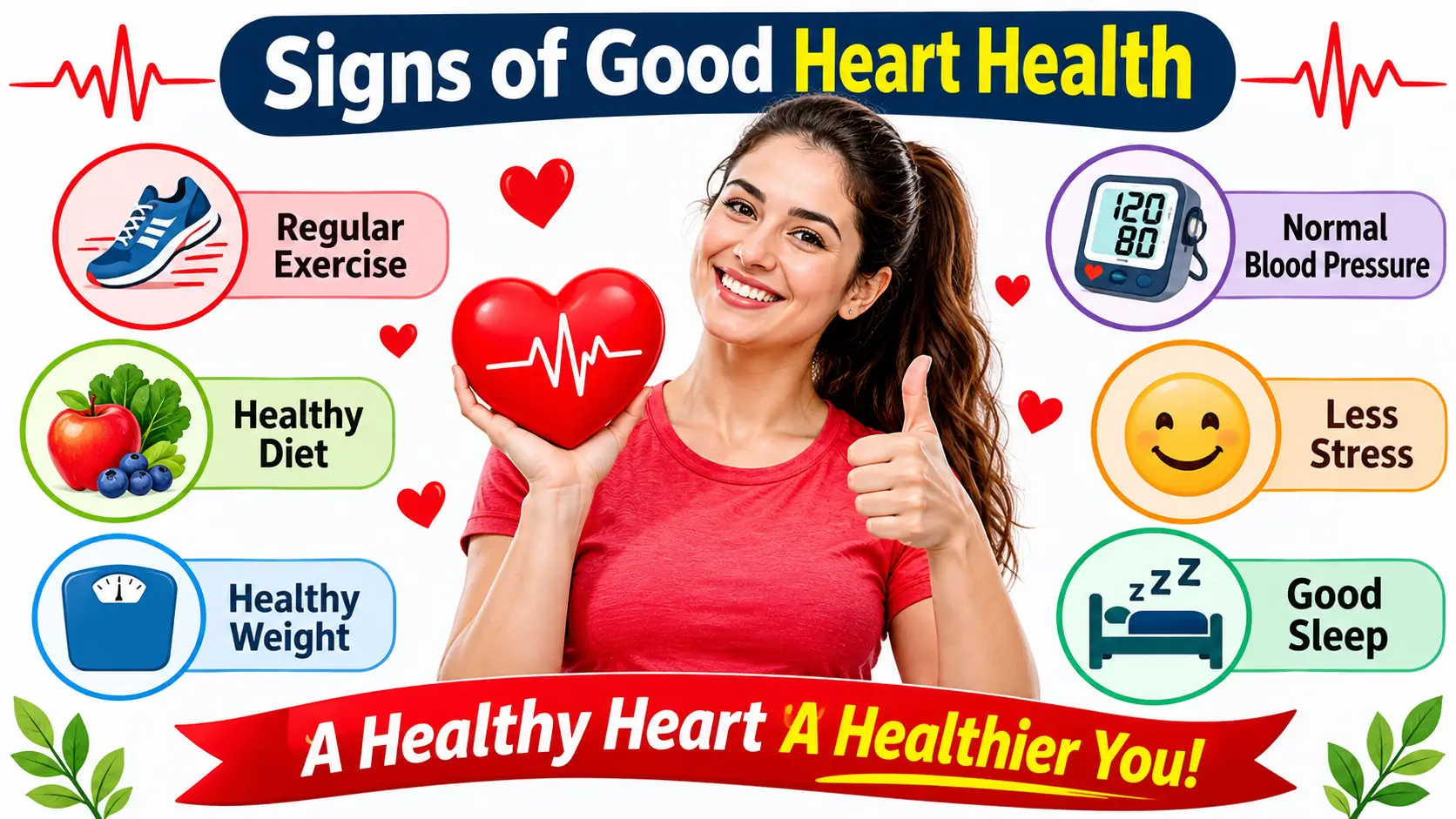

Signs of good heart health include healthy blood pressure, a normal resting heart rate, healthy cholesterol and blood sugar, a healthy weight, steady energy, and normal breathing.
But a healthy heart often has no obvious symptoms, so regular checkups and tests are the most reliable way to know.
Most people think of the heart only when something feels wrong. Yet some of the most important signs of good heart health are numbers you cannot feel. High blood pressure and high cholesterol often cause no symptoms for years.
That is why a “healthy feeling” is not enough. Energy, stamina, and steady breathing can be encouraging clues, but they are not proof. This article explains the measurable signs doctors check, the everyday signs that may suggest your heart is working well, and the habits behind both.
It also covers the warning signs that mean you should not wait. This guide cannot diagnose you. A healthcare professional can check your numbers and explain what they mean for your age, family history, and health conditions.
Can You Tell If Your Heart Is Healthy by How You Feel?
Only partly. Feeling well is a good sign, but it does not rule out heart disease. Conditions like high blood pressure, high LDL cholesterol (often called “bad” cholesterol), and early artery damage can build up quietly.
It helps to separate four ideas:
- Screening: routine checks in people without symptoms, such as blood pressure and cholesterol tests
- Risk assessment: combining your numbers, age, habits, and family history to estimate your chance of heart disease
- Diagnostic testing: tests used when symptoms or results suggest a problem
- Emergency evaluation: urgent care for warning signs such as chest pain
Self-checks at home can support this process, but they do not replace it.
The Measurable Signs of Good Heart Health
Healthy Blood Pressure
Blood pressure is the force of blood against your artery walls. It is written as two numbers, such as 118/76. For optimal heart health, readings should be less than 120/80 mm Hg. Readings of 130 to 139 for the top number, or 80 to 89 for the bottom number, fall in the high blood pressure range. Because high blood pressure usually has no symptoms, it needs to be measured. Ask your doctor what target is right for you.
A Normal Resting Heart Rate
Resting heart rate is the number of beats per minute when you are calm and still. For most adults, a normal resting heart rate is between 60 and 100 beats per minute. A lower rate can be a good sign, as long as it stays above 60, because it may mean the heart muscle does not have to work as hard.
Very fit people, such as endurance athletes, sometimes have rates below 60 without any problem.
Talk with your doctor if your resting rate is consistently above 100, or unusually low with dizziness, fatigue, or fainting. Stress, medicines, caffeine, illness, and poor sleep can all change the number.
Healthy Cholesterol Levels
A blood test can check your cholesterol and fats. It measures total cholesterol, HDL (“good”) cholesterol, LDL (“bad”) cholesterol, and triglycerides.
In the American Heart Association’s updated scoring, non-HDL cholesterol is the preferred number to monitor instead of total cholesterol. Healthy targets depend on your overall risk, so your doctor can tell you what is right for you.
Healthy Blood Sugar
Blood sugar, or glucose, is one of the eight measures the American Heart Association uses to score cardiovascular health. High blood sugar over time can damage blood vessels. A simple blood test can check it.
A Healthy Weight and Waist Size
A healthy body weight and waist size are listed among the signs of strong cardiovascular health. Extra weight, especially around the middle, can raise blood pressure, cholesterol, and blood sugar. BMI is a rough tool, so ask your doctor how to interpret your measurements.
Everyday Signs That Suggest a Healthy Heart
These signs are less precise than lab tests. Think of them as encouraging clues, not guarantees.
- Good stamina. You can climb stairs, walk briskly, or carry groceries without unusual breathlessness.
- Normal breathing. You are not short of breath at rest or lying flat.
- A steady rhythm. You do not often feel skipped beats, racing, or fluttering.
- Steady energy. You do not feel exhausted without a clear reason.
- Good sleep. Restful sleep supports heart health. Snoring at night or daytime fatigue can be signs of sleep apnea, which can raise the risk of high blood pressure and atrial fibrillation, an irregular heart rhythm. If that sounds familiar, ask about a sleep evaluation.
- No swelling. Your ankles and feet are not puffy by evening for no clear reason.
Some websites also list warm hands and feet, normal skin color, and quick wound healing. These are described as signs of good blood circulation. But they can be affected by many other things, such as room temperature and skin conditions, so do not rely on them.
The Bigger Picture: Life’s Essential 8
The American Heart Association measures cardiovascular health using Life’s Essential 8. The eight parts are a healthy diet, physical activity, avoiding nicotine, healthy sleep, a healthy weight, and healthy levels of blood lipids, blood glucose, and blood pressure. The first four are health behaviors, and the other four are health factors.
You can answer an online questionnaire called My Life Check to get a heart health score and tips. It is a self-assessment and not a medical test, but it can show where to focus.
Many adults have room to improve. In one 2022 analysis, about 80% of people in the U.S. had low to moderate cardiovascular health on this checklist. That is a reminder that small changes matter.
Signs That Are Not Signs of a Healthy Heart
Some symptoms need medical attention. Do not assume they are just stress or aging. See a healthcare professional if you have:
- Chest discomfort, pressure, or tightness
- Shortness of breath with light activity or at rest
- Fainting or near-fainting
- Fast, pounding, or irregular heartbeats that do not settle
- Swelling in the legs, ankles, or belly
- Unusual fatigue that does not improve
Call your local emergency number right away if you have chest pain or pressure, severe shortness of breath, fainting, or sudden weakness or trouble speaking. Heart attack symptoms can look different from person to person.
Some people have nausea, jaw or back pain, or cold sweats instead of classic chest pain. Do not wait to see if it passes.
How to Support Good Heart Health
The habits behind the signs are well known:
- Eat a balanced diet with vegetables, fruit, whole grains, beans, nuts, and fish, and limit salt, added sugar, and processed foods
- Move regularly. Brisk walking, cycling, and swimming all help, and a doctor can advise if you have a heart condition
- Do not smoke or use nicotine. Smoking lowers HDL cholesterol, raises blood pressure, and increases heart disease risk.
- Sleep well, and get help if you suspect sleep apnea
- Manage stress in ways that work for you
- Know your numbers and repeat tests as your doctor advises
- Take prescribed medicines exactly as directed
When to Get Checked
Talk to a healthcare professional about heart screening if you have not had your blood pressure, cholesterol, and blood sugar checked recently. This matters more if you have diabetes, kidney disease, a family history of early heart disease, or a history of pregnancy complications such as high blood pressure.
If you have risk factors, your doctor may monitor your readings more closely. How often to test depends on your age and risk, so ask what schedule suits you.
Frequently Asked Questions
What are the main signs of a healthy heart?
Healthy blood pressure, a normal resting heart rate, healthy cholesterol and blood sugar, a healthy weight, good stamina, and steady breathing are the main signs. Because many problems cause no symptoms, only testing can confirm your numbers are healthy.
Can I have a healthy heart without symptoms?
Yes, and you can also have heart disease without symptoms. High blood pressure and high cholesterol often cause none. Regular screening is the best way to find hidden risk. Feeling fine is a good sign, but it is not proof.
What is a good resting heart rate?
For most adults, 60 to 100 beats per minute is considered normal. A lower rate within that range can reflect good fitness. Very fit people may be lower. See a doctor if it is often above 100, or low with dizziness or fainting.
What blood pressure is considered healthy?
Under 120/80 mm Hg is considered optimal for heart health. Readings of 130/80 and higher are considered high by current American Heart Association guidance. Home readings can help, but your doctor should confirm and interpret them.
Can a smartwatch tell me if my heart is healthy?
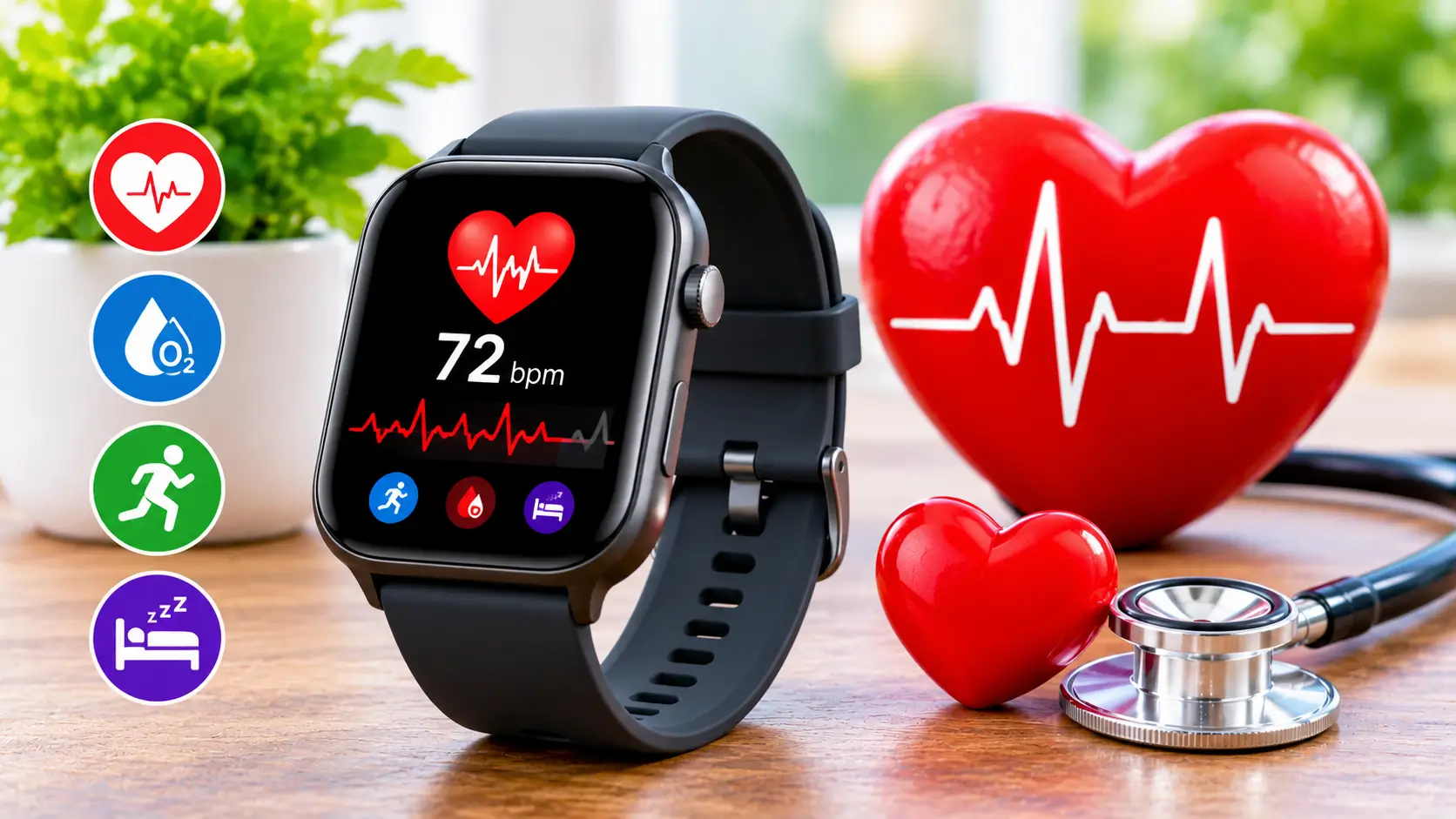
Smartwatches can track heart rate and sometimes flag irregular rhythms, but they cannot diagnose heart disease or rule it out. Use them as a prompt to talk to a doctor if something looks unusual, not as a replacement for checkups.
How can I check my heart health at home?
You can track your resting heart rate, blood pressure with a validated home monitor, activity, sleep, and weight. You can also take the My Life Check questionnaire. Cholesterol, blood sugar, and heart tests still need a healthcare professional.
Key Takeaway
The signs of good heart health are a mix of measurable numbers and everyday clues. Healthy blood pressure, resting heart rate, cholesterol, blood sugar, and weight matter most. Good stamina, steady breathing, and a regular rhythm are encouraging but cannot prove your heart is healthy.
Build the habits in Life’s Essential 8, get your numbers checked, and take new symptoms seriously. If you have chest pain, severe breathlessness, or fainting, call emergency services right away.