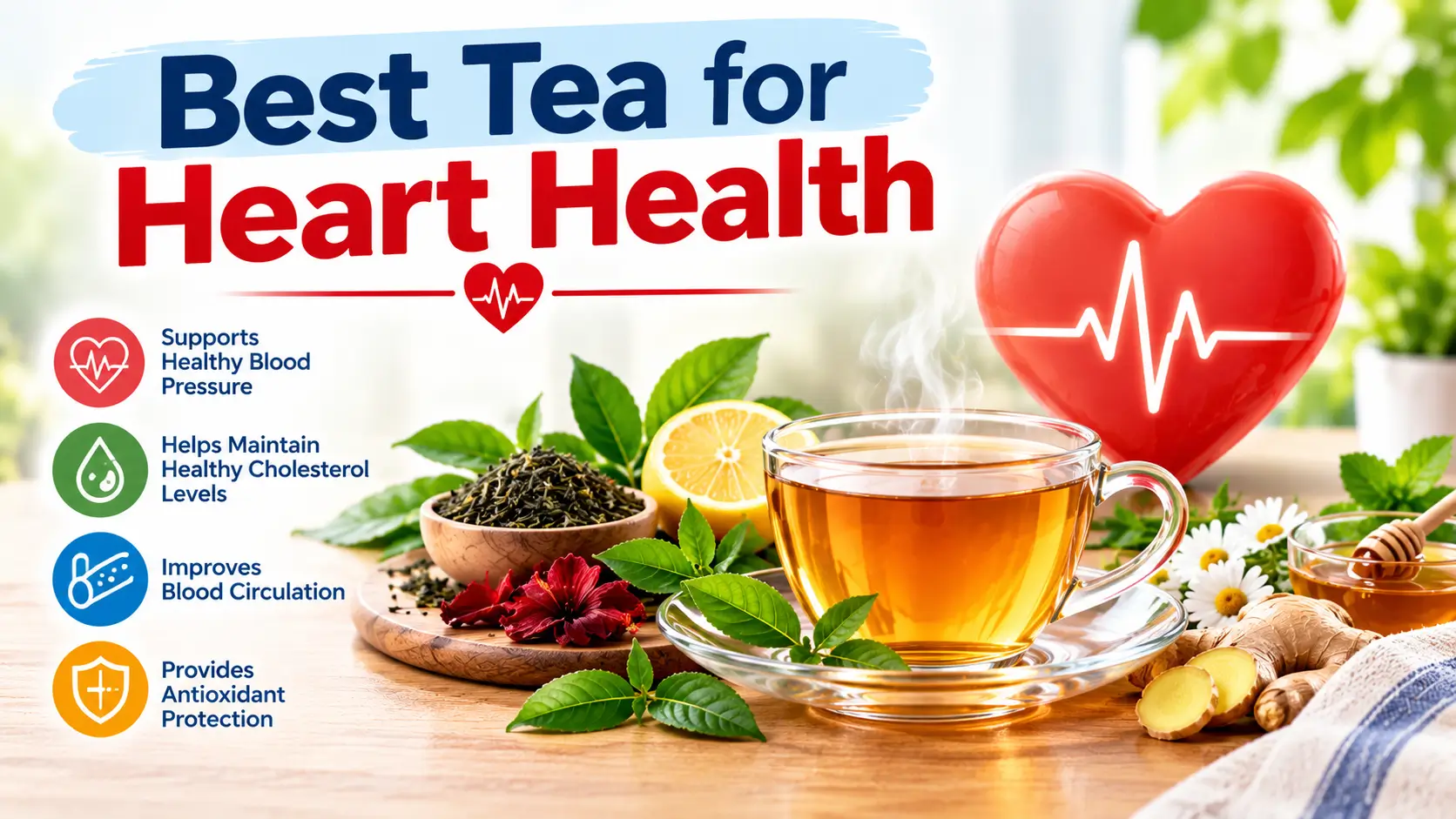

Green tea and black tea have the strongest research for heart health. Regular intake is linked to slightly lower blood pressure and LDL cholesterol, and to fewer cardiovascular events in large population studies.
No tea is a guaranteed fix. Unsweetened tea works best as part of an overall healthy lifestyle.
Tea is one of the most studied drinks in nutrition research. It contains plant compounds called flavonoids, which may help blood vessels relax and may support healthier cholesterol levels. That has led many people to ask which cup deserves a daily place in the routine.
The honest answer is that no single tea wins for everyone. Green tea has the most trial data, black tea has large population studies behind it, and herbal choices such as hibiscus show promise in smaller studies. Many findings come from observational research, which cannot prove cause.
This guide compares the most popular choices, explains what studies found, and flags the risks, including drug interactions and caffeine. You will also see how to prepare tea sensibly and what matters more than any cup. This article is educational and does not replace advice from your own clinician.
How Tea May Affect the Heart
Tea leaves contain catechins and other flavonoids. These antioxidants may help in several ways:
- Blood vessels: They may improve how well arteries widen, which can support healthy blood pressure.
- Cholesterol: Some trials show small drops in LDL cholesterol.
- Inflammation: Lab and small human studies suggest a mild effect on inflammation markers.
- Blood sugar: Results are mixed, but some studies hint at modest improvements.
Effects are usually small. A cup of tea is a helpful habit, not a treatment.
Comparing the Main Types
Green tea
Green tea is made from unfermented leaves and is rich in catechins, especially one called EGCG. Reviews of randomized trials report modest reductions in LDL cholesterol and blood pressure. Large population studies in Asia link regular drinking with lower rates of cardiovascular disease and stroke, though these studies may be affected by other lifestyle differences.
Black tea
Black tea is fully oxidized, so it has different flavonoids, including theaflavins. Studies suggest it may lower blood pressure slightly and improve blood vessel function. Large cohort analyses have linked regular intake, around a few cups daily, with lower cardiovascular risk. Adding milk may reduce some of the measured effects in lab settings, but evidence in people is unclear.
Oolong tea
Oolong is partly oxidized. Human evidence for heart outcomes is thinner than for green or black tea, and results come mostly from small studies.
Hibiscus tea
This tart herbal tea is not made from the tea plant. Several small trials and reviews found it may lower systolic blood pressure by a few points, particularly in adults with mild hypertension. Studies are short, and quality varies. It should not replace blood pressure medicine.
White tea
White tea is minimally processed and contains catechins. It has been studied far less than green tea, so heart-specific conclusions are limited.
Other herbal teas
Chamomile, peppermint, rooibos, and ginger are pleasant choices. Evidence for heart benefits ranges from small studies to very little. They can still be good caffeine-free replacements for sugary drinks.
Which Tea Is Best?
The answer depends on your goal:
| Goal | Reasonable choice | Evidence strength |
| General cardiovascular health | Green or black tea | Moderate, mostly observational and small trials |
| Slightly higher blood pressure | Hibiscus (with medical advice) | Limited to moderate |
| Avoiding caffeine | Rooibos or hibiscus | Limited for heart outcomes |
| Cholesterol support | Green tea | Modest effect in trials |
The best tea is often the one you enjoy and can drink unsweetened and consistently.
How Much Tea Is Reasonable?
Many studies looked at about two to four cups a day. That is a range from research, not a prescription. Benefits seen in the studies were modest, and drinking more does not necessarily increase them. Caffeine content also adds up, so consider your own sensitivity.
Risks and Precautions
- Caffeine: Green and black tea contain caffeine, which can cause jitteriness, poor sleep, or a racing pulse in some people. Those with arrhythmias or anxiety may need to limit it.
- Iron absorption: Tea compounds can reduce absorption of iron from plant foods. People with low iron should drink it between meals.
- Warfarin and vitamin K: Green tea contains small amounts of vitamin K, which can affect warfarin. Keep intake steady and ask your prescriber.
- Medication interactions: Green tea extract may interact with some drugs, including certain beta-blockers. Hibiscus can lower blood pressure and may add to the effect of blood pressure medicine.
- Green tea extract supplements: Concentrated capsules have been linked to rare cases of liver injury. Brewed tea is a different matter, but extracts deserve caution.
- Pregnancy: Caffeine should be limited, and some herbal teas are not recommended. Ask your clinician.
- Added sugar: Bottled and sweetened teas can cancel out any benefit. Check labels.
- Very hot drinks: Regularly drinking very hot beverages has been linked to a higher risk of esophageal cancer, so let tea cool a little.
Tips for Preparing Tea
- Use loose leaves or plain tea bags with no added sugar.
- Steep green tea in water that is hot but not boiling for a few minutes.
- Skip sweeteners, or use only a small amount.
- Try lemon or mint for flavor.
- Avoid drinking it close to bedtime if caffeine disturbs your sleep.
- Choose iced tea made at home rather than bottled drinks.
What Matters More Than Any Cup
Tea helps most when other habits are solid:
- Eat vegetables, fruit, whole grains, beans, nuts, and fish
- Limit sodium, processed meat, and added sugar
- Aim for at least 150 minutes of moderate activity each week
- Stay tobacco-free
- Maintain a healthy weight and sleep well
- Check blood pressure, cholesterol, and blood sugar, and follow your treatment plan
If you take prescribed medicine, keep taking it.
When to Seek Urgent Help
Call your local emergency number for chest pressure or pain, pain spreading to the arm, jaw, or back, sudden severe breathlessness, fainting, or stroke signs such as face drooping, arm weakness, or slurred speech. A cup of tea cannot treat these symptoms.
Frequently Asked Questions
Is green tea or black tea better for the heart?
Both have supportive evidence. Green tea has more trial data on cholesterol and blood pressure, while black tea has large population studies linking it to lower cardiovascular risk. Pick the one you enjoy and can drink unsweetened.
Can tea lower blood pressure?
It may, but only slightly. Green tea, black tea, and hibiscus have shown small reductions in studies. Tea should not replace prescribed medicine. Home blood pressure checks can show whether your own readings change.
Does tea lower cholesterol?
Green tea has shown modest reductions in LDL cholesterol in some trials. The effect is small compared with diet changes and statins. It is best viewed as a supportive habit.
How many cups of tea a day is good for the heart?
Studies often examine two to four cups daily, but no official target exists. More is not necessarily better, and caffeine limits vary by person. Ask your clinician if you have rhythm problems or other conditions.
Is hibiscus tea safe for people on blood pressure medication?
It may add to the blood pressure–lowering effect, so use caution. Talk with your clinician or pharmacist before drinking it regularly, particularly if you take diuretics or similar drugs, or if you are pregnant.
Are green tea supplements as good as brewed tea?
Not necessarily. Concentrated extracts deliver much higher doses and have been linked to rare liver injury. Brewed tea is the safer option, and extracts should be discussed with a clinician first.
Does adding milk or sugar cancel the benefits?
Sugar adds calories and can offset benefits, so limit it. Milk’s effect on flavonoids is debated, and human evidence is unclear. Unsweetened tea, with or without a splash of milk, is a reasonable choice.
Key Takeaway
Green and black tea have the most support for heart health, with small improvements in blood pressure and cholesterol and links to lower cardiovascular risk in large studies. Hibiscus may help blood pressure modestly.
None of these replaces medicine or healthy habits, and extracts carry extra risks. Drink tea unsweetened, watch caffeine and drug interactions, and talk with a clinician if you take regular medication.