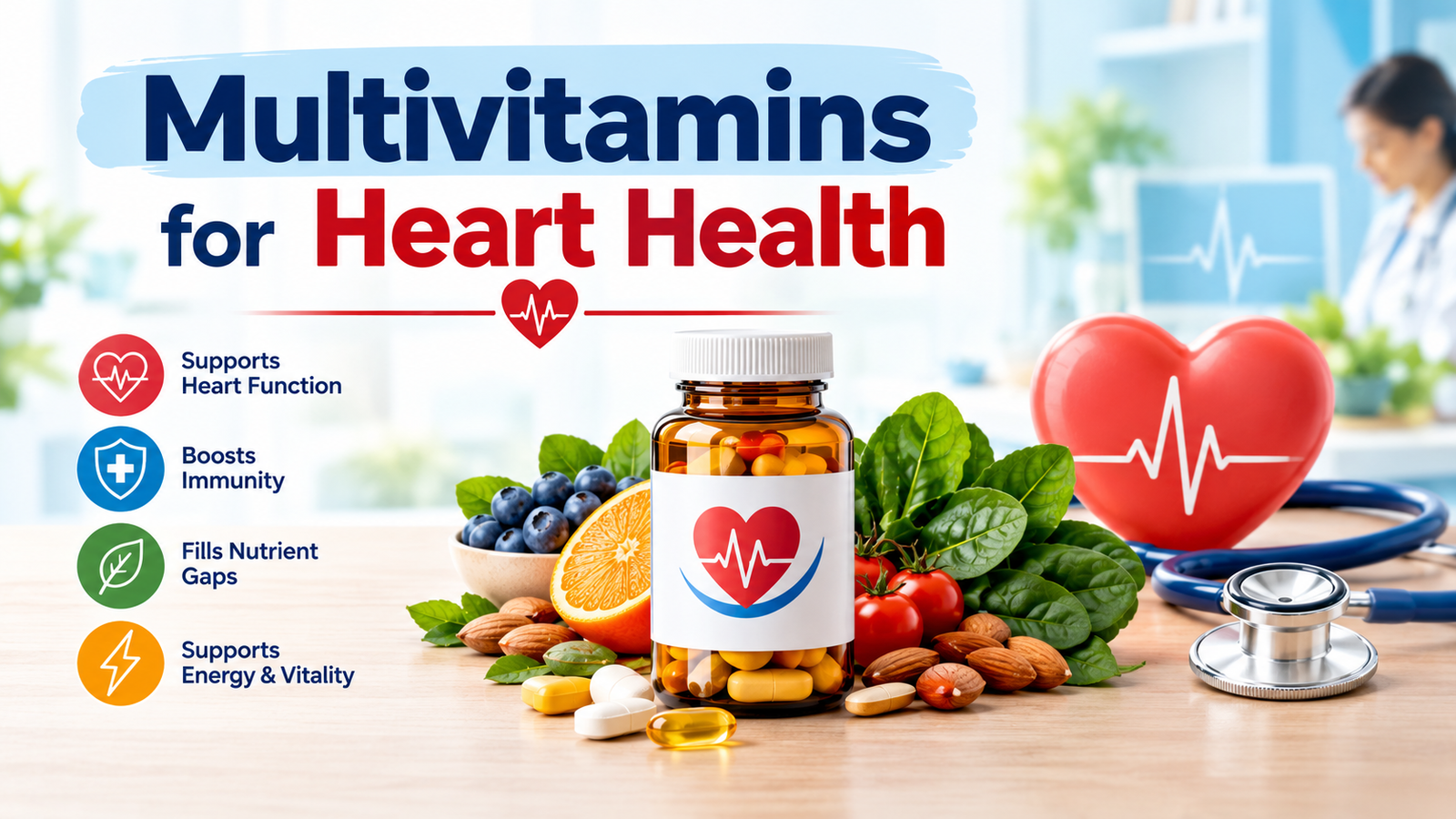

Multivitamins have not been shown to prevent heart attacks, strokes, or heart-related death in healthy adults.
Large studies found little to no protection. They may help fill nutrient gaps, but a balanced diet, regular movement, and medical care for blood pressure and cholesterol do far more for your heart.
A daily multivitamin feels like cheap insurance. One tablet, a long list of nutrients, and a label that hints at wellness. Many people assume it must help the heart too, so they search for multivitamins for heart health hoping for a clear yes.
The honest answer is more modest. Research has looked at tens of thousands of people, and the results keep landing in the same place: a general multivitamin does not clearly lower cardiovascular risk in people who are otherwise healthy.
That does not make them useless or dangerous for everyone. Some people truly need extra nutrients. This guide explains what a multivitamin contains, what the main trials found, which ingredients raise concern, and who may still benefit.
You will also find practical steps for choosing wisely. The article is educational and cannot replace advice from your own clinician.
What Is a Multivitamin?
A multivitamin is a pill, gummy, or powder that bundles many vitamins and minerals in one dose. There is no standard recipe. One brand may include 13 vitamins and a dozen minerals, while another adds herbs, amino acids, or extra doses of a single nutrient.
In many countries, these products are sold as supplements, so regulators do not test them for effectiveness before they reach shelves. Contents and quality can differ from brand to brand.
What the Research Shows
Large trials in healthy adults
Two big studies are often cited. The Physicians’ Health Study II followed male physicians for over a decade and found no reduction in major cardiovascular events among those taking a daily multivitamin.
The COSMOS trial tested a cocoa extract and a multivitamin in older adults, and the multivitamin did not lower heart attacks, strokes, or cardiovascular deaths.
What expert groups conclude
The U.S. Preventive Services Task Force reviewed the evidence and said there is not enough proof to recommend multivitamins for preventing cardiovascular disease or cancer. The American Heart Association has taken a similar stance, noting that food is the preferred source of nutrients.
Why the results disappoint
A heart attack usually builds over decades through plaque in the arteries, driven by high blood pressure, high LDL cholesterol, smoking, raised blood sugar, and inactivity. A multivitamin does not touch most of these causes. Taking more vitamins is not the same as correcting a problem that was never a vitamin shortage.
Correcting a Shortage Is Not the Same as Preventing Heart Disease
This difference explains a lot of confusion.
- Fixing a deficiency: If a blood test shows low iron, B12, or vitamin D, a supplement can correct it. That is real benefit, but it treats the deficiency, not the heart.
- Moving a lab number: Some nutrients nudge a biomarker slightly. A small shift does not always lead to fewer heart attacks.
- Lowering cardiovascular risk: This needs proof from long human trials, and multivitamins have not delivered it.
- Treating heart disease: No multivitamin treats an established condition.
Ingredients Worth a Closer Look
Antioxidants: vitamins E and C, beta-carotene
Early observational studies suggested people with high antioxidant intake had healthier hearts. Later randomized trials did not confirm it. High-dose vitamin E has not shown protection, and beta-carotene raised lung cancer risk in smokers in earlier trials.
B vitamins
B6, B12, and folate lower homocysteine, an amino acid linked to vascular problems. Trials show that lowering it with vitamins did not reduce heart attacks, though folic acid may slightly lower stroke risk in some populations. Evidence is mixed, so the benefit depends on the group studied.
Vitamin D
Helpful for bone health and for people who are low. Large trials have not shown that supplements prevent heart attacks or strokes.
Calcium
Some analyses raised a question about calcium pills and heart events, though findings are inconsistent. Calcium from food has not drawn the same concern. Because the evidence is unsettled, avoid taking large amounts without a reason.
Minerals such as magnesium and potassium
Magnesium may lower blood pressure modestly in people who are low. Potassium in food supports healthy blood pressure, but multivitamins contain only small amounts, and extra potassium can be unsafe for people with kidney disease or certain medicines.
Possible Risks and Cautions
Most standard multivitamins are well tolerated, but a few points deserve attention.
- Megadoses: More is not better. Fat-soluble vitamins A, D, E, and K can build up in the body.
- Vitamin K and warfarin: Vitamin K changes how warfarin works. Anyone using this blood thinner needs steady intake and should check with a clinician or pharmacist first.
- Iron: Men and postmenopausal women usually do not need extra iron, and too much can be harmful. Keep iron products away from children.
- Kidney disease: Some minerals can accumulate to unsafe levels.
- Pregnancy: Needs are different. Prenatal formulas are designed for this stage, so follow your clinician’s advice.
- False reassurance: Taking a daily pill may make a person feel they have “done enough,” leading them to skip exercise or healthy meals.
Who May Reasonably Benefit From a Multivitamin
A supplement can make sense for some groups:
- Older adults with poor appetite or low B12 absorption
- People following strict vegan diets, who may need B12
- Those with digestive disorders that limit nutrient absorption
- People after weight-loss surgery
- Individuals with limited food access or very restricted diets
- Pregnant or planning to become pregnant, using a suitable prenatal product
These benefits relate to nutrition status, not direct protection of the heart.
What Does Protect Your Heart
The habits with the strongest proof are not sold in bottles:
- Eat plenty of vegetables, fruit, beans, whole grains, nuts, and fish, with less sodium, added sugar, and processed meat
- Move regularly, with a target of at least 150 minutes of moderate activity a week
- Avoid tobacco in every form
- Keep a healthy weight and sleep well
- Manage stress as best you can
- Treat high blood pressure, high LDL cholesterol, and diabetes as your clinician advises
If you take prescribed medicine, continue it. A supplement is not a substitute.
How to Choose a Multivitamin Wisely
- Ask whether you actually need one. A blood test or dietitian review can show real gaps.
- Choose a formula close to daily recommended amounts, not extreme doses.
- Look for an independent testing seal on the label.
- Match the formula to your age and sex, since iron needs differ.
- Bring the bottle to your pharmacist, who can check it against your prescriptions.
- Be skeptical of claims about “cleansing” arteries or guaranteed heart protection.
When to Seek Urgent Help
Chest pressure or pain, discomfort spreading to the arm, jaw, or back, sudden severe breathlessness, fainting, or stroke signs such as face drooping, arm weakness, or slurred speech need emergency care. Call your local emergency number immediately and do not wait for a supplement to work.
Frequently Asked Questions
Do multivitamins help prevent heart disease?
Current evidence says no, at least in healthy adults. Large trials found no meaningful drop in heart attacks or strokes. Expert panels do not recommend them for heart protection, and they advise focusing on food, exercise, and medical care.
Is there a best multivitamin for heart health?
No product has proven heart protection, so a “best” choice does not exist. A better question is which formula fits your needs. Pick moderate doses, third-party testing, and ask your clinician about any specific gap.
Can a daily multivitamin lower blood pressure?
Not reliably. Standard formulas contain small amounts of minerals, and trials have not shown a consistent blood pressure drop. Eating less salt, staying active, and following prescribed treatment are far more effective.
Are multivitamins safe with heart medications?
Often yes, but not always. Vitamin K affects warfarin, and some minerals interact with blood pressure drugs or diuretics. Share your full product list with a pharmacist before starting.
Should older adults take a multivitamin for their heart?
Age alone is not a heart-related reason. Some older adults need B12 or vitamin D, based on testing or diet. For heart protection itself, evidence is lacking, so decisions should follow your clinician’s guidance.
Do gummy vitamins work as well as tablets?
They can provide similar nutrients, but gummies may contain less of certain minerals and added sugar. Content varies widely, so compare labels and check for independent testing.
Can I get the same nutrients from food?
Usually yes. Vegetables, legumes, nuts, fish, dairy or fortified alternatives, and whole grains supply vitamins and minerals along with fiber and healthy fats, which pills cannot match.
Key Takeaway
A multivitamin will not reliably protect your heart. Strong trials in healthy adults show no clear drop in heart attacks, strokes, or cardiovascular death. It can still help people with a confirmed shortage or a limited diet.
Put your effort into food, exercise, not smoking, and managing blood pressure and cholesterol. Check with a clinician or pharmacist before starting a supplement, especially if you take regular medicine.