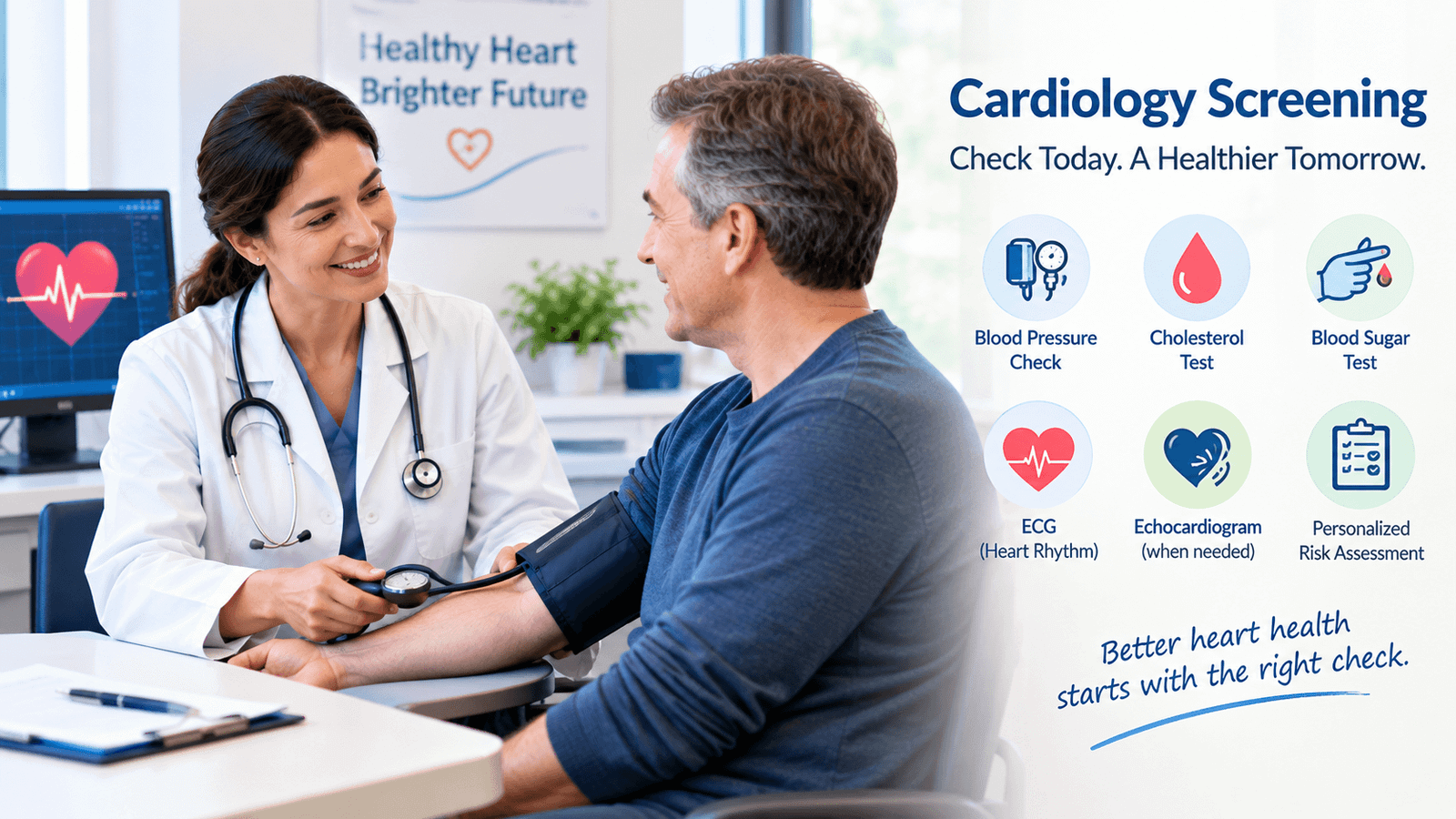

Cardiology screening helps check your heart health before serious problems develop. It may include blood pressure checks, cholesterol tests, blood sugar tests, and other heart tests. Doctors choose tests based on your age, symptoms, risk factors, and family history.
Have you ever wondered if your heart is truly healthy? You may feel fine and still have heart risks. Cardiology screening helps doctors find these risks early.
Heart problems can develop slowly over many years. High blood pressure and high cholesterol often cause no clear symptoms. A simple check can help find these problems sooner.
Screening does not mean you have heart disease. It means your doctor is checking for possible risks. Your results can guide healthy changes or further testing.
A heart check may include blood pressure, cholesterol, blood sugar, weight, and lifestyle questions. Some people may need an ECG, stress test, or heart scan. Not everyone needs every test.
This guide explains common heart screening tests and what they can show. It also covers costs, packages, blood tests, and finding screening near you.
❤️ What Is Cardiology Screening?
Cardiology screening is a set of health checks that helps estimate your heart disease risk. It often starts with simple tests during a regular medical visit.
Doctors may check your blood pressure, cholesterol, blood sugar, weight, and smoking habits. They may also ask about exercise, food, sleep, and family history.
These checks matter because some heart risks remain silent. High blood pressure often causes no symptoms. High cholesterol also usually has no warning signs.
Screening is different from testing a person with symptoms. Screening usually looks for risk in people who feel well. Diagnostic testing investigates a problem that already causes symptoms or abnormal findings.
What Does a Heart Screening Check?
A basic screening may include:
- Blood pressure measurement
- Cholesterol blood test
- Blood glucose or A1C test
- Weight and body mass index
- Smoking history
- Physical activity
- Diet habits
- Family history
- Other health conditions
The American Heart Association recommends regular checks of several heart risk factors. These include blood pressure, cholesterol, blood glucose, weight, and lifestyle habits.
For example, imagine a 45-year-old person who feels healthy. Their blood pressure may still be higher than expected. A routine visit could identify that risk early.
Your doctor may then suggest home blood pressure checks or another test. One unusual reading does not always confirm high blood pressure.
The USPSTF recommends screening adults for high blood pressure. It also recommends outside-office readings to confirm the diagnosis.
🩺 Who May Need Heart Screening?
Most adults benefit from routine checks of important heart risk factors. The exact schedule depends on age, health, and personal risk.
Your doctor may recommend more frequent checks if you have diabetes, high blood pressure, high cholesterol, obesity, or a strong family history. Smoking also raises heart disease risk.
Age also affects screening needs. For example, cholesterol screening starts in adulthood and may become more important as risk changes.
Main Heart Disease Risk Factors
Some risks can change, while others cannot.
| Risk factor | Can you change it? | Why it matters |
| High blood pressure | Often yes | Raises heart and stroke risk |
| High cholesterol | Often yes | Can cause artery plaque |
| Smoking | Yes | Damages blood vessels |
| Family history | No | Can raise inherited risk |
Diabetes can also increase heart disease risk. High blood sugar can damage blood vessels over time.
The USPSTF recommends diabetes screening for adults ages 35 to 70 with has a higher weight or obesity. Doctors may also screen younger people with higher risk.
Family history can also change your screening plan. Tell your doctor if close relatives had early heart disease.
Your doctor may use several results together. These results can help estimate your overall cardiovascular risk.
In 2026, the American Heart Association highlighted the PREVENT equations for risk estimates. These tools use factors such as age, blood pressure, cholesterol, kidney function, diabetes, and smoking.
📋 What Tests Are Included in Cardiology Screening?
There is no single test for every person. Your doctor chooses tests based on your health needs.
A basic screening often starts with blood pressure and cholesterol. Blood glucose may also be included when appropriate.
Blood Pressure Test
A blood pressure test uses a cuff around your upper arm. The test takes only a few minutes.
High blood pressure often has no symptoms. That makes regular measurement important.
The American Heart Association lists blood pressure as one of the main heart health screenings. Normal readings may need checking at least once each year. Higher readings may require more frequent checks.
Cholesterol Blood Test
A lipid profile measures several blood fats. These include LDL, HDL, total cholesterol, and triglycerides.
LDL is often called “bad” cholesterol. High LDL can contribute to plaque buildup inside arteries.
HDL is often called “good” cholesterol. Triglycerides are another type of blood fat.
Most healthy adults should check cholesterol every four to six years. People with higher risk may need more frequent testing.
Blood Sugar and A1C
A blood glucose test checks your blood sugar. An A1C test shows your average blood sugar over about two to three months.
These tests can identify prediabetes or diabetes. Both conditions can increase heart disease risk.
The exact test depends on your age and health history. Your doctor may recommend fasting glucose, A1C, or another glucose test.
ECG or EKG
An electrocardiogram records your heart’s electrical activity. It can help doctors check your heart rhythm.
An ECG may be useful when symptoms or other findings suggest a heart problem. It is not automatically needed for every healthy person.
Other tests can include an echocardiogram, stress test, or heart CT scan. Doctors usually order these when they have a specific reason.
💰 How Much Does Cardiac Screening Cost?
Cardiac screening test cost can vary widely in the United States. There is no single price for every patient.
The final cost may depend on the test, location, insurance plan, provider, and lab. Your deductible and copay can also affect what you pay.
A simple blood pressure check may cost little or nothing during a covered visit. Blood tests can have different prices at different labs.
Advanced tests may cost more. These can include stress testing, echocardiography, or coronary calcium scans.
What Can Change Your Cost?
Before scheduling a test, ask these questions:
- Is the test covered by my insurance?
- Is the provider in my insurance network?
- Do I need a referral?
- Do I need prior approval?
- What will I pay after insurance?
- Is the lab in my network?
- Are there separate facility or doctor fees?
A screening package may combine several tests. However, packages differ between clinics.
One package might include blood pressure, cholesterol, glucose, and an ECG. Another might include more tests.
Do not assume a larger package provides better care. Extra tests may not be needed for every person.
Ask your doctor which tests fit your personal risk. Then ask the clinic for an itemized price.
🧪 What Is Included in a Cardiovascular Screening?
A cardiovascular screening may include several simple checks. The exact group depends on your age and health history.
Common parts include:
- Blood pressure measurement
- Cholesterol testing
- Blood glucose testing
- Weight and BMI measurement
- Smoking assessment
- Diet and activity review
- Family history review
The American Heart Association also lists sleep quality among factors linked with heart health.
Some people may need more testing. Your doctor may consider an ECG if you have symptoms or rhythm concerns.
An echocardiogram uses sound waves to create pictures of the heart. It can show heart structure and pumping function.
A stress test checks how your heart works during exercise or another form of stress. Doctors may use it when symptoms or risk make it useful.
A coronary artery calcium scan uses CT imaging to look for calcium in heart arteries. It can help some adults when treatment decisions remain unclear.
A 2026 American Heart Association update also discusses Lp(a) testing. Lp(a) is a cholesterol-related blood marker that is largely inherited. The AHA says every adult should have it checked at least once.
These advanced tests do not replace basic risk checks. Your healthcare professional can decide which tests make sense.
🏥 Where Can You Get Heart Screening Near You?
You can often start with your primary care doctor. Many clinics can perform basic heart checks during regular visits.
Some hospitals and cardiology clinics also offer heart screening services. Certain labs can perform cholesterol and blood sugar tests.
When searching for heart screening near me, check what the clinic actually includes. Some centers may offer only blood tests. Others may offer imaging or cardiology visits.
Where to Get Heart Screening
You may find screening at:
- Primary care clinics
- Cardiology offices
- Hospitals
- Community health centers
- Diagnostic laboratories
- Preventive health clinics
Ask about the medical staff and tests before booking. Also confirm whether the center accepts your insurance.
For example, a 52-year-old patient may want a heart check after a parent had heart disease. A primary care visit may provide a good starting point.
The doctor can review blood pressure, cholesterol, diabetes risk, smoking, and family history. More testing may follow if needed.
You do not need to wait for chest pain before discussing prevention. Regular health visits can help identify risks earlier.
❤️ How Can You Prepare for Cardiology Screening?
Preparation depends on the tests your doctor orders.
You may not need special preparation for blood pressure or an ECG. Some blood tests may require fasting, while others may not.
Ask the clinic whether you should avoid food before your appointment. Also ask whether you should take your usual medicines.
Bring a list of your medicines and supplements. Include the names and doses if possible.
Tell your doctor about:
- Previous heart problems
- Diabetes
- High blood pressure
- High cholesterol
- Smoking
- Family heart history
- Previous heart tests
- New symptoms
Good preparation can make your visit easier.
You can also write down questions before your appointment. This helps you remember important concerns.
For example, a patient may feel nervous before their first heart screening. That feeling is common.
Most basic screening steps are simple. Your healthcare team can explain each test before starting.
Do not stop medicines or change your diet just for testing. Follow the instructions given by your healthcare professional.
⚠️ When Should You See a Doctor?
Routine screening is useful when you feel well. Symptoms need a different approach.
Contact a healthcare professional if you develop new or ongoing symptoms. These can include chest discomfort, shortness of breath, unusual tiredness, or racing heartbeats.
Some symptoms require emergency care.
Call 911 for Possible Heart Attack Symptoms
Call 911 if you have signs that may suggest a heart attack. Do not wait for symptoms to become severe.
Warning signs can include:
- Chest pressure, squeezing, or pain
- Pain in the arm, back, neck, jaw, or stomach
- Shortness of breath
- Cold sweat
- Nausea
- Lightheadedness
- Sudden unusual weakness
Women may have symptoms that feel less typical. These can include nausea, back pain, jaw pain, shortness of breath, or unusual tiredness.
If these symptoms appear, screening should not delay emergency care. Call 911 and follow emergency instructions.
Screening Versus Diagnostic Testing
Screening looks for risk before clear symptoms appear. Diagnostic testing looks for the cause of symptoms or abnormal findings.
For example, a routine cholesterol test is a screening tool. An ECG may become a diagnostic test when symptoms suggest a rhythm problem.
Your doctor decides which path fits your situation. The goal is to use the right test for the right reason.
Frequently Asked Questions
Q: How much does a cardiac screening test cost?
A: The cost varies by test, clinic, location, and insurance. Basic checks may cost less than imaging tests. Ask for an itemized estimate before testing.
Q: What is included in a cardiac screening package?
A: Packages vary between clinics. They may include blood pressure, cholesterol, glucose, weight, and an ECG. Always check the exact test list before booking.
Q: What is included in a cardiovascular screening?
A: It often includes blood pressure, cholesterol, blood sugar, weight, and lifestyle review. Doctors may add other tests when your risk or symptoms call for them.
Q: Is there a cardiac screening blood test?
A: Yes. Cholesterol and blood glucose tests can help assess heart disease risk. Some people may also need other blood markers based on their risk.
Q: Can I find cardiology screening near me?
A: Yes. Start with a primary care clinic, cardiology office, hospital, or health center. Ask which tests they provide and whether they accept your insurance.
Q: What is a heart check-up tests list?
A: Common checks include blood pressure, cholesterol, blood sugar, weight, and lifestyle review. Other tests may include ECG, echo, stress testing, or heart imaging.
Q: How often should I get cardiology screening?
A: The schedule depends on your age and heart risk. Many healthy adults check cholesterol every four to six years. Blood pressure checks may occur at least yearly for many adults.
Conclusion
Cardiology screening can help you understand your heart disease risk. Simple checks can find high blood pressure, cholesterol problems, or high blood sugar.
Your doctor may also suggest an ECG or heart scan when needed. Not everyone needs the same tests.
Cost can vary across the United States. Insurance, location, test type, and clinic fees can change your final bill.
A healthy lifestyle also supports heart health. Regular activity, healthy food, avoiding tobacco, and managing health conditions can help lower risk.
Do not ignore new chest pain or other possible heart attack signs. Call 911 when emergency symptoms appear.
Talk to a healthcare professional about your personal screening needs. Cardiology screening can be one useful part of long-term heart care.
Medically reviewed for accuracy. Always consult a licensed cardiologist for personal advice.