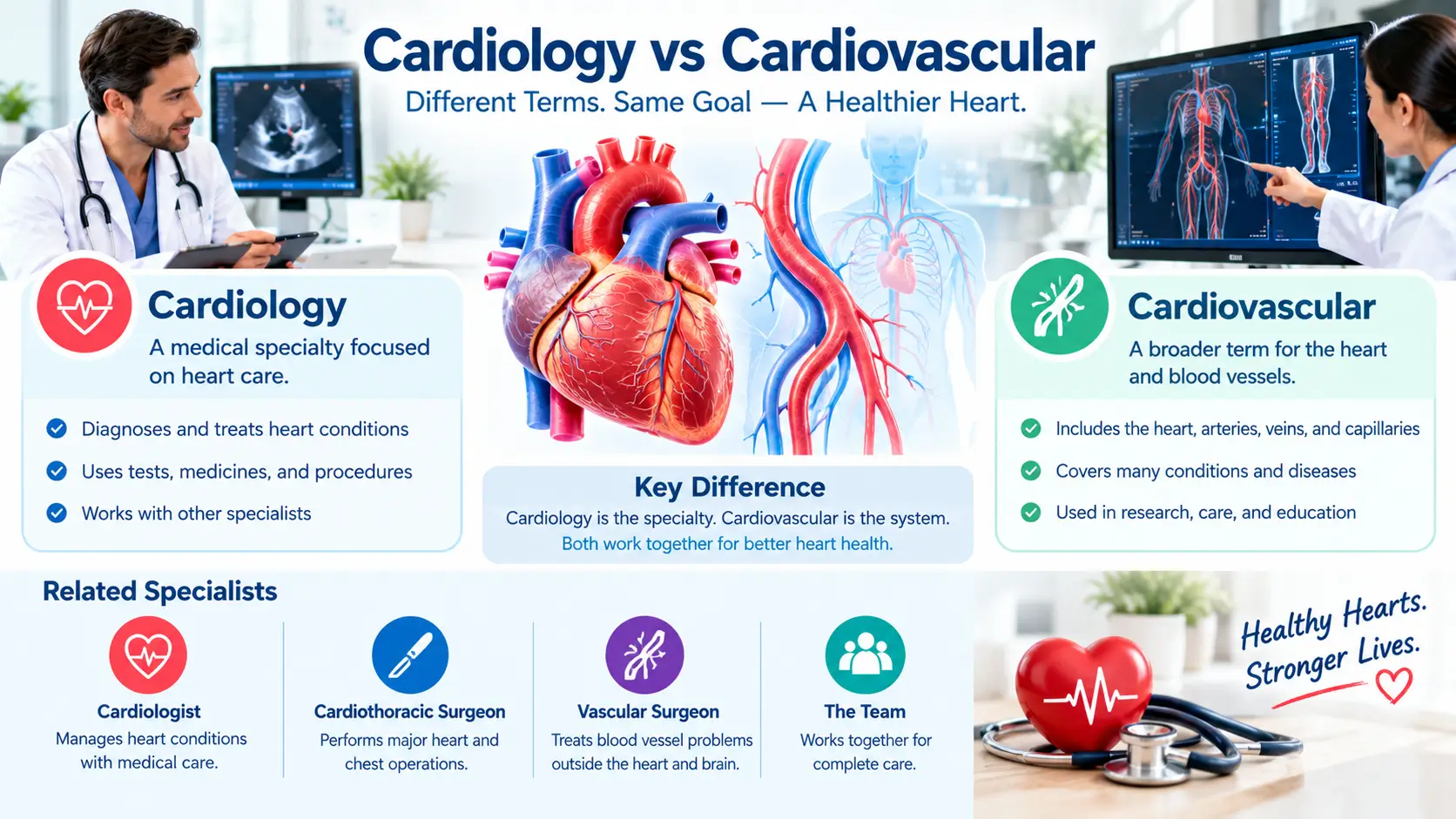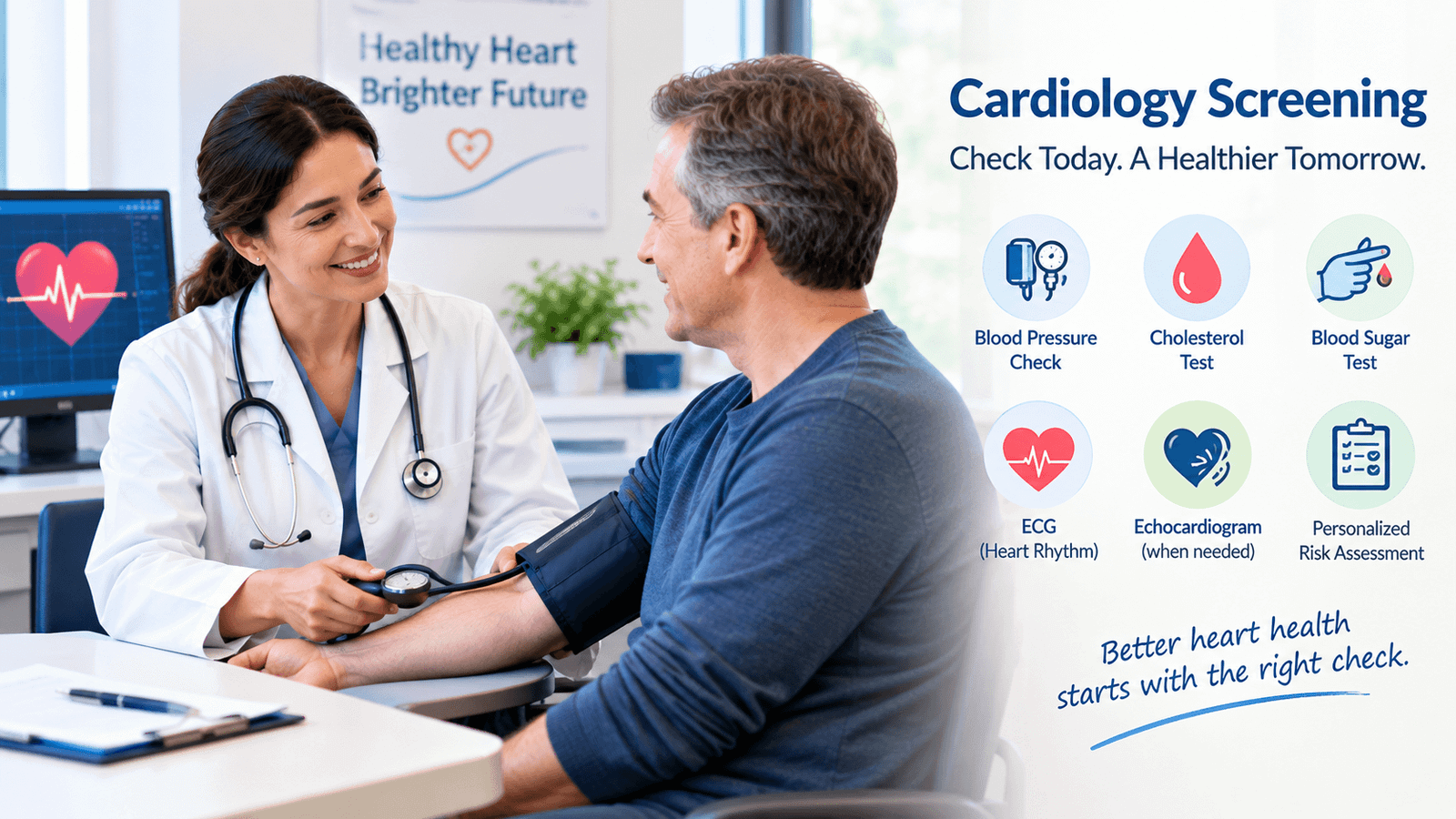


Clinical research in cardiology studies heart and blood vessel health in people. It helps doctors test new ways to prevent, find, and treat heart disease. Research can also improve care, tests, medicines, devices, and quality of life.
Have you ever wondered how a new heart test becomes part of regular care?
Or how doctors learn that one treatment works better than another?
Clinical research in cardiology helps answer these questions. It can study medicines, devices, tests, procedures, lifestyle changes, and care plans. Some studies watch people over time. Other studies compare two treatments or test a new approach.
This research helps build the evidence doctors use in daily care. It also helps patients learn about possible research choices. Yet every study has rules, risks, and limits.
This guide explains how heart research works in simple terms. It also explains clinical trials, common tests, safety steps, and patient rights. You will also learn about the Clinical Research in Cardiology journal. That journal publishes peer-reviewed work in cardiovascular medicine. Its submission rules, fees, editors, and journal details can change.
What Is Clinical Research in Cardiology? ❤️
Clinical research means studying health questions with people or their health data. In heart care, researchers study many problems. These include heart disease, blood pressure, heart failure, rhythm problems, and vascular disease.
Clinical research can take several forms. An observational study may track people without changing their treatment. Researchers may compare health records, test results, or lifestyle factors.
A clinical trial tests an intervention in people. An intervention may include a medicine, device, procedure, test, or behavior plan. Researchers use a written study plan called a protocol. The protocol explains the study goal, visits, tests, eligibility rules, and safety steps.
Common research types
| Research type | Main purpose | What may happen |
| Observational study | Study patterns or risks | Researchers collect health information |
| Diagnostic study | Study a test | Researchers compare test results |
| Prevention trial | Lower disease risk | Researchers test prevention methods |
| Treatment trial | Test a treatment | Researchers compare treatment options |
The NIH says clinical trials can study prevention, screening, diagnosis, treatment, behavior, and quality of life. They can also test new drugs, devices, surgeries, and treatment combinations.
For example, a study may follow adults with high blood pressure. Researchers may check how their blood pressure changes over time. Another study may compare two ways to treat a heart rhythm problem.
Research does not always give a direct benefit to participants. The main goal is to answer a scientific question. Results may help future patients even when a participant sees no personal benefit.
Why Does Heart Research Matter?
Heart care changes as researchers learn more. New studies can test safer treatments or better ways to find disease early.
Clinical trials help researchers learn whether a treatment works. They also help show side effects and limits. A trial may compare a new treatment with standard care or a placebo.
A placebo looks like the study treatment but has no active treatment ingredient. Researchers may use one when it is ethically suitable. The study team must explain the trial design before enrollment.
A simple patient example
Maria has heart failure and hears about a research study. She wants to help others, but she worries about risks.
The study team explains the goal, visits, tests, and possible risks. Maria can ask questions before deciding. She can also discuss the study with her regular doctor.
That process matters because research participation is voluntary. People can leave a study at any time. Leaving should not remove their regular medical care.
Researchers also use clinical data to improve care. They may study large groups to find health patterns. These studies can reveal links between risk factors and heart outcomes.
Still, one study rarely answers every question. Researchers often need more studies before changing routine care. Doctors also consider the quality, size, and design of research.
What Happens During a Heart Research Study? 🩺
Each study follows its own plan. The research team first checks whether a person meets the study rules. These rules are called inclusion and exclusion criteria.
Inclusion criteria describe who may join. Exclusion criteria describe who should not join. These rules may include age, health conditions, past treatments, or test results.
If you may qualify, the team explains the study. This may include its purpose, length, visits, tests, and possible risks. You receive time to ask questions.
Clinical trial phases
Drug and device trials often move through phases. Each phase answers different questions.
| Phase | Main question | Typical focus |
| Phase I | Is it safe? | Safety and side effects |
| Phase II | Does it help? | Early benefit and safety |
| Phase III | Does it work well? | Larger safety and benefit testing |
| Phase IV | What happens after approval? | Long-term safety and use |
NIH describes Phase I studies as small first tests. Phase II studies involve more people and help assess a treatment’s early effectiveness.
A research visit may feel similar to a medical visit. You may answer questions and have an exam. You may also have blood tests, an electrocardiogram, or other heart tests.
The research team may ask you to record symptoms. You may also need to track medicines or daily activities. The number of visits depends on the study.
Another real-world example
James joins a study about a new heart monitoring device. The team checks his health before enrollment.
He receives clear instructions for using the device. The team checks his results during planned visits. If he has a problem, he can contact the research team.
These steps help researchers collect useful data while watching participant safety.
What Tests Can Researchers Use? 📋
Heart studies may use many tests. The choice depends on the research question.
An electrocardiogram, or ECG, records the heart’s electrical activity. It can help researchers study heart rhythm and other heart signals.
An echocardiogram uses sound waves to make pictures of the heart. Researchers may use it to study heart structure and pumping function.
Blood tests can measure cholesterol, blood sugar, kidney function, or other markers. Researchers may also collect blood for study-specific tests.
Other studies may use stress tests, heart imaging, wearable monitors, or cardiac catheterization. A catheterization uses a thin tube to examine the heart and blood vessels.
Researchers may also use health records. These records can help study large groups without adding many new tests.
The research team should explain why each test is needed. They should also explain possible discomfort or risks.
If a study includes an experimental test, ask what is known about it. Ask what the team will do if the result needs medical follow-up.
Clinical research in cardiology can also study ways to improve testing. Researchers may compare one imaging method with another. They may study whether a test finds disease earlier or more accurately.
No single test answers every heart question. Doctors interpret test results with symptoms, history, and other findings.
How Are Research Participants Protected? ⚠️
Safety and ethics are central parts of human research. In the United States, most clinical trials receive review from an Institutional Review Board. An IRB checks whether a study protects participant rights and safety.
Researchers also use informed consent. This means you receive key study information before deciding. The process continues during the study.
The consent information should explain the study purpose. It should also explain procedures, time needs, risks, possible benefits, and contacts.
You should have time to ask questions. You do not need to join because someone asks you. Participation is voluntary.
Questions to ask before joining
- What is the study trying to learn?
- Why might I qualify?
- What tests or visits will I need?
- What risks should I know?
- What benefits might I receive?
- Are other care options available?
- Who pays for study-related costs?
- What happens if I leave the study?
NIH ethical guidance stresses informed consent, independent review, fair selection, and respect for participants. It also says participants can change their minds and withdraw.
A study may also protect your private health information. Ask how the team stores and shares your data. Ask who can access your records.
You can bring a family member or friend to a discussion if the study allows it. Writing down questions can also help.
If you do not understand something, ask the team to explain it again. You should feel comfortable before signing consent.
Clinical Research in Cardiology Journal: What Should You Know?
The phrase clinical research in cardiology can also refer to a specific journal. Clinical Research in Cardiology is an international journal from Springer Nature. It focuses on clinical cardiovascular research.
The journal publishes original research, review articles, and critical perspective articles. Its scope includes clinical cardiology, angiology, heart surgery, and vascular surgery. It is the official journal of the German Cardiac Society.
The current Springer page lists Professor Norbert Frey and Professor Ulrich Laufs as Editors-in-Chief. The page lists a 2025 Journal Impact Factor of 3.4. It also lists a 2025 five-year Journal Impact Factor of 3.6.
Journal metrics can change each year. Different databases can also use different measures. A metric should not be treated as the only sign of research quality.
Clinical Research in Cardiology submission
Authors submit manuscripts through the journal’s online submission system. The journal says original and review articles must be written in English. It also says all manuscripts undergo peer review.
The journal requires editable source files. Original and review articles also need a graphical abstract. The current author guide gives specific rules for abstracts, keywords, references, tables, and figures.
A typical submission needs an abstract of 150 to 250 words. Authors should provide four to six keywords. The journal also asks for statements about competing interests and other required declarations.
The journal uses a hybrid publishing model. Authors can choose subscription publishing or open access after acceptance. The current open-access APC is $4,390 USD, before applicable taxes. The subscription route has no APC charge.
Supplements and journal quartile
The journal’s official scope page says supplemental issues appear in Clinical Research in Cardiology Supplements.
Journal quartiles can differ by database and year. Current third-party listings place the journal in Q1 for some SCImago cardiology classifications. Other systems may show different categories or quartiles.
For submission, use the official Springer author page. Do not rely on old blog posts for fees or editor names. Journal policies can change.
How Can You Find a Cardiology Research Study? 🔎
Patients can ask their cardiologist about active research studies. A hospital research office may also know about local studies.
The NHLBI supports heart-related clinical trials. Its resources explain study types, eligibility, safety, and participant rights.
Before joining, check the study’s purpose and eligibility rules. Make sure you understand the visit schedule. Ask about travel, parking, child care, or other costs.
You should also ask whether the study uses a placebo. Ask whether the study treatment is experimental. Ask what regular care you will receive during the study.
A third patient example
David has a family history of heart disease. He wants to join a prevention study.
The research team explains that the study may not prevent disease. Its main goal is to learn whether the study approach helps.
David reviews the risks and asks his doctor questions. He decides only after he understands the study.
This is a useful way to think about research. A study can offer hope, but it cannot promise a personal result.
If you search online, use trusted sources first. Look for study details, contact information, eligibility rules, and official records.
When Should You Talk With a Doctor? ❤️
Research participation should not replace normal medical care. Talk with your doctor if you have new or worsening heart symptoms.
Seek urgent medical help for severe or sudden symptoms. These can include chest pressure, severe trouble breathing, fainting, or sudden weakness.
Do not wait for a research appointment when symptoms need urgent care. A research team may have a separate emergency contact plan. Ask about that plan before joining.
You should also contact the study team if you develop new symptoms. They can tell you whether the issue may affect your participation.
Know your rights
You have the right to ask questions. You have the right to understand the study before joining.
Participants have the right to ask questions. You have the right to understand the study before joining.. NIH says research participation remains voluntary and can stop at any time.
Research teams should respect your decision. Your regular medical care should continue even if you decline a trial.
If a study seems unclear, ask for more details. You can also discuss the study with your own doctor.
Q: Is Clinical Research in Cardiology a journal?
A: Yes. Clinical Research in Cardiology is a peer-reviewed cardiovascular research journal. Springer Nature lists it as the official journal of the German Cardiac Society. It publishes original, review, and critical perspective articles.
Q: What is the Clinical Research in Cardiology publication fee?
A: The current open-access APC is $4,390 USD. The fee applies when authors choose open access after acceptance. The subscription route has no APC charge. Taxes may apply to the open-access fee.
Q: How do I submit to Clinical Research in Cardiology?
A: Authors submit manuscripts through the journal’s online submission system. The journal provides detailed author instructions for text, abstracts, figures, references, and declarations. Original and review articles require a graphical abstract.
Q: Who is the Editor-in-Chief of Clinical Research in Cardiology?
A: The current Springer journal page lists Norbert Frey and Ulrich Laufs. Editor information can change with new appointments. Check the official journal page before citing this detail.
Q: Does Clinical Research in Cardiology have supplements?
A: Yes. The journal’s official scope page says supplemental issues appear in Clinical Research in Cardiology Supplements. These supplements are separate from regular journal issues.
Q: What does a clinical research study in cardiology test?
A: It may test a medicine, device, procedure, diagnostic test, or behavior plan. Some studies only observe health data over time. The study protocol explains what researchers will measure.
Q: Can I leave a heart clinical trial after joining?
A: Yes. Participation is voluntary, and you can withdraw from a clinical trial. Ask the research team what steps you should follow when leaving. Your regular medical care should not depend on joining the study.
Conclusion
Clinical research in cardiology helps researchers learn better ways to protect heart health. Studies can examine medicines, devices, tests, procedures, and lifestyle plans.
Clinical trials follow study plans with eligibility rules and safety steps. Informed consent helps people understand the study before joining. Participants can ask questions and leave a study later.
The Clinical Research in Cardiology journal shares peer-reviewed work in cardiovascular medicine. Its current publishing rules, editors, and fees may change over time.
If you are considering a study, talk with your doctor first. Review the risks, benefits, visits, and costs carefully.
Talk to a cardiologist if you have any heart concerns.
Medically reviewed for accuracy. Always consult a licensed cardiologist for personal advice.