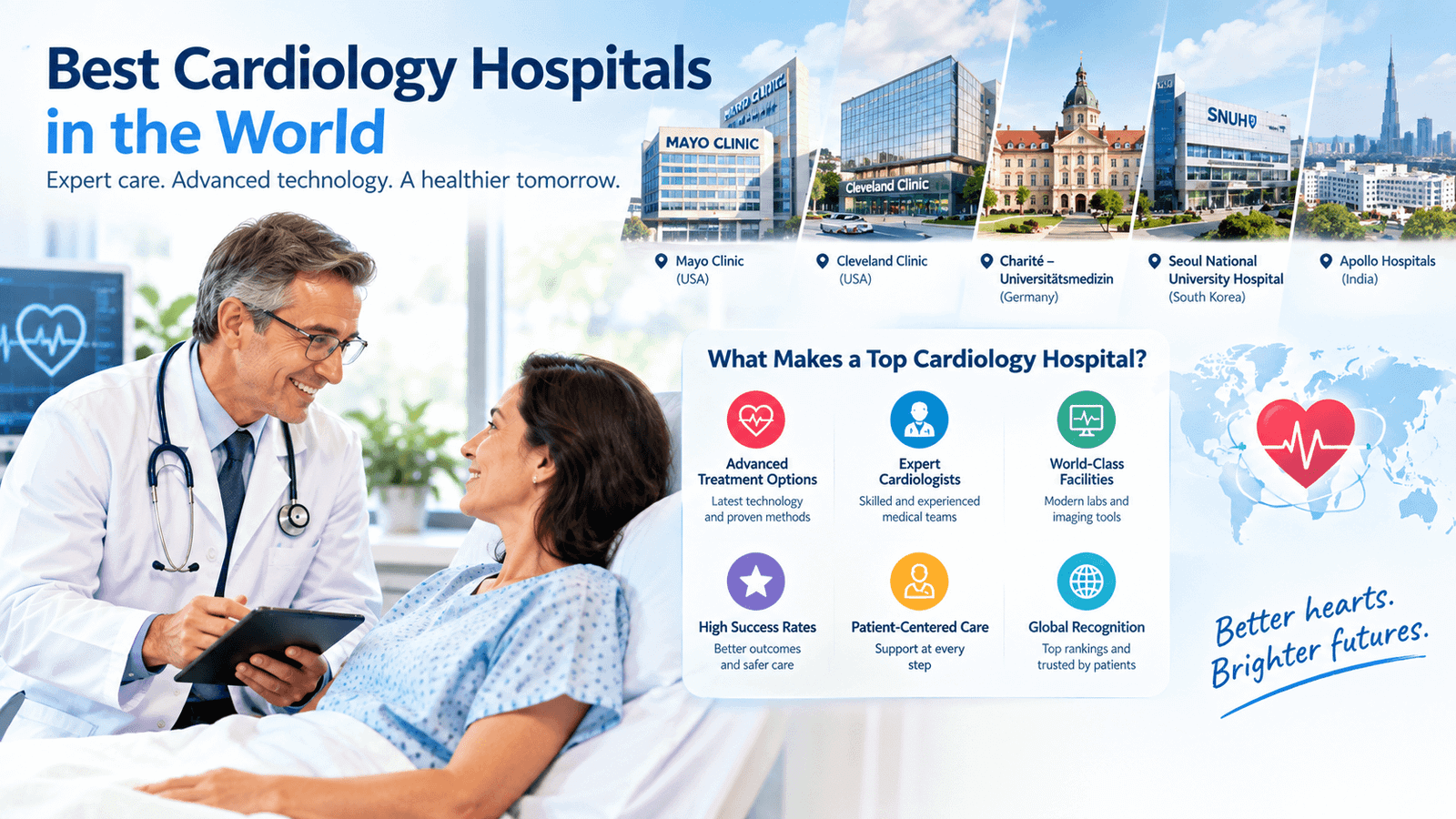

The best cardiology hospitals in the world are centers with skilled heart teams, advanced tests, and many treatment options. The right hospital depends on your heart condition, location, insurance, and care needs.
Have you or someone you love been told to see a heart specialist? Choosing a hospital can feel hard. You may search for the best cardiology hospitals in the world and find many different lists.
There is no single hospital that fits every patient. Heart care needs can differ from person to person. Some hospitals focus on heart surgery. Others have strong programs for rhythm problems, heart failure, or rare heart disease.
Large heart centers may also offer research and clinical trials. They may bring many heart specialists together in one team. Mayo Clinic, Cleveland Clinic, Johns Hopkins, and Mass General are examples in the United States. Major centers also exist in Europe and Asia.
This guide explains what makes a heart hospital strong. It also covers tests, treatments, costs, location, and safety. You will learn how to compare hospitals without relying on one ranking.
What Makes a Cardiology Hospital Stand Out? ❤️
A strong heart hospital usually has several types of cardiac care. This can help patients receive care from different specialists. A heart team may include cardiologists, surgeons, nurses, imaging experts, and other staff.
The hospital should also offer the tests needed for your condition. These may include an electrocardiogram, echocardiogram, stress test, or heart CT. Some patients may need cardiac catheterization or advanced imaging.
Large centers may also offer special programs. These can include heart failure, heart rhythm care, valve care, and adult congenital heart disease.
For example, Johns Hopkins lists services such as heart failure, electrophysiology, heart surgery, echocardiography, and transplantation. Its heart institute also supports research and clinical trials.
Cleveland Clinic brings heart, vascular, and thoracic specialists together. Its institute also supports research, clinical trials, and advanced heart care.
Mayo Clinic reports more than 240 cardiovascular experts across many heart specialties. It treats more than 100,000 adults and children each year.
These facts show why large heart centers may attract complex cases. However, size alone does not decide which hospital fits you.
Common signs of a strong heart center
Look for:
- Experienced cardiologists in your specific condition.
- Cardiac surgeons when surgery may be needed.
- Advanced heart imaging and testing.
- Emergency heart services.
- Heart rehabilitation programs.
- Access to clinical trials when suitable.
- Clear communication with patients and families.
- Support for second opinions.
The American Heart Association supports patient-centered heart care. This approach includes shared decisions between patients, caregivers, and health teams.
What Conditions Do Leading Heart Hospitals Treat?
Heart hospitals treat many different conditions. Your needs depend on your symptoms and medical history.
Common conditions include coronary artery disease, heart failure, valve disease, and abnormal heart rhythms. Some centers also treat congenital heart disease in adults and children.
A heart hospital may have separate teams for each condition. This can make care more focused.
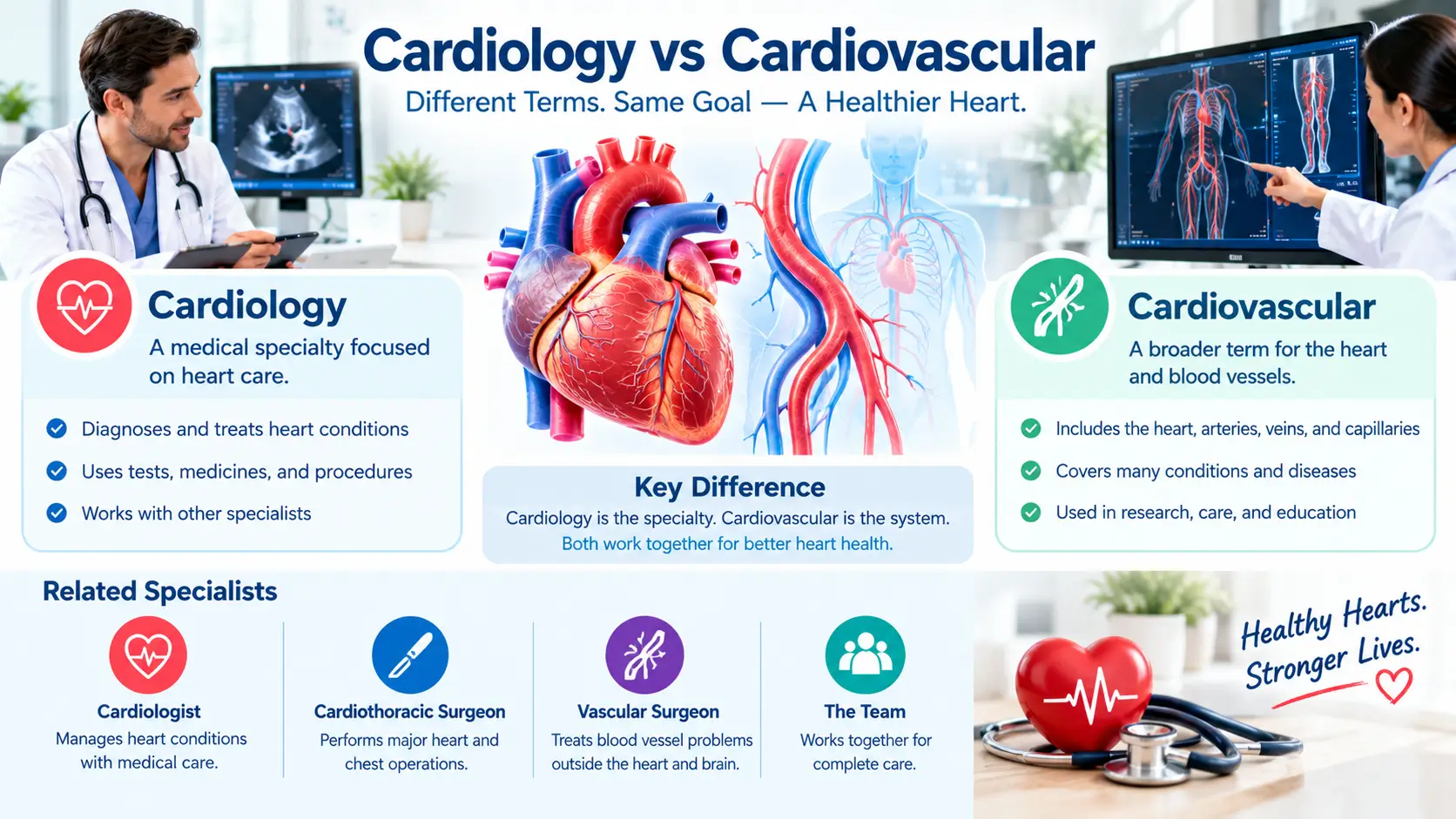
Common heart specialties
| Specialty | Main focus | Examples of care |
| General cardiology | Overall heart health | Exams, medicines, tests |
| Interventional cardiology | Catheter-based care | Stents, angiography |
| Electrophysiology | Heart rhythm problems | Ablation, device care |
| Cardiac surgery | Surgical heart care | Bypass, valve surgery |
For example, the National University Heart Centre Singapore treats coronary disease, heart failure, rhythm problems, valve disease, and other cardiovascular conditions. It also offers specialized programs for areas such as women’s heart health.
Samsung Medical Center in South Korea also has specialized teams for coronary disease, heart failure, valve disease, arrhythmias, and cardiac rehabilitation.
Imagine a patient with repeated abnormal heart rhythms. A general heart clinic may begin the evaluation. An electrophysiology team may then provide more specialized care.
Another patient may have severe valve disease. That person may need a team that includes imaging experts, cardiologists, and heart surgeons.
This is why the right hospital often depends on the exact heart problem. A hospital known for one specialty may not be the right fit for another.
Best Cardiology Hospitals in the World: What Should You Compare?
People often search for the best cardiology hospitals in the world by looking for a top 10 list. Rankings can help you find well-known centers. Still, rankings should not replace personal medical advice.
Different lists use different methods. Some look at expert opinions, hospital surveys, procedures, research, or patient feedback. A hospital’s position can also change from year to year.
Instead, compare the features that matter to your care.
United States
Several major U.S. heart centers have broad cardiac programs.
Mayo Clinic provides care for many heart conditions and includes specialists in areas such as heart rhythm disorders, valve disease, coronary disease, and congenital heart disease.
Cleveland Clinic’s Heart, Vascular & Thoracic Institute provides multidisciplinary care. It also supports clinical research and advanced treatment programs.
Johns Hopkins offers cardiology, cardiac surgery, heart failure care, rhythm services, imaging, and transplantation.
Mass General’s Corrigan Minehan Heart Center offers programs for valve disease, arrhythmias, adult congenital heart disease, surgery, and other heart conditions.
Europe
Europe has several large specialist heart centers.
The Deutsches Herzzentrum der Charité in Berlin is a major cardiovascular center. It treats children and adults and provides care across many heart specialties.
Its cardiology departments provide services such as echocardiography, ECG testing, rhythm care, catheter procedures, and cardiovascular imaging.
Asia
Asia also has large specialist heart centers.
National University Heart Centre Singapore provides screening, diagnosis, treatment, and long-term heart care. Its programs cover areas such as heart failure, rhythm disorders, structural heart disease, and women’s heart health.
Samsung Medical Center in South Korea provides multidisciplinary cardiovascular care. Its services include diagnosis, treatment, and cardiac rehabilitation.
These examples show the range of options around the world. They should not be treated as a fixed ranking.
How Do Doctors Check Your Heart? 🩺
A good heart hospital starts with a careful medical history. The doctor asks about symptoms, past conditions, medicines, and family history.
The doctor may then check your blood pressure, pulse, heart sounds, and other basic signs.
The next step depends on your symptoms and risk factors. Doctors do not need every heart test for every patient.
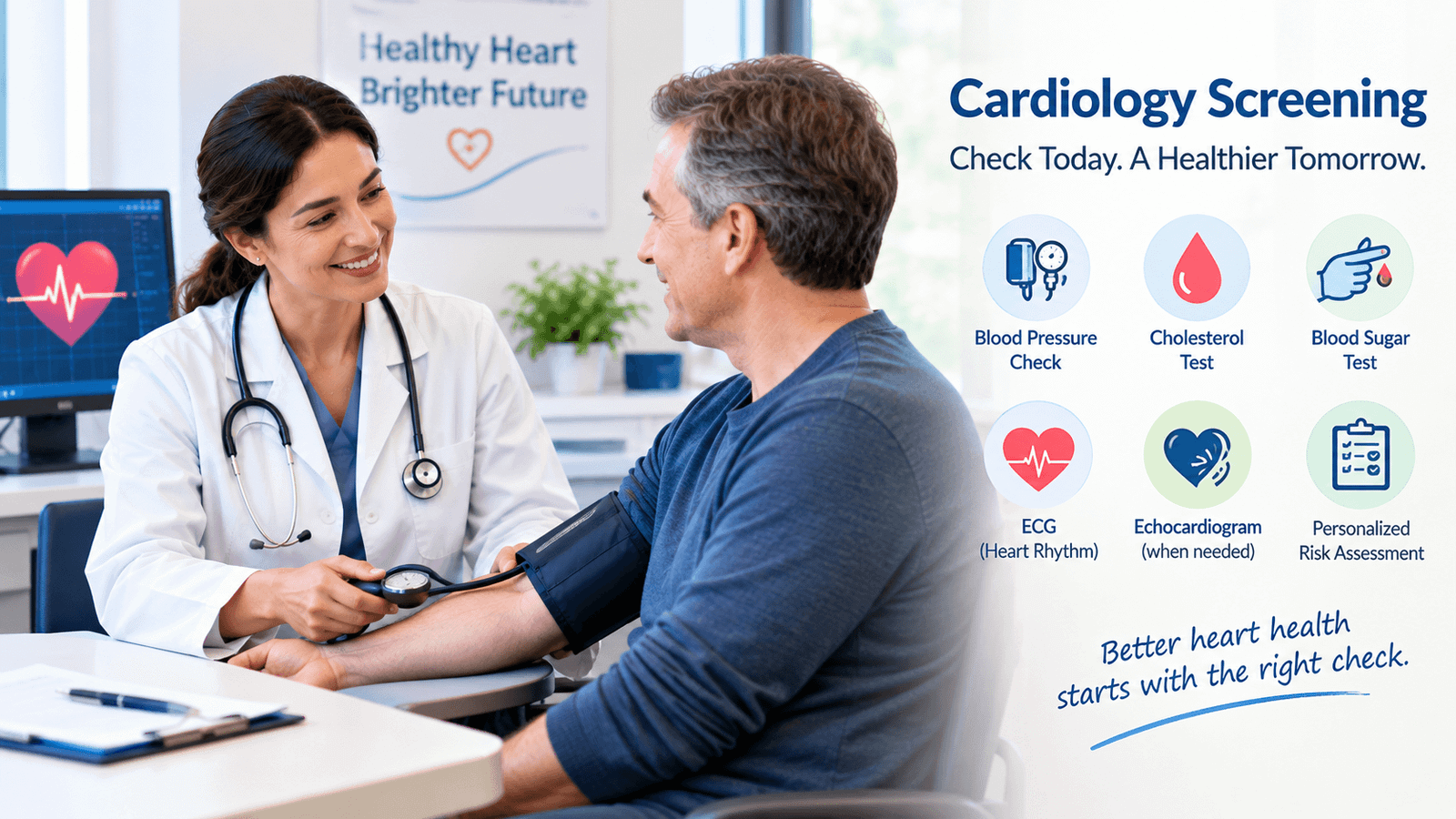
Common tests include:
- ECG: Records the heart’s electrical activity.
- Echocardiogram: Uses sound waves to create heart images.
- Stress test: Checks how the heart responds to activity.
- Heart CT: Creates detailed images of the heart and blood vessels.
- Cardiac MRI: Uses magnetic fields to create detailed heart images.
- Coronary angiography: Shows blood flow through heart arteries.
The National University Heart Centre Singapore lists ECG, echocardiography, CT, nuclear scans, MRI, angiography, and electrophysiology studies among its cardiac tests.
The American College of Cardiology also supports appropriate use of cardiovascular tests. Its guidance helps doctors decide when certain tests may be useful.
This matters because more testing does not always mean better care. ACC guidance has highlighted the need to avoid some routine tests when symptoms or risk factors do not support them.
A patient with chest symptoms may need urgent testing. Another patient with stable symptoms may need a planned outpatient visit.
Your doctor should explain why a test is needed. You can also ask what the test may show.
What Treatments Can Leading Heart Hospitals Offer?
Treatment depends on the heart problem, test results, age, health, and personal needs.
Some people only need lifestyle changes and medicines. Others may need a procedure or surgery.
Common treatment options include:
- Medicines for blood pressure or cholesterol.
- Medicines that help control heart rhythm.
- Lifestyle and diet support.
- Cardiac rehabilitation.
- Catheter-based procedures.
- Pacemakers or defibrillators.
- Heart valve procedures.
- Bypass surgery.
- Heart transplant care for selected patients.
Some hospitals also provide advanced heart failure care. This may include mechanical support devices or transplant programs.
For example, Johns Hopkins lists heart transplant, ventricular assist devices, advanced heart failure, and interventional cardiology among its services.
Mass General also offers cardiac surgery, valve care, arrhythmia treatment, and adult congenital heart services.
The American Heart Association and American College of Cardiology emphasize patient-centered and team-based care. Their guidelines support shared decisions between patients and care teams.
A real-world example may help. A patient with heart valve disease might meet a cardiologist first. Imaging may then show whether a procedure could help.
The patient may also ask about surgery, recovery time, risks, and other choices. A good care team should explain these choices clearly.
How Can You Choose a Heart Hospital Near You? 📋
You may not need to travel across the world for good heart care. A nearby hospital may offer the services you need.
When searching for a heart hospital near you, start with your condition. Then look for doctors who treat that condition often.
Ask your doctor for a referral when needed. Your insurance plan may also have a network of approved hospitals.
Questions to ask before choosing
Consider asking:
- Does the hospital treat my specific heart condition?
- Does it have the right heart specialist?
- Does it offer the tests I may need?
- Does it provide emergency cardiac care?
- Does my insurance cover the hospital?
- Can I request a second opinion?
- How far will I need to travel for follow-up visits?
Patient support also matters. The American Heart Association describes patient-centered care as a partnership. It includes patient values, preferences, and clear communication.
For complex care, distance can still matter. A patient may need many follow-up visits after surgery.
Another patient may need regular heart rhythm checks. In that case, a trusted center closer to home may be easier.
For international patients, travel can add more steps. These may include visas, medical records, lodging, language help, and payment planning.
The German Heart Centre Charité, for example, offers international patient support. It lists help with treatment coordination, cost estimates, visas, and accommodation.
When Should You Seek Heart Care? ⚠️
Some heart symptoms need urgent medical attention. Do not wait for a hospital appointment during a possible emergency.
Seek emergency help for symptoms such as:
- Severe or sudden chest pain.
- Chest pressure that does not go away.
- Trouble breathing.
- Fainting or near-fainting.
- Sudden severe weakness.
- New confusion with other serious symptoms.
- A fast or irregular heartbeat with severe symptoms.
Heart attack symptoms can differ between people. Some people may have chest pressure, while others may have shortness of breath or unusual weakness.
The 2025 ACC/AHA guideline for acute coronary syndromes covers urgent care for serious heart conditions. It reflects current evidence-based cardiovascular practice.
Do not drive yourself during a serious emergency. Contact your local emergency service.
For non-urgent concerns, make a medical appointment. Symptoms such as repeated palpitations, shortness of breath, swelling, or chest discomfort deserve medical review.
A second opinion may also help
A second opinion can be useful when a major procedure is suggested. It may help you understand your diagnosis and treatment choices.
Mass General, for example, offers physician second-opinion appointments for heart cases.
A second opinion does not mean your first doctor was wrong. It can help you feel informed before making a major care decision.
Q: What are the top 10 heart hospitals in the world?
A: There is no single official global top 10 list for every heart condition. Hospital rankings use different methods and can change each year. A better approach is to compare specialty experience, services, outcomes, access, and patient needs.
Q: What are the best cardiology hospitals in Europe?
A: Europe has many major cardiovascular centers. The Deutsches Herzzentrum der Charité in Berlin is one example. It provides specialized care for cardiovascular disease across many age groups.
Q: What are the best heart hospitals in the United States?
A: The United States has many major heart centers. Examples include Mayo Clinic, Cleveland Clinic, Johns Hopkins, and Mass General. Their programs cover different heart conditions and specialties.
Q: What is the best hospital for heart problems near me?
A: The best choice depends on your condition and local options. Start with a hospital that treats your specific heart problem. Your cardiologist and insurance provider can help identify suitable choices.
Q: What is the best heart hospital in Asia?
A: Asia has several major heart centers with specialized services. National University Heart Centre Singapore and Samsung Medical Center are examples. Both provide multidisciplinary cardiovascular care.
Q: Is Johns Hopkins one of the major heart hospitals?
A: Yes, Johns Hopkins has a large Heart and Vascular Institute. It provides cardiology, cardiac surgery, heart failure care, rhythm care, imaging, and research.
Q: Are the best cardiology hospitals in the world always the right choice?
A: No, not always. Your medical needs, travel distance, insurance, and specialist access also matter. A nearby hospital may provide the right care for your condition.
Conclusion
Choosing among the best cardiology hospitals in the world can feel overwhelming. A famous name does not automatically make one hospital right for you.
Start with your heart condition and the type of care you need. Then compare specialist experience, tests, treatment options, emergency services, and follow-up care.
Major centers in the United States, Europe, and Asia offer many types of cardiac care. Still, your personal needs should guide the choice.
Ask questions before major tests or procedures. A second opinion may also help when you face a difficult decision.
Talk to a cardiologist if you have any heart concerns. Seek emergency help for serious or sudden symptoms.
Medically reviewed for accuracy. Always consult a licensed cardiologist for personal advice.