

Heart and health are closely linked: a strong heart pumps blood to every organ, and daily habits shape how well it works.
Eating well, staying active, avoiding tobacco, sleeping enough, and keeping blood pressure, cholesterol, and blood sugar in a healthy range can lower the chance of heart attack and stroke.
Your heart is a muscle about the size of your fist. It works day and night, and you rarely notice it until something goes wrong. Heart disease remains the leading cause of death worldwide, yet much of that risk can be reduced.
Small, steady choices add up over the years. This article explains how the heart works, why it matters for the rest of your body, and what raises or lowers your risk. You will find a simple framework of eight habits and measures from the American Heart Association.
You will also learn which warning signs need urgent care and when a regular check-up is enough. This is general education, not personal medical advice. A doctor can look at your history, test results, and family background and tell you what applies to you.
How the Heart Works
The heart has four chambers. The two on the right side send blood to the lungs to pick up oxygen. The two on the left side send that fresh blood out to the body. Four valves act like one-way doors and keep the blood moving forward.
The heart muscle needs its own blood supply. The coronary arteries, which wrap around the surface of the heart, deliver it. If these arteries narrow or clog, the muscle gets less oxygen. That is the root of most heart attacks.
An electrical system sets the rhythm. A small cluster of cells sends a signal that makes each beat start in the right order. Problems with this system can cause an irregular heartbeat, called arrhythmia.
Why the Heart Matters for the Whole Body
Every organ depends on the blood the heart delivers. The brain needs it to think. The kidneys need it to filter waste. The muscles need it to move.
The link works both ways. High blood pressure, diabetes, and kidney disease can strain the heart. A weakened heart can, in turn, harm other organs. A stroke is a brain event, but it often shares the same causes as heart disease, such as high blood pressure and clogged arteries.
What Raises Heart Risk
Some risks you can change. Others you cannot.
Risks you can often change:
- High blood pressure
- High LDL cholesterol, sometimes called “bad” cholesterol
- High blood sugar or diabetes
- Smoking, vaping, or heavy secondhand smoke
- Excess body weight, especially around the waist
- Little physical activity
- An eating pattern high in salt, added sugar, and processed foods
- Heavy alcohol use
- Poor sleep and long-term stress
Risks you cannot change:
- Age
- Family history of early heart disease
- Some inherited conditions
Having a risk you cannot change does not mean heart disease is certain. It means the habits you can control matter even more.
Heart and Health: Eight Habits and Measures to Track
The American Heart Association describes cardiovascular health with a framework called Life’s Essential 8. It combines four habits and four health measures.
The Four Habits
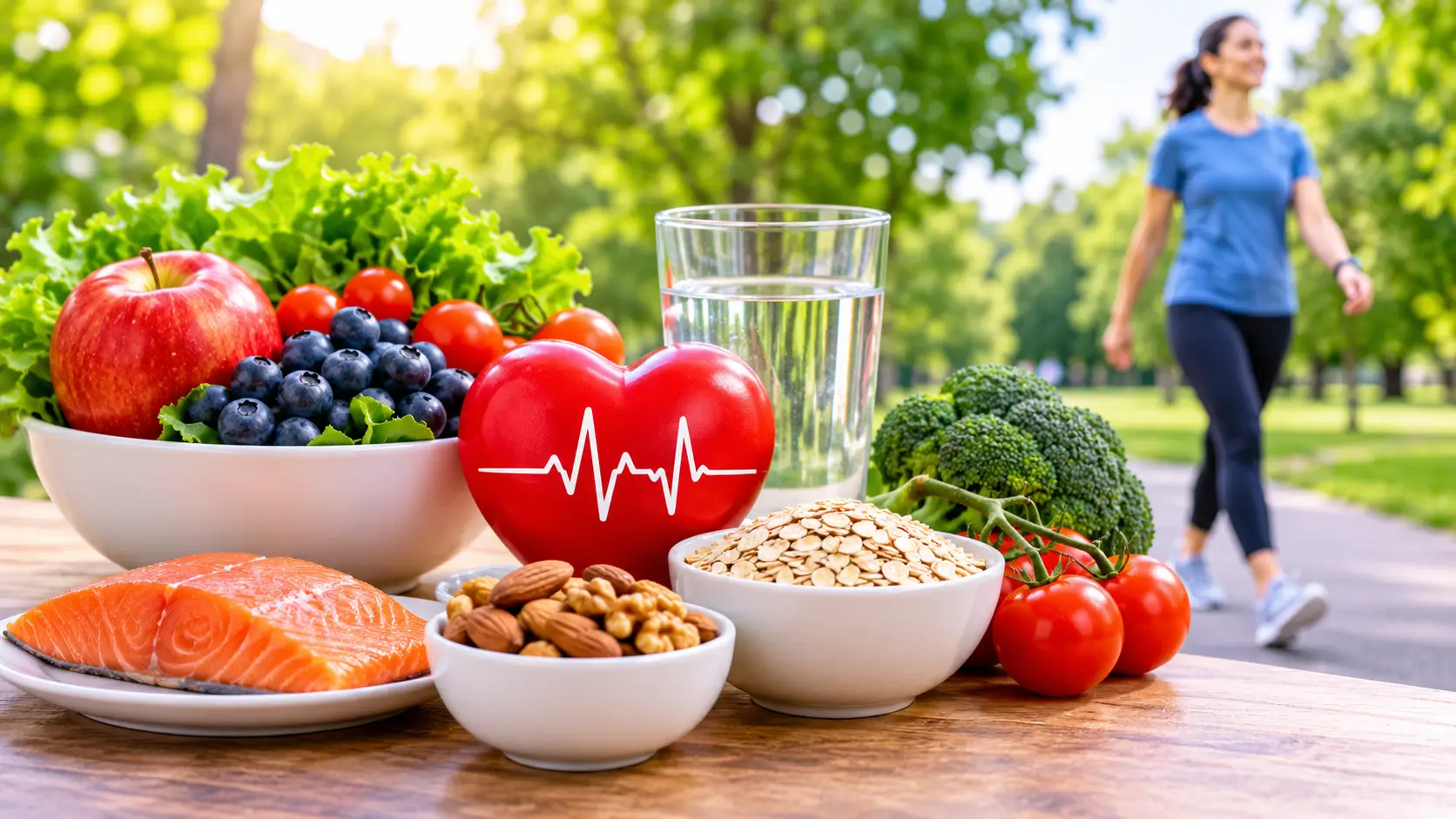
- Eat well. Build meals around vegetables, fruit, whole grains, beans, nuts, and fish. Limit salt, sugary drinks, and processed meat.
- Move more. Aim for at least 150 minutes of moderate activity each week, such as brisk walking.
- Avoid nicotine. This covers cigarettes, vaping, and secondhand smoke.
- Sleep enough. Most adults do best with seven to nine hours a night.
The Four Measures
- Body weight. Body mass index is one tool. Waist size adds helpful context.
- Blood fats. This includes LDL cholesterol and triglycerides.
- Blood sugar. Persistently high levels damage blood vessels over time.
- Blood pressure. In U.S. guidelines, a reading under 120/80 is considered normal. A reading of 130/80 or higher counts as high blood pressure.
Targets differ from person to person. Your doctor sets goals based on your overall risk, not on one number alone.
Eating for a Healthy Heart
No single food protects the heart. The overall pattern matters most. Two well-studied approaches are the Mediterranean-style diet and the DASH diet, which was designed to lower blood pressure.
Useful ideas from both:
- Fiber: Oats, beans, lentils, fruit, and vegetables help manage cholesterol.
- Fats: Swapping some saturated fat, found in butter and fatty meat, for unsaturated fat, found in olive oil, nuts, and fish, supports healthier cholesterol.
- Sodium: Most salt comes from packaged and restaurant food, not the salt shaker. Reading labels helps.
- Added sugar: Sweet drinks add calories without filling you up.
- Portions: Even nourishing foods add up if portions are large.
Alcohol is not a heart treatment. If you do not drink, there is no heart reason to start.
Moving for a Healthy Heart
Exercise strengthens the heart, helps control blood pressure and blood sugar, and improves mood. Good options include walking, cycling, swimming, and dancing. Add muscle-strengthening work, such as resistance bands or body-weight exercises, on two days a week.
Start slowly and build up. Ten minutes at a time counts. If you have known heart disease, chest discomfort, dizziness, or major risk factors, ask a doctor before starting a new routine.
Stress, Mood, and Connection
Long-term stress, depression, and loneliness are linked to a higher risk of heart disease. The reasons are not fully understood.
Stress may lead to poor sleep, overeating, or smoking. It may also affect blood pressure directly. Walking, time with friends, relaxation practice, and professional mental health care can all help. Treating depression matters for the heart as well as the mind.
Checks Worth Having
Many heart problems cause no symptoms early on. Checking the numbers is how they get caught.
- Blood pressure: Have it measured at least once a year, or more often if it runs high.
- Cholesterol: Healthy adults are generally tested every four to six years. People at higher risk may need testing more often.
- Blood sugar: Ask about testing if you have extra weight, a family history of diabetes, or other risks.
Be clear about what each step does. A screening test looks for hidden risk. A risk calculator estimates your chance of future problems. A diagnostic test finds out what is wrong when symptoms appear. A home blood pressure monitor can be useful, but it does not replace a medical exam.
Warning Signs and When to Get Help
Call your local emergency number right away if you have:
- Chest pressure, squeezing, or pain
- Pain that spreads to the arm, shoulder, jaw, neck, or back
- Sudden shortness of breath
- Cold sweat, nausea, or lightheadedness with chest symptoms
Women may have less typical signs, such as unusual tiredness, nausea, or pain in the back or jaw. Do not wait to see if symptoms pass, and do not drive yourself.
Stroke signs also need an emergency call: a drooping face, weakness in one arm, trouble speaking, or sudden confusion or vision loss.
See a doctor soon for: breathlessness that keeps coming back, swelling in the feet or ankles, a racing or skipping heartbeat, or fainting.
Frequently Asked Questions
What is the best way to keep a heart healthy?
Combine several habits instead of relying on one. Eat a plant-rich diet, stay active, avoid tobacco, sleep well, and keep blood pressure, cholesterol, and blood sugar in check. Regular visits with a doctor help catch problems early and adjust treatment when needed.
Which foods support heart health?
Vegetables, fruit, whole grains, beans, nuts, olive oil, and fatty fish such as salmon fit well in a heart-friendly pattern. Packaged snacks, processed meat, and sugary drinks are best kept small. Context matters more than any one item on your plate.
How much exercise does the heart need?
Adults are advised to get at least 150 minutes of moderate activity a week, or 75 minutes of vigorous activity, plus muscle strengthening on two days. Shorter sessions still count. People with heart conditions should get medical advice first.
Can young people have heart problems?
Yes. Some are born with heart conditions, and others develop high blood pressure, high cholesterol, or diabetes early. Habits formed in the teens and twenties shape risk later. Anyone with fainting during exercise or a family history of sudden cardiac death should see a doctor.
Does stress damage the heart?
Long-term stress is linked to higher heart risk, though the exact mechanism is still being studied. Stress can raise blood pressure and push people toward habits that hurt the heart. Managing it helps, and support from a professional is worthwhile when stress feels constant.
How often should blood pressure and cholesterol be checked?
Blood pressure is usually checked at every medical visit and at least yearly. Cholesterol is generally checked every four to six years in healthy adults, and more often with higher risk or abnormal results. Your doctor can set the schedule that fits you.
Key Takeaway
Heart and health go hand in hand. The strongest evidence points to ordinary habits: balanced eating, regular movement, no tobacco, enough sleep, and routine checks of blood pressure, cholesterol, and blood sugar.
You cannot change your age or genes, but you can change a great deal else. Learn the emergency warning signs, and call for help immediately if they appear.