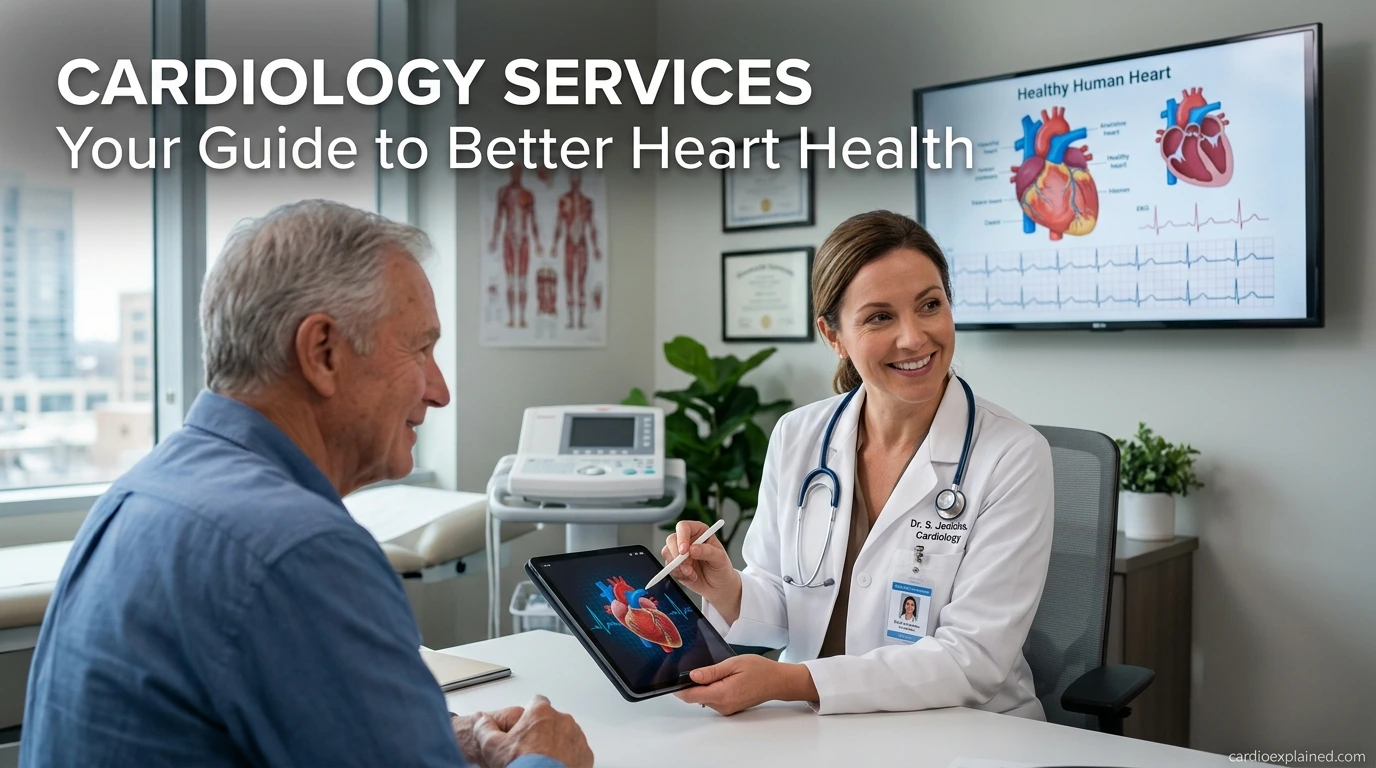

Cardiology services help prevent, find, and treat heart and blood vessel problems. They include heart checkups, tests, treatments, and follow-up care for people of all ages. Doctors use these services to help keep your heart healthy and lower the risk of serious heart disease.
❤️ Your heart works every second of every day. It pumps blood to every part of your body. Most people do not think about their heart until something feels wrong. You may notice chest pain, shortness of breath, or a fast heartbeat. You may also want a checkup because heart disease runs in your family. That is when cardiology services can help.
Heart care does more than treat illness. It also helps stop problems before they become serious. A heart doctor can check your risk, answer your questions, and build a care plan that fits your needs. Many people feel nervous before their first visit. That feeling is normal. The visit often starts with simple questions and basic tests. Learning about heart care helps you feel more prepared and more confident about your health.
❤️ What Are Cardiology Services?
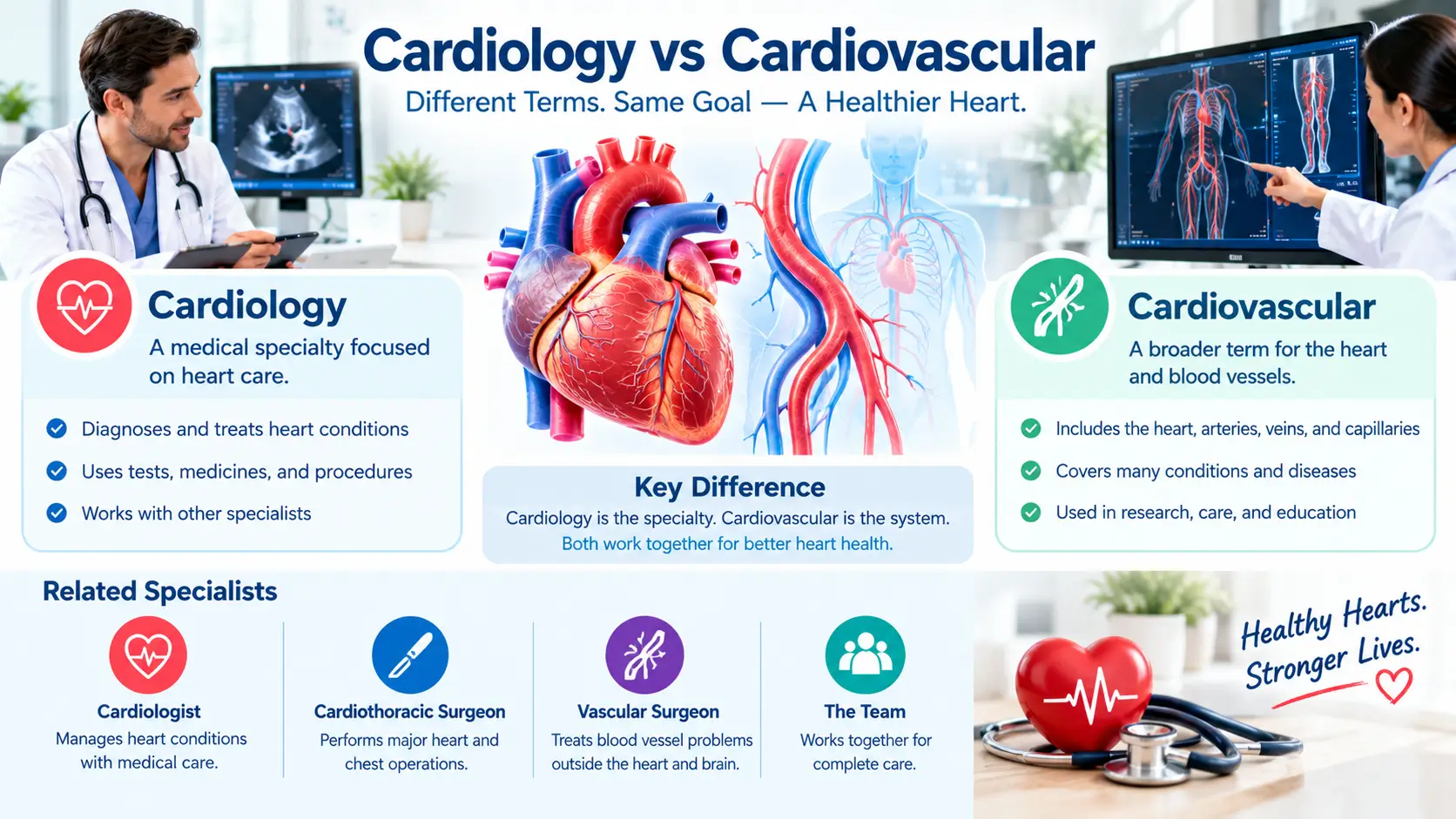
Cardiology services include medical care for the heart and blood vessels. A doctor who treats heart problems is called a cardiologist. These doctors work with nurses, technicians, and other health experts to give complete care.
Heart care can help people who already have heart disease. It also helps people who want to lower their future risk. Children, adults, and older adults may all need heart care at different times.
Services You May Receive
A heart clinic may offer many kinds of care, including:
- 🩺 Heart health checkups
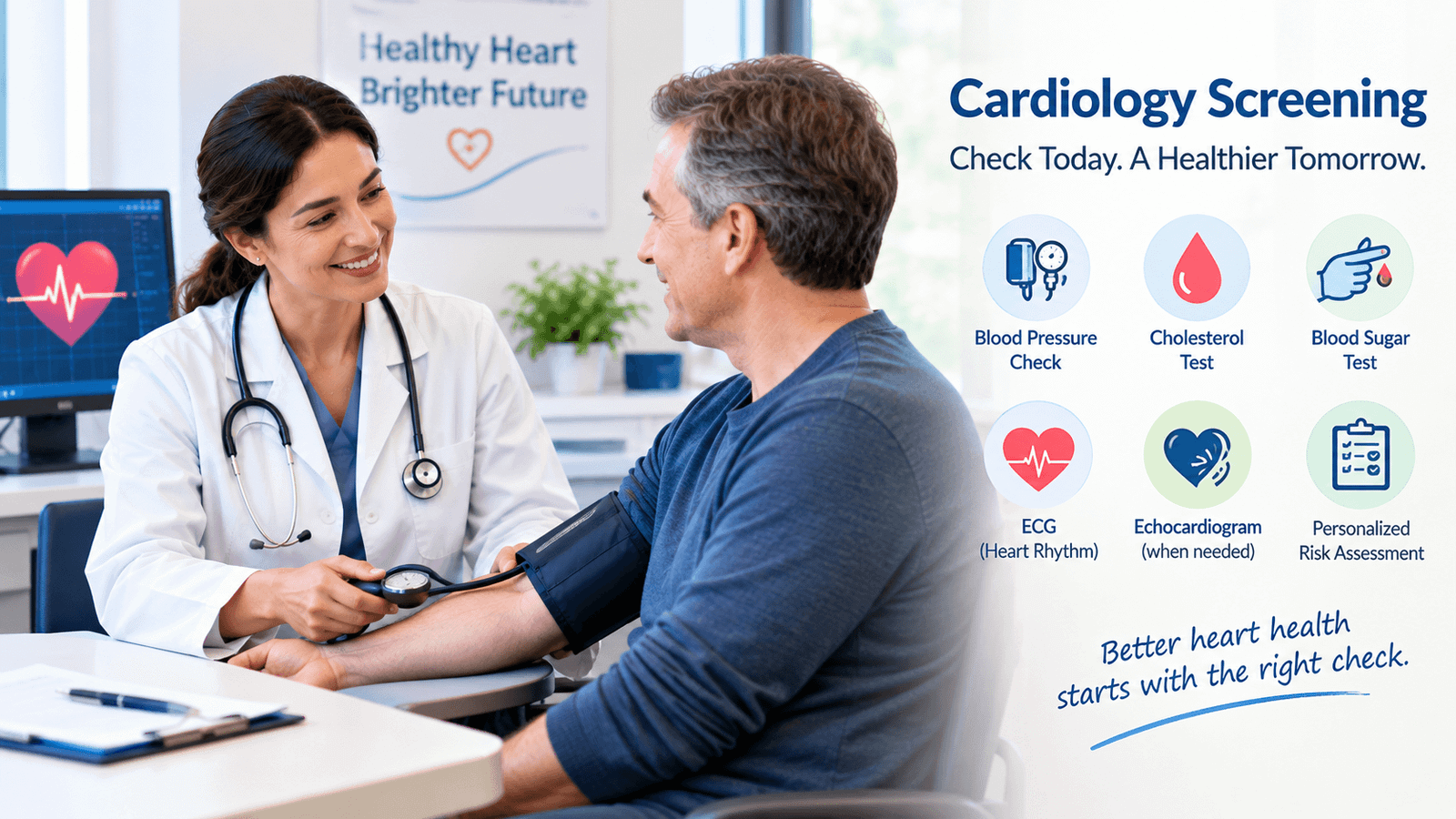
- 🩺 Blood pressure testing
- 🩺 Cholesterol testing
- 🩺 Heart rhythm checks
- 🩺 Imaging tests that create heart pictures
- 🩺 Exercise stress tests
- 🩺 Treatment plans
- 🩺 Follow-up visits after heart procedures
Each service has a different goal. Some help find problems early. Others help doctors watch a known condition over time.
Who May Need Heart Care?
Many people think only older adults need heart care. That is not true. Your doctor may suggest a visit if you:
- ❤️ Have chest pain
- ❤️ Feel short of breath
- ❤️ Have high blood pressure
- ❤️ Have diabetes
- ❤️ Have high cholesterol
- ❤️ Have a family history of heart disease
- ❤️ Notice a racing or uneven heartbeat
Some people also visit a cardiologist before major surgery. The doctor checks if the heart can safely handle the procedure.
A Real-Life Example
Maria is 48 years old. She feels tired while walking upstairs. She thinks stress causes the problem. Her primary doctor sends her to a cardiologist. After simple tests, the doctor finds high blood pressure. Early treatment helps protect her heart before more serious problems develop.
Early care often makes treatment easier and may lower future health risks.
🩺 What Raises the Risk of Heart Problems?
Many heart conditions develop over time. Some risks cannot change. Others improve with healthy habits.
Risk Factors You Cannot Change
These factors stay the same:
- ✅ Age
- ✅ Family history
- ✅ Some inherited heart conditions
- ✅ Biological sex
These risks do not mean you will get heart disease. They only increase the chance.
Risk Factors You Can Control
Many daily choices affect heart health.
These include:
- ✅ Smoking
- ✅ High blood pressure
- ✅ High cholesterol
- ✅ Diabetes
- ✅ Extra body weight
- ✅ Little physical activity
- ✅ Poor eating habits
- ✅ Long-term stress
Doctors often focus on these areas first because small changes can help over time.
How Heart Disease Develops
Fat and cholesterol may slowly build inside blood vessels. This buildup is called plaque. Plaque makes blood vessels narrower. Blood then has less room to flow.
If blood cannot reach the heart well, chest pain may happen. If blood flow stops completely, a heart attack may occur.
Not every heart problem comes from blocked blood vessels. Some people have weak heart muscles. Others have heart rhythm problems. A heart rhythm problem means the heart beats too fast, too slow, or unevenly.
Another Patient Story
James is 55 years old. During a work exam, doctors find very high blood pressure. With medicine and lifestyle changes, he lowers his risk and feels better within months.
Stories like this show why regular care matters.
Heart Health Guidelines
Groups like the American Heart Association (AHA) and the American College of Cardiology (ACC) encourage regular screening for people with known risk factors. They also support healthy eating, exercise, and blood pressure control to protect heart health.
⚠️ Signs That May Mean You Need Heart Care
Heart symptoms are not always dramatic. Some begin slowly. Others appear without warning.
Knowing the signs helps you act sooner.
Common Symptoms
Watch for symptoms such as:
- ⚠️ Chest pain or pressure
- ⚠️ Shortness of breath
- ⚠️ Fast heartbeat
- ⚠️ Slow heartbeat
- ⚠️ Irregular heartbeat
- ⚠️ Dizziness
- ⚠️ Fainting
- ⚠️ Swelling in the legs or feet
- ⚠️ Feeling very tired
These symptoms may have many causes. Only a healthcare provider can find the reason.
Chest Pain Does Not Always Feel the Same
Some people feel sharp pain. Others notice pressure, tightness, or burning. The pain may spread to the arm, neck, jaw, or back.
Women, older adults, and people with diabetes may have different symptoms. They may mainly feel tired, short of breath, or sick to their stomach.
When Symptoms Should Never Wait
Call emergency services right away if someone has:
- ⚠️ Severe chest pain
- ⚠️ Trouble breathing
- ⚠️ Fainting
- ⚠️ Sudden weakness
- ⚠️ Pain that spreads to the arm or jaw
Fast treatment can save heart muscle and may save a life.
A Common Experience
Many patients worry they will waste the doctor’s time. They hope symptoms disappear. Doctors would rather check mild symptoms early than treat serious damage later.
Listening to your body is always a smart choice.
📋 How Doctors Check Your Heart
Doctors start with simple steps. They learn about your health before ordering tests.
Medical History and Physical Exam
Your cardiologist may ask:
- 📋 What symptoms do you have?
- 📋 When did they begin?
- 📋 Does exercise make them worse?
- 📋 Do heart problems run in your family?
- 📋 What medicines do you take?
The doctor also checks:
- Blood pressure
- Heart rate
- Breathing
- Weight
- Heart sounds
These steps give useful information before testing begins.
Common Heart Tests
Some tests take only a few minutes. Others need more time.
| Test | Purpose | What Happens |
| Electrocardiogram (ECG or EKG) | Checks heart rhythm | Small stickers record heart signals |
| Echocardiogram | Shows heart structure | Sound waves create heart pictures |
| Stress Test | Checks the heart during activity | Walking or medicine raises heart workload |
| Blood Tests | Look for heart damage or risk | A small blood sample is taken |
What Is an ECG?
An electrocardiogram, also called an ECG or EKG, records the heart’s electrical signals. These signals control each heartbeat.
The test does not hurt. It usually finishes within a few minutes.
What Is an Echocardiogram?
An echocardiogram uses sound waves to create moving pictures of the heart. It lets doctors see heart valves, heart chambers, and blood flow.
Many patients worry about this test. It is painless and does not use radiation.
What Happens After Testing?
Your doctor reviews the results with you. Some people need no treatment. Others may need medicine, more testing, or regular follow-up visits.
The goal is not only to find disease. The goal is also to protect your heart for many years to come.
🩺 Treatment Options and How Cardiology Services Help
Treatment depends on your heart condition. Your doctor builds a plan that matches your health, age, and daily life.
Some people only need healthy lifestyle changes. Others may need medicine or a procedure.
Lifestyle Changes Come First
Many heart problems improve with better daily habits.
Your doctor may suggest:
- ✅ Eat more fruits and vegetables.
- ✅ Choose whole grains often.
- ✅ Cut back on salt.
- ✅ Stay active most days.
- ✅ Keep a healthy weight.
- ✅ Stop smoking.
- ✅ Sleep seven to nine hours each night.
- ✅ Manage stress in healthy ways.
Small steps add up over time.
Medicines That May Help
Doctors may prescribe medicine to:
- Lower blood pressure
- Reduce cholesterol
- Control heart rhythm
- Prevent blood clots
- Help the heart pump better
Take medicine exactly as your doctor advises. Do not stop it without medical advice.
Procedures for Some Heart Conditions
Sometimes lifestyle changes and medicine are not enough.
Your cardiologist may recommend a procedure.
| Procedure | Purpose | What It Does |
| Cardiac Catheterization | Checks heart blood flow | A thin tube reaches the heart through a blood vessel. |
| Angioplasty | Opens a blocked artery | A small balloon widens the narrowed artery. |
| Stent Placement | Keeps an artery open | A tiny mesh tube supports blood flow. |
| Pacemaker | Treats slow heart rhythm | A small device helps control heartbeats. |
Your doctor explains each option before treatment.
Recovery Looks Different for Everyone
Many patients return home the same day after simple procedures.
Others may stay in the hospital for a short time.
Recovery often includes:
- Walking each day
- Taking medicine
- Eating heart-friendly foods
- Attending follow-up visits
A Patient Story
David had chest pressure while mowing his lawn. Tests found a blocked heart artery. His doctor placed a stent. David later joined a heart rehabilitation program. Heart rehabilitation is a supervised exercise and education program. Within months, he returned to many daily activities with more confidence.
Regular cardiology services helped him recover safely and lower future risks.
✅ Healthy Habits That Protect Your Heart
Many heart problems can be delayed or prevented.
Healthy choices support your heart every day.
Eat Foods That Support Heart Health
Fill your plate with healthy foods.
Choose:
- 🍎 Fruits
- 🥦 Vegetables
- 🌾 Whole grains
- 🐟 Fish
- 🫘 Beans
- 🥜 Nuts
Limit foods with:
- Added sugar
- Too much salt
- Saturated fat
- Trans fat
- Highly processed ingredients
Healthy eating does not mean giving up favorite foods forever. Balance matters most.
Stay Active
Exercise helps your heart grow stronger.
Adults should aim for about 150 minutes of moderate activity each week, following AHA guidance.
Good choices include:
- Walking
- Swimming
- Cycling
- Dancing
- Light jogging
Always ask your doctor before starting a new exercise plan if you have heart disease.
Know Your Numbers
Regular checkups help track:
- Blood pressure
- Cholesterol
- Blood sugar
- Weight
These numbers help your doctor spot problems early.
Lower Daily Stress
Stress affects both the body and the mind.
Helpful ideas include:
- Deep breathing
- Spending time outdoors
- Talking with friends
- Reading
- Gentle exercise
Even a few quiet minutes each day can help.
Keep Regular Checkups
Many heart problems develop silently.
Routine visits help doctors find small changes before they become bigger problems.
People with high blood pressure, diabetes, or family history often benefit from ongoing cardiology services to monitor heart health.
⚠️ When Should You See a Doctor?

Some symptoms deserve quick attention.
Do not ignore changes that continue or become worse.
Schedule a Medical Visit If You Notice:
- Chest discomfort
- Shortness of breath
- Frequent dizziness
- Heart palpitations, or uneven heartbeats
- Swollen legs
- Unusual tiredness
These symptoms do not always mean heart disease. They should still be checked.
Call Emergency Services Right Away If You Have:
- Severe chest pain lasting several minutes
- Trouble breathing
- Fainting
- Sudden weakness on one side
- Trouble speaking
- Chest pain with sweating or nausea
Fast treatment may reduce heart damage.
Do Not Wait Too Long
Many people hope symptoms disappear.
That delay can make treatment harder.
Early care often gives doctors more treatment choices.
One Final Example
Linda noticed mild chest pressure while shopping. She almost went home instead of seeking care. Her family encouraged her to visit the emergency department. Doctors found an early heart problem and treated it quickly. She later said acting early gave her peace of mind.
Listening to your body can make a real difference.
❓ Frequently Asked Questions
❓ Q: What are cardiology services?
A: Cardiology services include tests, treatments, and follow-up care for heart and blood vessel conditions. They also help prevent future heart problems. Many people receive these services before serious disease develops.
❓ Q: Do I need a referral to see a cardiologist?
A: It depends on your health insurance plan. Some plans require a referral from your primary care doctor. Others let you schedule a visit directly.
❓ Q: What happens during the first cardiology visit?
A: Your doctor reviews your health history and symptoms. A physical exam usually follows. Simple tests may also be ordered if needed.
❓ Q: Are heart tests painful?
A: Most common heart tests are painless. An ECG, echocardiogram, and many blood tests cause little or no discomfort. Your care team explains every step before testing.
❓ Q: Can young adults need heart care?
A: Yes. Young adults may need heart care if they have symptoms, inherited conditions, or strong family history. Early care helps doctors find problems sooner.
❓ Q: Can lifestyle changes improve heart health?
A: Yes. Healthy eating, regular exercise, avoiding tobacco, and controlling blood pressure help many people. These habits work best when you keep them long term.
❓ Q: How often should I use cardiology services?
A: The answer depends on your health needs. Some people only need one evaluation. Others benefit from regular visits to monitor ongoing heart conditions.
Conclusion
Your heart supports every part of your life. Taking care of it should never wait. Cardiology services help prevent heart disease, find problems early, and guide safe treatment when needed. Healthy habits, regular checkups, and timely care can protect your heart for years. If you notice chest pain, shortness of breath, or other warning signs, seek medical advice without delay. Even if you feel well, routine heart screening may help if you have risk factors. Talk to a cardiologist if you have any heart concerns.