
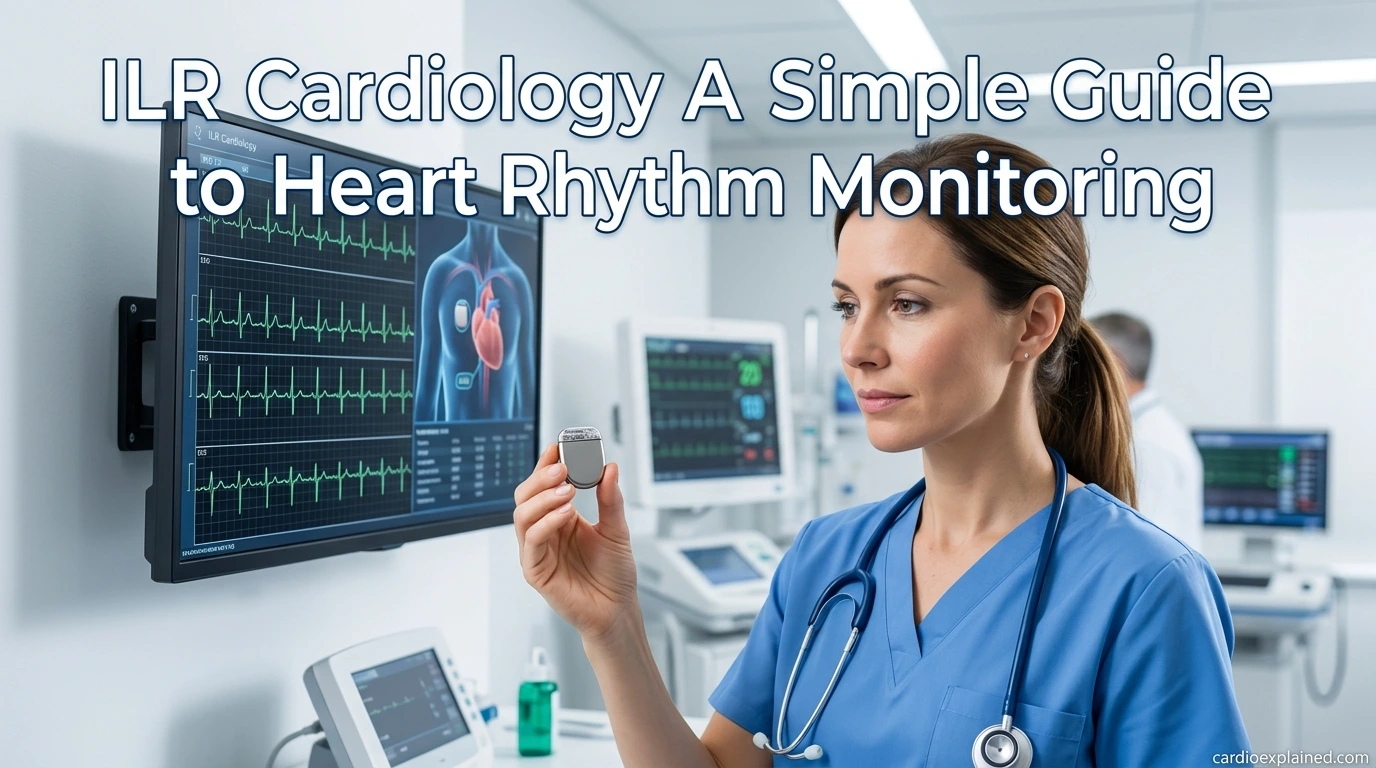

ILR cardiology is the use of an implantable loop recorder to track your heart rhythm over time. It helps doctors find heart rhythm problems that may not appear during a short test. This small device records your heartbeat and can help explain symptoms like fainting, dizziness, or a racing heart.
Have you ever felt your heart race for a few seconds and then return to normal? Maybe you felt dizzy or even fainted. These moments can feel scary. They also can be hard to explain during a doctor’s visit because they may not happen every day.
That is where ILR cardiology can help. Doctors use a tiny device that watches your heart rhythm for months or even years. It can catch heart rhythm changes that other tests may miss. This makes it easier to find the cause of symptoms and choose the right care.
Many people feel worried before getting this device. That feeling is normal. The good news is that the procedure is quick, and most people return home the same day. Learning how it works can help you feel more prepared and confident.
❤️ What Is an Implantable Loop Recorder?
An implantable loop recorder, or ILR, is a very small heart monitor. It sits under the skin of your chest. It watches your heartbeat day and night.
Unlike a regular heart test, an ILR records your heart rhythm for a long time. Some devices can work for up to three years. This helps doctors find heart rhythm problems that happen only once in a while.
How the Device Works
The ILR records your heart’s electrical activity. These are the signals that tell your heart when to beat.
If your heart beats too fast, too slow, or skips beats, the device may save that event. Some devices also let you press a small recorder when you notice symptoms. This helps match your feelings with your heart rhythm.
The recorder stores the information safely. It then sends reports to your care team through a home monitor or secure wireless system. Your doctor reviews the reports and decides if more care is needed.
Why Doctors Recommend ILR Cardiology
Doctors may suggest ILR cardiology when symptoms happen without a clear cause. Short tests may not catch rare events.
Your doctor may recommend an ILR if you have:
- 🩺 Unexplained fainting
- 🩺 Repeated dizziness
- 🩺 Heart palpitations, or a feeling that your heart flutters
- 🩺 A stroke with no clear reason
- 🩺 A family history of certain heart rhythm problems
Many heart rhythm problems come and go. A longer recording gives doctors a better chance to find them.
A Real-Life Example
Maria, age 62, fainted twice within six months. Her office ECG looked normal. An ECG is a quick test that records the heart’s electrical activity.
Her doctor placed an ILR under her skin. Two months later, the recorder showed that her heart slowed down for several seconds during one episode. That finding helped her doctor choose the right treatment.
This kind of story is common. Many patients get answers only after long-term heart monitoring.
🩺 Why Someone May Need Long-Term Heart Rhythm Monitoring
Heart rhythm problems do not always happen during a doctor’s visit. They may appear only once every few weeks or months.
That makes diagnosis harder with short tests alone.
Symptoms That Come and Go
Many people notice symptoms that disappear quickly.
These may include:
- ✅ Feeling lightheaded
- ✅ Sudden fainting
- ✅ Fast heartbeat
- ✅ Slow heartbeat
- ✅ Fluttering in the chest
- ✅ Feeling weak without warning
These symptoms can have many causes. An ILR helps doctors see if the heart is responsible.
When Other Tests Look Normal
Doctors often begin with simple heart tests.
These may include:
| Test | Purpose | How Long It Records |
| ECG | Checks heart rhythm at one moment | A few seconds |
| Holter monitor | Records daily heart activity | Usually 24 to 48 hours |
| Event monitor | Records during symptoms | Several weeks |
| Implantable loop recorder | Tracks rare rhythm problems | Months to years |
Each test has an important role. The best choice depends on how often symptoms happen.
Finding Hidden Heart Rhythm Problems
Some rhythm problems stay hidden for a long time.
Examples include:
- Atrial fibrillation, an irregular heartbeat
- Slow heart rhythms
- Long pauses between beats
- Fast heart rhythms that start suddenly
Finding these problems early may lower the risk of future health issues. Your doctor uses the results with your medical history and physical exam.
Another Patient Story
James often felt dizzy while walking his dog. His heart tests looked normal.
His doctor recommended an ILR because the symptoms happened only once every two months. Six months later, the recorder showed a brief abnormal rhythm during one dizzy spell. That result helped guide his treatment plan.
Stories like this show why patience matters. Long-term monitoring often gives the missing piece of the puzzle.
📋 Symptoms and Signs That May Lead to ILR Cardiology
Not every skipped heartbeat means you have heart disease. Many harmless changes happen during daily life.
Still, some symptoms deserve medical attention.
Common Symptoms
Your doctor may think about ILR cardiology if you have:
- ❤️ Fainting without warning
- ❤️ Feeling dizzy often
- ❤️ A racing heartbeat
- ❤️ A pounding heartbeat
- ❤️ Fluttering in your chest
- ❤️ Unexplained falls, especially in older adults
These symptoms may happen only once in a while. That is why long-term monitoring can help.
Symptoms After a Stroke
Some people have a stroke without a clear cause. Doctors call this a cryptogenic stroke. This means the reason remains unknown after standard testing.
An ILR may help find silent atrial fibrillation. This irregular rhythm sometimes causes blood clots that can travel to the brain.
Finding the rhythm problem helps doctors decide if blood-thinning medicine may help lower the risk of another stroke.
Symptoms That Need Fast Medical Care
Some symptoms need emergency care instead of waiting for an office visit.
Seek medical help right away if you have:
- ⚠️ Chest pain that lasts several minutes
- ⚠️ Trouble breathing
- ⚠️ Fainting with an injury
- ⚠️ Severe weakness on one side
- ⚠️ Trouble speaking
- ⚠️ Sudden confusion
These symptoms may point to a serious heart or brain problem.
Keep a Symptom Diary
A simple diary can help your doctor.
Write down:
- 📋 When symptoms happened
- 📋 What you were doing
- 📋 How long they lasted
- 📋 Any chest pain or shortness of breath
- 📋 Any medicine you took
Even with an ILR, these notes give your care team helpful details.
Many patients feel relieved after getting answers. Even when the heart is normal, knowing the cause of symptoms can bring peace of mind.
⏱️ How Doctors Diagnose Heart Rhythm Problems
Finding an irregular heartbeat can take time. Some rhythm changes happen only once every few months.
Doctors start with simple tests. If those tests do not give answers, they may suggest an implantable loop recorder.
Your First Medical Visit
Your doctor will ask about your symptoms.
They may ask:
- 🩺 When did the symptoms begin?
- 🩺 How often do they happen?
- 🩺 Did you faint or almost faint?
- 🩺 Does exercise trigger the symptoms?
- 🩺 Do heart problems run in your family?
Clear answers help your doctor choose the right test.
Tests You May Have
Doctors often use more than one test.
| Test | What It Shows | When It Helps |
| Electrocardiogram (ECG) | Heart rhythm at one moment | First office visit |
| Blood tests | Other health problems | Rule out other causes |
| Echocardiogram | Heart structure and pumping | Checks heart health |
| Stress test | Heart during exercise | Symptoms with activity |
If these tests look normal, your doctor may recommend ILR cardiology to watch your heart over a longer time.
Getting an Implantable Loop Recorder
Many people worry before the procedure. Most say it was easier than expected.
The procedure usually takes less than 30 minutes.
Here is what often happens:
- You lie on an exam table.
- The doctor cleans the skin.
- You receive numbing medicine.
- The doctor makes a very small cut.
- The device goes under the skin.
- The cut closes with glue or stitches.
Most people go home the same day.
You may feel mild soreness for a few days. That usually improves quickly.
After the Procedure
Your doctor explains how the monitor works.
Many newer devices send reports automatically through a secure home system. This means fewer office visits.
You should keep follow-up appointments. Your care team reviews the recordings and contacts you if they find important changes.
One patient shared that she forgot the recorder was there after two weeks. She returned to gardening, walking, and caring for her grandchildren without trouble.
❤️ Treatment and Care After an ILR Finds a Problem
An implantable loop recorder does not treat heart disease.
It helps doctors find the cause of your symptoms.
Treatment depends on what the recorder shows.
If the Heart Beats Too Slowly
Some people have long pauses between heartbeats.
Your doctor may recommend:
- ✅ A pacemaker
- ✅ Medicine changes
- ✅ More follow-up visits
A pacemaker helps keep the heart beating at a healthy speed.
If the Heart Beats Too Fast
Fast rhythms may need different care.
Treatment may include:
- ✅ Medicines to control the rhythm
- ✅ Catheter ablation
- ✅ Lifestyle changes
- ✅ Regular monitoring
Catheter ablation is a procedure that blocks tiny areas causing abnormal signals.
If Atrial Fibrillation Is Found
Atrial fibrillation is an irregular heartbeat.
Some people never feel it.
Finding this rhythm early may help lower the risk of stroke.
Your doctor may discuss:
- Blood-thinning medicine
- Heart rhythm medicine
- Heart rate medicine
- Healthy lifestyle habits
The best plan depends on your age and health.
Sometimes No Serious Problem Appears
This also can be good news.
Many patients feel relieved when recordings stay normal.
Your doctor may then look for other causes of dizziness or fainting.
The goal is always to find the real reason for your symptoms.
Doctors often follow guidance from organizations such as the American Heart Association (AHA) and the American College of Cardiology (ACC). These groups publish recommendations based on medical research and expert review.
✅ Healthy Habits That Support Your Heart

An ILR records your heart rhythm. Healthy habits support your heart every day.
Small changes often make a big difference over time.
Eat Heart-Healthy Foods
Choose foods that help your heart.
Good choices include:
- 🥗 Fruits
- 🥗 Vegetables
- 🥗 Whole grains
- 🥗 Beans
- 🥗 Fish
- 🥗 Nuts
Try to limit foods high in salt, sugar, and saturated fat.
Stay Active
Regular movement helps many people.
Good activities include:
- 🚶 Walking
- 🚴 Riding a bike
- 🏊 Swimming
- 🧘 Gentle stretching
Ask your doctor which activities fit your health needs.
Take Medicines as Directed
Take your medicine every day unless your doctor tells you to stop.
Do not skip doses because you feel better.
If you notice side effects, call your healthcare team before making changes.
Reduce Stress
Stress may make some people notice heart palpitations more often.
Helpful ways to relax include:
- 🌿 Deep breathing
- 🌿 Quiet reading
- 🌿 Gentle exercise
- 🌿 Spending time with loved ones
- 🌿 Getting enough sleep
These habits support your overall health.
Keep Follow-Up Visits
Even if you feel well, attend scheduled appointments.
Your doctor checks your device reports and answers your questions.
Regular care helps your team spot changes early.
⚠️ When to See a Doctor
Many heart rhythm changes are not emergencies.
Still, some symptoms should never wait.
Call Your Doctor Soon If You Notice
Contact your healthcare provider if you have:
- ⚠️ New dizziness
- ⚠️ More frequent palpitations
- ⚠️ Fainting without injury
- ⚠️ Swelling in your legs
- ⚠️ New tiredness that does not improve
Your doctor can decide if you need testing or treatment.
Go to the Emergency Room Right Away
Call 911 or seek emergency care if you have:
- ⚠️ Chest pain that does not go away
- ⚠️ Trouble breathing
- ⚠️ Fainting with serious injury
- ⚠️ Sudden weakness on one side
- ⚠️ Trouble speaking
- ⚠️ Severe confusion
- ⚠️ Loss of consciousness
These symptoms may point to a heart attack, stroke, or another emergency.
Living Well With an Implantable Loop Recorder
Most people return to normal life soon after the procedure.
You can usually:
- ✅ Walk
- ✅ Travel
- ✅ Work
- ✅ Exercise as advised
- ✅ Sleep in your usual position
Always follow your doctor’s instructions about wound care and activity after placement.
Many patients say they feel more confident knowing their heart rhythm is being watched. That peace of mind can make daily life less stressful.
Frequently Asked Questions
🙋 Q: Is an implantable loop recorder the same as a pacemaker?
A: No. An implantable loop recorder only records your heart rhythm. It does not change how your heart beats. A pacemaker treats certain slow heart rhythms by sending small electrical signals to the heart.
🙋 Q: How long does an implantable loop recorder stay in place?
A: Most devices work for two to three years. Your doctor may remove it sooner if it has already found the answer. The exact time depends on your health needs and the device model.
🙋 Q: Is the ILR cardiology procedure painful?
A: Most people say the procedure causes only mild discomfort. The doctor uses numbing medicine before placing the device. You may feel some soreness for a few days afterward.
🙋 Q: Can I exercise after getting an implantable loop recorder?
A: Yes, in many cases. Your doctor may ask you to avoid heavy lifting for a short time after the procedure. After healing, most people return to their normal activities with medical guidance.
🙋 Q: Can airport security detect an implantable loop recorder?
A: Yes, it may. Carry your device identification card when you travel. Tell security staff that you have an implanted medical device if needed.
🙋 Q: Will my implantable loop recorder send information to my doctor automatically?
A: Many newer devices do. They often use a secure wireless monitor that sends heart rhythm reports to your care team. Your doctor reviews the reports and contacts you if more care is needed.
🙋 Q: Does everyone with dizziness need ILR cardiology?
A: No. Many causes of dizziness are not related to the heart. Your doctor will review your symptoms, medical history, and test results before deciding if ILR cardiology is the right choice.
Conclusion
ILR cardiology gives doctors a better way to find heart rhythm problems that may hide during short tests. The small recorder watches your heartbeat over many months. This can help explain fainting, dizziness, or heart palpitations when other tests look normal.
Many people feel nervous before getting the device. Most find the procedure simple and recover quickly. The information from the recorder helps doctors choose the best care for each person.
If you notice repeated fainting, dizziness, or an irregular heartbeat, talk to a cardiologist. Early evaluation may help you understand your symptoms and support better heart health.