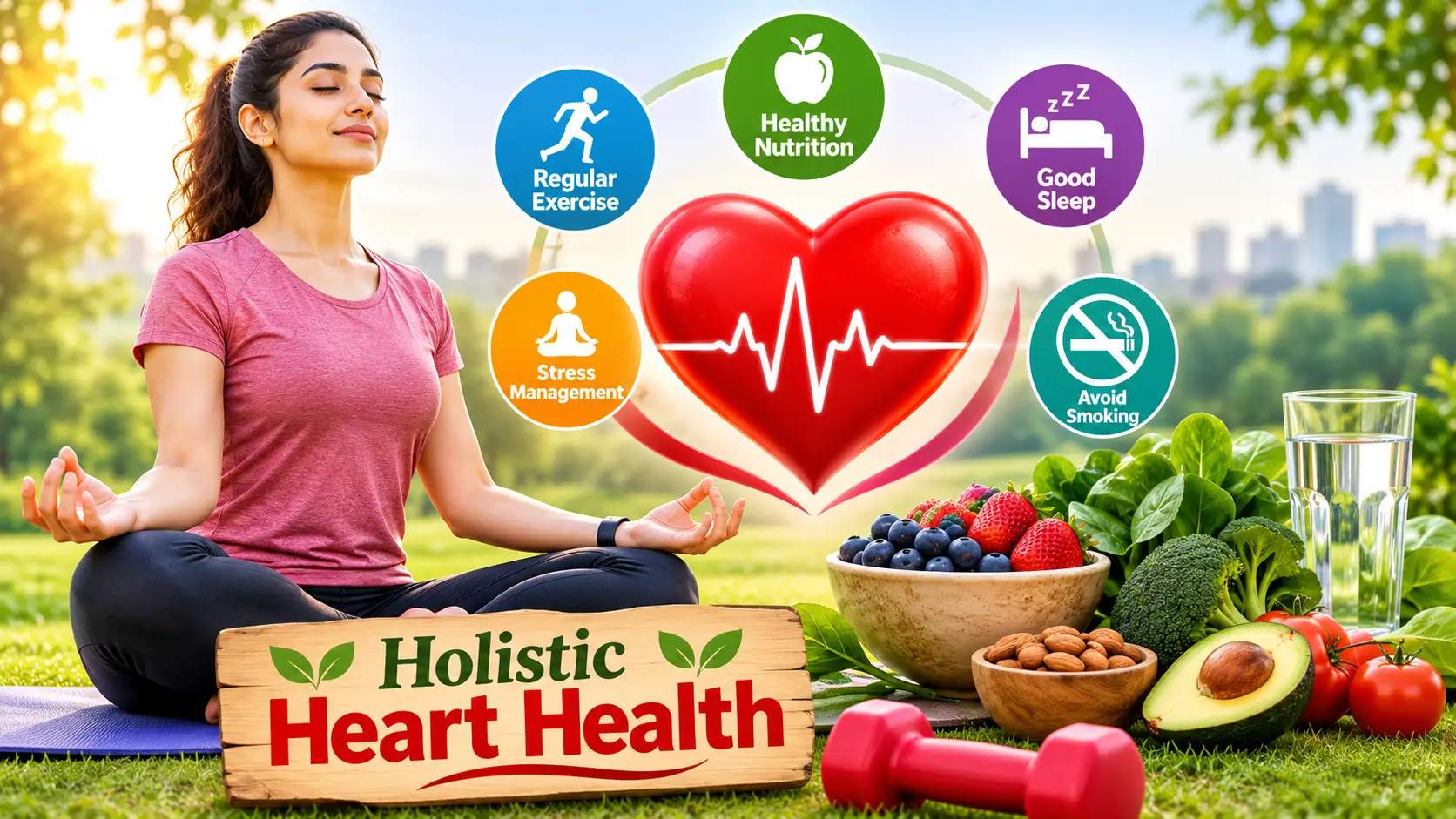

Holistic heart health looks at every part of life that touches your heart: meals, movement, rest, stress, and relationships.
The best-supported pieces are healthy eating, regular activity, good sleep, avoiding tobacco, and routine medical care. Holistic habits can support treatment, but they never take its place.
Your heart responds to far more than a cholesterol number. A poor night of sleep, a lonely month, a stretch of constant pressure at work, and a diet built on takeout all leave a mark on blood vessels over time.
That is the core idea behind holistic heart health. Instead of fixing one risk factor in isolation, you look at the habits and circumstances that shape all of them. Done well, this approach rests on solid research. Done badly, it turns into sales pitches for cleanses and miracle powders.
Below, the topic is organized into five pillars: nourish, move, rest, calm, and connect. Each one comes with what research suggests and what remains uncertain. A section on medical care, a look at natural-remedy claims, and a list of warning signs follow.
Nothing here is a personal prescription, so bring your own questions to a healthcare professional.
What Holistic Really Means for Your Heart
The word covers two very different ideas. One is a broad view of health that treats the body, mind, and daily environment as connected. The other is a loose label used to sell unproven products.
The first idea has real scientific backing. The American Heart Association (AHA) updated its cardiovascular health scoring system, now called Life’s Essential 8, and placed psychological health and social circumstances at its base.
The advisory treats these factors as crucial context for improving cardiovascular health. The AHA also points out that psychological health and social and structural factors strongly shape whether a person can adopt healthy habits in the first place.
The practical lesson is that willpower is only part of the story. Time, money, safe streets, sleep, and support all influence what a person can realistically do.
Pillar One: Nourish
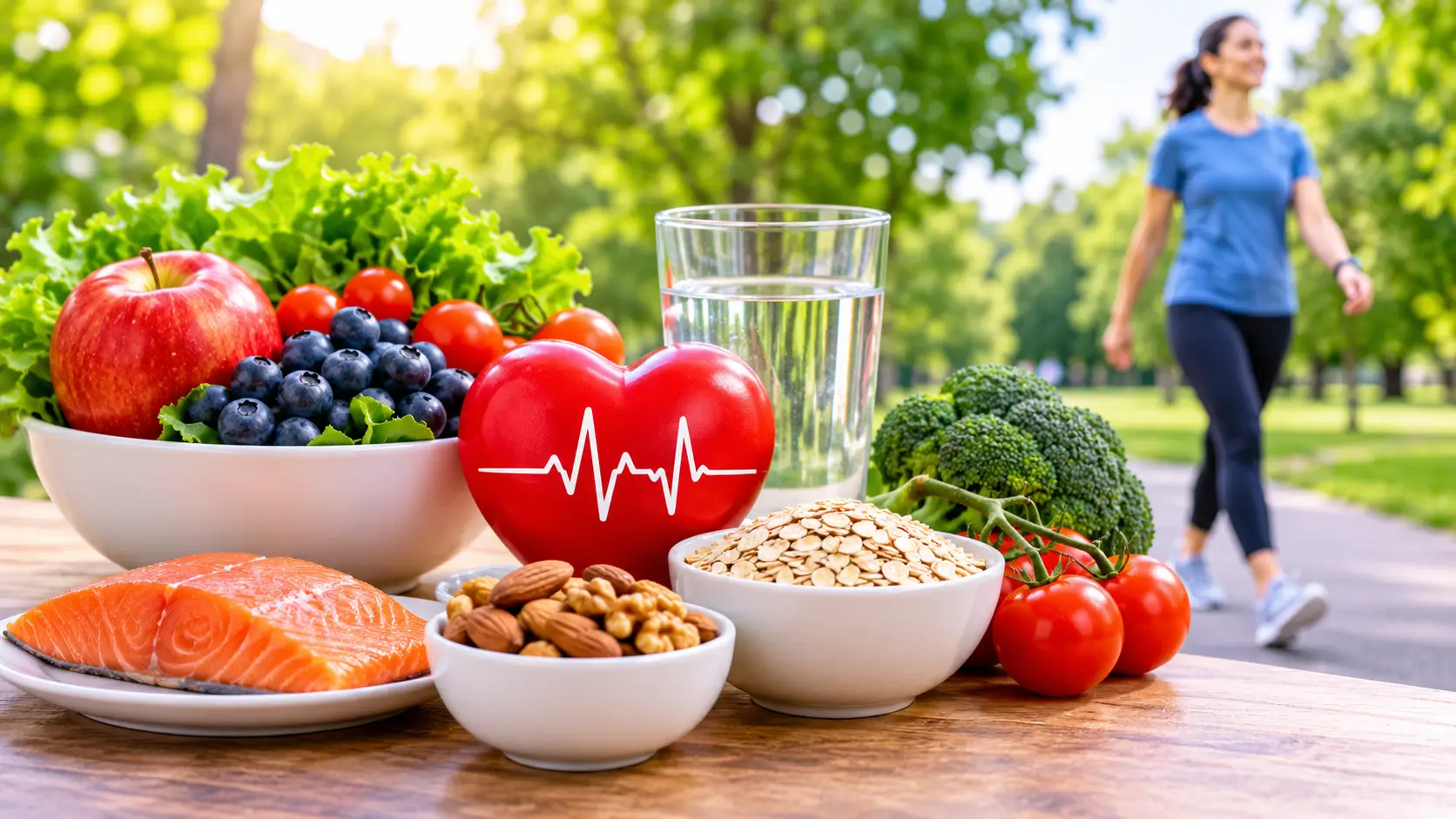
The AHA’s diet score follows a DASH-style pattern with plenty of fruits, vegetables, nuts, legumes, and whole grains, and with little sodium, red and processed meat, or sweetened drinks. That makes the target an overall eating pattern, not any single “heart food.”
Ways to apply it:
- Build plates around vegetables, beans, and whole grains, and treat meat as a side
- Swap sugary drinks for water, unsweetened tea, or sparkling water
- Choose unsalted nuts for snacks
- Check labels on bread, soups, and sauces, where hidden sodium tends to appear
- Cook with oils such as olive oil instead of butter when you can
Pillar Two: Move
Physical activity helps blood pressure, weight, blood sugar, mood, and sleep all at once. A commonly cited adult target is around 150 minutes of moderate movement per week, which works out to roughly 20 to 25 minutes a day. Any activity that raises your breathing counts: brisk walking, cycling, swimming, dancing, or yard work.
Start where you are. If you have a known heart condition, dizziness, or chest discomfort with effort, check with your doctor before ramping up.
Pillar Three: Rest
Sleep joined the AHA’s checklist in 2022. For adults, the advisory suggests 7 to 9 hours a night, with more for children depending on age. People who sleep better tend to manage weight, blood pressure, and type 2 diabetes risk more effectively.
Habits that protect sleep include a steady bedtime, a cool dark room, less caffeine late in the day, and screens off before bed. Loud snoring, gasping, or heavy daytime tiredness deserve a conversation with your doctor, since sleep apnea is treatable.
Pillar Four: Calm
Why Stress and Mood Matter
In 2021 the AHA reviewed the evidence linking the mind and heart. The review concluded that good mental health may improve heart health and lower cardiovascular risk, while poor mental health may raise the risk of heart disease.
The links run through the body and through behavior:
- Depression, anxiety, and chronic stress were tied to changes in heart rate, blood pressure, inflammation, and blood flow to the heart.
- Poorer psychological health also tracks with smoking, inactivity, unhealthy eating, excess weight, and skipped medicines.
- Reported stress at work or in general has been linked to as much as a 40% higher chance of developing or dying from heart disease. Because this comes from observational studies, it shows a pattern, not proof of cause.
Preliminary 2023 findings point the same way. Depression and anxiety were associated with about a 35% higher risk of a major cardiovascular event, and roughly 40% of that link appeared to run through faster-developing heart risk factors. These results still need confirmation.
Mood problems are medical issues, not character flaws. The AHA recommends simple depression and anxiety screening at routine visits for people who have, or are at risk for, heart disease.
If you feel hopeless or have thoughts of harming yourself, get help right away. In the U.S., call or text 988, or use your local emergency number or crisis line.
Do Meditation, Yoga, and Tai Chi Help?
They may, with limits. The AHA’s 2017 review of meditation found a possible benefit for cardiovascular risk, although the quality and sometimes the quantity of the studies were modest. The authors said the proven foundation remains a heart-healthy lifestyle and following medical advice.
Meditation was associated with less stress, anxiety, and depression, along with better sleep and well-being. It might also reduce blood pressure, and might help lower heart disease risk when paired with established measures.
Reviewers noted that the evidence falls short of what guidelines require, so meditation is best viewed as an add-on to standard risk reduction. Yoga and tai chi were left out of that review because their physical movement already has known benefits. They can double as gentle exercise.
Pillar Five: Connect
Relationships belong on a heart health plan. An AHA statement from 2022 reported a 29% higher risk of heart attack or death from heart disease, and a 32% higher risk of stroke, among people who were socially isolated or lonely.
An earlier meta-analysis of long-term studies found the same two figures for coronary heart disease and stroke.
Researchers separate two ideas. Social isolation is the objective state of having few contacts, while loneliness is the distressing feeling of being isolated. Either can matter.
Some details are worth knowing:
- People with heart disease who were isolated had a two- to threefold higher death rate over six years in one study.
- Depression and isolation feed each other: each makes the other more likely.
- Lonely people may eat fewer fruits and vegetables and sit more.
- Group fitness, recreation programs, and approaches that tackle negative thinking can reduce isolation and loneliness.
These findings are associations. Still, a weekly walk with a neighbor, a standing call with a friend, a faith community, a club, or volunteering costs little and may help both mood and habits.
Where Medical Care Fits In
Four of Life’s Essential 8 are measurements: weight, blood lipids, blood glucose, and blood pressure. The updated cholesterol metric uses non-HDL cholesterol instead of total cholesterol. You cannot judge these by feel. High blood pressure and high LDL cholesterol often cause no symptoms for years.
A whole-life approach therefore includes:
- Regular checks of blood pressure, cholesterol, and blood sugar
- Medicines when your doctor prescribes them, taken as directed
- Honest conversations about mood, stress, and sleep
- Follow-up after pregnancy complications, heart events, or new symptoms
The AHA’s online My Life Check tool scores the eight areas from 0 to 100. It is a self-assessment and does not replace a medical visit, but it can show where to focus first.
Healthy behavior carries real weight. In one analysis, optimal heart-health behaviors were linked to nearly 50% fewer coronary events among people at high genetic risk. Genes are not destiny.
Natural Remedies: Weighing the Claims
“Natural” is a marketing word, not a safety rating. Keep these points in mind:
- Most vitamins and supplements have not been shown to prevent heart attacks or strokes in healthy adults
- Some herbal products affect bleeding, blood pressure, blood sugar, or the liver, and may interact with prescriptions
- Supplements are not tested like medicines before sale, so strength and purity vary
- Promises to “cleanse” the heart or “unclog” arteries have no scientific support
Ask a doctor or pharmacist before adding anything new, and never swap a prescribed medicine for a supplement.
What a Balanced Day Might Look Like
This is an example, not a plan built for you:
- Morning: oatmeal with fruit and unsalted nuts, a glass of water, a short stretch or breathing break
- Midday: a salad or grain bowl with beans and vegetables, a ten-minute walk afterward
- Afternoon: a quick call with a friend, a handful of fruit instead of a sugary snack
- Evening: fish or beans with vegetables, a relaxed dinner with someone, screens off an hour before bed
- Weekly: two or three longer active sessions, a medicine check, and a plan for your next checkup
Warning Signs That Need Prompt Care
See a healthcare professional soon for shortness of breath with light activity, swelling in the legs or ankles, repeated palpitations, or unusual exhaustion.
Call your local emergency number immediately for chest pain or pressure, severe shortness of breath, fainting, sudden weakness, trouble speaking, or a drooping face. Do not wait to see whether it passes.
Frequently Asked Questions
Is holistic medicine the same as alternative medicine?
Not exactly. Holistic care looks at the whole person and can work alongside standard treatment. Alternative medicine means using unproven approaches in place of standard treatment, which can be risky for heart conditions. A holistic plan should still include tests, checkups, and prescribed medicines.
Can I lower my heart risk without medication?
Sometimes. Diet, activity, sleep, and quitting tobacco can improve blood pressure, cholesterol, and blood sugar. But many people also need medicine, depending on their numbers and history. Your doctor can tell you whether lifestyle changes alone are enough.
Which habit matters most?
No single one wins. Avoiding tobacco, being active, eating well, sleeping enough, and controlling blood pressure all contribute. If you smoke, quitting is often the biggest step. Otherwise, start with the change you are most likely to keep.
Does meditation count as treatment for heart disease?
No. The American Heart Association says meditation may help with some risk factors, but the evidence is modest and it is not a replacement for medical care. Think of it as a possible addition to proven steps.
How does loneliness harm the heart?
Researchers link it to higher heart attack and stroke risk, probably through stress responses, low mood, and habits such as less activity and poorer eating. The studies show associations, not proof. Building regular social contact may help both mood and routines.
How much sleep supports a healthy heart?
For adults, the American Heart Association suggests 7 to 9 hours a night. Children need more, depending on age. If you sleep enough but still feel exhausted, or you snore loudly, ask your doctor about sleep apnea.
Key Takeaway
Holistic heart health works when it rests on proven habits: a plant-rich eating pattern, regular activity, enough sleep, no tobacco, and managed blood pressure, cholesterol, and blood sugar. Stress, mood, and relationships add real weight, and the American Heart Association now treats them as foundational.
Meditation, yoga, and social connection are reasonable supports, but they sit beside medical care. Be wary of detox claims and unproven supplements, take prescribed medicines as directed, and call emergency services for chest pain or severe breathlessness.