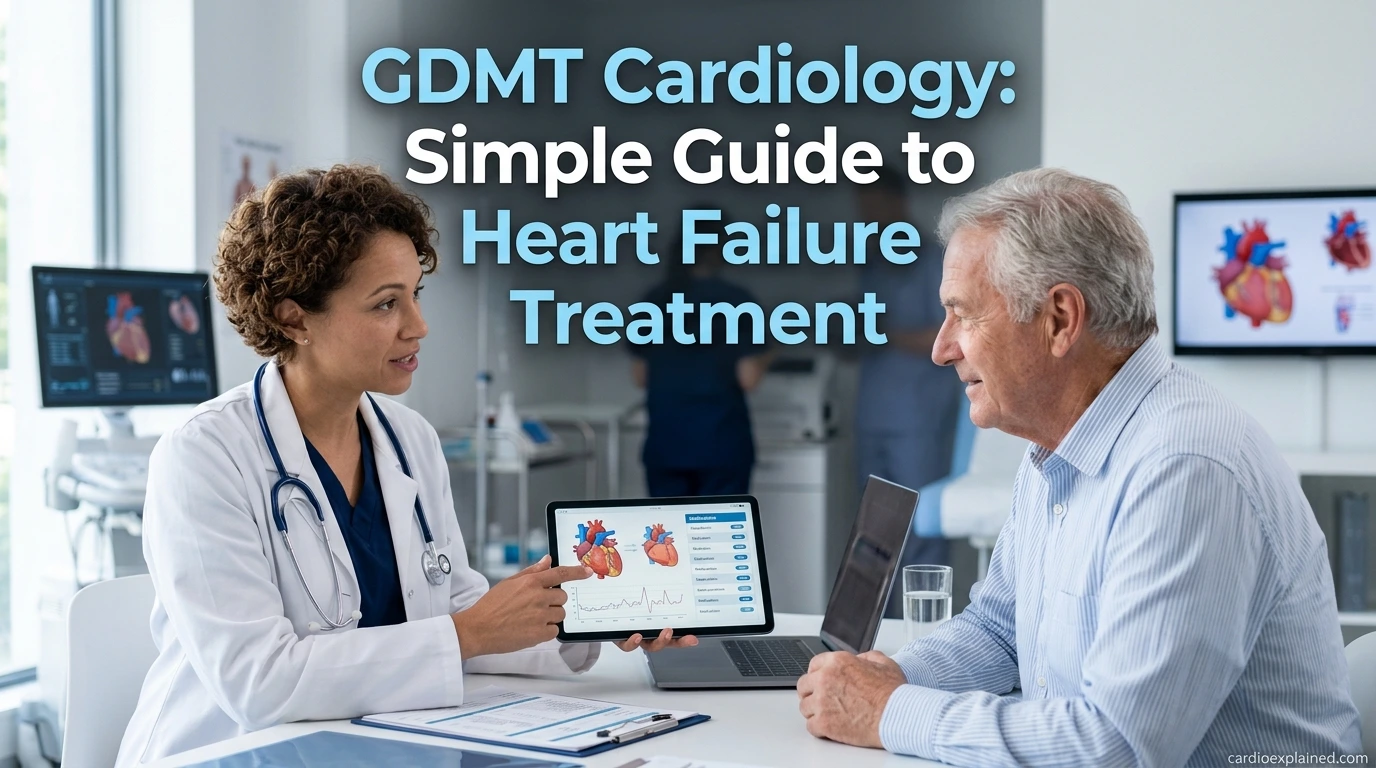

GDMT cardiology is a treatment plan using proven heart medicines.It helps the heart work better and last longer.
Doctors use it to reduce symptoms and hospital visits. Have you ever felt short of breath walking a short distance? Or noticed swelling in your feet at night?
These can be signs of heart weakness.This is where gdmt cardiology comes in. It is a structured way doctors treat heart failure.Heart failure means the heart is not pumping well enough.
In this guide, you will learn what GDMT means.
You will see how it helps patients live better.
You will also learn the main medicines used.
We will keep everything simple and easy to follow.
Many patients feel confused at first.
But GDMT is built on clear, proven steps.
It follows guidance from groups like AHA and ACC.
These groups guide heart doctors in the United States.
What GDMT Means in Heart Care ❤️
GDMT stands for Guideline-Directed Medical Therapy.
This means doctors follow trusted heart guidelines.
These guidelines come from large medical research studies.
In gdmt cardiology, treatment is not random.
Doctors use medicines that improve survival.
They also reduce hospital stays and symptoms.
The main goal is simple.
Help the heart pump blood more easily.
Help you feel less tired and breathless.
Many patients start GDMT after heart failure diagnosis.
Some also start after a heart attack.
A common patient story:
One patient feels tired just walking to the mailbox.
After starting GDMT, walking becomes easier over time.
Another patient wakes up breathless at night.
With treatment, sleep becomes more comfortable.
GDMT is not a quick fix.
It works slowly and steadily.
Why Doctors Use GDMT in Cardiology 🩺
Doctors use GDMT because it is proven.
It is based on strong medical evidence.
Heart failure can get worse over time.
But GDMT slows this process.
Doctors follow AHA and ACC guidelines closely.
These guidelines change as new research appears.
Key reasons GDMT is used:
- ❤️ Improves survival in many patients
- ❤️ Reduces hospital visits
- ❤️ Eases breathing and swelling
- ❤️ Helps daily activity levels improve
Doctors also monitor blood pressure and kidney health.
These checks help keep treatment safe.
Many patients worry about starting many pills.
Doctors explain each medicine step by step.
This helps reduce fear and confusion.
GDMT Cardiology: Main Medicines Used 🧾
The treatment plan includes a few key medicine groups.
Each one helps the heart in a different way.
In gdmt cardiology, doctors often combine medicines.
This gives stronger protection than one drug alone.
Common GDMT medicine groups:
| Medicine Type | What It Does | Simple Benefit |
| Beta-blockers | Slow heart rate | Reduces heart strain |
| ACE inhibitors | Relax blood vessels | Improves blood flow |
| ARNI medicines | Newer heart support drugs | Helps heart pump better |
| Diuretics | Remove extra fluid | Reduces swelling |
Beta-blockers help the heart rest.
They slow the heartbeat gently.
ACE inhibitors relax tight blood vessels.
This lowers pressure on the heart.
ARNI medicines are newer options.
They are often used in long-term care.
Diuretics help remove extra water.
This helps with leg swelling and breathing.
Doctors adjust doses slowly.
This helps avoid side effects.
A patient example:
One person had swollen ankles daily.
After diuretics, swelling reduced in a week.
Another patient felt dizzy at first.
Doctors adjusted the dose and improved comfort.
How GDMT Treatment Is Started and Adjusted 🩺
GDMT is not started all at once.
Doctors begin with low doses.
Then they increase slowly over weeks or months.
This is called titration.
In gdmt cardiology, safety comes first.
Doctors watch blood pressure closely.
They also check kidney function with blood tests.
These tests show how the body responds.
Typical steps in GDMT care:
- Start one or two medicines
- Check blood pressure and symptoms
- Add new medicines slowly
- Adjust doses over time
- Keep regular follow-up visits
Patients often visit the clinic often at first.
Later visits may become less frequent.
Some people feel better within weeks.
Others need more time.
Doctors remind patients not to stop medicines suddenly.
Stopping can make symptoms return quickly.
Living With GDMT and Daily Care Tips ❤️

Life with GDMT can feel new at first.
But many people adjust well.
In gdmt cardiology, daily habits also matter.
Medicines work best with healthy routines.
Helpful daily habits:
- ❤️ Take medicines at the same time daily
- ❤️ Weigh yourself every morning
- ❤️ Watch for swelling in legs
- ❤️ Limit salty foods
- ❤️ Stay active as advised by your doctor
One patient story:
A retired teacher struggled with fatigue.
After GDMT and light walking, energy improved.
Another patient felt scared about pills.
After education, they felt more confident.
Doctors also teach warning signs.
These include sudden weight gain or breath changes.
If symptoms worsen, call your care team.
Do not wait too long.
GDMT Cardiology and Heart Failure Types 🫀
Heart failure is not all the same.
It has different types.
Doctors choose GDMT based on heart strength.
They use tests like echocardiograms.
An echocardiogram is a heart ultrasound.
It shows how well the heart pumps.
Main heart failure types:
- ❤️ Reduced pumping strength
- ❤️ Preserved pumping strength
- ❤️ Mild or early heart failure
Each type may need different medicine focus.
In all cases, gdmt cardiology still guides care.
It gives structure to treatment choices.
Doctors also look at symptoms.
They do not rely on tests alone.
Tests Used in GDMT Care 🧪
Doctors use several tests to guide treatment.
These tests are simple and safe.
Common tests include:
- Blood pressure checks
- Blood tests for kidney function
- Echocardiogram (heart ultrasound)
- Electrocardiogram (heart rhythm test)
These tests help doctors adjust medicines.
They also help prevent side effects.
Patients often feel nervous before tests.
But most tests are quick and painless.
A nurse may place stickers on your chest.
This checks your heart rhythm.
Blood tests may cause a small pinch.
It lasts only a few seconds.
FAQ: GDMT Cardiology Questions ❓
Q: What is gdmt cardiology used for?
A: It is used to treat heart failure. It improves symptoms and survival. Doctors follow proven medical guidelines.
Q: Is GDMT a cure for heart failure?
A: No, it is not a cure. It helps control symptoms and slow worsening. Many patients feel better with treatment.
Q: How long do people stay on GDMT?
A: Most patients stay on it long term. Doctors may adjust doses over time. Stopping suddenly is not safe.
Q: What side effects can GDMT cause?
A: Some people may feel dizziness or tiredness. Doctors monitor and adjust medicines as needed.
Q: Why do doctors combine multiple medicines in gdmt cardiology?
A: Different medicines help different heart functions. Together, they give stronger heart protection.
Q: Can lifestyle changes help GDMT work better?
A: Yes, healthy habits improve results. Low salt diet and light exercise are helpful.
Conclusion ❤️
GDMT is a proven way to treat heart failure.
It uses a careful mix of heart medicines.
It helps people breathe easier and stay active.
In gdmt cardiology, doctors follow trusted guidelines.
These include AHA and ACC recommendations.
Care is adjusted slowly for safety and comfort.
Many patients feel worried at first.
But most adjust well with support and education.
If you notice heart symptoms, do not ignore them.
Talk to a cardiologist if you have concerns.
Early care can make a real difference.