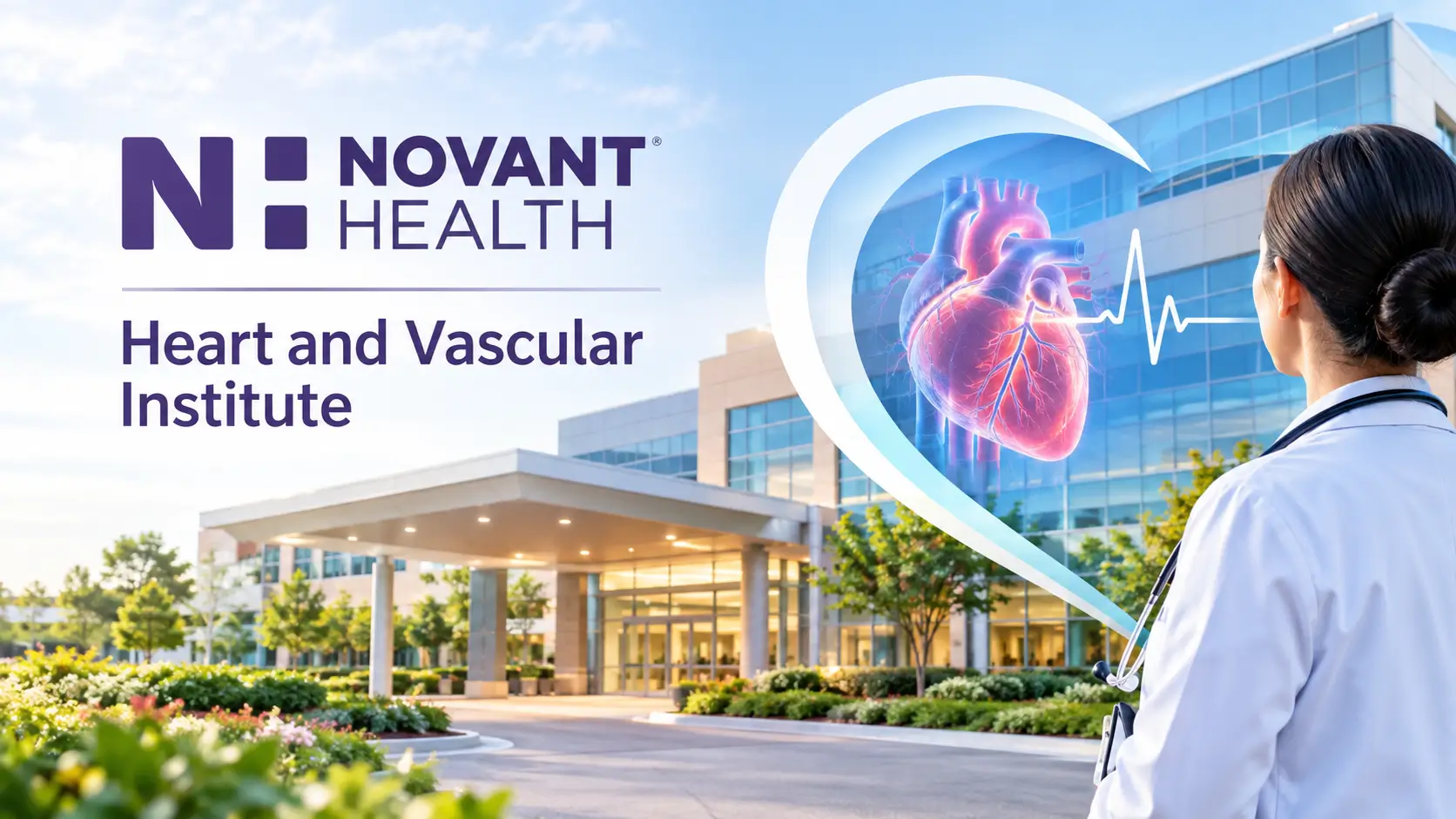

Novant Health Heart & Vascular Institute is the cardiology and vascular care network of Novant Health, a nonprofit health system based in North Carolina.
Its clinics offer heart and blood-vessel testing, medical management, and surgery. Services and sites differ by community, so confirm details with the clinic before booking.
People usually search for a heart clinic after a worrying test result, a referral, or a symptom they cannot ignore. Knowing what a cardiac program does, and how it works, makes that first visit less stressful.
The Novant Health Heart & Vascular Institute is not one single building. It is a group of clinics, surgical teams, and hospital-based programs spread across several communities. Each site focuses on the heart, the arteries, and the veins.
This article explains what the institute is, which conditions its teams treat, and which tests you might encounter.
You will also see how locations differ, how to prepare for an appointment, and when a clinic visit is the wrong choice and emergency care is needed. For current phone numbers, hours, and provider lists, always check Novant Health’s official website.
What Is the Novant Health Heart & Vascular Institute?
Novant Health is a health system headquartered in Winston-Salem, North Carolina. Its heart and vascular institute brings cardiology, vascular care, and cardiac surgery under one banner.
Some locations are outpatient clinics. Others are surgical practices that sit beside a hospital campus. The Wilmington site, for example, is described as a team devoted to surgery on the heart, chest, and circulatory system. The Elizabeth surgery site sits on the Novant Health Presbyterian Medical Center campus in Charlotte.
Because each clinic has its own focus, two sites may offer different services. A neighborhood clinic may handle testing and medicine, while a surgical site handles operations.
Conditions the Teams Treat
Clinic descriptions mention a wide range of heart and blood-vessel problems. The Ballantyne clinic lists carotid disease, peripheral artery disease, aneurysms, atrial fibrillation, coronary artery disease, and heart failure. Here is what those terms mean in plain language:
- Coronary artery disease: The arteries feeding the heart muscle narrow, usually from plaque buildup.
- Atrial fibrillation (Afib): An irregular, often fast heartbeat that raises stroke risk.
- Heart failure: The heart does not pump as strongly as the body needs. It does not mean the heart has stopped.
- Peripheral artery disease: Narrowed arteries, often in the legs, that limit blood flow.
- Carotid disease: Plaque in the neck arteries that carry blood to the brain.
- Aneurysm: A weak, bulging section of an artery wall.
Other sites describe care for arrhythmias and valve problems. The Southport clinic mentions minimally invasive heart procedures as an option. Whether such an approach fits you depends on your condition, and only your care team can decide that.
Tests You May Be Offered
Clinic pages describe several common, non-invasive tests. The Highland Oaks clinic in Winston-Salem lists cardiac stress tests, vascular ultrasounds, and echocardiograms. The Ballantyne clinic adds portable heart monitors.
What each one does:
- Echocardiogram: Uses sound waves to create moving pictures of the heart. It shows heart size, pumping strength, and valve function.
- Stress test: Records the heart while you walk on a treadmill or receive a medicine that raises heart rate. It checks for blood-flow problems that may appear only under effort.
- Vascular ultrasound: Uses sound waves to look at arteries and veins and check blood flow.
- Portable heart monitor: A small device worn for a period of time to catch rhythm problems that come and go.
These tests give information. They do not label you with a disease on their own. Your clinician combines results with your history, symptoms, blood pressure, cholesterol, and other risk factors.
Locations and Regional Growth
Searches reveal clinics in many North Carolina communities, including Wilmington, Southport, Charlotte, Winston-Salem, Monroe, and Salisbury. Treat that list as a snapshot, not a complete directory.
The Ballantyne clinic opened on February 14 to mark American Heart Month, in space previously used by an OB-GYN clinic. More recently, Randolph Health and Novant Health unveiled a new cardiac catheterization lab and an expanded heart and vascular program at Randolph Hospital in Asheboro, so patients needing a diagnostic catheterization or a stent no longer have to be referred elsewhere.
Offices open, move, and change services over time. The safest step is to confirm any address, schedule, insurance acceptance, and provider name directly with Novant Health.
How to Prepare for a Visit
A little planning helps the appointment go further.
- Bring a medicine list. Include prescriptions, over-the-counter drugs, and supplements.
- Write down symptoms. Note when they start, what triggers them, and how long they last.
- Collect records. Prior test results, hospital papers, and imaging reports help the team avoid repeat testing.
- Know your family history. Early heart disease in a parent or sibling matters.
- Prepare questions. Ask what each test is for, what results mean, and what the next step is.
- Ask about test instructions. Some tests need special clothing, fasting, or holding certain medicines. Never stop a prescribed medicine unless your clinician tells you to.
When a Clinic Is Not the Right Place
An outpatient heart clinic is not an emergency room. Call your local emergency number right away for:
- Chest pain, pressure, or tightness, especially with sweating, nausea, or arm, jaw, or back pain
- Severe shortness of breath
- Fainting or near-fainting
- Sudden weakness or numbness on one side, facial drooping, or trouble speaking
Do not wait for an appointment if these signs appear.
Choosing a Heart Care Team: Practical Points
If you have a choice, a few questions can guide you:
- Does this site treat my specific condition, or only do testing?
- Is surgical care on-site or at a nearby hospital?
- Is my insurance accepted?
- How will the clinic share results with my primary care doctor?
- What happens after a procedure, including follow-up and rehab?
A second opinion is common and reasonable before major surgery.
Frequently Asked Questions
What does the Novant Health Heart & Vascular Institute do?
It provides care for heart and blood-vessel conditions through a network of clinics and surgical teams. Services described by its sites include diagnostic testing, treatment of conditions such as Afib and heart failure, and cardiac or vascular surgery. Availability varies by location.
Where are the institute’s clinics located?
Clinic pages describe sites in North Carolina communities such as Wilmington, Southport, Charlotte, Winston-Salem, Monroe, and Salisbury. The list can change. Use the official Novant Health website to find the nearest current location and confirm its services.
Do I need a referral to see a cardiologist there?
Requirements depend on your insurance plan and the specific clinic. Some plans want a primary care referral first, while others do not. Call the clinic and your insurer before scheduling so you know what paperwork is needed.
Does it treat vascular problems, or only the heart?
Both. The name includes vascular care, meaning arteries and veins. Clinic descriptions mention peripheral artery disease, carotid disease, aneurysms, and vascular ultrasounds, along with heart conditions. Specific procedures vary by site.
Is it an emergency room?
No. The institute’s clinics handle scheduled visits, testing, and planned procedures. Chest pain, severe breathlessness, fainting, or stroke signs need emergency services immediately, not a clinic appointment.
What should I bring to my first appointment?
Bring photo identification, insurance details, a medicine and supplement list, past test results, and notes on your symptoms. Writing down questions helps, too. Arrive early, because new-patient forms often take extra time.
Key Takeaway
Novant Health Heart & Vascular Institute is a regional network that combines heart testing, ongoing medical care, and surgical services across several North Carolina communities. Each clinic differs, so check its focus, schedule, and insurance rules before you go. Come prepared with medicines, records, and questions, and treat serious warning signs as emergencies rather than waiting for an appointment.