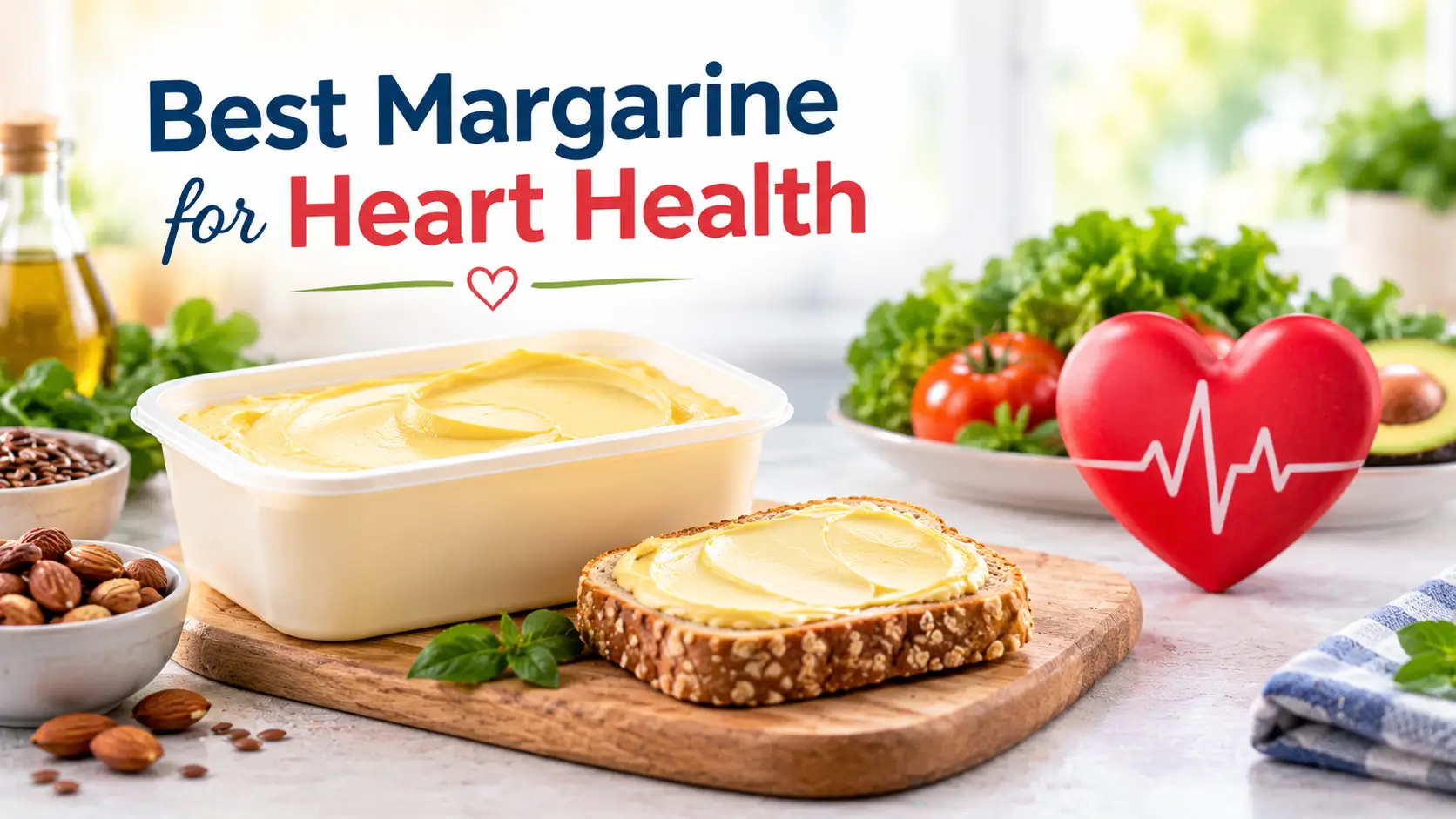

The best margarine for heart health is a soft tub spread with zero trans fat, no partially hydrogenated oil, and as little saturated fat as possible.
Spreads with added plant sterols or stanols can lower LDL cholesterol further. Even the best choice should be used in small amounts, as part of an overall heart-healthy diet.
Walk down the dairy aisle and you will find dozens of tubs, sticks, and bottles, each promising something different.
Some are made from olive oil. Others carry a heart symbol or a cholesterol claim. Picking the best margarine for heart health means ignoring the front of the package and reading the back.
Margarine is made from plant oils, so it has far less saturated fat than butter. Yet not every margarine is a smart pick. Some contain trans fat, which harms arteries, and others rely on tropical oils that add saturated fat.
This guide explains what separates a good spread from a poor one. You will see how to read a label, what plant sterol spreads can and cannot do, and how margarine compares with butter and olive oil. A short section covers who should ask a clinician before choosing a fortified product.
What Is Margarine, and Why Does Its Fat Matter?
Margarine is a spread made mainly from vegetable oils, water, and small amounts of salt and flavoring. Oils are liquid at room temperature, so makers must firm them up to create a spreadable product. The way they do it determines how heart-friendly the result is.
Three kinds of fat show up in spreads:
- Unsaturated fat: Found in olive, canola, and sunflower oils. It is the preferred type for cardiovascular health.
- Saturated fat: Raises LDL cholesterol, the “bad” kind, when intake is high. The American Heart Association recommends keeping saturated fat to 6% or less of daily calories.
- Trans fat: Raises LDL cholesterol and lowers HDL cholesterol, which is why the association advises eliminating it.
Arteries respond to the overall pattern of fats you eat, so the spread is one piece of a bigger picture.
Butter vs. Margarine
Butter is an animal fat, and a single tablespoon holds roughly 7 grams of saturated fat. Most soft margarines contain a fraction of that. A softer tub margarine or liquid oil in place of butter or stick margarine can reduce saturated and trans fat intake, lowering heart disease risk.
That does not make every margarine better than butter. A hard stick margarine made with partially hydrogenated oil could be worse for your arteries. The form matters: the more solid the product, the more likely it contains trans fat or extra saturated fat.
Why Soft Tub Spreads Usually Win
Hardening a liquid oil is the tricky step. Industrial hydrogenation creates trans fat. Some brands skip it and use palm or palm kernel oil instead, which are naturally solid but high in saturated fat. Tub margarine often uses plant-based solid fats such as palm oils, while stick versions more often contain trans fat.
Tubs are softer because they contain more liquid oil and less hardened fat. That is why the American Heart Association suggests soft, trans-fat-free spreads over regular butter or stick margarine.
How to Read a Margarine Label
A short checklist beats any brand ranking. Check these items in order:
- Ingredient list first. If you see “partially hydrogenated oil,” put it back. Artificial trans fat is the concern.
- Trans fat line. In the U.S., a product with under 0.5 grams per serving may be labeled as 0 grams. The ingredient list is therefore the more reliable check, because several servings could add up.
- Saturated fat per serving. Compare tubs side by side and favor the lowest number. Be wary of palm oil near the top of the ingredient list.
- Base oil. Olive, canola, sunflower, or soybean oil as the first ingredient is a good sign.
- Sodium. Salted spreads add up. People managing blood pressure may prefer unsalted or lower-sodium versions.
- Serving size. One tablespoon is typical, and a thick layer can easily double it. All spreads carry about 100 calories per tablespoon, so portion still counts.
Plant Sterol and Stanol Spreads: Do They Help?
Some margarines are fortified with plant sterols or stanols. These natural plant compounds resemble cholesterol and compete with it in the gut, so less cholesterol is absorbed into the blood.
Here is where the evidence stands:
- About 2 grams a day of plant sterols or stanols can help lower LDL cholesterol when the diet is low in saturated fat and cholesterol.
- Research published in Cleveland Clinic Journal of Medicine found that sterol-fortified margarines lowered total and LDL cholesterol in people with mildly raised levels.
- Lower LDL is a biomarker. Whether these spreads reduce heart attacks or strokes has not been proven, and the American Heart Association has described them as an addition to, not a replacement for, a low-saturated-fat diet.
The effect only appears with regular use, and the spread must sit alongside other healthy habits. Packaging may be confusing, since sterol products are labeled differently. Check the amount per serving to see how many servings reach the target.
Who Should Be Careful With Fortified Spreads?
- Children and pregnant or breastfeeding women: Sterol products are generally not designed for them unless a clinician recommends one.
- People who do not have high cholesterol: The benefit is smaller.
- Anyone with a rare inherited condition called sitosterolemia: Plant sterols are absorbed too well, so these products should be avoided.
- People on cholesterol medicine: Ask a clinician first, since the spread supplements treatment rather than replacing it.
Sterol products may also reduce absorption of some plant pigments, so eating plenty of fruit and vegetables remains important.
What About Olive Oil?
Margarine is not the only option. Olive oil is rich in monounsaturated fat, and dipping bread in olive oil is a simple heart-friendly swap. Olive oil spreads fall somewhere in between and are often a good compromise for people who want something spreadable.
For cooking, liquid oils such as olive or canola are generally easier to keep trans-fat free than sticks. For baking, a trans-fat-free stick margarine can replace butter when a firm texture is needed.
Keep It in Perspective
A spread alone will not rescue a poor diet. Eating fewer saturated and trans fats, consuming more plant foods, and getting enough exercise has a greater effect on heart health than any one product.
Useful habits include:
- Filling most of the plate with vegetables, fruit, beans, and whole grains
- Choosing fish, poultry, and nuts more often than processed meat
- Moving regularly and not smoking
- Having blood pressure and cholesterol checked as your clinician advises
When to Talk to a Doctor
Ask a clinician or dietitian if you have very high cholesterol, take blood thinners or lipid-lowering medicine, or have kidney disease and need to watch certain nutrients. Never swap a prescribed medicine for a fortified spread. Seek urgent care for chest pain, severe shortness of breath, fainting, or stroke symptoms.
Frequently Asked Questions
Is margarine or butter better for your heart?
A soft, trans-fat-free margarine is generally the better choice, since it contains much less saturated fat. Stick margarines may contain trans fat and can be worse than butter. Olive oil or other liquid oils are better still when they fit the recipe.
Is “0 grams trans fat” on the label really zero?
Not always. Under U.S. labeling rules, a serving with less than 0.5 grams can be rounded down to zero. Scan the ingredients for partially hydrogenated oil, which signals trans fat is present, and keep portions modest.
Are plant sterol margarines worth buying?
They can help people with raised LDL cholesterol when eaten daily in the right amount and combined with a low-saturated-fat diet. Benefits shrink if your cholesterol is already normal. Cost is another factor, since fortified tubs usually sell at a higher price. Proof of fewer heart attacks is still lacking.
Is margarine made with olive oil healthier?
It may be a good option because olive oil provides monounsaturated fat. Quality still depends on the full recipe, so check that saturated fat is low and no hydrogenated oil is listed. A product with little actual olive oil may not offer much advantage.
Is palm oil in margarine bad for the heart?
Palm and palm kernel oils are high in saturated fat, which can raise LDL cholesterol. They avoid trans fat, so they beat hydrogenated oils, yet a spread built on liquid vegetable oils is usually the more heart-friendly pick.
How much margarine can I eat daily?
No single amount suits everyone. Spreads add calories quickly, and about a tablespoon is a standard serving. Fit it within your overall saturated fat, calorie, and sodium goals, and ask a dietitian for personal guidance.
Key Takeaway
The best margarine for heart health is a soft tub spread made from liquid plant oils, with no partially hydrogenated oil and little saturated fat. Sterol-fortified versions may lower LDL cholesterol for some people, though proof of fewer heart attacks is missing.
Read the ingredients, watch portions and salt, and treat any spread as a small part of a broader heart-healthy diet. Check with a clinician before using fortified products if you take cholesterol medicine, are pregnant, or are feeding a child.