
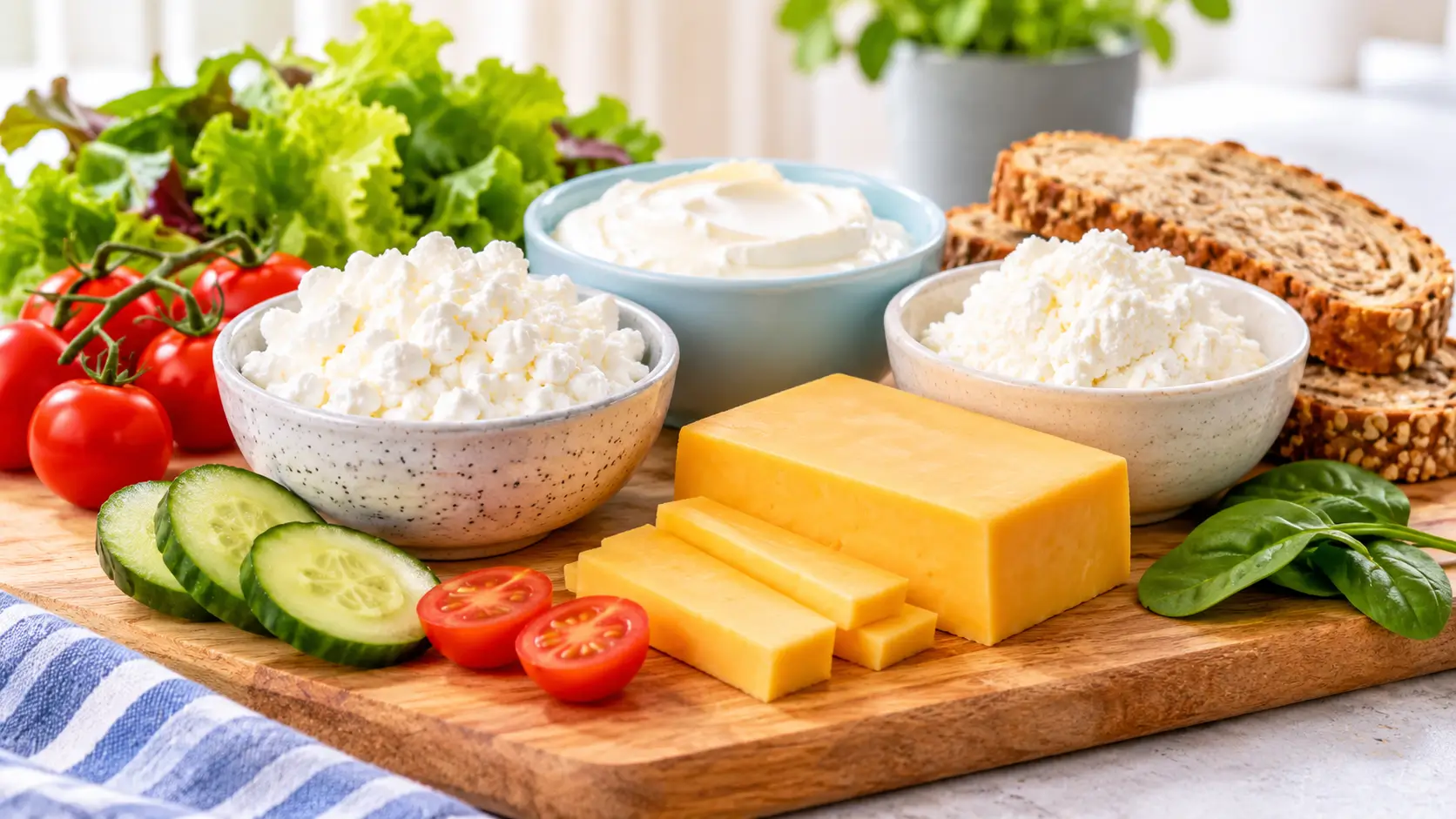

The best cheese for heart health is usually a lower-sodium, lower-saturated-fat option that fits into a balanced diet.
Part-skim mozzarella, reduced-fat cottage cheese, and some lower-fat Swiss cheeses can be useful choices. Portion size and the rest of your diet matter just as much as the type of cheese.
Cheese can provide protein, calcium, and other nutrients, but it can also contain saturated fat and sodium. These nutrients matter because eating too much saturated fat can raise LDL cholesterol, while excess sodium can make blood pressure harder to manage.
You do not have to avoid cheese completely to support cardiovascular health. Instead, compare nutrition labels, choose varieties that suit your dietary needs, and enjoy reasonable portions.
This guide explains which cheeses may be better choices, how common varieties compare, what to look for on food labels, and how cheese can fit into a heart-conscious eating pattern.
Which Cheeses May Be Better Choices for Heart Health?
No single cheese works best for everyone. If you want to limit saturated fat or salt, these varieties are worth comparing:
1. Reduced-Fat Cottage Cheese
Reduced-fat cottage cheese is one of the lower-fat options. It provides protein and calcium, and it generally contains less saturated fat than many hard cheeses.
However, salt levels vary between brands. Compare labels and choose a lower-salt version when available.
2. Quark
Quark is a soft, fresh cheese that can contain very little fat. It works well in dips, breakfast bowls, and recipes that call for soft cheese.
Check the label for salt and added ingredients, especially in flavoured varieties.
3. Reduced-Fat Cheddar
Reduced-fat cheddar can provide a familiar flavour with less fat than standard cheddar. Some mature varieties also have a strong taste, so a smaller amount can add plenty of flavour to a meal.
Reduced-fat does not mean fat-free. Check the saturated-fat and salt figures before choosing a product.
4. Ricotta
Ricotta is a soft cheese that can be lower in salt and saturated fat than some harder varieties. It works well in pasta dishes, vegetable fillings, and spreads.
Its nutritional content varies by product and milk type, so compare the label rather than assuming every ricotta has the same profile.
5. Edam
Edam is a semi-hard cheese that can be a useful alternative to some higher-fat hard cheeses. Reduced-fat versions may contain less fat than standard varieties.
Still, Edam can contain meaningful amounts of saturated fat and salt. Check the nutrition information and keep the amount in context with the rest of your meal.
6. Lower-Fat Cream Cheese
Reduced-fat cream cheese can be useful in sandwiches, wraps, and spreads. It may contain less fat than regular cream cheese.
Some products contain more salt than expected, so compare different brands. Plain versions can also make it easier to avoid unnecessary added ingredients.
These options reflect general nutrition comparisons, not proof that any particular cheese prevents heart disease. The British Heart Foundation highlights quark, cottage cheese, and ricotta as softer options that tend to contain less saturated fat and salt than many other cheeses.
Cheese Nutrition: What Matters for Your Heart?
Cheese provides useful nutrients, but its nutritional profile can vary widely. Three label details deserve particular attention.
Saturated Fat
Saturated fat is a type of dietary fat found in foods such as cheese, butter, and fatty meat. Eating too much can raise LDL cholesterol, often called “bad” cholesterol.
Higher LDL cholesterol can contribute to plaque building up inside arteries over time. Choosing cheese with less saturated fat can help reduce your overall intake.
The NHS advises comparing saturated fat per 100g. In its UK food-label guidance, more than 5g per 100g counts as high, while 1.5g or less counts as low.
Sodium and Salt
Cheese can contain a considerable amount of salt. Too much salt in the diet can contribute to high blood pressure.
This makes salt content important when comparing varieties. Cottage cheese, feta, cheddar, and processed cheese can differ considerably between brands and recipes.
UK labels usually list salt rather than sodium. Compare the salt amount per 100g and look for products with lower figures.
Protein and Calcium
Cheese supplies protein and calcium. Protein helps the body build and maintain tissues, while calcium supports healthy bones and teeth.
These nutrients can make cheese a useful part of a balanced diet. However, they do not cancel out high levels of saturated fat or salt.
The best choice is one that provides nutrients while fitting your overall dietary needs.
Cheeses to Eat in Smaller Amounts
You do not need to remove your favourite cheese from your meals. However, some varieties contain more saturated fat or salt, so smaller amounts may help you keep your overall intake balanced.
- Cheddar: A popular hard cheese that can contain substantial saturated fat and salt.
- Parmesan: Strong in flavour, so a little grated Parmesan can add taste without using a large amount.
- Brie: A soft cheese that can contain considerable saturated fat.
- Stilton and other blue cheeses: These can be high in salt and saturated fat.
- Mascarpone: A creamy cheese that often contains a high amount of fat.
- Processed cheese: Nutrition varies, but some products contain considerable salt and saturated fat.
The British Heart Foundation’s cheese comparisons show wide differences between varieties. Its guidance suggests using smaller amounts of richer cheeses and choosing lower-fat alternatives where practical.
How Much Cheese Can Fit Into a Balanced Diet?
The right amount depends on the type of cheese, your overall diet, and your nutritional needs. A useful UK guide is around 30g of hard cheese, roughly the size of a small matchbox.
For cottage cheese, a serving guide may be around 90g. These are general food portions, not strict limits for every person.
A few practical habits can help:
- Grate hard cheese over meals instead of adding several thick slices.
- Use a small amount of mature cheese for a stronger flavour.
- Add vegetables to sandwiches, pasta, and wraps.
- Compare reduced-fat versions with regular products.
- Check salt as well as saturated fat.
- Enjoy cheese as one part of a varied diet rather than relying on it as a main source of nutrition.
How to Choose Heart-Conscious Cheese at the Supermarket
Nutrition labels make it easier to compare similar products. In the UK, many food packages use traffic-light colours to show whether fat, saturated fat, sugar, and salt levels are low, medium, or high.
Compare Products Per 100g
Look at the figures per 100g when comparing two cheeses. This gives you a fairer comparison than relying on different serving sizes.
Pay particular attention to:
- Saturated fat
- Salt
- Total fat
- Protein and calcium, if these are important to your meal
A product labelled “reduced fat” may still contain a meaningful amount of saturated fat. The NHS explains that a reduced-fat claim does not necessarily mean a food is low in fat.
Check Flavoured and Processed Varieties
Flavoured cheeses, cheese spreads, and processed products can have different amounts of salt and fat. Ingredients and nutrition values also vary by brand.
Read the full label instead of assuming that a product is a better choice because its packaging uses words such as “light” or “healthy.”
Consider Your Whole Meal
Cheese is only one part of a meal. A sandwich with a modest amount of cheese, wholegrain bread, salad, and vegetables offers a different overall balance from a meal built around large amounts of cheese and processed meat.
The wider eating pattern matters more than choosing one supposedly perfect food.
Does Cheese Raise Cholesterol?
Cheese contains saturated fat, and eating too much saturated fat can raise LDL cholesterol. However, the effect of a person’s diet depends on the overall pattern of foods they eat.
Choosing lower-saturated-fat cheese and replacing some foods high in saturated fat with sources of unsaturated fat can help improve the balance of dietary fats.
Do not assume that all cheeses affect everyone in exactly the same way. If you have concerns about cholesterol, a healthcare professional can explain your test results and discuss suitable dietary changes.
Is Full-Fat Cheese Bad for Heart Health?
Full-fat cheese is not automatically harmful when eaten as part of a varied diet. It does, however, often contain more saturated fat than reduced-fat alternatives.
If you enjoy full-fat cheese, you can consider using a smaller amount or choosing it less often. You can also compare it with a lower-fat version of the same cheese.
The aim is not to label foods as completely good or bad. It is to understand what they contain and how often they fit into your usual meals.
What Eating Pattern Supports Heart Health?
No single cheese can protect the heart on its own. A balanced eating pattern includes a variety of foods and limits excess salt and saturated fat.
Useful choices include:
- Vegetables and fruit: Provide fibre, vitamins, and minerals.
- Whole grains: Foods such as oats, brown rice, and wholegrain bread provide fibre.
- Beans and lentils: Supply plant protein and fibre.
- Nuts and seeds: Provide unsaturated fats and other nutrients.
- Fish: Oily fish provides omega-3 fats.
- Lower-fat dairy: Options such as reduced-fat cheese and plain lower-fat yoghurt can provide protein and calcium.
The NHS Eatwell Guide recommends a varied diet and suggests choosing lower-fat dairy products where possible. The American Heart Association also stresses the importance of an overall dietary pattern rather than focusing on one food.
Who May Need Extra Care When Choosing Cheese?
Most people can include cheese in a balanced diet, but some may need to pay closer attention to the type they choose.
- People managing high blood pressure: Comparing salt levels may help them make suitable food choices.
- People monitoring LDL cholesterol: Lower-saturated-fat options may help reduce saturated fat intake.
- People with lactose intolerance: Some cheeses contain less lactose than others, but tolerance varies. Check product information and seek advice if symptoms continue.
- People with a milk allergy: Regular dairy cheese is not suitable for someone with a milk allergy. A healthcare professional can help identify appropriate alternatives.
- People following a medically advised diet: Follow advice from your healthcare team, especially if they have recommended specific limits for salt or other nutrients.
A healthcare professional or registered dietitian can help if you need advice that accounts for a medical condition, food allergy, or specific nutritional requirement.
Frequently Asked Questions
What is the healthiest cheese for heart health?
There is no single healthiest cheese for everyone. Reduced-fat cottage cheese and quark are often lower in fat than many hard cheeses. Reduced-fat cheddar and some ricotta products may also suit people who want to limit saturated fat. Compare salt and saturated fat on the label.
Is mozzarella good for heart health?
Mozzarella provides protein and calcium, but its fat and salt content depends on the type and brand. Fresh mozzarella and reduced-fat versions may differ from other varieties. Check the nutrition label and consider how much you use in a meal.
Is cottage cheese better than cheddar for heart health?
Reduced-fat cottage cheese often contains less saturated fat than standard cheddar. However, salt levels can vary, and different products have different nutrition profiles. Comparing the labels per 100g gives you a more useful picture.
Can I eat cheese if I have high cholesterol?
Many people can include cheese in a balanced diet, but the amount and type matter. Lower-saturated-fat varieties may help reduce overall saturated fat intake. If you have high cholesterol, ask a healthcare professional or dietitian about changes that fit your needs.
Which cheese has the least saturated fat?
Quark and reduced-fat cottage cheese are among the lower-fat options listed in British Heart Foundation comparisons. However, products vary, so check the saturated-fat figure on the packaging rather than relying only on the cheese name.
Is feta cheese healthy for the heart?
Feta provides nutrients such as protein and calcium, but it can also contain considerable salt. Its saturated-fat content varies by product. If you choose feta, compare labels and consider using a smaller amount to add flavour to salads and other meals.
Is reduced-fat cheese always the healthier option?
Not automatically. Reduced-fat cheese may contain less fat than the regular version, but it can still contain substantial salt or saturated fat. Compare the full nutrition label and choose according to your dietary needs.
How much cheese should I eat?
A general UK portion guide for hard cheese is about 30g, although needs vary between people and types of cheese. Cottage cheese has a different serving guide. Consider the amount you eat alongside the rest of your diet rather than treating one portion as a universal limit.
Key Takeaway
The best cheese for heart health is generally one that fits your nutritional needs and helps you avoid excess saturated fat and salt. Reduced-fat cottage cheese, quark, and some reduced-fat hard cheeses can be useful options.
You can still enjoy other cheeses in smaller amounts. Compare food labels, consider the full meal, and remember that your overall eating pattern matters more than any single cheese.