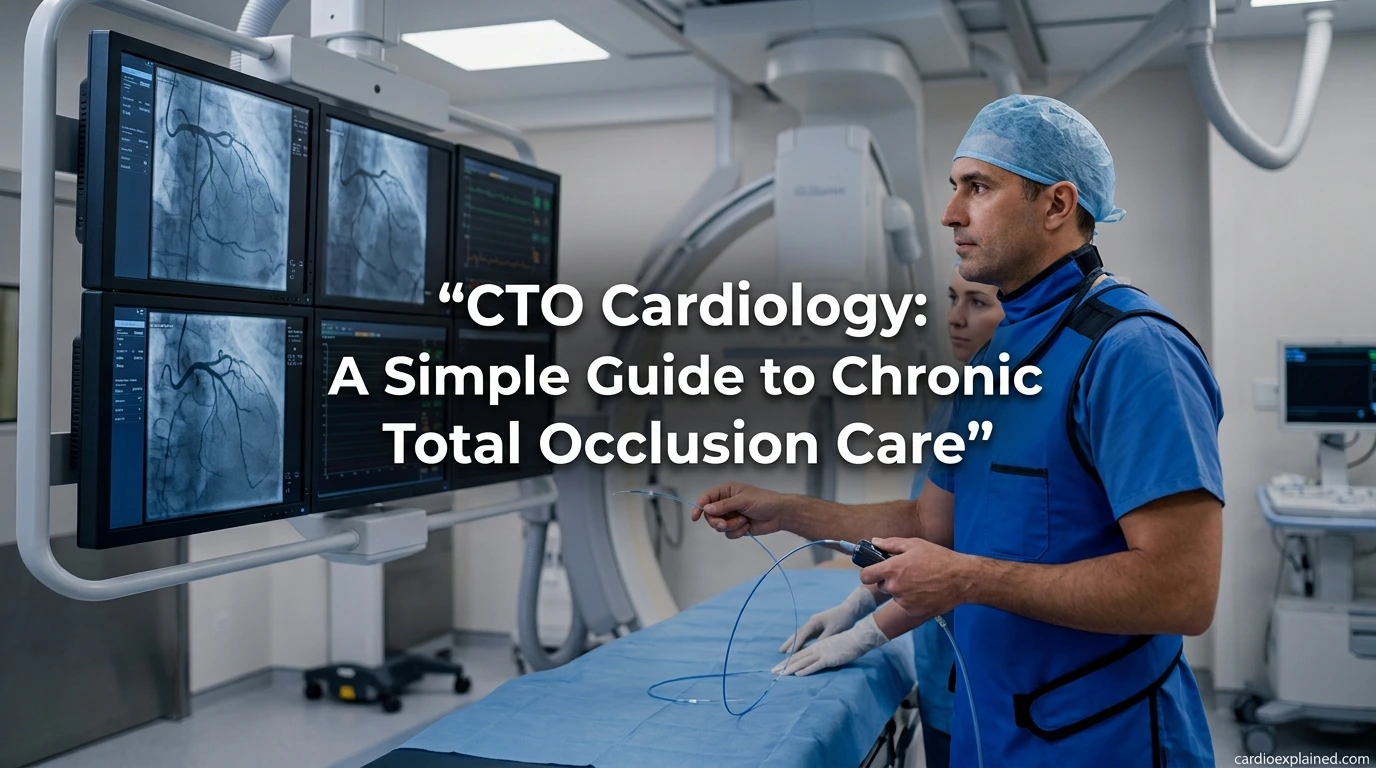

CTO cardiology is the part of heart care that treats a chronic total occlusion, which is a heart artery blocked for at least three months. It helps restore blood flow when the blockage causes symptoms or limits daily life. Doctors use special tools and careful planning to decide if treatment is the best choice.
Have you ever wondered why chest pain stays even after taking medicine? Many people ask this question when simple treatments do not help. CTO cardiology focuses on a long-lasting heart artery blockage called a chronic total occlusion. This blockage can reduce blood flow to part of the heart. Some people feel tired or short of breath. Others notice chest pain during daily tasks. Many people also have no symptoms at first. Learning about this condition can help you feel more prepared. It also makes it easier to ask good questions during a heart visit. With the right care, many people can improve their comfort and daily activities.
❤️ What Is CTO Cardiology?
A chronic total occlusion, or CTO, is a heart artery that has stayed fully blocked for at least three months. Blood cannot pass through the blocked area.
CTO cardiology focuses on finding, checking, and treating these blockages.
Your body may form tiny new blood vessels around the blockage. These small vessels can help, but they often cannot replace normal blood flow.
Doctors may find a CTO during tests for:
- ❤️ Chest pain during activity
- ❤️ Shortness of breath
- ❤️ Low energy
- ❤️ Abnormal stress test results
Some people never notice symptoms. Others find daily tasks much harder over time.
How does a CTO happen?
Most CTOs develop because of coronary artery disease. This disease causes fatty material, called plaque, to build inside the arteries.
Over time, the artery can close completely.
Risk factors include:
- ✅ High blood pressure
- ✅ High cholesterol
- ✅ Diabetes
- ✅ Smoking
- ✅ Family history of heart disease
- ✅ Older age
🩺 How Doctors Diagnose a Chronic Total Occlusion
Doctors begin with your medical history and a physical exam.
They ask about your symptoms and daily activities.
Several tests may help confirm the blockage.
| Test | Purpose | What It Shows |
| Electrocardiogram (ECG) | Checks heart signals | May show past heart damage |
| Stress test | Measures heart during exercise or medicine | Shows reduced blood flow |
| Echocardiogram | Heart ultrasound | Shows heart pumping strength |
| Coronary angiogram | Dye test with X-rays | Shows blocked heart arteries |
| CT heart scan | Detailed heart images | Helps plan treatment in some cases |
A coronary angiogram remains the main test for confirming a CTO. Doctors place a thin tube into a blood vessel. They guide it to the heart. Dye then shows the arteries on X-rays.
The American Heart Association (AHA) and the American College of Cardiology (ACC) support careful testing before treatment. Doctors also look at symptoms, heart function, and overall health.
📋 Treatment Options for CTO Cardiology
Not every blockage needs a procedure.
Doctors choose treatment based on symptoms, heart health, and personal goals.
Medicines
Many people start with medicine.
Medicine may help reduce:
- ✅ Chest pain
- ✅ Blood pressure
- ✅ Cholesterol
- ✅ Blood clot risk
Medicine cannot remove the blockage. Still, it often helps people feel better.
Lifestyle changes
Healthy habits support every treatment plan.
Helpful steps include:
- ✅ Stop smoking
- ✅ Stay active if your doctor approves
- ✅ Eat more fruits and vegetables
- ✅ Keep diabetes under control
- ✅ Take medicines as directed
CTO PCI
Sometimes doctors recommend CTO cardiology procedures such as CTO PCI.
PCI means percutaneous coronary intervention. This is a procedure that opens blocked arteries without open-heart surgery.
The doctor guides tiny wires and balloons through blood vessels. A small metal tube, called a stent, often keeps the artery open afterward.
CTO PCI usually takes longer than a standard PCI because the blockage is harder to cross.
Bypass surgery
Some people benefit from coronary artery bypass surgery.
The surgeon creates a new path around the blockage using another blood vessel.
Doctors may suggest surgery when several arteries have severe disease.
⏱️ What Happens During Recovery?
Many patients feel nervous before their first procedure. That feeling is normal.
Recovery depends on the type of treatment.
After PCI, many people return home the same day or the next day.
After bypass surgery, recovery takes several weeks.
Your care team may ask you to:
- ✅ Walk a little each day
- ✅ Drink enough water
- ✅ Watch the procedure site
- ✅ Take medicines every day
- ✅ Attend follow-up visits
Cardiac rehabilitation may also help.
Cardiac rehabilitation is a guided exercise and education program. It helps people recover safely after heart treatment.
Many patients say the program builds confidence along with strength.
⚠️ Benefits and Risks of Treatment
Every treatment has benefits and risks.
Your doctor will explain what fits your health needs.
Possible benefits include:
- ✅ Less chest pain
- ✅ Better exercise ability
- ✅ Improved quality of life
- ✅ Better daily comfort
Possible risks include:
- ✅ Bleeding
- ✅ Blood vessel injury
- ✅ Infection
- ✅ Heart rhythm changes
- ✅ Rare need for emergency surgery
Many procedures happen safely in experienced centers.
Doctors balance the possible benefits against the possible risks before making a recommendation.
A real-life example
John, age 67, noticed chest pain while mowing his lawn.
Medicine helped only a little.
His heart team completed several tests. They recommended PCI after reviewing his case.
Months later, he walked farther with much less discomfort.
Each person has different results. Your experience may not be the same.
Another patient story
Maria cared for her grandchildren every week.
She became tired after short walks.
Testing found a chronic total occlusion.
Her doctor adjusted her medicines first.
She later joined cardiac rehabilitation. She slowly returned to many daily activities.
❤️ Living Well With Heart Disease

A heart blockage does not define your future.
Many people live active lives after treatment or with medicine alone.
Small daily choices matter.
Try these healthy habits:
- ✅ Eat balanced meals
- ✅ Stay active
- ✅ Sleep well
- ✅ Manage stress
- ✅ Keep medical appointments
- ✅ Know your blood pressure numbers
Ask questions during every visit.
Bring a family member if you feel nervous.
Write down symptoms before your appointment.
These simple steps help your doctor understand how you feel.
📋 Frequently Asked Questions
Q: What does CTO cardiology mean?
A: CTO cardiology focuses on treating chronic total occlusions in heart arteries. Doctors use tests, medicines, and procedures when they may improve symptoms or daily life.
Q: Can a chronic total occlusion heal by itself?
A: No. A complete long-term blockage usually does not open on its own. Your body may create small new blood vessels, but they often cannot replace normal blood flow.
Q: Does every CTO need a procedure?
A: No. Many people do well with medicine and healthy habits. Doctors recommend procedures only when the expected benefits may outweigh the risks.
Q: Is CTO PCI safe?
A: Yes, it is often safe in experienced hands. Every procedure carries risks, so your doctor reviews your health before making a plan.
Q: How long does recovery take after treatment?
A: Recovery depends on the treatment. Many people recover from PCI within days, while bypass surgery usually needs several weeks.
Q: Can I exercise after a chronic total occlusion diagnosis?
A: Yes, in many cases. Your cardiologist can recommend safe activity based on your heart health and treatment plan.
Final Thoughts
Learning about CTO cardiology can make heart care feel less confusing. A chronic total occlusion is a long-term blocked heart artery, but many treatment choices are available. Doctors use careful testing to decide the best plan for each person. Healthy habits also play a big role in heart health. Talk to a cardiologist if you have chest pain, shortness of breath, or other heart concerns. Early evaluation may help you find the right care and improve your daily life.