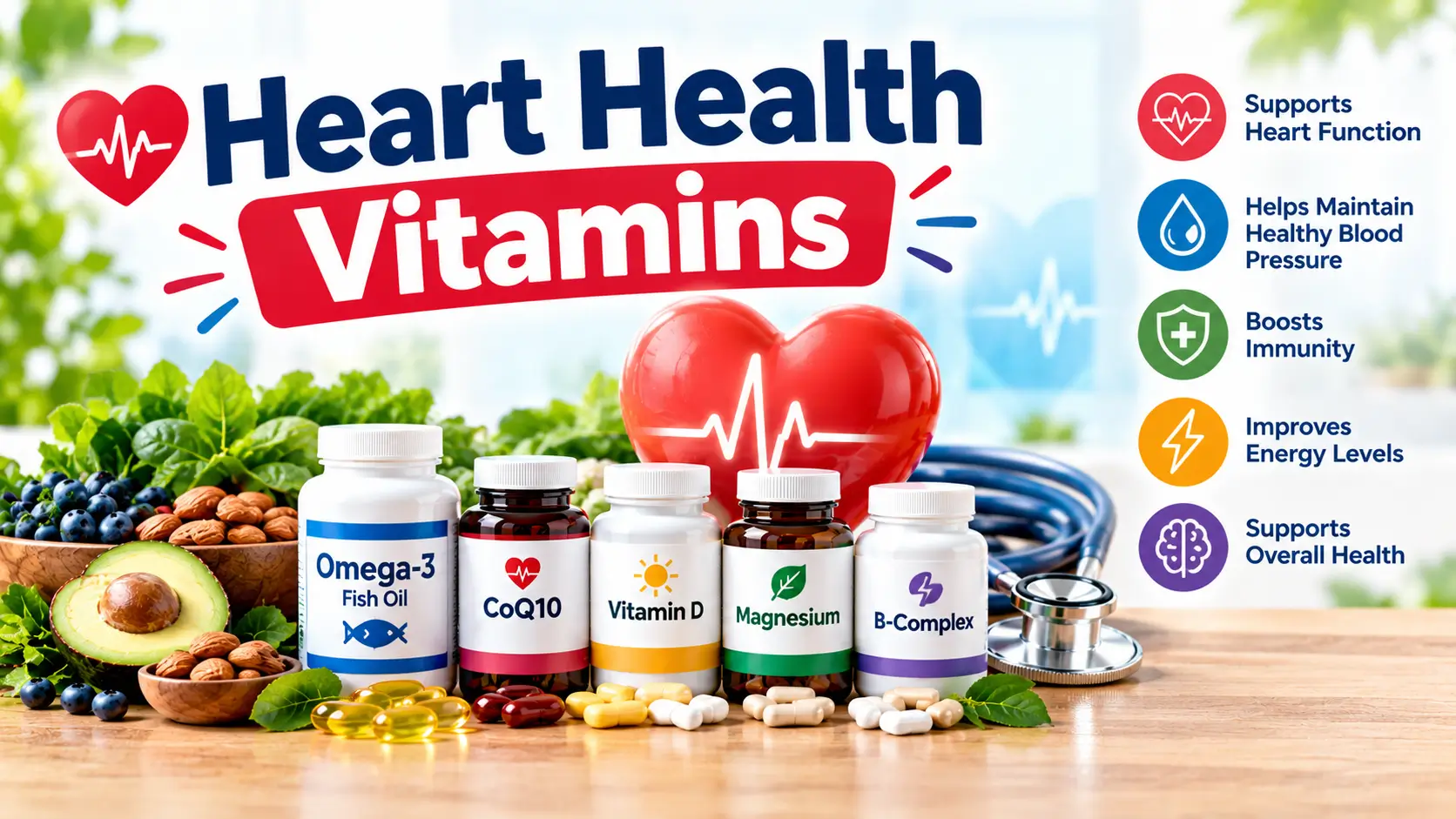

No vitamin has been proven to prevent heart attacks or strokes in healthy adults. Vitamins help most when they correct a real shortage, such as low vitamin D or B12.
For protecting the heart, food, exercise, not smoking, and managing blood pressure and cholesterol carry far stronger evidence.
Vitamin aisles are full of labels that mention the heart. A busy shopper could easily conclude that the right tablet might do the work of a healthy lifestyle. Research tells a more sober story.
Large trials have tested vitamins C, D, E, B-complex, and beta-carotene, and most failed to show fewer heart attacks or strokes in people without a deficiency. A few findings are more nuanced, and some products carry real risks.
This guide covers heart health vitamins one at a time. You will see what each does in the body, what studies found, where results are mixed, and when a supplement makes sense. You will also learn which food sources are worth building into your meals. The article is educational and does not replace advice from your own clinician.
Vitamins, Deficiency, and Heart Risk Are Different Things
Before looking at individual vitamins, separate four ideas that marketing often blends together:
- Correcting a deficiency: A blood test shows a low level and a supplement restores it. This is a genuine benefit, but it addresses the shortage, not heart disease itself.
- Improving a lab marker: Some nutrients shift a number such as homocysteine. A better number does not always translate into fewer heart attacks.
- Lowering cardiovascular risk: This needs large, long human trials. Most vitamins have not passed that bar.
- Treating heart disease: No over-the-counter vitamin replaces prescribed treatment.
Vitamin-by-Vitamin Review
Vitamin D
Vitamin D supports bones and muscles. People with low levels have shown higher cardiovascular risk in observational studies, but those links do not prove cause. Large randomized trials of vitamin D supplements in generally healthy adults did not show fewer heart attacks or strokes.
It is worth correcting a confirmed deficiency, yet taking extra beyond that has not been shown to protect the heart. Very high doses can raise blood calcium and harm the kidneys.
B vitamins and folate
B6, B12, and folate help the body process homocysteine, an amino acid linked to vascular problems. Vitamin pills lower homocysteine, but trials found no drop in heart attacks. Stroke is a slightly different story. A large trial in China involving adults with high blood pressure suggested that adding folic acid to blood pressure treatment reduced first stroke. Because that population differs from many Western diets, the finding may not apply everywhere. Older adults with low B12 absorption or people on strict vegan diets may need a supplement for that reason alone.
Vitamin K
Vitamin K helps blood clot and is involved in how the body handles calcium. Observational studies hint that higher intake from food may relate to better arterial health, and trials of K2 supplements are small and short. For now, evidence is limited. The key safety point is that vitamin K changes how warfarin works, so people taking it need steady intake and should speak with their prescriber before using supplements.
Vitamin E
Vitamin E is an antioxidant. Early observational work looked promising, yet randomized trials showed no heart protection. The U.S. Preventive Services Task Force recommends against using it to prevent cardiovascular disease. High doses may raise bleeding risk.
Vitamin C
Vitamin C is plentiful in citrus fruit, peppers, and berries. People who eat more fruits and vegetables tend to have healthier hearts, but supplements of vitamin C alone have not shown clear cardiovascular benefit in trials. Large doses can cause stomach upset and may contribute to kidney stones in susceptible people.
Beta-carotene and vitamin A
Beta-carotene is converted to vitamin A in the body. Trials in smokers found it increased lung cancer risk, and the Task Force recommends against using it to prevent cardiovascular disease. Too much preformed vitamin A can harm the liver and, in pregnancy, the baby.
Niacin (vitamin B3)
High-dose niacin lowers LDL cholesterol and triglycerides and raises HDL. Even so, trials adding it to statin therapy did not reduce heart attacks and produced more side effects, including flushing, liver problems, and raised blood sugar. It is no longer a routine choice.
Multivitamins
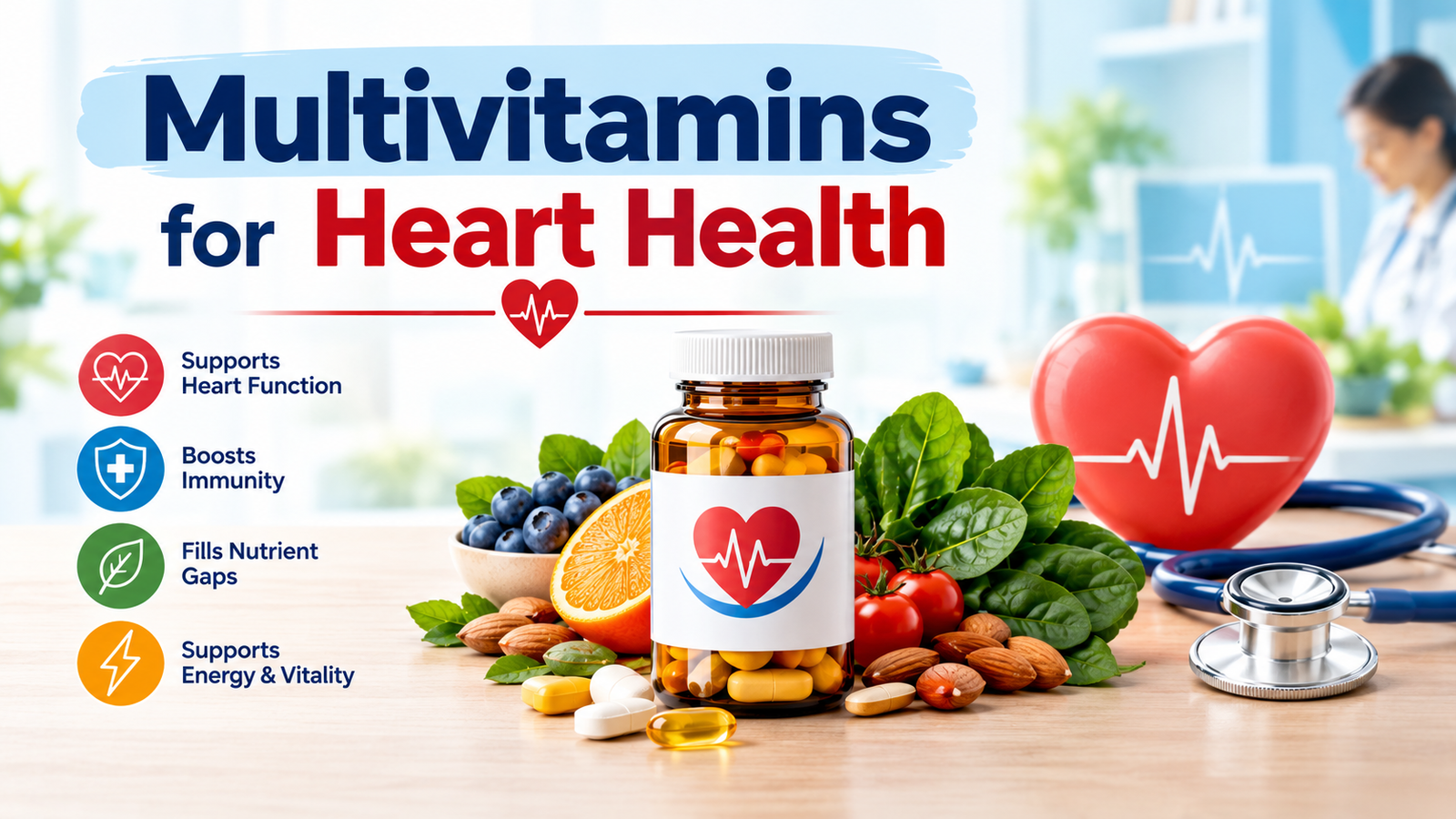
Multivitamins bundle many nutrients. Large trials, including studies of older adults, did not find clear protection against cardiovascular events. They may help people with limited diets, but they do not substitute for healthy eating.
Why Vitamin Pills Often Disappoint
Heart disease builds over decades through high blood pressure, high LDL cholesterol, smoking, raised blood sugar, and inactivity. Most of these are not caused by a missing vitamin. Foods also deliver fiber, healthy fats, potassium, and plant compounds that work together, and a pill cannot copy that mix.
Getting Vitamins From Food
| Nutrient | Everyday food sources |
| Vitamin D | Fatty fish, egg yolks, fortified milk or cereals, sensible sun exposure |
| Folate | Lentils, beans, leafy greens, citrus, fortified grains |
| B12 | Fish, meat, eggs, dairy, fortified foods |
| Vitamin K | Spinach, kale, broccoli |
| Vitamin E | Nuts, seeds, vegetable oils |
| Vitamin C | Oranges, peppers, strawberries, tomatoes |
A pattern such as the Mediterranean diet, rich in vegetables, legumes, whole grains, nuts, and fish, has stronger heart evidence than any single vitamin.
Risks and Precautions
- Megadoses: Fat-soluble vitamins A, D, E, and K can build up in the body.
- Medication interactions: Vitamin K affects warfarin, and high-dose vitamin E may add to bleeding risk with blood thinners. Niacin can interact with statins.
- Kidney and liver conditions: Some vitamins and minerals can reach unsafe levels.
- Pregnancy: Needs differ, and excess vitamin A is risky. Follow clinician guidance and use a suitable prenatal formula.
- Quality: Supplements are generally not tested for effectiveness before sale. Look for independent testing seals.
- False security: A daily tablet should not replace exercise, healthy meals, or prescribed medicine.
Who May Reasonably Need a Vitamin Supplement
- People with a confirmed deficiency on a blood test
- Older adults with poor appetite or low B12 absorption
- People on strict vegan diets, who need a reliable B12 source
- Those with digestive conditions or weight-loss surgery that limit absorption
- Pregnant people, using a prenatal product
What Protects the Heart More
- Eat vegetables, fruit, beans, whole grains, nuts, and fish, with less salt, added sugar, and processed meat
- Aim for at least 150 minutes of moderate activity each week
- Stay tobacco-free
- Maintain a healthy weight and sleep well
- Manage stress
- Check blood pressure, cholesterol, and blood sugar, and follow treatment plans
When to Seek Urgent Help
Call your local emergency number for chest pressure or pain, pain spreading to the arm, jaw, or back, sudden severe breathlessness, fainting, or signs of stroke such as face drooping, arm weakness, or slurred speech. A supplement is never the answer to these symptoms.
Frequently Asked Questions
What is the best vitamin for heart health?
No single vitamin has proven heart protection for everyone. The best choice depends on your own blood tests and diet. Correcting a documented deficiency makes sense, and a clinician can tell you whether any supplement is needed.
Does vitamin D protect the heart?
Low vitamin D has been linked with higher cardiovascular risk, but large trials of supplements did not show fewer heart attacks or strokes in healthy adults. Treat a confirmed deficiency, and avoid very high doses without medical supervision.
Can B vitamins lower the risk of heart attack?
They lower homocysteine, but trials did not show fewer heart attacks. Folic acid may reduce stroke in some groups, particularly adults with high blood pressure in certain regions. Ask your clinician whether testing is appropriate.
Is it better to take vitamins or eat vitamin-rich foods?
Food is generally preferred. Meals deliver vitamins with fiber, healthy fats, and minerals, and large dietary studies link whole-food patterns to better heart outcomes. Supplements are better reserved for confirmed gaps.
Are vitamins safe with blood thinners?
Not always. Vitamin K affects warfarin, and vitamin E at high doses may increase bleeding tendency. Ask a pharmacist to review every product you take against your prescriptions.
Do I need vitamins if I have high cholesterol?
Usually not. Cholesterol is mainly managed through diet, activity, and medicines such as statins. Niacin once played a role, but it has not improved outcomes when added to statins and is not a routine option.
How do I know if I am deficient?
Blood tests can measure vitamin D, B12, folate, and other levels. Symptoms alone are unreliable. Your clinician can decide which tests fit your diet, age, and health conditions.
Key Takeaway
Vitamins can fix a genuine shortage, but they have not been shown to prevent heart attacks or strokes in healthy people, and some, such as beta-carotene and high-dose vitamin E, are discouraged for this purpose.
Build your plan on food, movement, tobacco-free living, and medical care. Speak with a clinician or pharmacist before starting any product, especially if you take regular medicine.