
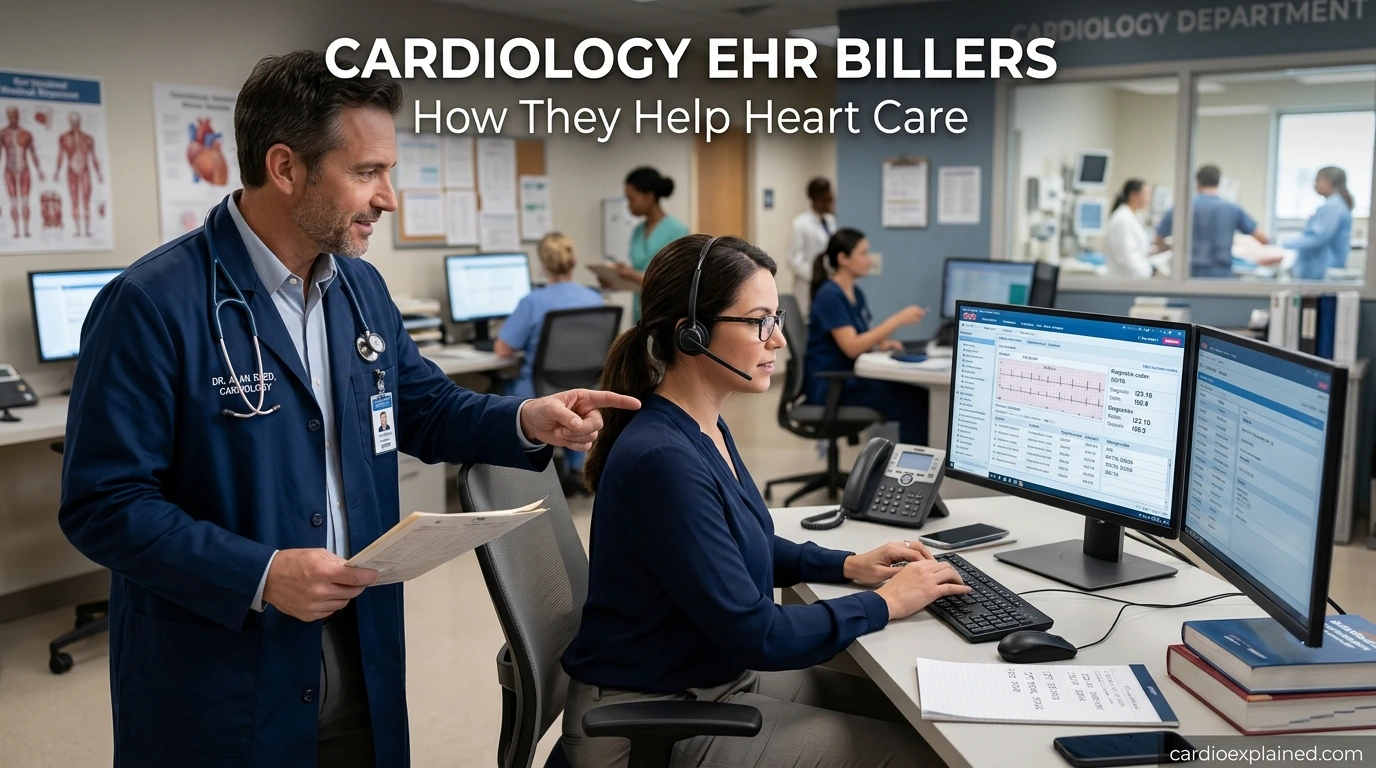

Cardiology EHR billers help heart clinics send correct medical claims using electronic health records (EHRs). They connect patient records with billing codes to reduce errors and speed up payments. Good billing helps doctors focus on patient care while making sure clinics receive fair payment for their work.
Have you ever wondered what happens after a heart doctor finishes your visit? The care does not end when you leave the office. Many people work behind the scenes to keep the clinic running well. One of those people is a cardiology EHR billers specialist.
These billing experts use electronic health records to prepare and send insurance claims. They help doctors receive payment for the care they provide. They also help lower billing mistakes that may delay claims. When billing works well, patients often enjoy a smoother experience. You may see fewer billing problems and faster claim updates. Learning how these professionals work can help you better understand your healthcare journey and why accurate medical records matter.
❤️ What Are Cardiology EHR Billers?
Cardiology EHR billers are trained billing professionals who work with heart doctors and heart clinics. They use electronic health records, also called EHRs, to prepare insurance claims.
An EHR is a digital patient chart. It stores health details, test results, medicines, and doctor notes. Instead of paper files, clinics use secure computer systems.
The biller’s job starts after the doctor finishes a visit. They review the patient’s record. Then they match the visit with the correct billing codes. These codes tell insurance companies what care the patient received.
How EHR Systems Help Billing
Electronic health records keep important information in one place. This makes billing easier and more accurate.
An EHR may include:
- 📋 Patient history
- 📋 Doctor notes
- 📋 Heart test results
- 📋 Medicines
- 📋 Visit dates
- 📋 Procedures
Because the information stays together, billers spend less time searching for missing details.
Why Heart Care Needs Special Billing
Heart care often includes many services during one visit.
A patient may receive:
- An office visit
- An electrocardiogram, or ECG, which checks the heart’s electrical activity
- Blood tests
- An ultrasound of the heart, called an echocardiogram
- Medicine changes
Each service needs the correct billing code. Even a small mistake may delay payment.
Many heart clinics also care for patients with long-term health problems. These patients often return several times each year. Accurate records help every visit connect with earlier care.
A Real-Life Example
Mrs. Lewis visited her cardiologist because of chest discomfort. The doctor reviewed her history, ordered an ECG, and changed one medicine.
The EHR recorded every step. The billing specialist reviewed the record and submitted one complete insurance claim. Because the information matched, the insurance company processed the claim without delay.
🩺 Why Heart Clinics Need Accurate Billing
Accurate billing helps everyone involved in healthcare.
Doctors receive payment for their work. Clinics stay open. Patients receive clear bills. Insurance companies review complete claims.
Without good billing, problems may happen quickly.
Common Billing Problems
Some claims fail because of simple mistakes.
These may include:
- ✅ Missing patient information
- ✅ Wrong billing codes
- ✅ Missing doctor notes
- ✅ Incorrect insurance details
- ✅ Duplicate claims
Modern EHR systems help reduce these mistakes. They can alert staff when information is missing before a claim is sent.
Helping Doctors Spend More Time with Patients
Doctors want to care for patients instead of fixing paperwork.
When skilled billing teams handle insurance claims, doctors can spend more time discussing heart health. Patients often ask questions about medicines, test results, or lifestyle changes. Good billing support gives doctors more time for these conversations.
Following Standard Medical Guidelines
Heart clinics often follow guidance from the American Heart Association (AHA) and the American College of Cardiology (ACC). These groups help doctors provide safe and effective care.
Billing professionals must also understand current coding rules. They review medical records carefully before sending claims.
This careful process helps reduce rejected claims while supporting accurate documentation.
Better Patient Trust
Many patients feel worried when they receive unexpected medical bills.
Clear billing helps patients understand:
- What services they received
- What insurance paid
- What they may still owe
Simple and accurate bills build trust between patients and healthcare teams.
⏱️ How Cardiology EHR Billers Work Every Day
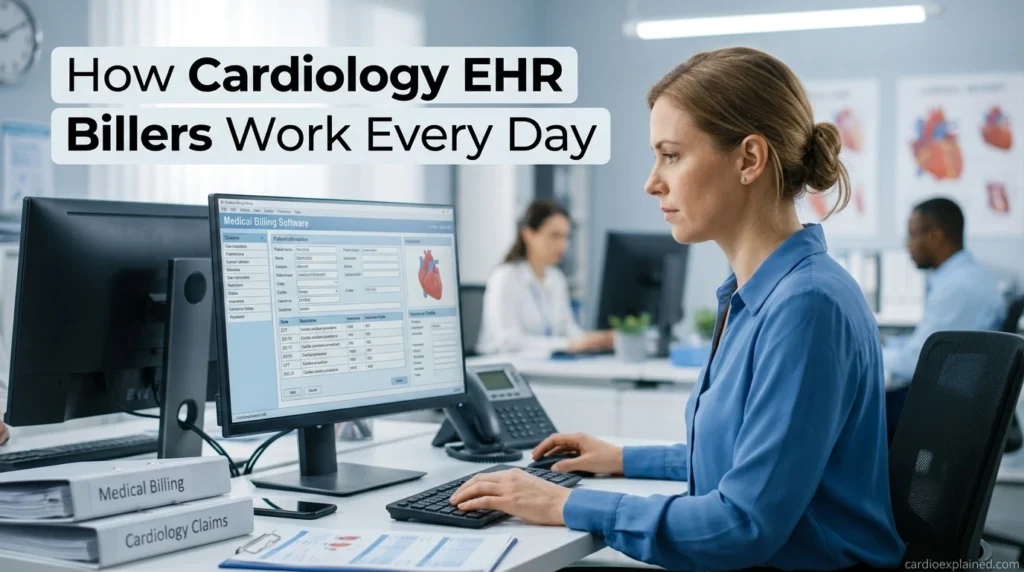
A billing specialist completes many steps before an insurance company reviews a claim.
Each step helps improve accuracy.
Reviewing the Patient Record
The biller first opens the electronic health record.
They check:
- Patient information
- Doctor notes
- Test reports
- Diagnoses
- Procedures
If something seems unclear, they contact the healthcare team before submitting the claim.
Matching Services with Billing Codes
Every healthcare service has a billing code.
These codes tell insurance companies:
- What happened during the visit
- Why the patient needed care
- Which tests the doctor performed
Correct coding helps prevent payment delays.
Sending the Insurance Claim
After checking everything, the biller sends the claim electronically.
Electronic claims often move faster than paper claims.
Many insurance companies also send updates through electronic systems. This helps clinics follow each claim from start to finish.
Fixing Claim Problems
Sometimes insurance companies ask for more information.
The biller reviews the request.
They may:
- Contact the doctor
- Add missing records
- Correct coding errors
- Resubmit the claim
Fast action often helps resolve problems sooner.
A Second Patient Story
Mr. Carter visited a cardiology clinic after feeling short of breath. The doctor ordered an echocardiogram and adjusted his treatment plan.
The billing specialist noticed one report had not reached the EHR. Instead of sending an incomplete claim, they waited for the missing document. The finished claim matched the medical record, and the insurance company approved payment without extra requests.
Why Teamwork Matters
Heart care involves many healthcare workers.
These may include:
- ❤️ Cardiologists
- ❤️ Nurses
- ❤️ Medical assistants
- ❤️ Imaging staff
- ❤️ Laboratory workers
- ❤️ Billing professionals
Each person plays an important part. Good communication helps patients receive quality care and fewer billing problems.
Table: Common Heart Services and Why They Need Accurate Billing
| Heart Service | Purpose | Why Accurate Billing Matters |
| Office Visit | Discuss symptoms and treatment | Records the doctor’s evaluation correctly |
| ECG | Checks heart rhythm | Prevents billing confusion for testing |
| Echocardiogram | Creates heart images | Supports correct payment for imaging |
| Stress Test | Shows heart function during activity | Helps match the service with insurance rules |
📋 How Doctors Check Billing Accuracy
Good billing starts with complete medical records. Doctors and billing teams work together to make sure every claim matches the care provided.
Many clinics also review claims before sending them to insurance companies. This process helps catch small mistakes early.
How Cardiology EHR Billers Support Better Records
Cardiology EHR billers review each patient record with care. They compare doctor notes, test results, and treatment details before submitting claims.
They often check for:
- ✅ Complete patient information
- ✅ Correct insurance details
- ✅ Accurate diagnosis codes
- ✅ Correct procedure codes
- ✅ Signed doctor notes
If something is missing, they ask the healthcare team to update the record.
Common Heart Tests
Heart doctors use several tests to understand how well the heart works.
| Test | Purpose | Simple Explanation |
| ECG | Check heart rhythm | Records the heart’s electrical signals |
| Echocardiogram | View heart structure | Uses sound waves to create heart images |
| Stress Test | Measure heart function | Shows how the heart works during exercise or medicine |
| Holter Monitor | Watch heart rhythm | Records heartbeats for one or more days |
Each test must match the medical record. Accurate records support accurate billing.
Another Patient Example
Ms. Green visited her cardiologist because of dizziness. The doctor ordered an ECG and a Holter monitor.
The billing specialist reviewed the EHR before sending the claim. One diagnosis code needed an update. After the correction, the insurance company accepted the claim without delay.
This careful review helped avoid extra paperwork for both the clinic and the patient.
✅ Treatment and Good Billing Management
Treatment focuses on improving heart health. Billing focuses on recording that treatment correctly.
Both matter because they support quality patient care.
Common Heart Treatments
A cardiologist may recommend:
- ❤️ Heart medicines
- ❤️ Healthy eating changes
- ❤️ Regular exercise
- ❤️ Blood pressure checks
- ❤️ Cholesterol control
- ❤️ Heart procedures when needed
Each treatment becomes part of the patient’s electronic health record.
Why Complete Records Matter
Every visit adds new information.
Doctors may record:
- Symptoms
- Test results
- New medicines
- Follow-up plans
- Lifestyle advice
Billing teams use these details when preparing insurance claims.
When records stay complete, clinics often experience fewer rejected claims.
Working With Insurance Companies
Insurance companies review every claim before payment.
They may ask questions if:
- Information is missing.
- Codes do not match.
- Medical notes seem incomplete.
Billing specialists answer these requests using the patient’s electronic record.
This process helps many claims move forward more quickly.
Technology Makes Billing Easier
Modern EHR systems offer helpful tools.
Many systems can:
- 📋 Flag missing information
- 📋 Check common coding errors
- 📋 Track claim status
- 📋 Store patient history securely
These features save time and help reduce mistakes.
🌿 Tips That Help Prevent Billing Problems
Patients also play an important role in accurate billing.
Simple steps before each visit can prevent delays later.
Before Your Appointment
You can help by:
- ✅ Bringing your insurance card
- ✅ Updating your address
- ✅ Sharing medicine changes
- ✅ Reporting new symptoms
- ✅ Asking questions about your bill
Small updates often make a big difference.
Keep Your Records Updated
Tell your clinic if you change:
- Phone number
- Insurance plan
- Primary doctor
- Home address
Current information helps billing teams prepare accurate claims.
Read Your Medical Bills
Review your bill after each visit.
Look for:
- Visit dates
- Test names
- Insurance payments
- Remaining balance
If something looks wrong, contact the clinic. Many questions have simple answers.
Why Communication Helps
Many billing concerns happen because information changes over time.
Patients who ask questions often understand their bills better. Clear communication helps everyone work together.
⚠️ When Should You Contact Your Doctor or Billing Office?
Sometimes you should call the clinic instead of waiting.
Quick action may solve small problems before they become larger ones.
Contact Your Doctor If You Have
- ⚠️ New chest pain
- ⚠️ Trouble breathing
- ⚠️ Fainting
- ⚠️ Fast or irregular heartbeats
- ⚠️ Swelling that gets worse
These symptoms may need medical attention. Always follow your doctor’s advice.
Contact the Billing Office If You Notice
- The wrong insurance company
- Duplicate charges
- Missing insurance payments
- Bills for services you did not receive
- Questions about payment plans
The billing team can review your account and explain each charge.
Many clinics also offer secure online patient portals where you can review visits and billing information.
Frequently Asked Questions
❓ Q: What are cardiology EHR billers?
A: Cardiology EHR billers are billing professionals who use electronic health records to prepare insurance claims for heart care. They help match medical services with correct billing codes. Their work supports accurate payments and fewer billing errors.
❓ Q: Do cardiology EHR billers work with doctors every day?
A: Yes. They often work closely with cardiologists, nurses, and office staff. Good teamwork helps keep patient records complete and insurance claims accurate.
❓ Q: Can electronic health records reduce billing mistakes?
A: Yes, in many cases. EHR systems organize patient information in one place. They can also alert staff when important details are missing before claims are sent.
❓ Q: Why do insurance claims sometimes take longer?
A: Claims may slow down if information is missing or billing codes need correction. Insurance companies sometimes request more details before approving payment.
❓ Q: Should patients understand how cardiology EHR billers work?
A: Yes. Knowing how cardiology EHR billers support the billing process can help patients understand medical bills and insurance claims. It also makes it easier to ask helpful questions during clinic visits.
❓ Q: Can patients help improve billing accuracy?
A: Yes. Keeping insurance information current and reviewing medical bills can reduce problems. Sharing updates with the clinic also helps.
❓ Q: Are electronic health records safe?
A: Yes, in many cases. Healthcare organizations use security measures to protect patient information. Authorized healthcare workers follow privacy rules when accessing records.
Conclusion
Good heart care depends on many people working together. Doctors care for patients, while billing specialists help clinics receive payment for that care. Cardiology EHR billers play an important role by connecting electronic health records with accurate insurance claims. Their careful work can reduce billing errors, support faster claim processing, and improve the patient experience. Patients also help by keeping their information updated and asking questions about their bills. If you have concerns about your heart or your medical charges, talk to your cardiologist or your clinic’s billing team. Clear communication often leads to better care and fewer surprises.