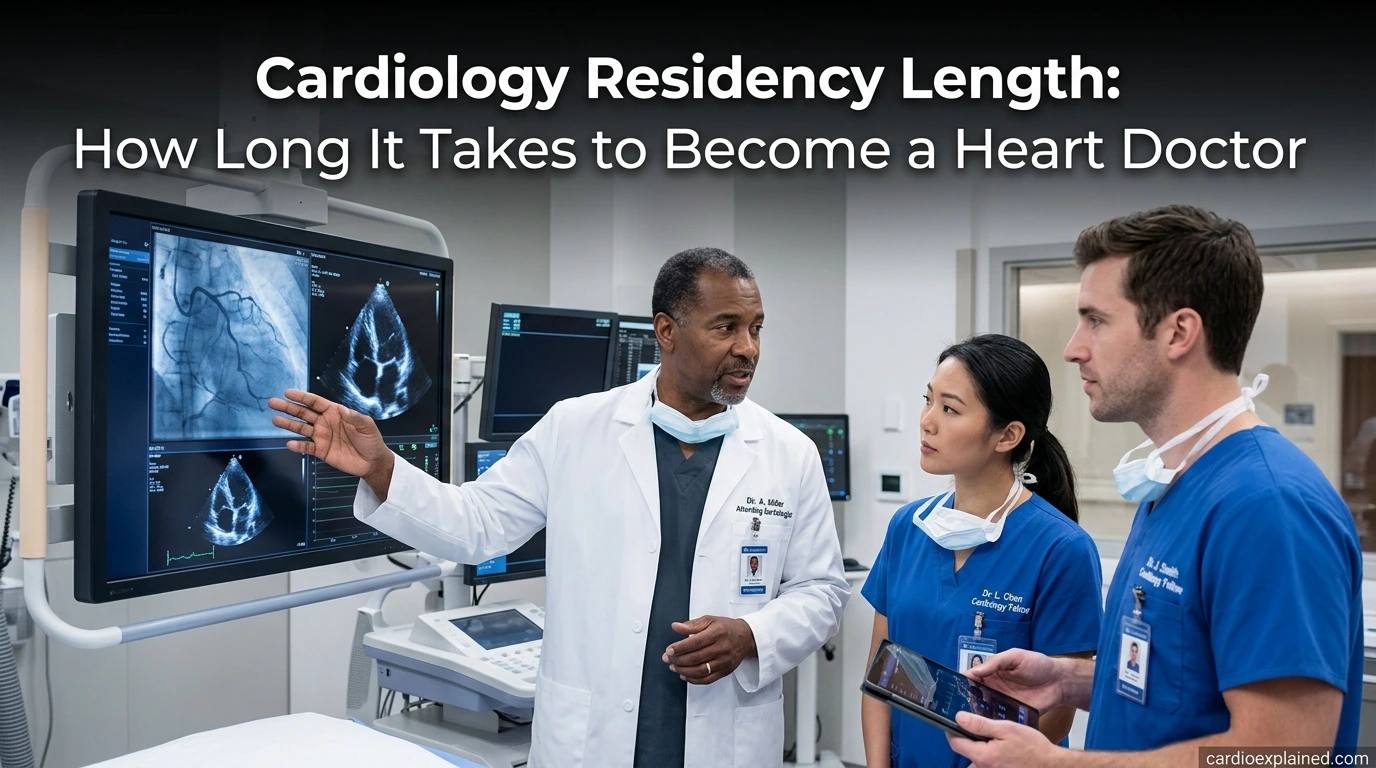

Cardiology residency length is the full training time needed before a doctor becomes a heart specialist. In the United States, this path usually takes about 14 years after high school, including college, medical school, internal medicine residency, and a cardiology fellowship. The training helps doctors build the skills to care for people with heart problems safely.
Have you ever wondered how long it takes to become a heart doctor? Many people ask this after meeting a cardiologist. Some students also want to know before choosing a career. The cardiology residency length often surprises people because the path includes several training steps. Each step builds new skills and confidence. Some years focus on learning. Others focus on caring for real patients with expert guidance. By the end, doctors have strong knowledge and hands-on experience. Knowing the timeline helps patients, families, and future doctors understand why heart specialists spend many years preparing for this important role.
❤️ Understanding Cardiology Residency Length
Many people think cardiology is a residency. That is not correct.
A doctor first finishes medical school. Next comes an internal medicine residency. This is a three-year training program.
After that, the doctor enters a cardiology fellowship. A fellowship gives extra training in one specialty.
The usual training path in the United States looks like this:
- High school: 4 years
- College: 4 years
- Medical school: 4 years
- Internal medicine residency: 3 years
- General cardiology fellowship: 3 years
That means most doctors spend about 14 years after high school before becoming a general cardiologist.
Some doctors continue even longer. They may complete another one to three years in a subspecialty.
Examples include:
- 🩺 Interventional cardiology, which treats blocked arteries.
- 🩺 Electrophysiology, which treats heart rhythm problems.
- 🩺 Advanced heart failure, which cares for very sick heart patients.
This long path helps protect patients. Heart disease can become life-threatening. Doctors need many years of guided practice before working on their own.
⏱️ Cardiology Residency Length in USA: The Full Timeline
The cardiology residency length in the United States includes more than one training program.
College
Students usually earn a bachelor’s degree first.
Many study biology or chemistry. Still, any major works if required science classes are complete.
Medical School
Medical school lasts four years.
Students learn about the human body. They also care for patients during supervised hospital rotations.
Internal Medicine Residency
This three-year program teaches doctors how to care for adults.
Residents treat many illnesses. They also learn emergency care and hospital medicine.
Cardiology Fellowship
Doctors then enter a three-year cardiology fellowship.
They learn about:
- ❤️ Heart attacks
- ❤️ Heart failure
- ❤️ High blood pressure
- ❤️ Heart valve disease
- ❤️ Heart imaging tests
Heart imaging includes an echocardiogram. This is an ultrasound that creates pictures of the heart.
Many programs follow guidance from organizations like the American Heart Association (AHA) and the American College of Cardiology (ACC). These groups help shape safe and effective heart care.
📋 What Happens During Training?
Training involves much more than classroom learning.
Doctors spend long hours with patients.
They work with experienced heart specialists every day.
Many patients feel nervous before their first heart visit. A cardiology fellow may explain each test using simple words. This often helps patients feel calmer before treatment.
Doctors learn many skills, including:
- ✅ Reading electrocardiograms (ECGs), which record the heart’s electrical activity.
- ✅ Reading echocardiograms.
- ✅ Managing heart emergencies.
- ✅ Planning long-term treatment.
- ✅ Working with nurses and other specialists.
Some fellows also take part in research.
Research helps doctors learn better ways to prevent and treat heart disease.
💵 Cardiology Residency Salary and Fellowship Pay
People often ask about income during training.
Residents and fellows earn salaries while they train.
The amount depends on the hospital and city.
Here is a simple guide.
| Training Stage | Typical Annual Salary | Main Role |
| Internal Medicine Resident | $65,000–$85,000 | Adult medical care |
| Cardiology Fellow | $75,000–$95,000 | Advanced heart training |
| Practicing Cardiologist | Often $350,000+ | Independent heart specialist |
These numbers are estimates. Pay may change by location, experience, and employer.
Doctors often work nights, weekends, and holidays during training.
The salary grows after training ends.
🩺 Life After Cardiology Fellowship

Some doctors begin practice right away.
Others continue learning through extra fellowships.
Popular choices include:
| Subspecialty | Extra Training | Main Focus |
| Interventional Cardiology | 1 year | Heart stents and blocked arteries |
| Electrophysiology | 2 years | Heart rhythm problems |
| Advanced Heart Failure | 1 year | Severe heart disease |
Each extra year helps doctors treat more complex conditions.
Patients often benefit from doctors with special training for difficult heart problems.
🌍 Training Outside the United States
Training differs across countries.
Europe
Cardiology residency length in Europe depends on the country.
Many European programs combine internal medicine and cardiology differently.
Some countries finish training in about six to eight years after medical school.
Others take longer.
Each nation has its own medical licensing rules.
Canada
Canada follows a path similar to the United States.
Doctors complete:
- Medical school
- Internal medicine residency
- Cardiology fellowship
The total time usually reaches about six years after medical school.
Training standards remain very high across Canada.
🎓 How to Become a Cardiologist After 12th
Students outside the United States often ask this question.
The answer depends on the country.
In general, the path looks like this:
- Finish high school.
- Enter medical school.
- Complete medical training.
- Finish internal medicine training.
- Complete cardiology fellowship.
Students should build strong science and math skills early.
Good communication also matters.
Heart doctors spend much of each day talking with patients and families.
❤️ Why Does Training Take So Long?
Heart disease remains one of the leading health problems worldwide.
Doctors must recognize many conditions.
They also need strong decision-making skills.
Years of supervised training help doctors:
- ✅ Spot serious problems early.
- ✅ Read complex heart tests.
- ✅ Choose safe treatments.
- ✅ Handle emergencies.
- ✅ Explain care clearly.
One family may visit after a loved one has chest pain.
A well-trained cardiologist can quickly decide which tests may help.
This careful process supports safer care.
📱 What People Say Online
Many people search online for personal stories.
Searches like “cardiology residency length Reddit” often show discussions from doctors and students.
These posts can share daily experiences.
Still, they should not replace official program information.
Hospital websites, medical schools, and professional organizations usually provide more reliable details.
❓ Frequently Asked Questions
Q: Is cardiology a residency?
A: No. Cardiology is a fellowship. Doctors first complete an internal medicine residency before starting heart specialty training.
Q: What is the cardiology residency length in USA?
A: The cardiology residency length includes three years of internal medicine residency plus a three-year cardiology fellowship after medical school. Most doctors spend about 14 years after high school reaching this goal.
Q: How long is cardiology training in Canada?
A: Canada follows a similar path to the United States. Doctors complete internal medicine residency before cardiology fellowship.
Q: How long is cardiology training in Europe?
A: The answer depends on the country. Many programs take six to eight years after medical school, but requirements vary.
Q: What salary does a cardiology resident or fellow earn?
A: Residents and fellows receive paid training. Annual salaries often range from about $65,000 to $95,000 depending on the hospital.
Q: Can I become a cardiologist after finishing 12th grade?
A: Yes, but not right away. You must complete medical school and many years of supervised training before becoming a cardiologist.
Final Thoughts
The cardiology residency length may seem long, but every step has a purpose. Doctors spend years learning how to care for people with heart disease safely. Internal medicine residency builds a strong base. Cardiology fellowship adds advanced heart training. Many doctors also complete extra fellowship years for special skills. If you have heart concerns, talk to a licensed cardiologist. They can explain your options and help guide your care. Learning about the training process can also help you appreciate the experience behind every heart specialist you meet.