
Cardiology fellowship is advanced training that doctors complete after internal medicine residency. It teaches doctors how to find, treat, and help prevent heart disease. This training helps future heart specialists give safe, skilled, and caring treatment to patients.
Many people hear the words cardiology fellowship and wonder what they mean. Maybe your doctor mentioned it. Maybe a loved one plans to become a heart doctor. You may even be thinking about a medical career yourself. Heart disease affects many families across the United States. Knowing how heart doctors train can build trust and answer common questions. You will also learn how long this training takes, what fellows do each day, what they may earn, and how programs work across the country. The goal is simple. Help you understand the path in clear, everyday words.
❤️ Understanding Cardiology Fellowship
A cardiology fellowship is special training for doctors who want to care for heart patients.
Doctors first finish medical school. Next comes three years of internal medicine residency. After that, they enter fellowship training.
During fellowship, doctors learn how to:
- ❤️ Find heart problems early.
- ❤️ Read heart tests.
- ❤️ Treat heart disease.
- ❤️ Help patients lower future risks.
- ❤️ Work with heart surgery teams.
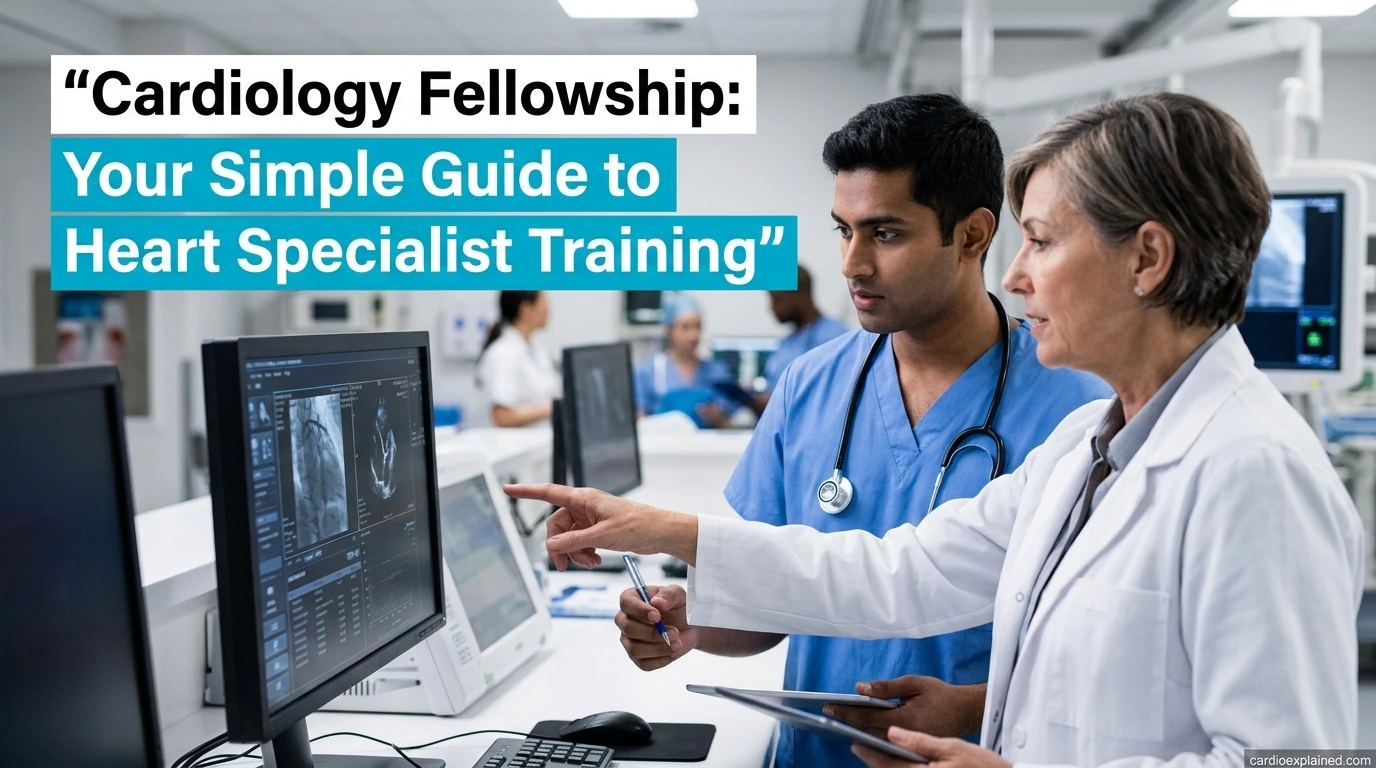
A fellow is a licensed doctor. They work under experienced heart specialists while learning new skills.
The training mixes classroom lessons with patient care. Fellows also join hospital rounds, discuss cases, and study new research.
The American Heart Association (AHA) and the American College of Cardiology (ACC) support evidence-based heart care. Many fellowship programs teach these accepted standards.
What do fellows learn?
They learn many important skills.
- 📋 Electrocardiogram (ECG or EKG). This test records the heart’s electrical signals.
- 📋 Echocardiogram. This ultrasound creates moving pictures of the heart.
- 📋 Stress testing. This test checks how the heart works during exercise or medicine.
- 📋 Cardiac catheterization. Doctors guide a thin tube into blood vessels to study the heart.
Each skill takes practice and close supervision.
🩺 How Long Does Training Take?
Many people ask about cardiology fellowship length.
Most general cardiology fellowships last three years after internal medicine residency.
Some doctors continue with extra training after that.
| Training | Typical Length | Main Focus |
| Internal medicine residency | 3 years | Adult medical care |
| General cardiology fellowship | 3 years | Heart disease diagnosis and treatment |
| Extra heart specialty training | 1–2 years | Advanced heart care |
Extra training may include:
- ✅ Heart rhythm care
- ✅ Heart failure care
- ✅ Imaging
- ✅ Interventional cardiology, which treats blocked arteries with small tubes and balloons
The total journey after medical school often reaches six to eight years.
⏱️ A Day in the Life of a Fellow
Every day looks a little different.
A fellow may start early by checking overnight patient updates.
They often visit hospital patients first.
Later, they may:
- 📋 Review heart scans.
- 📋 Attend clinic visits.
- 📋 Join procedures.
- 📋 Meet with teachers.
- 📋 Study medical research.
Many patients feel nervous before their first heart visit.
A fellow often spends extra time explaining each test. Clear answers can help patients feel calmer.
Another patient may arrive with chest pain after exercise.
The fellow works with senior doctors. Together, they choose the safest next step based on accepted medical practice.
✅ Choosing Cardiology Fellowship Programs
Many hospitals across the United States offer fellowship training.
Each program has its own strengths.
Some focus on research.
Others focus on busy patient care.
Students often compare:
- ✅ Hospital size
- ✅ Patient numbers
- ✅ Research chances
- ✅ Teaching style
- ✅ Special clinics
Many people search for a Cardiology Fellowship programs list before applying.
There is no single national list that fits every goal. Many applicants review programs approved through national graduate medical education systems and compare their learning opportunities.
Kansas City training options
Many future heart doctors look at cardiology fellowship Kansas City opportunities.
Large medical centers in this region serve many patients. That gives fellows experience with many heart conditions.
UMKC Cardiology Fellowship
Many people search for UMKC Cardiology Fellowship because of its connection with academic medicine.
Programs linked with major universities often combine patient care, teaching, and research. Program details may change over time, so applicants should review each school’s current requirements before applying.
University of Kansas Cardiology Fellowship
The University of Kansas Cardiology Fellowship also attracts many applicants.
Academic centers often provide advanced heart imaging, research projects, and care for patients with complex heart disease.
Applicants should review current admission details directly from each program before applying.
Osteopathic cardiology fellowship
Doctors with osteopathic medical degrees also become heart specialists.
An osteopathic cardiology fellowship follows national training standards.
Training focuses on the same goal.
Doctors learn safe, high-quality heart care for adults.
❤️ Skills That Matter Most

Medical knowledge matters.
People skills matter too.
Great heart doctors often:
- ❤️ Listen carefully.
- ❤️ Explain clearly.
- ❤️ Stay calm.
- ❤️ Work as a team.
- ❤️ Keep learning.
Heart care changes over time.
Doctors continue learning even after fellowship ends.
Many attend conferences and study updated treatment guidance.
📋 Cardiology Fellowship Salary
Many students ask about cardiology fellowship salary.
During fellowship, doctors receive a salary from the hospital.
Pay depends on:
- 📋 Hospital
- 📋 State
- 📋 Training year
- 📋 Benefits
Here is a simple overview.
| Training Stage | Typical Annual Pay | Notes |
| First-year fellow | About $70,000–$85,000 | Varies by hospital |
| Senior fellow | About $75,000–$95,000 | Often increases yearly |
| Practicing cardiologist | Much higher | Depends on location and specialty |
Benefits may include:
- ✅ Health insurance
- ✅ Retirement plans
- ✅ Paid vacation
- ✅ Education support
These numbers are estimates. Actual pay changes between hospitals and regions.
⚠️ Why This Training Helps Patients
Patients benefit from careful training.
Fellows learn under experienced heart doctors.
Every decision receives close review.
That process helps protect patient safety.
A patient with shortness of breath may need several tests.
The fellow reviews the results with senior doctors before making treatment plans.
This teamwork supports better care in many cases.
Heart disease often needs long-term follow-up.
Doctors also teach healthy habits like:
- ❤️ Eating balanced meals
- ❤️ Staying active
- ❤️ Managing blood pressure
- ❤️ Taking medicines correctly
- ❤️ Quitting smoking
These steps may lower future heart risks.
📋 Frequently Asked Questions
Q: Does cardiology fellowship require internal medicine first?
A: Yes. Doctors first complete internal medicine residency. Then they begin cardiology fellowship training before becoming independent heart specialists.
Q: How competitive are cardiology fellowship programs?
A: They are often competitive. Strong grades, research, patient care, and recommendations may improve an applicant’s chances.
Q: Can osteopathic doctors become cardiologists?
A: Yes. Doctors with osteopathic degrees can enter accredited fellowship programs if they meet training requirements.
Q: Are fellowship doctors licensed?
A: Yes. They are licensed physicians. Experienced heart specialists supervise their work while they continue learning.
Q: Do fellows perform heart procedures?
A: Yes. They may perform procedures under close supervision. Their responsibilities grow with experience and skill.
Q: How do students compare cardiology fellowship programs?
A: Students often compare teaching, research, patient volume, faculty support, and specialty opportunities before applying.
Final Thoughts
A cardiology fellowship prepares doctors to become skilled heart specialists through years of supervised training. Most programs last three years after internal medicine residency. Fellows learn advanced testing, patient care, and teamwork while following accepted medical guidance. Patients benefit because experienced specialists guide every step of the learning process. If you have heart concerns, talk to a licensed cardiologist. They can explain your condition and help you choose the care that fits your needs.