
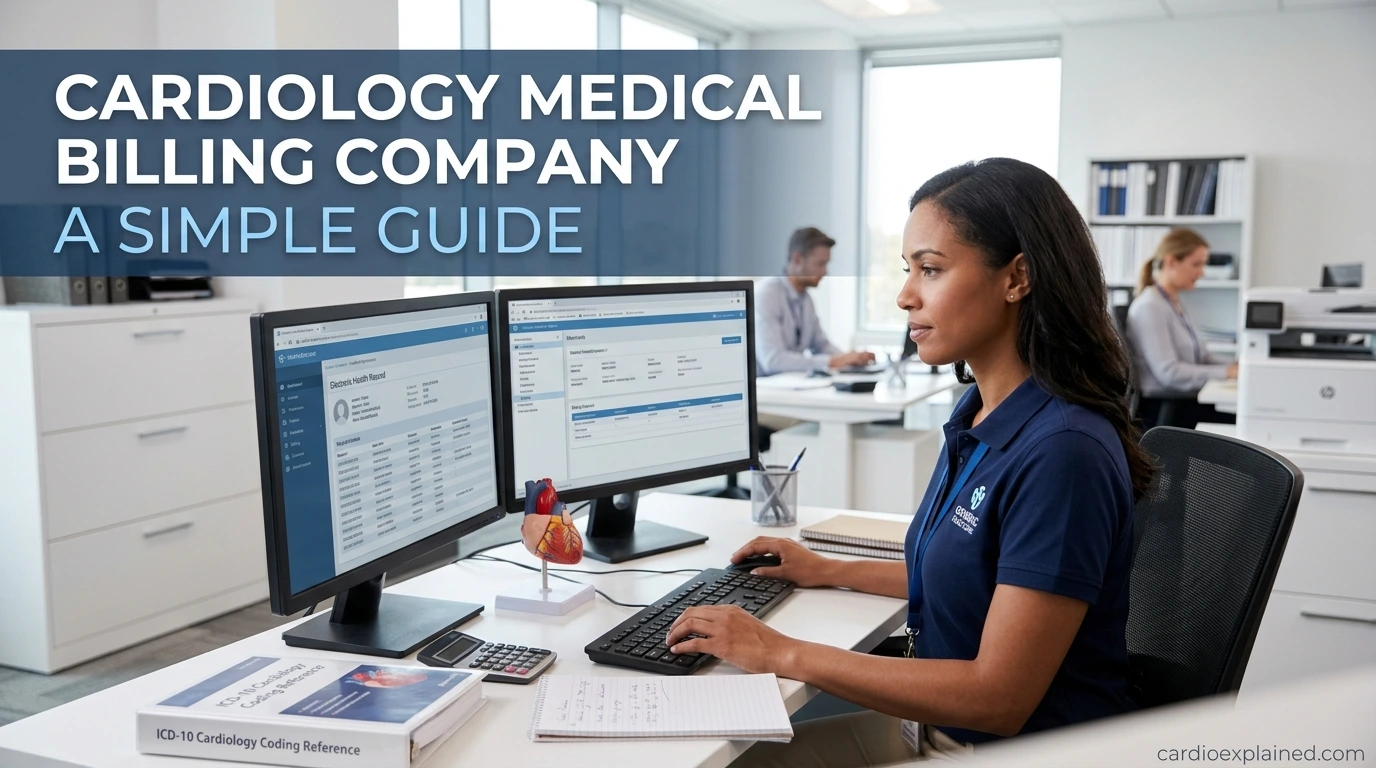

A cardiology medical billing company helps heart doctors send claims to insurance companies and collect payments. It works to lower billing errors, speed up payments, and help clinics focus on patient care. Many heart clinics choose this service to save time and improve their daily work.
Have you ever wondered what happens after a heart doctor finishes your visit? A bill still needs careful work before an insurance company pays it. A cardiology medical billing company helps make that process simple and correct. This support helps heart clinics spend more time with patients and less time on paperwork.
Many people never see the work behind medical bills. Still, it affects every visit. A clean billing process may lower delays and reduce stress for both clinics and patients. You will learn how these companies work, why heart clinics need them, and how they help improve care. You will also learn what patients should know when reading medical bills.
❤️ What Is a Cardiology Medical Billing Company?
A cardiology medical billing company handles billing work for heart clinics. It sends insurance claims and tracks payments. It also helps solve claim problems when insurance companies ask questions.
Heart care often includes many tests and treatments. Each service needs the right billing code. A billing code is a special number that tells the insurance company what care the patient received.
Many heart clinics choose outside billing experts because the work can become complex. These teams know the rules and help reduce mistakes.
How the Billing Process Works
The billing process follows several simple steps.
- 🩺 The patient visits the heart clinic.
- 📋 The doctor records the visit.
- The billing team adds the correct billing codes.
- The insurance claim goes to the insurance company.
- The insurance company reviews the claim.
- The clinic receives payment if the claim meets the rules.
- The patient receives any remaining bill.
Each step matters. A small mistake may delay payment for weeks.
Why Heart Clinics Need Special Billing
Heart doctors perform many different services during one visit. Some patients need simple checkups. Others need advanced heart tests or procedures.
Common heart services include:
- ❤️ Electrocardiogram (ECG or EKG), a test that checks heart signals
- ❤️ Echocardiogram, an ultrasound picture of the heart
- ❤️ Stress test, which shows how the heart works during exercise
- ❤️ Heart monitor, which records heart rhythm over time
- ❤️ Cardiac catheterization, a test that checks blood flow inside the heart
Each service has different billing rules. Insurance companies expect the correct code for every service.
A Real-Life Example
Mr. Allen visited his cardiologist because of chest discomfort. His doctor ordered an ECG and an echocardiogram. Both tests needed different billing codes. The billing team checked every detail before sending the claim. The insurance company processed the claim without delays, and Mr. Allen received a clear bill.
Stories like this happen every day. Good billing helps patients avoid confusion.
Skills a Good Billing Team Brings
A strong billing team does more than send claims.
It also helps by:
- ✅ Checking patient insurance
- ✅ Finding billing mistakes early
- ✅ Correcting rejected claims
- ✅ Tracking unpaid claims
- ✅ Answering billing questions
- ✅ Following changing insurance rules
Many clinics also use electronic health records, called EHRs. These digital records store patient information safely. Billing teams often work with these systems to improve accuracy.
Common Billing Challenges
Heart clinics face many billing problems.
These may include:
| Challenge | How the Billing Team Helps |
| Wrong billing code | Reviews medical records carefully |
| Missing insurance details | Confirms insurance before visits |
| Denied claim | Fixes errors and sends the claim again |
| Slow payment | Tracks claims until payment arrives |
Many clinics notice smoother daily work after improving their billing process.
🩺 Why Heart Clinics Use a Cardiology Medical Billing Company
Heart care changes often. Insurance rules also change. Clinics need billing experts who stay current.
A cardiology medical billing company understands these updates and helps clinics follow them.
Doctors want to spend more time helping patients. Billing experts handle paperwork behind the scenes.
Better Accuracy
Insurance companies review every claim closely.
A billing specialist checks:
- ✅ Correct patient details
- ✅ Correct procedure codes
- ✅ Doctor notes
- ✅ Insurance coverage
- ✅ Needed documents
This careful review lowers billing errors.
Faster Payments
Correct claims often move faster.
When fewer claims return with mistakes, clinics receive payment sooner.
Steady payments help clinics:
- Buy new equipment
- Pay staff on time
- Improve patient services
- Reduce financial stress
Less Work for Clinic Staff
Office workers already answer phones and schedule visits.
Adding billing work may become overwhelming.
Many clinics let billing experts handle:
- Insurance claims
- Payment follow-up
- Billing questions
- Appeal letters after denied claims
This allows office staff to focus on helping patients.
Helping Patients Understand Bills
Medical bills sometimes confuse patients.
Billing specialists explain:
- Insurance payments
- Patient balance
- Payment plans
- Billing corrections
Many patients feel calmer after someone explains each charge clearly.
A Real-Life Example
Mrs. Garcia needed several heart tests after feeling short of breath. She worried about the cost more than the tests.
The billing office checked her insurance before the visit. They explained what her insurance might pay. After her tests, her bill matched the estimate closely. She felt more confident because she understood the process from the start.
Following National Guidelines
Many billing teams follow guidance from trusted medical groups.
These groups include:
- American Heart Association (AHA)
- American College of Cardiology (ACC)
- Centers for Medicare & Medicaid Services (CMS)
These organizations help improve patient care and billing standards.
📋 Signs Your Heart Clinic Has Strong Billing Support
Patients often notice good billing without realizing it.
Strong billing systems help create smoother visits.
Bills Arrive Clearly
A good bill should show:
- ✅ Visit date
- ✅ Services received
- ✅ Insurance payment
- ✅ Patient balance
Simple bills reduce confusion.
Insurance Problems Get Fixed Quickly
Insurance companies sometimes reject claims.
Common reasons include:
- Missing information
- Wrong billing code
- Insurance changes
- Missing doctor notes
Good billing teams review the problem and send corrected claims when needed.
Staff Answer Questions Kindly
Many patients worry after receiving a medical bill.
Helpful billing staff answer questions with patience.
They explain charges using simple words instead of confusing terms.
Claims Move Without Long Delays
Patients often ask why insurance takes time.
Some delays happen because insurance companies need more information.
Strong billing teams watch every claim until it reaches the final payment stage.
A Real-Life Example
James visited his cardiologist after feeling dizzy. His insurance first denied one heart test because of missing information. The billing team quickly added the needed records and sent the claim again. His insurance later approved the payment. James only needed to pay his expected share.
What Patients Can Do
Patients also help the billing process.
Before each visit:
- ✅ Bring your insurance card.
- ✅ Check your personal information.
- ✅ Tell the office about insurance changes.
- ✅ Ask questions before expensive tests.
- ✅ Save copies of your bills.
These simple steps may prevent billing problems later.
Many patients feel nervous before opening a medical bill. Clear communication helps reduce that worry. Good billing teams work with patients and insurance companies to solve problems fairly.
📋 How Billing Teams Check Claims Before Sending Them

A careful review helps lower billing mistakes. Good billing teams check every claim before sending it to the insurance company.
Many clinics use software to find simple errors. Then, trained billing staff review the claim by hand.
What the Team Checks
The billing team reviews several details.
| Item | Why It Matters |
| Patient information | Makes sure the claim matches the correct person. |
| Insurance details | Confirms active insurance coverage. |
| Billing codes | Shows the exact care the patient received. |
| Doctor notes | Supports the services listed on the claim. |
These checks help lower claim denials.
Common Reasons Claims Get Denied
Insurance companies may deny claims for many reasons.
- ✅ Wrong billing code
- ✅ Missing patient details
- ✅ Missing medical records
- ✅ Insurance plan limits
- ✅ Late claim submission
A cardiology medical billing company reviews denied claims, fixes errors when possible, and sends them again. This process is called an appeal or claim correction.
A Real-Life Example
Mr. Brown received a heart rhythm monitor after several dizzy spells. His insurance first denied the claim because one record was missing. The billing team quickly added the needed note. The insurance company later approved payment.
Many patients never know this work happens behind the scenes.
💙 How a Cardiology Medical Billing Company Helps Clinics Stay Strong
Running a heart clinic costs money every day. Staff need pay. Medical equipment needs care. Patients need timely visits.
A cardiology medical billing company helps clinics receive payments more quickly by reducing billing mistakes.
Better Cash Flow
Cash flow means money coming into the clinic.
Steady payments help clinics:
- ✅ Hire trained staff
- ✅ Buy newer equipment
- ✅ Keep appointments available
- ✅ Improve patient services
Lower Administrative Stress
Doctors already manage many daily tasks.
Without billing support, staff may spend hours:
- Calling insurance companies
- Correcting rejected claims
- Tracking unpaid balances
- Updating billing rules
Billing experts handle much of this work.
Better Patient Experience
Patients want simple answers.
A good billing team explains:
- Insurance payments
- Patient responsibility
- Payment choices
- Billing questions
Clear answers build trust.
A Real-Life Example
A busy heart clinic added outside billing support after frequent payment delays. Within several months, staff spent less time fixing claims. Patients also received clearer billing statements. Doctors gained more time for patient visits.
✅ Tips That Help Prevent Billing Problems
Patients and clinics both help create smoother billing.
Small steps today may prevent larger problems later.
Before Your Appointment
- ✅ Bring your current insurance card.
- ✅ Carry a photo ID.
- ✅ Tell the office about insurance changes.
- ✅ Ask if approval is needed before special tests.
After Your Visit
- ✅ Read your bill carefully.
- ✅ Compare it with your insurance statement.
- ✅ Ask questions if something looks wrong.
- ✅ Keep copies of important papers.
Keep Your Records Updated
Tell your clinic if you change:
- Address
- Phone number
- Insurance plan
- Employer
- Last name
Updated records help avoid delays.
Understand Your Insurance
Insurance plans differ.
Some plans may require:
- A referral from another doctor
- Approval before certain tests
- Higher payments for some services
Your billing office can often explain these rules.
⚠️ When Should You Contact Your Doctor or Billing Office?
Most billing questions have simple answers.
Still, you should contact your clinic if:
- ⚠️ You receive a bill that seems incorrect.
- ⚠️ Your insurance says it denied a claim.
- ⚠️ You receive the same bill twice.
- ⚠️ You cannot understand the charges.
- ⚠️ Your insurance information changes.
Call sooner rather than later.
Many billing questions become easier to fix when reported quickly.
Remember that billing concerns differ from medical emergencies.
If you have chest pain, trouble breathing, fainting, or other warning signs, seek emergency medical care right away instead of waiting to discuss billing.
❓ Frequently Asked Questions
✅ Q: What does a cardiology medical billing company do?
A: A cardiology medical billing company manages insurance claims, billing codes, payment tracking, and claim corrections for heart clinics. Its goal is to help clinics receive accurate payments while reducing billing errors.
✅ Q: Why is heart care billing different from regular medical billing?
A: Heart care often includes several tests and procedures during one visit. Each service needs its own billing code. This makes billing more detailed than many general medical visits.
✅ Q: Can billing mistakes affect patients?
A: Yes. Billing mistakes may delay insurance payments or create confusing bills. Most problems can be corrected after careful review by the billing team.
✅ Q: Should I ask questions about my medical bill?
A: Yes. You should ask whenever something seems unclear. Billing staff can explain charges, insurance payments, and your remaining balance.
✅ Q: Will insurance always pay for heart tests?
A: No. Insurance coverage depends on your health plan and the medical need for each test. Your clinic can often explain expected costs before your visit.
✅ Q: How can I help avoid billing problems?
A: Keep your insurance information updated and review your bills carefully. Bring your insurance card to every visit and report any changes as soon as possible.
✅ Q: Does a cardiology medical billing company help patients too?
A: Yes. While it mainly supports heart clinics, patients also benefit. Faster claims, clearer bills, and fewer billing mistakes often make the payment process much easier.
Conclusion
A cardiology medical billing company plays an important role in modern heart care. It helps heart clinics send accurate insurance claims, reduce payment delays, and answer billing questions with care. Patients also benefit from clearer bills and fewer billing problems.
Good billing supports better communication between clinics, insurance companies, and patients. While no system removes every challenge, careful billing may reduce stress and improve the overall care experience. If you have questions about a heart-related bill, talk with your clinic or billing office. If you have heart concerns, speak with a licensed cardiologist for personal medical advice.
Medically reviewed for accuracy. Always consult a licensed cardiologist for personal advice.