
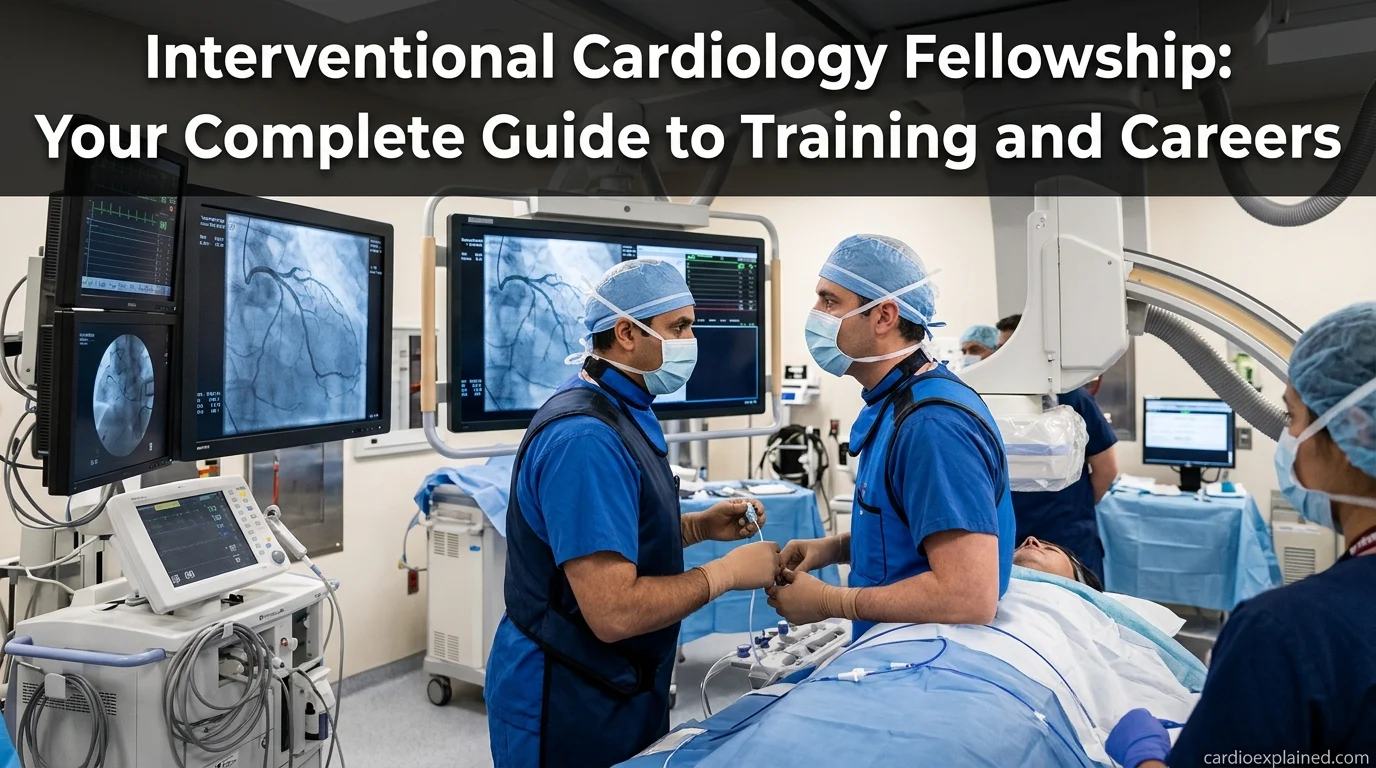

Interventional cardiology fellowship is advanced medical training for heart doctors who want to treat blocked or damaged blood vessels with small tools instead of major surgery. It builds special skills in procedures that may help people with heart disease live longer and feel better. Doctors complete this training after general cardiology fellowship before working as interventional cardiologists.
Many people know someone with heart disease. A parent may need a heart procedure. A friend may have chest pain. You may even dream of becoming a heart doctor. Learning about interventional cardiology fellowship helps you understand how doctors gain the skills to perform life-saving heart procedures. This training takes years of hard work, careful practice, and close guidance from experienced heart specialists. Patients also benefit because they receive care from doctors with advanced training. Knowing this path helps patients, families, and students better understand modern heart care and why specialized training matters.
❤️ What Is an Interventional Cardiology Fellowship?
An interventional cardiology fellowship is extra training after general cardiology fellowship.
Doctors first finish:
- Medical school
- Internal medicine residency
- General cardiology fellowship
Then they complete this advanced year of training.
During this time, doctors learn procedures that treat heart problems through small tubes called catheters. A catheter is a thin, flexible tube. Doctors place it through an artery, often in the wrist or groin.
Instead of making a large cut, doctors guide the catheter to the heart.
They learn procedures such as:
- ✅ Coronary angiography, which uses dye to show heart arteries
- ✅ Angioplasty, which opens blocked arteries with a balloon
- ✅ Stent placement, which keeps arteries open with a tiny metal tube
- ✅ Emergency treatment during a heart attack
- ✅ Advanced imaging inside blood vessels
The goal is safe treatment with less pain and faster recovery.
🩺 Why This Training Matters
Heart disease remains a leading cause of death in the United States.
Some patients suddenly develop blocked heart arteries. Others slowly develop chest pain over many years.
A doctor with advanced procedural training can often treat these problems without open-heart surgery.
Many patients feel nervous before their first procedure. They often worry about pain and recovery. The care team explains each step and answers questions before treatment begins.
Standard care often follows guidance from the American Heart Association (AHA) and the American College of Cardiology (ACC). These groups publish recommendations that help doctors choose safe treatments for many patients.
⏱️ How Long Does the Training Take?
Interventional Cardiology Fellowship Length
Most programs last one year after general cardiology fellowship.
Some doctors choose even more training afterward.
Extra fellowship options may include:
- Structural heart disease
- Peripheral vascular intervention
- Complex coronary intervention
- Research training
The full path often looks like this.
| Training Stage | Typical Length | Focus |
| Medical school | 4 years | Learn medicine |
| Internal medicine residency | 3 years | Adult patient care |
| General cardiology fellowship | 3 years | Heart diseases |
| Interventional fellowship | 1 year | Heart procedures |
The entire journey usually takes about eleven years after college.
📋 What Do Fellows Learn Each Day?
Training combines classroom learning with patient care.
Fellows spend many hours inside a cardiac catheterization laboratory. Many people call it the cath lab.
They practice under close supervision.
Daily work may include:
- ✅ Reviewing patient records
- ✅ Examining patients
- ✅ Reading heart scans
- ✅ Performing procedures
- ✅ Managing emergencies
- ✅ Discussing treatment plans with the care team
Doctors also learn how to handle unexpected problems during procedures.
Experience grows with every supervised case.
❤️ Procedures Doctors Learn
Interventional cardiologists perform many treatments.
Common examples include:
Coronary Angiography
This test uses contrast dye and X-rays to show blood flow.
Balloon Angioplasty
A small balloon opens a narrowed artery.
Coronary Stent Placement
A tiny metal mesh tube helps keep the artery open.
Intravascular Ultrasound
This imaging test uses sound waves inside the artery.
It gives doctors a close view of the blood vessel.
Fractional Flow Reserve
This test measures blood flow inside an artery.
It helps doctors decide if treatment may help.
🩺 Salary After Fellowship

Many students ask about earnings after training.
Salary depends on experience, employer, location, workload, and call schedule.
The table below shows general estimates.
| Career Stage | Estimated Annual Pay | Notes |
| Fellow | $75,000–$95,000 | Training salary |
| New interventional cardiologist | $450,000–$600,000+ | May vary by region |
| Experienced physician | $600,000+ | May increase with practice type |
These numbers are estimates. Actual pay varies across hospitals and private practices.
📋 Choosing Fellowship Programs
Many hospitals offer advanced training.
Strong programs often provide:
- ✅ High procedure numbers
- ✅ Experienced teachers
- ✅ Modern cath labs
- ✅ Research opportunities
- ✅ Simulation training
- ✅ Good patient variety
Many students review published interventional cardiology fellowship programs list resources before applying.
Applicants also compare location, teaching style, research support, and graduate success.
🌍 Training Outside the United States
Some doctors choose international training.
Training rules differ between countries.
Europe
Many European countries offer advanced interventional heart training.
Requirements vary by nation and medical licensing rules.
Germany
An interventional cardiology fellowship in Germany often requires German language skills and medical registration. Doctors also must meet local licensing standards before patient care.
London
Several large teaching hospitals offer advanced heart procedure training.
Doctors interested in an interventional cardiology fellowship London opportunity should review each hospital’s admission rules because they differ.
🌎 Opportunities for International Medical Graduates
Many international medical graduates hope to train in the United States.
People often shorten this to IMG.
An interventional cardiology fellowship for IMG usually requires several important steps.
These often include:
- ✅ ECFMG certification
- ✅ U.S. residency training
- ✅ General cardiology fellowship
- ✅ Strong recommendations
- ✅ Research experience
Competition can be high.
Many successful applicants spend years building experience before applying.
❤️ A Patient Story
James, age 67, arrived with sudden chest pain.
Doctors found a blocked heart artery.
An interventional cardiologist quickly placed a stent.
James returned home within days.
His recovery included medicine, healthy eating, exercise, and follow-up visits.
His story shows how advanced training can support fast treatment during emergencies.
🩺 What Skills Make a Great Interventional Cardiologist?
Technical skill matters.
People skills matter just as much.
Strong doctors often show:
- ✅ Calm thinking
- ✅ Careful attention
- ✅ Good teamwork
- ✅ Clear communication
- ✅ Fast decision-making
- ✅ Compassion
Patients often remember kindness as much as medical care.
A worried family member may understand the treatment better after a simple explanation from the doctor.
📋 Research and New Technology
Medicine keeps changing.
Doctors continue learning throughout their careers.
Many fellows join research projects that study:
- New stents
- Better imaging
- Safer procedures
- Faster recovery
- Improved patient outcomes
Research helps improve future care while keeping patient safety first.
⚠️ Risks and Safety
Every procedure has some risk.
Doctors explain possible benefits and risks before treatment.
Possible concerns may include:
- Bleeding
- Infection
- Allergic reaction to contrast dye
- Blood vessel injury
- Heart rhythm changes
Most procedures happen safely with careful planning.
Doctors monitor patients closely before, during, and after treatment.
✅ Frequently Asked Questions
Q: What is the typical interventional cardiology fellowship salary?
A: Fellows usually earn a training salary rather than a full physician salary. Pay often ranges from about $75,000 to $95,000 each year, depending on the program and location.
Q: How long is an interventional cardiology fellowship?
A: Most programs last one year after general cardiology fellowship. Some doctors complete extra specialized training afterward.
Q: Can international medical graduates apply for an interventional cardiology fellowship?
A: Yes. Many IMGs qualify after completing the required U.S. training and licensing steps. Competition can be strong, so preparation matters.
Q: Are there interventional cardiology fellowship programs in Europe?
A: Yes. Many countries offer advanced heart procedure training. Each country has its own licensing and education requirements.
Q: Where can I find an interventional cardiology fellowship programs list?
A: Medical societies, teaching hospitals, and university websites often publish current program information. Applicants should always review official program details before applying.
Q: Is an interventional cardiology fellowship right for every cardiologist?
A: No. Doctors choose this path if they enjoy procedures and emergency heart care. Others may choose different cardiology specialties.
Final Thoughts
An interventional cardiology fellowship prepares heart doctors to perform advanced procedures through small tubes instead of major surgery. The training takes dedication, careful practice, and years of education. Patients benefit from doctors who develop strong procedural skills and follow trusted medical standards. If you or someone you love has heart concerns, talk to a cardiologist. They can explain testing, treatment choices, and whether an interventional procedure may be helpful.