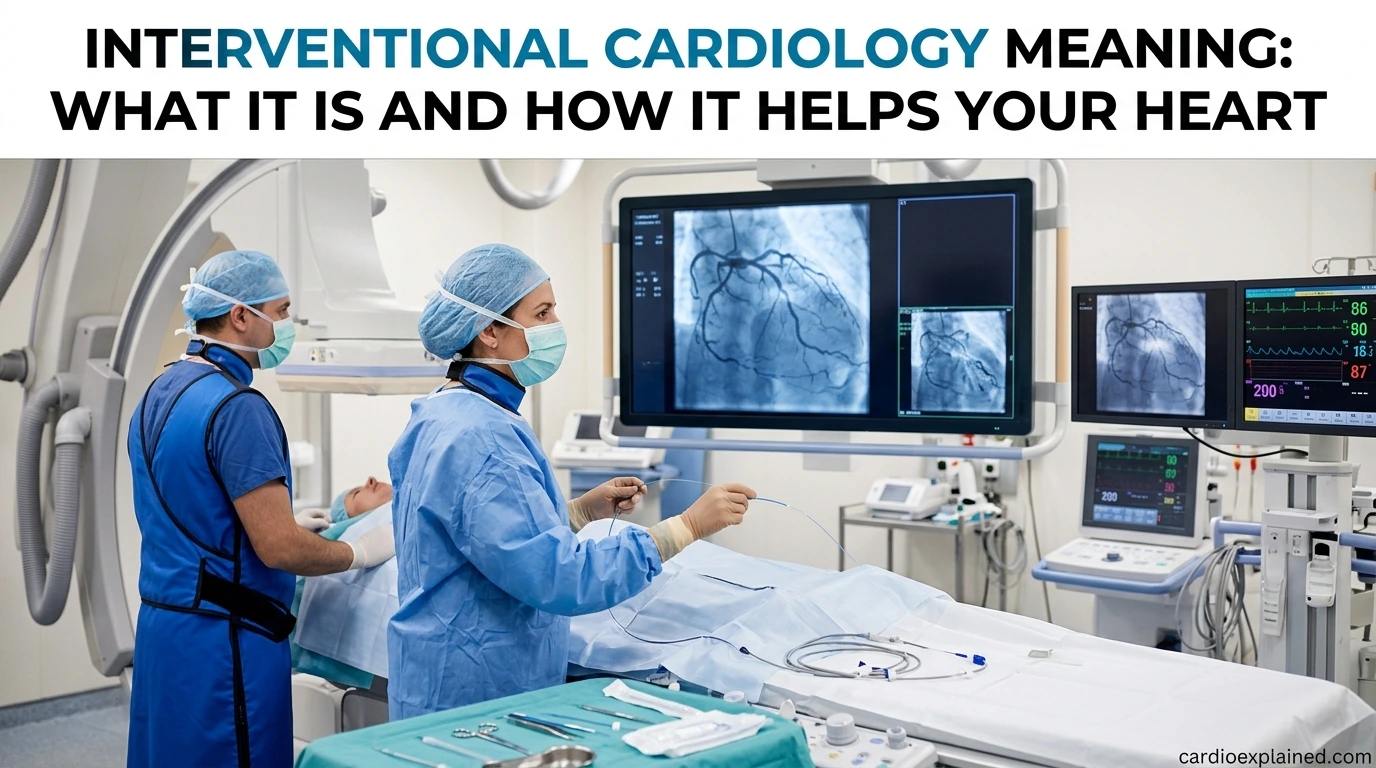

Interventional cardiology meaning is the use of small tubes, called catheters, to treat some heart and blood vessel problems without major open-heart surgery. It helps doctors improve blood flow, open blocked arteries, and treat certain heart conditions. Many people recover faster because these treatments often need only a small cut.
Have you or someone you love heard the words “interventional cardiology” after a heart test? Many people feel worried when they hear new medical words. That feeling is normal.
Understanding interventional cardiology meaning can help you feel more prepared. This field focuses on treating many heart problems with thin, flexible tubes instead of large chest cuts. Many treatments help people return home sooner than they expect. Learning the basics also helps you ask better questions during a doctor’s visit.
❤️ Understanding Interventional Cardiology Meaning
The word interventional means a doctor takes action to fix a problem. The doctor does more than find the problem. The doctor also treats it.
A cardiologist is a heart doctor. An interventional cardiologist has extra training to treat heart problems with special tools.
These doctors guide thin tubes, called catheters, through a blood vessel. They often start in the wrist or groin. The catheter travels to the heart without a large chest opening.
Many people ask if this means surgery. The answer depends on the treatment. Most catheter procedures are much less invasive than open-heart surgery. “Less invasive” means the doctor makes only a small opening instead of a large cut.
How interventional care works
A doctor may:
- 🩺 Open blocked heart arteries.
- 🩺 Place a small metal tube called a stent to keep an artery open.
- 🩺 Repair some heart valves without open surgery.
- 🩺 Treat certain birth heart problems.
- 🩺 Improve blood flow during a heart attack.
Many hospitals follow guidance from the American Heart Association (AHA) and the American College of Cardiology (ACC). These groups help doctors choose safe and proven treatments.
A simple example
John, age 64, felt chest pain while walking. His doctor found a blocked heart artery. An interventional cardiologist opened the blockage with a balloon and placed a stent. John walked the next day and went home soon after.
Every patient is different. Your doctor will choose the best treatment for your needs.
🩺 What Problems Can Interventional Cardiology Treat?
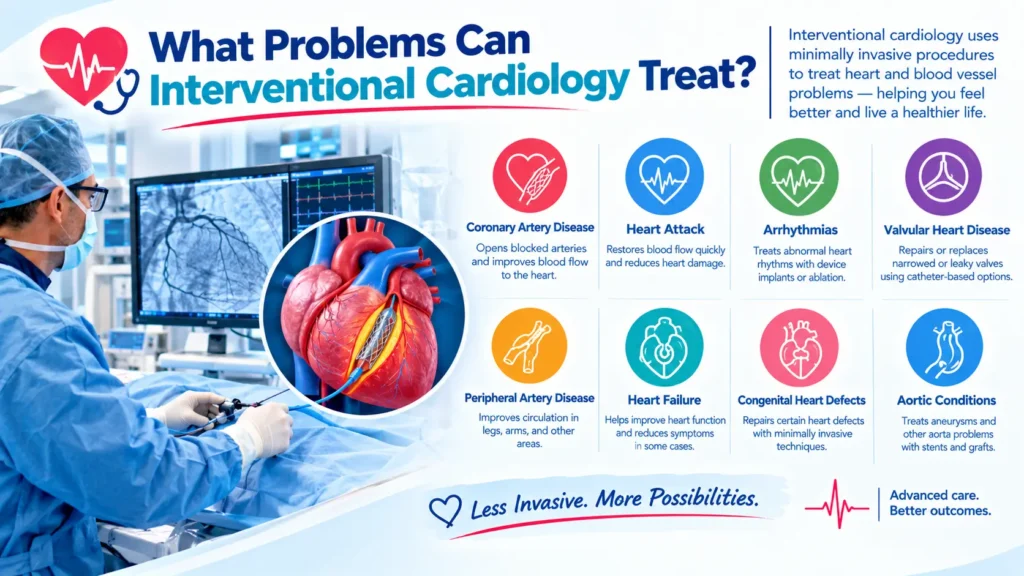
Interventional cardiology helps many heart and blood vessel problems. It does not treat every heart condition. Still, it helps many people avoid larger operations.
Your doctor may suggest this care for:
- ✅ Blocked heart arteries.
- ✅ Heart attack treatment.
- ✅ Narrow heart valves.
- ✅ Some birth heart defects.
- ✅ Poor blood flow in some blood vessels.
Doctors first learn about your heart with tests.
Common heart tests
| Test | Purpose |
| Electrocardiogram (ECG) | Checks your heart’s electrical activity. |
| Echocardiogram | Uses sound waves to create heart pictures. |
| Stress test | Shows how your heart works during activity. |
| Coronary angiogram | Uses dye and X-rays to find blocked arteries. |
The results help your doctor decide if a catheter treatment may help.
📋 Common Interventional Cardiology Procedures
Many treatments use the same basic idea. A doctor guides a catheter through a blood vessel to the heart.
Here are some common procedures.
Coronary angioplasty
A tiny balloon opens a blocked artery. Better blood flow reaches the heart muscle.
Coronary stent placement
The doctor places a small wire mesh tube. This tube helps keep the artery open after treatment.
Cardiac catheterization
This test lets doctors measure blood flow and pressure. It also helps find blocked arteries.
Transcatheter aortic valve replacement (TAVR)
Some people have a damaged heart valve. TAVR lets doctors replace the valve without open-heart surgery in many cases.
Balloon valvuloplasty
A small balloon opens a narrowed heart valve. This treatment may improve blood flow.
Closure of heart defects
Doctors may close some small holes inside the heart with special devices.
Procedures at a glance
| Procedure | Main Goal | Typical Hospital Stay |
| Angioplasty | Open a blocked artery | Same day or one night |
| Stent placement | Keep an artery open | Same day or one night |
| Cardiac catheterization | Find heart problems | Same day |
| TAVR | Replace a heart valve | Usually a few days |
The right treatment depends on your health, age, and heart condition.
⏱️ Interventional Cardiologist vs Cardiologist
Many people think these doctors do the same job. They share many skills. Still, they have different roles.
| Feature | Cardiologist | Interventional Cardiologist |
| Main work | Finds and treats heart disease | Treats heart disease with catheter procedures |
| Medicines | Yes | Yes |
| Heart tests | Yes | Yes |
| Catheter procedures | Some | Main focus |
A general cardiologist often manages long-term heart care. They may treat high blood pressure, heart rhythm problems, or heart failure.
An interventional cardiologist receives extra training after cardiology. This added training prepares them for advanced catheter procedures.
Many patients see both doctors. They work together as one team.
Extra training after medical school
Doctors complete several years of medical training before this specialty.
A common path includes:
- Medical school.
- Internal medicine training.
- Cardiology fellowship.
- Interventional Cardiology Fellowship.
The fellowship gives hands-on experience with advanced heart procedures. Doctors learn under experienced specialists before treating patients on their own.
Patients often feel nervous before meeting a heart specialist. Many leave feeling calmer after learning their treatment choices and asking questions.
❤️ When Should You See an Interventional Cardiologist?
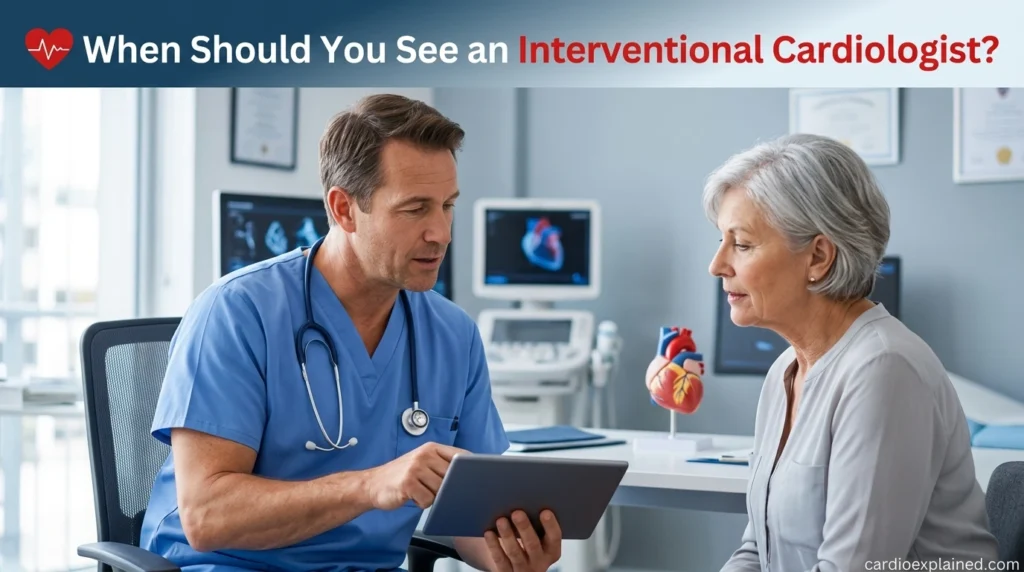
Your regular doctor or cardiologist may send you to this specialist. They do this when you need more than medicine alone.
You may need a visit if you have:
- ✅ Chest pain that keeps coming back.
- ✅ A blocked heart artery.
- ✅ A heart attack.
- ✅ A narrow heart valve.
- ✅ Test results showing poor blood flow.
Do not wait if you have sudden chest pain. Call emergency services right away.
What happens at your first visit?
Many people feel nervous before their first visit. That feeling is common.
Your doctor may:
- Review your health history.
- Ask about your symptoms.
- Check your blood pressure.
- Review heart tests.
- Talk about your treatment choices.
You should bring a list of your medicines and questions.
📋 Benefits and Risks of Interventional Heart Care
Many people recover faster after catheter treatments. They often spend less time in the hospital.
Benefits
- ✅ Smaller cuts.
- ✅ Less pain.
- ✅ Faster recovery.
- ✅ Shorter hospital stay.
- ✅ Lower risk than open-heart surgery for some patients.
Possible risks
Every medical procedure has risks.
These may include:
- ⚠️ Bleeding.
- ⚠️ Infection.
- ⚠️ Blood vessel injury.
- ⚠️ Blood clots.
- ⚠️ Rare allergic reaction to contrast dye.
Your care team works hard to lower these risks. They will explain them before treatment.
🩺 Training and Career in Interventional Cardiology
Some readers want to know about this medical career.
After becoming a heart doctor, physicians complete an Interventional Cardiology Fellowship. This extra training usually lasts one year. Doctors learn advanced catheter skills under close supervision.
They may also earn interventional cardiology certification after meeting training and testing standards. Certification shows they completed recognized education and skills testing.
Interventional Cardiology salary
Pay depends on experience, location, and workplace.
| Career Stage | Typical Salary Range |
| New specialist | $450,000–$550,000 |
| Experienced specialist | $550,000–$750,000+ |
| Academic practice | Often lower than private practice |
These numbers are estimates. Actual pay may differ by state, employer, and workload.
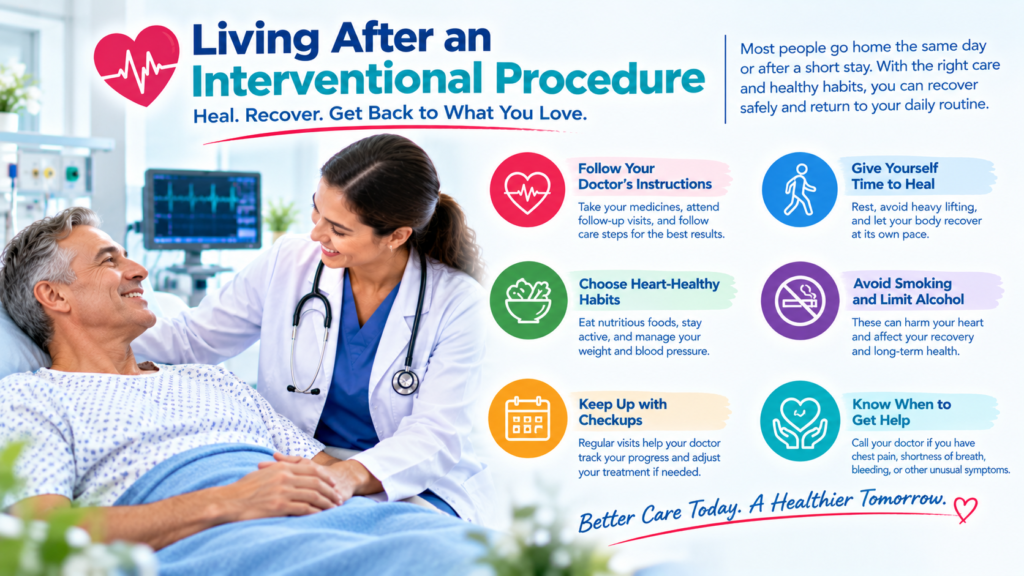
📋 Living After an Interventional Procedure
Recovery often starts quickly. Many people walk within hours after treatment.
Still, healing takes time.
Your doctor may ask you to:
- ✅ Take your medicines every day.
- ✅ Eat more fruits and vegetables.
- ✅ Stay active after approval.
- ✅ Stop smoking if you smoke.
- ✅ Keep follow-up visits.
Small daily habits help protect your heart.
Mary, age 72, received a heart valve procedure through a catheter. She worried before treatment. A few weeks later, she enjoyed short walks with her family again. Every person’s recovery is different. Your doctor will guide your care.
❓ FAQ
Q: What is interventional cardiology meaning?
A: Interventional cardiology meaning is treating certain heart problems with thin tubes called catheters instead of major open-heart surgery. Doctors may use balloons, stents, or other small devices to improve blood flow.
Q: Is interventional cardiology surgery?
A: Not in the usual sense. Most procedures are minimally invasive. That means doctors make a small opening instead of a large chest cut.
Q: What does interventional mean in medicine?
A: Interventional means a doctor treats a problem, not only finds it. The treatment often uses special tools through a small opening.
Q: What is an interventional cardiology procedures list?
A: Common procedures include cardiac catheterization, angioplasty, stent placement, TAVR, balloon valvuloplasty, and closure of some heart defects. Your doctor recommends the best option for your condition.
Q: How is an interventional cardiologist different from a cardiologist?
A: An interventional cardiologist has extra training in catheter procedures. A general cardiologist often manages long-term heart care with medicines and testing.
Q: Is interventional cardiology certification important?
A: Yes. Certification shows the doctor completed approved training and met professional standards. It can help patients feel confident about their care.
Conclusion
Understanding interventional cardiology meaning helps you feel more informed before a heart visit. These doctors treat many heart problems through small openings instead of large chest cuts. Many people recover faster after these procedures, though every case is different. Talk to a cardiologist if you have any heart concerns. They can explain your choices and help you decide the next steps for your health.