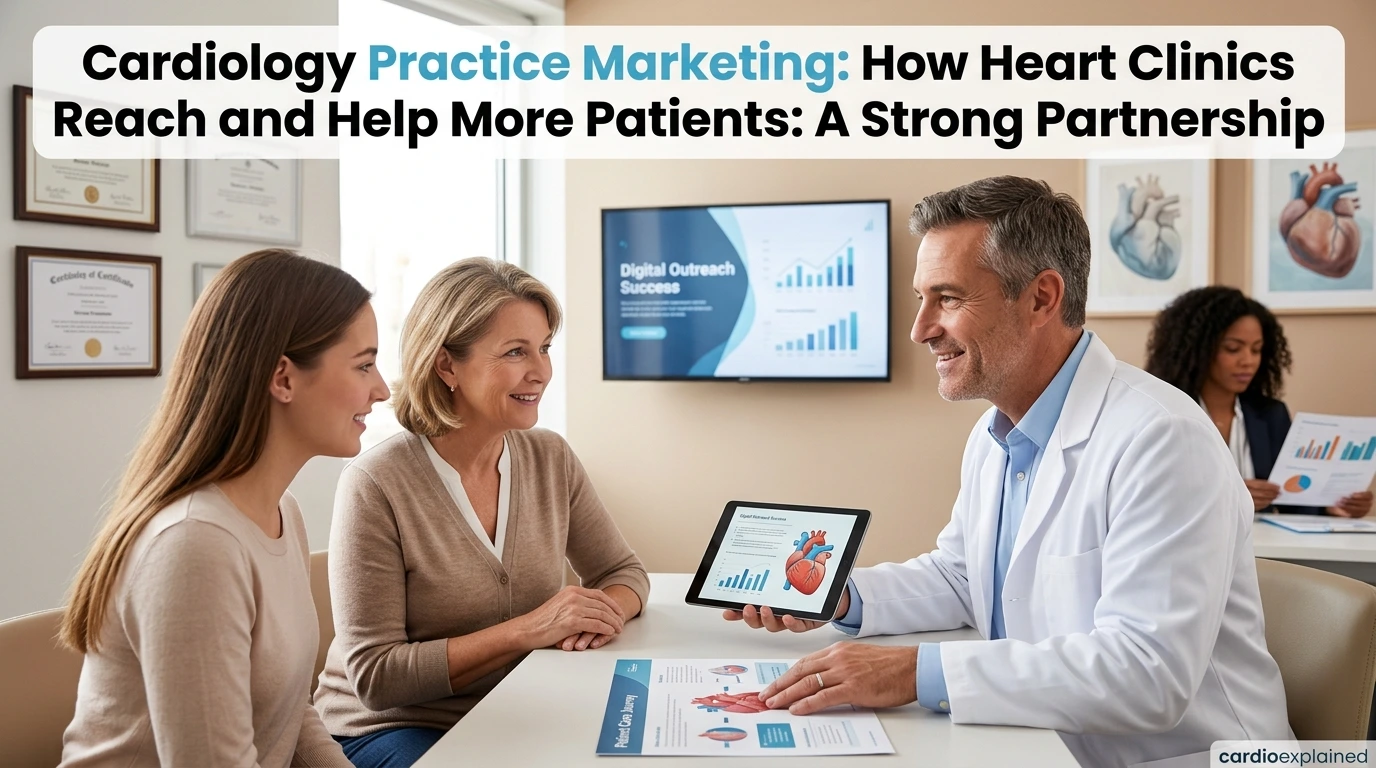

Cardiology practice marketing is the process of helping people find and trust a heart care clinic. It helps cardiologists connect with patients who need care. Doctors use it to share helpful information, build trust, and grow their practice.
Have you ever searched online for a doctor near your home?
Most people do. They often read reviews first. They may visit a website too. That is where cardiology practice marketing plays a role.
Heart care is important at every age. Patients want clear answers and trusted care. A good clinic must be easy to find. It should also make people feel comfortable before a visit.
Many patients feel nervous before their first heart appointment. Good communication can ease that stress. Marketing helps clinics share useful information and build confidence.
This guide explains how heart clinics reach patients. You will learn about websites, reviews, local search, patient education, and trust-building strategies.
❤️ Why Marketing Matters for Heart Care Clinics

Heart disease remains a major health concern in the United States. Many people need ongoing heart care. Others need help after a new diagnosis.
Patients often have many choices. They may compare clinics online before calling.
Good marketing helps a clinic:
- ✅ Reach people who need heart care
- ✅ Explain services in simple terms
- ✅ Build trust before a visit
- ✅ Improve patient engagement
- ✅ Support long-term relationships
Marketing is not just about attracting new patients. It also helps current patients stay informed.
For example, a clinic may post tips about blood pressure checks. Those tips can remind patients to stay on track.
Building Trust Before the First Visit
Trust starts long before a patient enters the office.
Many patients read reviews. They may check office hours and directions. They often visit a clinic website first.
A clear website can answer common questions. This saves time and reduces worry.
🩺 Cardiology Practice Marketing Strategies That Work
Effective cardiology practice marketing focuses on education and trust.
Patients want helpful information. They do not want confusing messages.
Create a Helpful Website
A website often serves as the clinic’s front door.
It should include:
- ✅ Contact information
- ✅ Office location
- ✅ Services offered
- ✅ Doctor profiles
- ✅ Appointment options
The website should work well on phones. Many people search from mobile devices.
Share Educational Content
Educational content helps patients learn about heart health.
Topics may include:
- High blood pressure
- Cholesterol levels
- Heart attack warning signs
- Healthy eating habits
- Exercise and heart health
Simple content can answer questions before appointments.
Use Search Engine Optimization
Search engine optimization, or SEO, helps people find a clinic online.
SEO may improve visibility when someone searches for:
- Heart doctor near me
- Cardiologist in my city
- Heart testing services
Good SEO focuses on useful content and accurate information.
📋 Online Reviews and Patient Experience
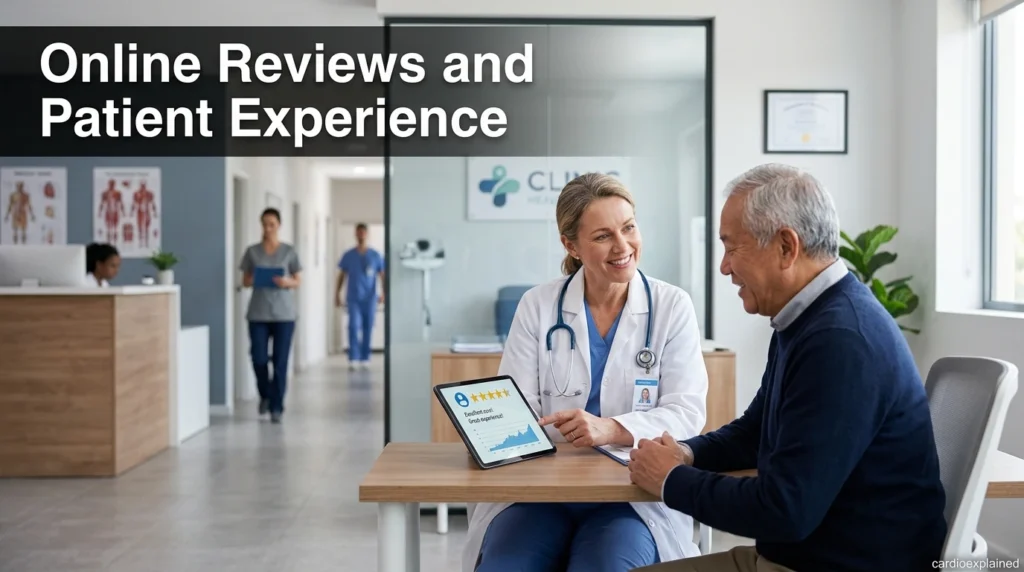
Patient reviews can influence healthcare decisions.
People often trust feedback from other patients.
Why Reviews Matter
Reviews provide real experiences.
A positive review may mention:
- Friendly staff
- Clear communication
- Short wait times
- Helpful follow-up care
Patients often appreciate clinics that explain things simply.
Encouraging Honest Feedback
Clinics may ask patients to share feedback after visits.
The process should remain easy and respectful.
Honest reviews help future patients understand what to expect.
Real-World Example
A patient named Maria felt worried about chest discomfort.
She searched online for a cardiologist. Positive reviews helped her choose a clinic.
After her visit, she appreciated the doctor’s clear explanations. She later shared her experience online.
Stories like this show how trust can grow.
⏱️ Patient Education Builds Strong Relationships
Education helps patients take an active role in their care.
People often feel more confident when they understand their condition.
Explain Heart Tests Clearly
Heart clinics often perform tests that help assess heart health.
| Test | What It Does | Simple Explanation |
| EKG | Records heart signals | Shows how the heart beats |
| Echocardiogram | Uses sound waves | Creates pictures of the heart |
| Stress Test | Checks heart function during activity | Shows how the heart works under effort |
| Holter Monitor | Tracks heart rhythm over time | Records heart activity during daily life |
Patients often feel less anxious when they know what a test does.
Use Trusted Medical Guidance
Heart clinics often follow recommendations from organizations such as the American Heart Association (AHA) and the American College of Cardiology (ACC).
These groups provide guidance based on research and patient care standards.
Clinics that share reliable information often earn greater trust.
Educational Videos and Articles
Short videos can explain common heart conditions.
Helpful topics include:
- Managing blood pressure
- Understanding cholesterol
- Healthy food choices
- Exercise safety
Patients can review these resources at home.
✅ Local Marketing and Community Outreach
Many people prefer healthcare close to home.
Local visibility helps patients find nearby services.
Improve Local Search Results
A clinic should keep its online information updated.
Important details include:
- Address
- Phone number
- Office hours
- Directions
Accurate details make scheduling easier.
Participate in Community Events
Heart clinics often join health fairs and local events.
These activities help clinics connect with families.
They also provide opportunities to discuss prevention.
Offer Free Educational Sessions
Some clinics host talks about heart health.
Topics may include:
- Blood pressure control
- Healthy eating
- Exercise habits
- Heart disease prevention
These events help build awareness and trust.
Another Real-World Example
James recently moved to a new city.
He needed follow-up care after a heart procedure.
A local seminar introduced him to a nearby clinic. He later became a patient there.
Community outreach often creates these connections.
⚠️ Digital Marketing Trends in Cardiology
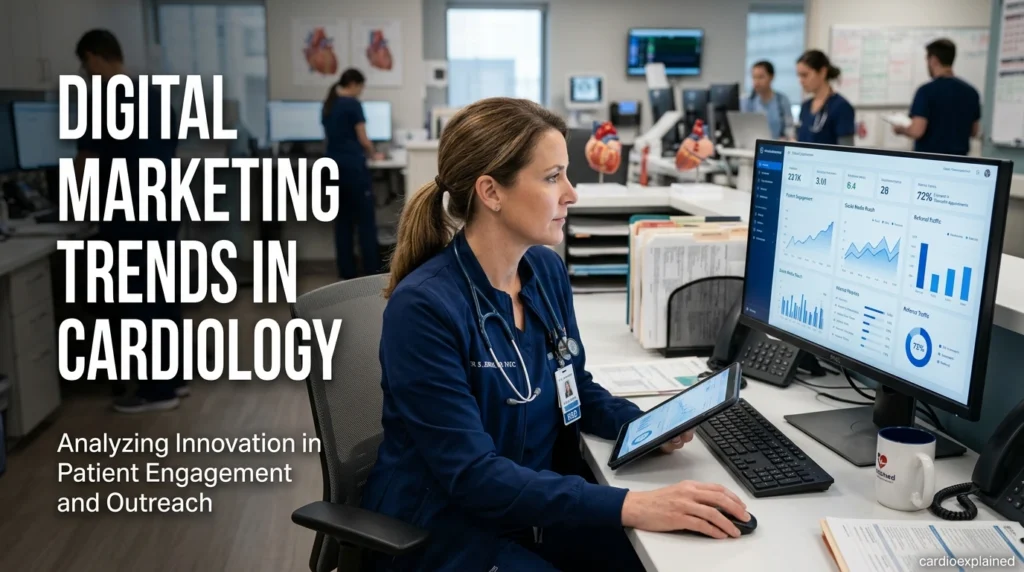
Technology continues to shape healthcare communication.
Patients expect easy access to information.
Social Media Education
Many clinics use social media to share health tips.
Common content includes:
- Heart health reminders
- Awareness month campaigns
- Healthy lifestyle advice
- Clinic updates
Educational posts often perform best.
Email Communication
Email can help patients stay informed.
Messages may include:
- Appointment reminders
- Wellness tips
- Practice news
- Seasonal health advice
Short and clear messages work well.
Video Content
Video content continues to grow.
Patients often prefer watching a short explanation instead of reading a long article.
A cardiologist can explain a common topic in just a few minutes.
Measuring Results
Clinics track marketing performance using data.
Common measures include:
| Metric | What It Shows | Why It Matters |
| Website Visits | Number of visitors | Shows interest |
| Appointment Requests | New patient inquiries | Indicates growth |
| Review Ratings | Patient feedback | Reflects satisfaction |
| Email Opens | Message engagement | Shows audience interest |
Tracking results helps clinics improve their efforts.
Frequently Asked Questions
Q: What is cardiology practice marketing?
A: It is the process of promoting heart care services and educating patients. Good cardiology practice marketing helps people find trusted care and learn about available services.
Q: Why do heart clinics need marketing?
A: Heart clinics need visibility. Marketing helps patients find care, learn about services, and feel more confident before appointments.
Q: Do online reviews matter for cardiologists?
A: Yes. Many patients read reviews before choosing a doctor. Reviews can provide insight into patient experiences and communication style.
Q: Can educational content help patients?
A: Yes. Educational content may improve understanding and reduce anxiety. Patients often feel more prepared when they know what to expect.
Q: What is local SEO for a cardiology clinic?
A: Local SEO helps a clinic appear in nearby search results. It focuses on accurate contact details, location information, and useful content.
Q: Is social media useful for heart care practices?
A: Yes. Social media can help clinics share health tips and practice updates. It also helps people stay connected with trusted information.
Conclusion
Good cardiology practice marketing helps patients find trusted heart care. It focuses on education, clear communication, and patient trust. Strong websites, helpful content, positive reviews, and community outreach all support growth.
Many patients begin their healthcare journey online. A clinic that shares reliable information can make that journey easier. Clear communication also helps reduce stress before appointments.
If you have heart concerns, talk to a cardiologist. They can guide you toward the care that best fits your needs.