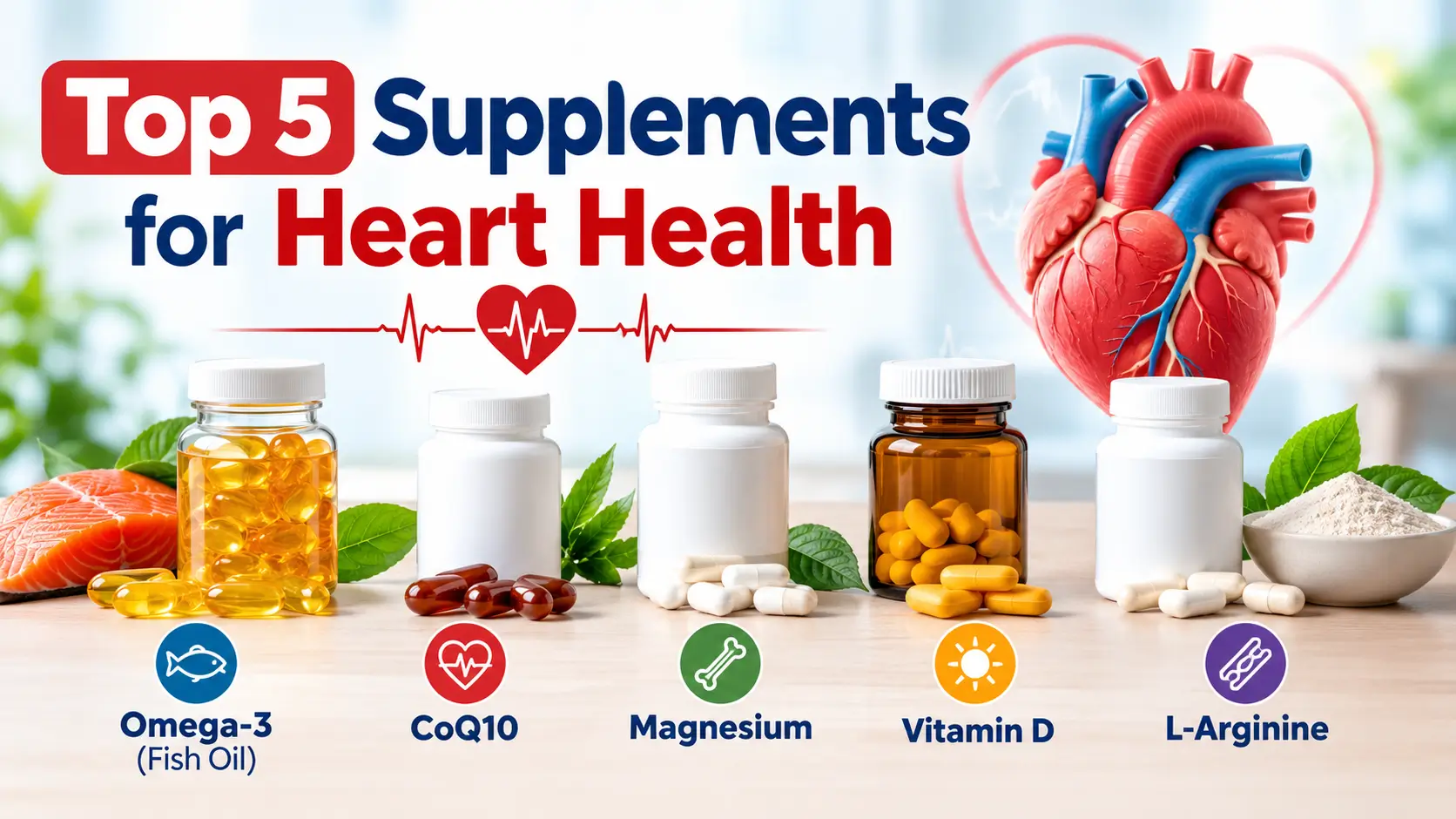

The five most studied options are omega-3 fish oil, psyllium fiber, plant sterols and stanols, magnesium, and coenzyme Q10. Each has a narrow, specific role, such as lowering triglycerides or LDL cholesterol. None replaces healthy eating, exercise, or prescribed medicine, and none is proven to prevent heart attacks in everyone.
Shelves of capsules promise a stronger heart, yet only a small group has real research behind it. This guide ranks the top 5 supplements for heart health by how much evidence exists and what that evidence shows.
A key point comes first. A supplement can fix a shortage, nudge a lab number, lower the chance of a heart attack, or treat an existing condition. These are four separate outcomes, and most products have proof for, at best, one of them.
Below, you will find what each option is, what it may do, where the science falls short, and who should be careful. You will also see popular products that do not earn a spot, plus questions worth bringing to your clinician. This article is educational and cannot replace personal medical advice.
How This List Was Built
Products were chosen by three questions. Did large human studies test them? Did they change something that matters, like cholesterol or blood pressure? Are the risks reasonably well understood? Hype and sales popularity were ignored.
Keep one caution in mind. Supplements in many countries are not approved for effectiveness before sale, so quality varies between brands. Look for third-party testing seals on the label.
1. Omega-3 Fatty Acids (Fish Oil)
What it is
Fish oil supplies EPA and DHA, fats found in salmon, sardines, and mackerel.
What it may do
High doses can lower triglycerides, a type of blood fat. Prescription-strength products are used for this purpose in people with very high levels.
What the research shows
Evidence splits into two stories. One large trial of a purified EPA prescription drug, in people with raised triglycerides already on statins, found fewer cardiovascular events. By contrast, big trials of ordinary over-the-counter fish oil in the general population did not show clear protection against heart attacks or strokes.
Risks and cautions
Higher doses have been linked to an increased chance of atrial fibrillation, an irregular heartbeat. Fish oil may also add to bleeding risk when combined with blood thinners. Fishy aftertaste and stomach upset are common.
Who should ask first
Anyone taking anticoagulants, planning surgery, or using a prescription omega-3. Eating fatty fish about twice weekly is the better-supported route for most people.
2. Psyllium and Other Soluble Fiber
What it is
Psyllium husk is a plant fiber that turns gel-like in water.
What it may do
Soluble fiber binds bile acids in the gut, so the liver pulls more LDL cholesterol from the blood. Studies show modest LDL reductions, and some regulators permit a health claim linking psyllium to lower cholesterol when paired with a low-saturated-fat diet.
What remains uncertain
Cholesterol drops are real but small. Proof that psyllium alone cuts heart attacks is lacking.
Risks and cautions
Bloating and gas are common at first, so increase slowly. Take it with plenty of fluid, because dry fiber can cause choking or blockage. It may slow absorption of some medicines, so leave a gap of a couple of hours between doses and ask a pharmacist about timing.
Who benefits most
People with mildly raised LDL who struggle to eat enough oats, beans, and fruit.
3. Plant Sterols and Stanols
What they are
These plant compounds resemble cholesterol and are added to some spreads, yogurts, and capsules.
What they may do
They compete with cholesterol for absorption in the intestine. Intakes around two grams daily have lowered LDL cholesterol by roughly 5 to 15 percent in trials.
What remains uncertain
Lower LDL is a biomarker. Long-term studies showing fewer heart attacks are missing, so the benefit for actual events remains unproven.
Risks and cautions
They can reduce absorption of some carotenoids, so a fruit-and-vegetable-rich diet matters. People with a rare inherited condition called sitosterolemia should avoid them. Children and pregnant people should consult a healthcare professional first.
Practical note
They work best alongside statins, not instead of them.
4. Magnesium
What it is
A mineral involved in muscle contraction, nerve signaling, and heartbeat rhythm.
What it may do
Several analyses suggest supplements lower blood pressure slightly, often by only a couple of points. Low intake has also been linked to higher cardiovascular risk in observational studies.
What remains uncertain
Observational links do not prove cause. Benefits look strongest in people who are actually low in magnesium, and correcting a deficiency is not the same as preventing disease.
Risks and cautions
Loose stools are the most frequent complaint, particularly with magnesium oxide. People with kidney disease can accumulate dangerous levels, so they must seek medical guidance. Magnesium can interfere with some antibiotics, thyroid medicine, and osteoporosis drugs.
Food first
Nuts, seeds, legumes, whole grains, and leafy greens deliver it along with fiber and healthy fats.
5. Coenzyme Q10 (CoQ10)
What it is
A compound your cells use to make energy. Levels fall with age and with statin use.
What it may do
Some small trials suggest benefit in people with heart failure, and one larger trial reported fewer serious events. Even so, major cardiology guidelines do not broadly recommend it.
What remains uncertain
Hopes that CoQ10 relieves statin-related muscle pain have produced mixed results. Evidence for healthy adults is thin.
Risks and cautions
Side effects are usually mild, such as stomach upset or insomnia. It might weaken the effect of warfarin and could lower blood pressure further in people on antihypertensive drugs.
Who should ask first
Anyone with heart failure, on anticoagulants, or experiencing muscle symptoms from a statin.
Popular Products That Did Not Make the List
- Multivitamins, vitamin E, beta-carotene, and calcium: large reviews have not found clear protection against heart disease. Some, like beta-carotene in smokers, may even cause harm.
- Vitamin D: helpful for people who are deficient, but trials have not shown it prevents heart attacks or strokes.
- Red yeast rice: it contains a natural statin-like compound, and amounts differ widely from brand to brand. Some products have also been contaminated with a kidney-damaging substance. A regulated statin is more predictable.
- Niacin: once popular, it has not improved outcomes when added to statins and causes flushing and liver concerns.
Supplements Versus the Habits That Matter More
Daily choices carry far more weight than any capsule. Not smoking, regular movement, a diet rich in vegetables, whole grains, and unsalted nuts, good sleep, and a healthy weight shape blood pressure, cholesterol, and blood sugar. A supplement rarely makes up for weak foundations.
Using Supplements Safely
- Tell every clinician and pharmacist what you take, including herbs.
- Never stop prescribed medicine to try a supplement.
- Pick products with independent quality testing.
- Avoid megadoses, and treat claims like “cleanses arteries” as a red flag.
- Pause new products before surgery unless your surgeon says otherwise.
- Recheck lab results after a few months to see whether anything actually changed.
When to Get Urgent Help
Chest pressure, pain spreading to the arm or jaw, sudden severe breathlessness, fainting, or signs of stroke need emergency care. Call your local emergency number rather than reaching for a pill.
Frequently Asked Questions
What is the best supplement for heart health?
No single product wins. The right choice depends on your goal: triglycerides, LDL cholesterol, blood pressure, or a diagnosed deficiency. A blood test and a conversation with your clinician reveal which, if any, deserves a place in your routine.
Can supplements replace cholesterol medicine?
No. Supplements like sterols or fiber lower LDL only modestly, while statins have strong proof of preventing heart attacks in the right patients. Never stop a prescription without medical direction. Some people use both, under supervision.
Is fish oil worth taking?
For most healthy adults, evidence for ordinary capsules is weak. People with very high triglycerides may benefit from prescription versions. Eating oily fish regularly offers omega-3s plus protein and is generally favored in guidelines.
Which supplement lowers blood pressure?
Magnesium may reduce readings slightly, mainly when intake is low. Potassium-rich foods and cutting salt usually matter more. Kidney problems or certain medicines make some products unsafe, so check with a professional before starting.
Are heart supplements safe with blood thinners?
Not always. Fish oil can raise bleeding tendency, and CoQ10 may weaken warfarin. Ask a pharmacist to screen every product against your prescriptions before you begin.
Do I need a supplement if I eat well?
Probably not. A varied diet delivers fiber, magnesium, and omega-3s naturally. Supplements make the most sense for a confirmed shortage, a specific lab target, or a food pattern that is hard to follow.
How long before a supplement changes cholesterol?
Fiber and sterols usually show effects within several weeks. A repeat lipid panel after roughly one to three months, arranged by your clinician, shows whether the product is helping.
Key Takeaway
Omega-3s, psyllium, plant sterols, magnesium, and CoQ10 each have a limited, specific purpose, and most improve lab markers rather than proven heart attack rates. Food, movement, and prescribed treatment remain the core of cardiovascular care. Check with a clinician or pharmacist before starting anything, especially if you take regular medicines.