
Heart doctors cardiology is the medical field that focuses on the heart and blood vessels. It helps find, treat, and manage heart problems. Doctors use tests, exams, and care plans to help keep your heart healthy.
Have you ever felt chest pain and wondered what it means? Maybe a loved one has heart disease. Many people feel unsure about heart care.
Heart doctors cardiology covers the doctors, tests, and treatments that help protect your heart. Learning about this field can help you make smart health choices. It can also ease fear before a doctor visit.
Your heart works every second of every day. Good heart care matters at every age. Knowing when to seek help may improve your health and peace of mind.
❤️ Understanding Heart Doctors Cardiology
The heart is a strong muscle. It pumps blood through your body.
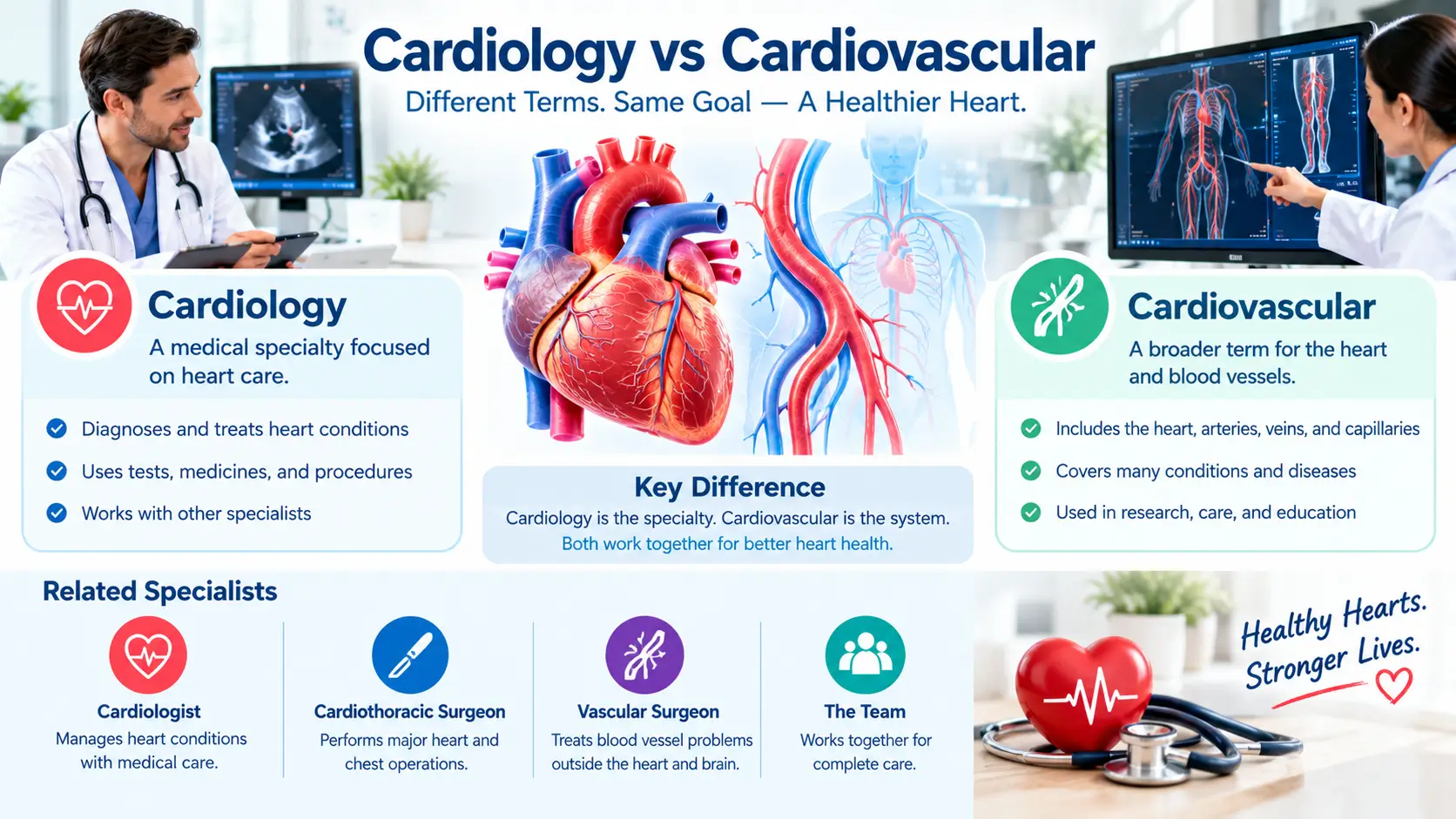
A cardiologist is a doctor who treats heart and blood vessel problems. These doctors study heart health for many years. They help prevent disease and manage existing conditions.
Common conditions they treat include:
- ❤️ High blood pressure
- ❤️ Heart failure
- ❤️ Irregular heartbeat
- ❤️ Coronary artery disease
- ❤️ High cholesterol
- ❤️ Heart valve problems
Many people see a cardiologist after a referral from their primary doctor. Others visit because of symptoms.
Some warning signs include:
- ⚠️ Chest pain
- ⚠️ Shortness of breath
- ⚠️ Fast or uneven heartbeat
- ⚠️ Dizziness
- ⚠️ Swelling in the legs
These symptoms may have many causes. A doctor can help find the reason.
Different Types of Heart Specialists
Not all heart doctors do the same work.
| Specialist | Focus | What They Do |
| General Cardiologist | Heart health | Diagnoses and treats common heart issues |
| Electrophysiologist | Heart rhythm | Treats irregular heartbeats |
| Interventional Cardiologist | Blood flow | Performs catheter-based procedures |
| Cardiac Surgeon | Heart surgery | Performs operations on the heart |
Each specialist plays a different role in patient care.
🩺 What Happens During a Heart Visit?

Many patients feel nervous before their first appointment. That feeling is very common.
The visit often starts with questions about:
- 📋 Symptoms
- 📋 Family history
- 📋 Current medicines
- 📋 Lifestyle habits
The doctor may check:
- ✅ Blood pressure
- ✅ Heart rate
- ✅ Weight
- ✅ Breathing
The goal is to understand your overall heart health.
Common Heart Tests
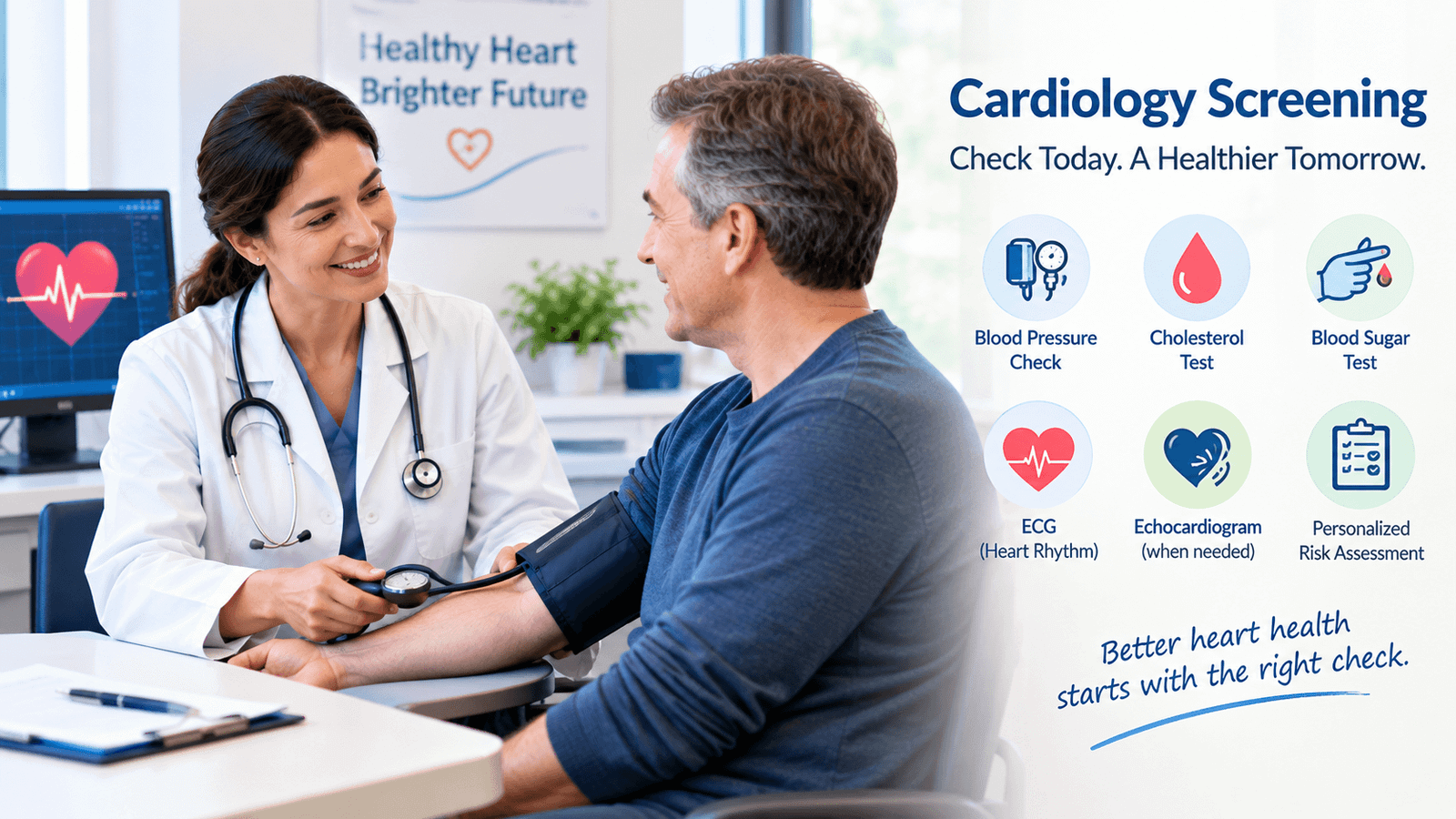
Doctors use tests to gather more information.
| Test | Purpose | What It Shows |
| ECG or EKG | Records heart signals | Heart rhythm and timing |
| Echocardiogram | Heart ultrasound | Heart structure and pumping |
| Stress Test | Checks heart during exercise | Blood flow during activity |
| Blood Tests | Measures key markers | Risk factors and heart damage |
An ECG records electrical signals from your heart. It is quick and painless.
An echocardiogram uses sound waves. It creates pictures of the heart.
A stress test checks how your heart works during activity.
📋 How Heart Problems Are Diagnosed
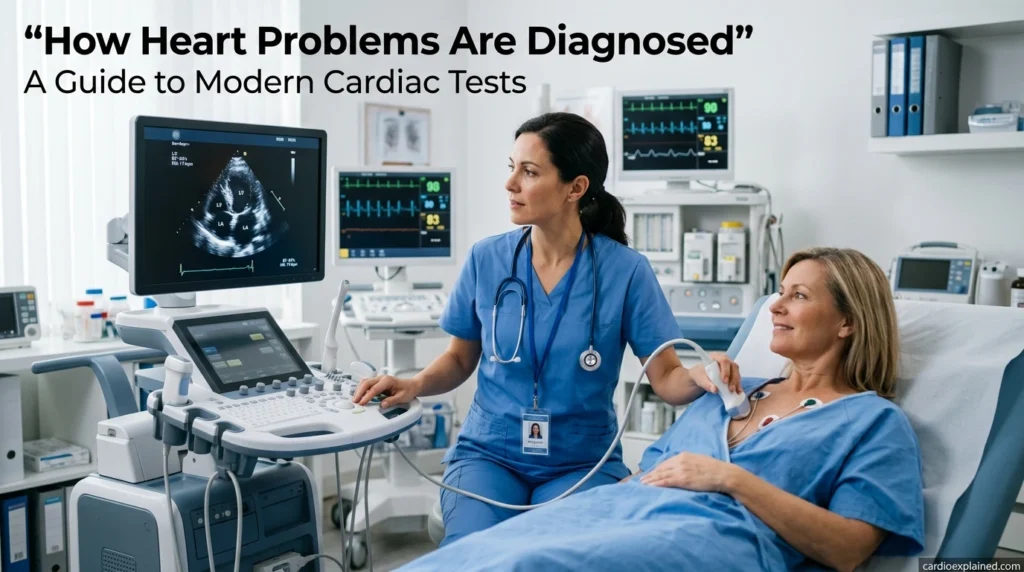
Doctors look at several pieces of information. One test rarely tells the whole story.
They review symptoms, exam findings, and test results. Then they create a care plan.
For example, a patient may notice chest tightness while walking. The doctor may order an ECG and stress test. Results can help guide treatment.
Another patient may have high blood pressure for years. Regular visits can help prevent future problems.
Risk Factors Doctors Watch Closely
Some factors increase heart disease risk.
These include:
- ❤️ Smoking
- ❤️ Diabetes
- ❤️ High cholesterol
- ❤️ Obesity
- ❤️ Lack of exercise
- ❤️ Family history
You cannot change family history. You can improve many other factors.
The American Heart Association (AHA) and the American College of Cardiology (ACC) encourage healthy lifestyle habits. These habits can lower heart disease risk in many cases.
⏱️ Treatment Options and Long-Term Care
Treatment depends on the condition.
Some people need lifestyle changes only. Others need medicines or procedures.
Common treatments include:
- ✅ Healthy eating plans
- ✅ Regular exercise
- ✅ Blood pressure medicines
- ✅ Cholesterol medicines
- ✅ Heart procedures
- ✅ Surgery when needed
Heart doctors cardiology teams often work together. This team approach helps patients receive complete care.
Lifestyle Changes That Support Heart Health
Small changes can add up over time.
Helpful habits include:
- Eat more fruits and vegetables.
- Choose whole grains often.
- Stay active most days.
- Avoid smoking.
- Manage stress.
- Get enough sleep.
These habits support overall wellness.
Procedures You May Hear About
Some patients need procedures.
A cardiac catheterization uses a thin tube. Doctors use it to check blood flow.
A stent is a small mesh tube. It helps keep an artery open.
Heart surgery may help when other treatments are not enough.
Doctors explain risks and benefits before treatment.
❤️ Finding the Right Heart Specialist

Choosing a doctor can feel overwhelming. A few simple steps can help.
Look for:
- ✅ Board certification
- ✅ Hospital connections
- ✅ Good communication skills
- ✅ Experience with your condition
- ✅ Positive patient feedback
Many people search online for a “Cardiologist near me.” Local hospital websites can help. Insurance provider directories can also help.
Ask questions during your visit. A good doctor welcomes questions and explains things clearly.
Understanding Specialized Heart Centers
Large cities often have advanced heart centers.
Some people search for terms like “Herzchirurgie Frankfurt team” or “Cardiovasculäres Centrum Frankfurt.” These are German terms related to heart surgery teams and cardiovascular centers.
In the United States, similar centers often exist within major hospitals. These centers may offer:
- ❤️ Heart surgery
- ❤️ Advanced imaging
- ❤️ Rhythm treatment
- ❤️ Rehabilitation programs
Patients with complex conditions may receive care from several specialists at one location.
FAQ
Q: How do I find heart doctors cardiology services near me?
A: Start with your primary care doctor. You can also search hospital websites and insurance directories. Many health systems provide online physician listings.
Q: Do I need a referral to see a cardiologist?
A: It depends on your insurance plan. Some plans require referrals, while others do not. Check your coverage before scheduling.
Q: What does a cardiologist do on the first visit?
A: A cardiologist reviews your health history and symptoms. The doctor may perform an exam and order tests if needed.
Q: What does Cardiologist near me usually mean in online searches?
A: It usually means someone wants a local heart specialist. Search results often show nearby clinics, hospitals, and physician offices.
Q: What is Herzchirurgie Frankfurt team?
A: This term refers to a heart surgery team in Frankfurt, Germany. Such teams often include surgeons, cardiologists, nurses, and support staff.
Q: What is Cardiovasculäres Centrum Frankfurt?
A: It refers to a cardiovascular care center in Frankfurt, Germany. These centers focus on heart and blood vessel diagnosis and treatment.
Conclusion
Heart doctors cardiology helps protect one of your body’s most important organs. Cardiologists diagnose heart conditions, guide treatment, and support long-term health. Early care may help prevent serious problems later.
Pay attention to symptoms such as chest pain, shortness of breath, or irregular heartbeat. Healthy habits also play a big role in heart wellness.
Talk to a cardiologist if you have any heart concerns. Taking action today may help support a healthier future.