
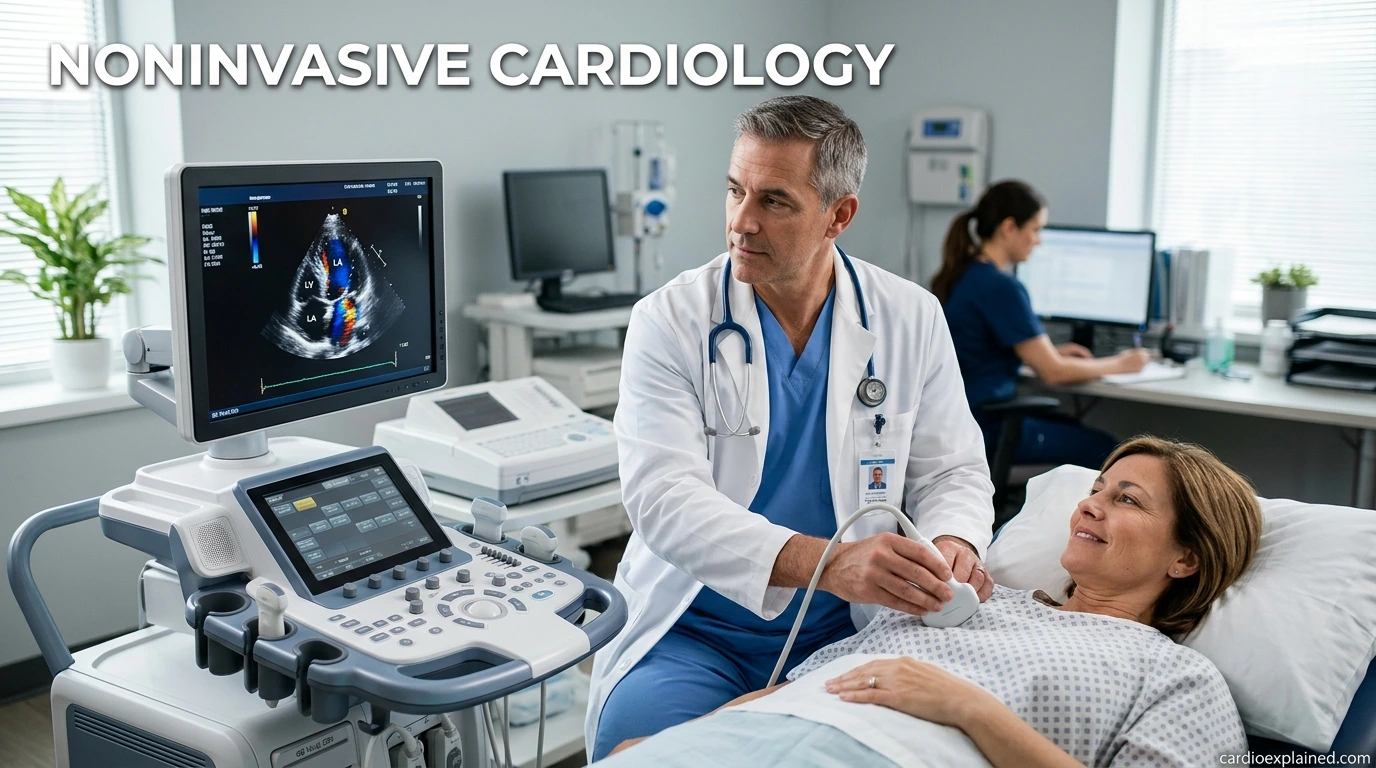

Noninvasive cardiology is a type of heart care that checks your heart without surgery. It helps doctors find heart problems by using safe tests and exams. Doctors use it to learn how your heart works and choose the best care for you.
Have you ever felt chest pain or a fast heartbeat? Maybe you wondered if your heart was healthy. Many people feel worried before seeing a heart doctor. The good news is that noninvasive cardiology gives doctors many ways to check your heart without surgery.
Your heart works every minute of every day. It sends blood and oxygen to every part of your body. When something feels wrong, doctors want to find the cause early. They often begin with simple tests that do not need cuts or tubes inside your heart.
Many patients feel nervous before their first heart visit. They often expect painful tests. Most feel relieved after learning that many heart exams are quick and painless. These tests help doctors understand your heart and plan the right care. They also help track heart health over time. Knowing what to expect can make your visit much easier.
❤️ What Is Noninvasive Cardiology?
Noninvasive cardiology is the part of heart care that uses tests outside the body. Doctors do not make cuts or place tools inside your blood vessels. Instead, they use machines that show how your heart looks and works.
These tests help doctors:
- ❤️ Check your heart’s size and shape.
- ❤️ Measure how well your heart pumps blood.
- ❤️ Look for blocked blood flow.
- ❤️ Find heart rhythm problems.
- ❤️ Watch heart health over time.
Doctors often start with these tests because they are safe and easy. Many people go home right after the visit.
How It Differs From Invasive Cardiology
Some heart tests need a thin tube called a catheter. A catheter is a small, flexible tube that goes into a blood vessel. Doctors use it to look inside the heart or treat some problems.
Noninvasive care does not use these tubes. That means:
| Type of Care | How Doctors Check the Heart | Recovery Time |
| Noninvasive cardiology | Uses scans, monitors, and outside tests | Usually none |
| Invasive cardiology | Uses catheters inside blood vessels | May need several hours or longer |
Doctors choose the safest test first in many cases. If they need more details, they may suggest an invasive test later.
Why Doctors Recommend These Tests
Heart disease often starts quietly. Some people have no warning signs. Others notice small changes that seem easy to ignore.
Doctors may suggest heart testing if you have:
- ❤️ Chest pain
- ❤️ Shortness of breath
- ❤️ Fast or uneven heartbeat
- ❤️ High blood pressure
- ❤️ High cholesterol
- ❤️ Diabetes
- ❤️ A family history of heart disease
Students also learn about these tests because they form the first step in heart care. Many hospitals and heart clinics use them every day.
A Real-Life Example
Mark is 56 years old. He noticed chest tightness while walking his dog. His doctor ordered an electrocardiogram, also called an ECG. An ECG records your heart’s electrical signals. The test took only a few minutes. It helped the doctor decide that Mark needed more testing, but not emergency surgery.
Stories like Mark’s happen every day. Early testing often helps doctors find problems before they become serious.
🩺 How Heart Problems Can Develop
Heart problems usually build over time. Many changes happen slowly. You may not notice them at first.
Your heart needs healthy blood vessels to carry oxygen-rich blood. When these vessels become narrow, the heart works harder.
Several health problems can raise your risk.
Common Risk Factors
Some risks come from daily habits. Others come from family history.
- ✅ Smoking
- ✅ High blood pressure
- ✅ High cholesterol
- ✅ Diabetes
- ✅ Extra body weight
- ✅ Little physical activity
- ✅ Long-term stress
- ✅ Older age
- ✅ Family history of heart disease
You cannot change your age or family history. You can change many daily habits.
Plaque Build-Up
Doctors often talk about plaque. Plaque is a sticky mix of fat, cholesterol, and other materials.
Plaque can collect inside blood vessels. Over time, the opening becomes smaller. Blood then has less room to flow.
Your heart may not get enough oxygen during exercise or stress. This can lead to chest pain or other symptoms.
Problems With Heart Rhythm
Your heart has its own electrical system. It tells the heart when to beat.
Sometimes these signals change. Your heart may beat too fast, too slow, or unevenly. Doctors call this an arrhythmia. An arrhythmia means an abnormal heartbeat.
Simple heart monitors often find these rhythm changes.
Heart Muscle Changes
The heart is a strong muscle. Like other muscles, it can weaken or become stiff.
High blood pressure can make the heart work harder. Over time, this extra work may affect how well it pumps blood.
Doctors often use ultrasound pictures to watch these changes. An ultrasound uses sound waves to create moving images of your heart.
A Patient Story
Linda is 63 years old. She has diabetes and high blood pressure. She felt fine during most days. During a yearly checkup, her doctor suggested heart testing because of her risk factors.
The tests showed early changes in her heart function. Her doctor adjusted her medicines and encouraged daily walks. Linda now feels more confident because she knows her heart receives regular care.
📋 Signs and Symptoms to Watch For
Heart problems do not always feel the same. Some signs appear suddenly. Others develop little by little.
Never ignore symptoms that worry you. Even mild changes deserve attention if they continue.
Common Warning Signs
Watch for:
- ⚠️ Chest pain or pressure
- ⚠️ Shortness of breath
- ⚠️ Fast heartbeat
- ⚠️ Skipped heartbeats
- ⚠️ Dizziness
- ⚠️ Fainting
- ⚠️ Swelling in the legs or feet
- ⚠️ Feeling very tired
Many of these symptoms have causes besides heart disease. Still, only a healthcare professional can tell for sure.
Chest Pain Does Not Always Mean a Heart Attack
Many people fear the worst when chest pain starts.
Sometimes chest pain comes from muscles, acid reflux, or anxiety. Acid reflux happens when stomach acid moves into the food pipe.
Still, heart-related chest pain needs quick medical attention. Doctors may order tests right away to rule out serious problems.
Symptoms Can Be Different
Not everyone has the same warning signs.
Women, older adults, and people with diabetes sometimes notice:
- ❤️ Extreme tiredness
- ❤️ Nausea
- ❤️ Back pain
- ❤️ Jaw pain
- ❤️ Mild shortness of breath
These signs can seem small. That makes regular checkups even more helpful.
Keep Track of Changes
Many doctors ask patients to keep a simple record.
Write down:
- ✅ When symptoms started
- ✅ How long they lasted
- ✅ What you were doing
- ✅ What made them better or worse
This information helps your doctor understand the problem.
Another Real-Life Example
James is a college student. He noticed his heart racing during class. He thought stress caused it. His doctor ordered a small heart monitor that he wore for two days.
The monitor showed brief rhythm changes. His doctor explained the results in simple words. James learned that his condition could be managed with follow-up care instead of emergency treatment.
⏱️ How Doctors Check Your Heart
Doctors want clear answers before they choose a treatment. They often begin with noninvasive cardiology tests because they are safe and simple. Most tests do not need a hospital stay.
Many heart clinics follow guidance from the American Heart Association (AHA) and the American College of Cardiology (ACC). These groups support using the right test for each person’s symptoms and health history.
Common Heart Tests
Each test gives different information.
| Test | What It Shows | What You May Feel |
| Electrocardiogram (ECG) | Heart rhythm and electrical signals | Sticky pads on your skin |
| Echocardiogram | Heart size, valves, and pumping | A small device moves over your chest |
| Stress Test | How your heart works during activity | Walking on a treadmill or taking medicine |
| Holter Monitor | Heart rhythm over one or two days | A small monitor worn at home |
| CT Heart Scan | Detailed heart and blood vessel pictures | You lie still during the scan |
What Happens During a Visit
Many patients worry about their first appointment. Most visits are calm and easy.
Your doctor may:
- ❤️ Ask about your symptoms.
- ❤️ Check your blood pressure.
- ❤️ Listen to your heart.
- ❤️ Review your medicines.
- ❤️ Choose the best test.
Most visits end with a simple care plan.
Are These Tests Safe?
Most people have no problems during testing.
An ECG and echocardiogram do not use radiation. A CT scan does use a small amount of radiation. Your doctor only orders it when the benefits are greater than the risks.
Many people return to work or school after testing.
❤️ Treatment and Long-Term Care
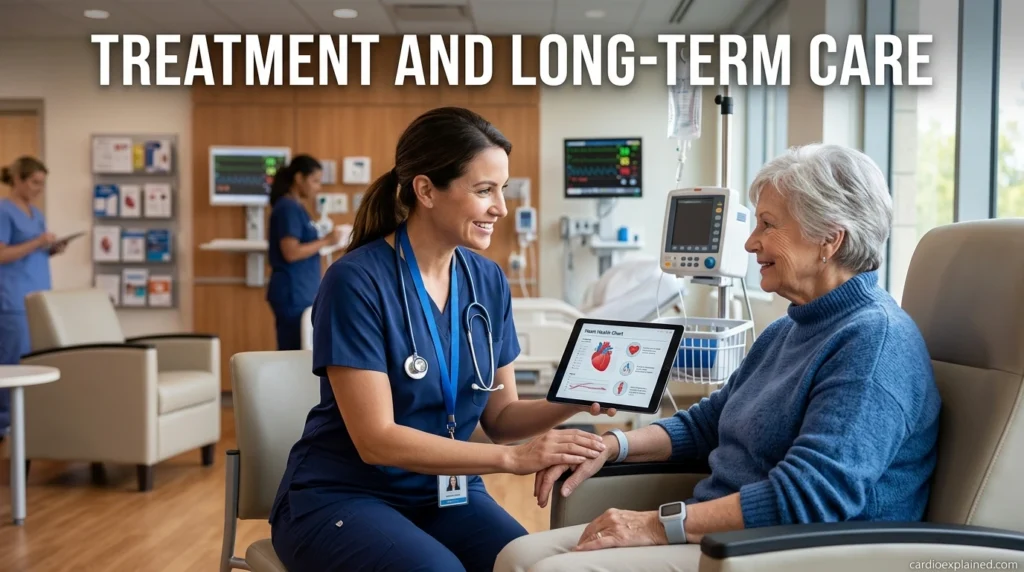
The right treatment depends on your test results. Some people need only healthy habits. Others may need medicine or more testing.
Doctors build a plan that fits your needs.
Healthy Lifestyle Changes
Small steps can help your heart every day.
- ✅ Eat more fruits and vegetables.
- ✅ Choose whole grains.
- ✅ Limit salty foods.
- ✅ Stay active most days.
- ✅ Keep a healthy weight.
- ✅ Stop smoking.
- ✅ Sleep well each night.
Even small changes can make a difference over time.
Medicines
Some people need medicine to protect their heart.
Your doctor may prescribe medicine to:
- Lower blood pressure
- Lower cholesterol
- Control heart rhythm
- Prevent blood clots
Take medicine only as directed. Never stop without talking to your doctor.
Follow-Up Visits
Heart health changes over time.
Doctors may repeat noninvasive cardiology tests to see how your heart responds to treatment. They compare new results with older ones.
This helps them adjust your care if needed.
A Patient Story
Susan had high blood pressure for years. She started medicine and walked every evening. Six months later, her follow-up heart test looked better.
She felt encouraged because her daily choices supported her treatment.
✅ Healthy Habits That Help Protect Your Heart
You cannot control every risk. You can control many daily choices.
Healthy habits support your heart for many years.
Eat for Heart Health
Choose foods that help your heart.
Try to eat:
- ❤️ Fresh fruits
- ❤️ Vegetables
- ❤️ Beans
- ❤️ Fish
- ❤️ Nuts
- ❤️ Whole grains
Limit foods with lots of sugar, salt, and unhealthy fats.
Stay Active
Exercise helps your heart stay strong.
Aim for about 150 minutes of moderate activity each week if your doctor agrees.
Walking, swimming, and biking are good choices.
Know Your Numbers
Ask your doctor about:
- ✅ Blood pressure
- ✅ Cholesterol
- ✅ Blood sugar
- ✅ Weight
Regular checkups help find small problems early.
Manage Stress
Stress can affect your body.
Many people feel better when they:
- Take slow walks.
- Spend time with family.
- Practice deep breathing.
- Get enough sleep.
Simple daily habits often improve both heart health and overall well-being.
⚠️ When to See a Doctor
Some symptoms should never wait.
Call your doctor if you notice new or ongoing heart symptoms.
Seek emergency care right away if you have:
- ⚠️ Chest pain lasting several minutes
- ⚠️ Severe shortness of breath
- ⚠️ Fainting
- ⚠️ Sudden weakness on one side
- ⚠️ Trouble speaking
These symptoms may need immediate care.
Do Not Ignore Small Changes
Some people wait because symptoms come and go.
Even mild symptoms deserve medical attention if they happen often. Early care may prevent bigger problems later.
Before Your Appointment
Bring helpful information.
Write down:
- ❤️ Your symptoms
- ❤️ Your medicines
- ❤️ Your family history
- ❤️ Questions for your doctor
Good notes help your visit go smoothly.
Frequently Asked Questions
❓ Q: Is noninvasive cardiology painful?
A: No. Most noninvasive cardiology tests do not cause pain. You may feel sticky pads, light pressure, or mild exercise during testing. Most people feel comfortable throughout the visit.
❓ Q: How long do heart tests take?
A: It depends on the test. An ECG often takes only a few minutes. Some heart monitors stay on for one or two days while you continue normal activities.
❓ Q: Can these tests find blocked arteries?
A: Yes, some tests may suggest blocked arteries. Your doctor may order a stress test or CT heart scan if needed. Some people still need more testing for a clear answer.
❓ Q: Do I need to prepare before testing?
A: Sometimes. Your doctor may ask you not to eat, drink coffee, or take certain medicines before a test. Always follow the instructions you receive.
❓ Q: Can children have these heart tests?
A: Yes. Doctors may use many of the same safe tests for children when needed. They adjust care based on the child’s age and condition.
❓ Q: Will I always need surgery if a test finds a problem?
A: No. Many heart problems improve with medicine and healthy lifestyle changes. Your doctor chooses treatment based on your condition and test results.
❓ Q: How often should I have noninvasive cardiology tests?
A: There is no single schedule for everyone. Your doctor decides based on your symptoms, health history, and risk factors. Some people only need testing when symptoms appear, while others benefit from regular follow-up.
Conclusion
Your heart deserves regular care. Noninvasive cardiology helps doctors learn how your heart works without surgery. These safe tests often find problems early and guide the best treatment plan.
Healthy habits, regular checkups, and early testing can protect your heart for years. Do not ignore chest pain, shortness of breath, or changes in your heartbeat. Even small symptoms deserve attention.
Talk to a cardiologist if you have any heart concerns. Early care can help you make informed choices and support your long-term heart health.
Medically reviewed for accuracy. Always consult a licensed cardiologist for personal advice.