
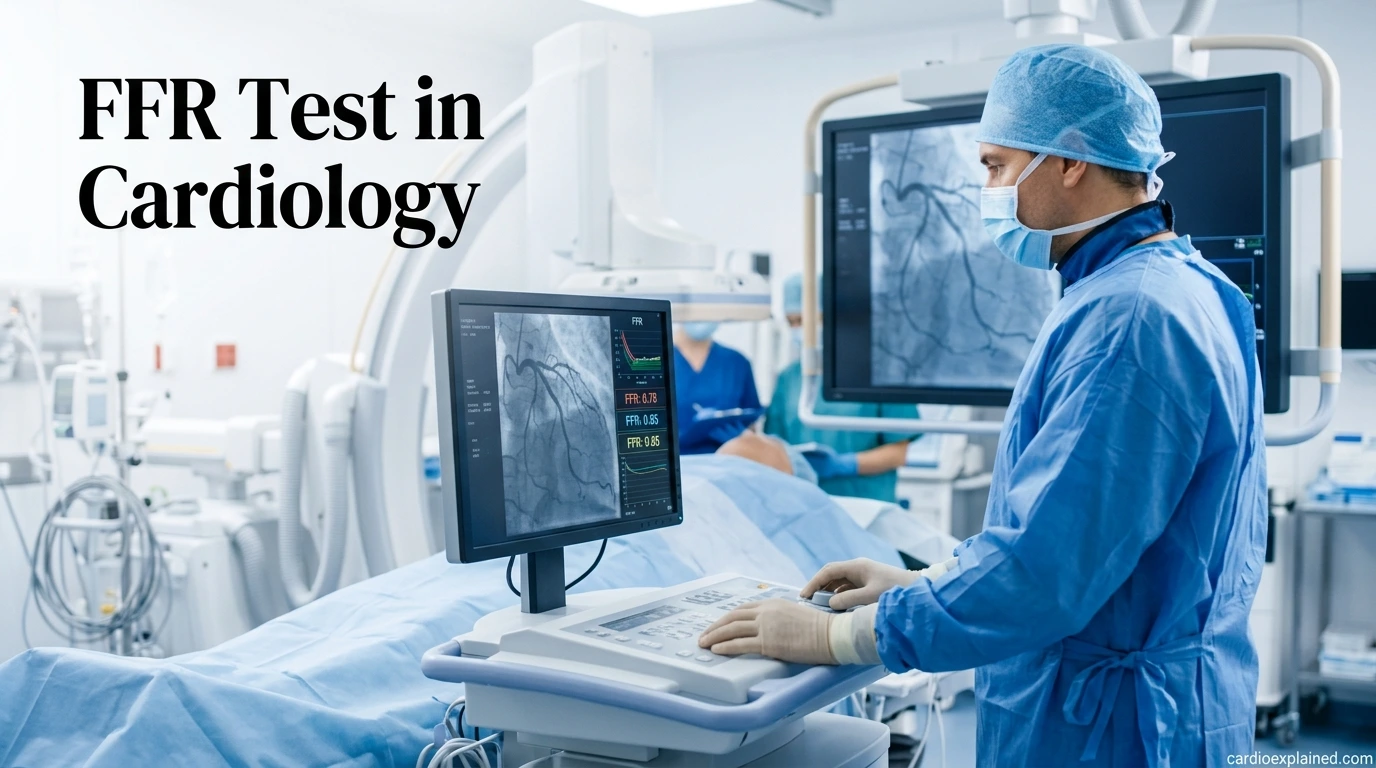

FFR test in cardiology is a heart test that shows how much a blocked heart artery slows blood flow. Doctors use it during a heart catheter procedure to decide if a blockage needs treatment. The test helps many people avoid care they may not need while finding those who may benefit from a stent or surgery.
Have you ever heard that you have a heart artery blockage and wondered what comes next? Many people feel worried after hearing this news. They often ask if they need a stent right away. The ffr test in cardiology helps answer that question with clear facts. It checks how well blood moves through a narrowed heart artery. It also shows if the blockage truly limits blood flow.
This test gives doctors more than a picture. It gives real numbers about blood flow inside the heart. Those numbers help guide safe treatment choices. Some people need a stent. Others may do well with medicine and healthy habits. Knowing the difference can bring peace of mind. It can also help you avoid treatment that may not help. Learning about this test can make your next heart visit feel less stressful.
❤️ What Is an FFR Test?
FFR stands for Fractional Flow Reserve. The name sounds hard, but the idea is simple. It measures how much a narrow heart artery slows blood flow.
Your heart needs a steady blood supply every second. Blood travels through small tubes called coronary arteries. These arteries feed the heart muscle with oxygen. A fatty buildup, called plaque, may narrow these arteries over time.
A heart scan can show that a narrowing exists. Still, the picture alone cannot tell if the narrowing truly affects blood flow. That is where an FFR test helps.
How the Test Works
Doctors perform the test during a heart catheter procedure. A catheter is a thin, flexible tube. The doctor places it into an artery, often in the wrist or groin. The tube moves gently toward the heart.
Next, the doctor guides a tiny wire across the narrowed area. The wire has a small pressure sensor near its tip. This sensor measures blood pressure before and after the blockage.
The doctor also gives medicine that briefly opens the heart arteries wider. This step helps show the greatest possible blood flow. The pressure readings then create the FFR number.
Understanding the FFR Number
The result is a simple number.
| FFR Result | What It May Mean | Common Next Step |
| Above 0.80 | Blood flow stays strong | Medicine and follow-up may be enough |
| 0.80 or lower | Blood flow may be limited | The doctor may discuss a stent or other treatment |
Your doctor never uses this number alone. They also look at your symptoms, medical history, and other test results.
Many heart specialists follow guidance from the American Heart Association (AHA) and the American College of Cardiology (ACC). These groups support using FFR when doctors need more information about a heart artery blockage.
A Real-Life Example
Many patients feel nervous before their first heart catheter visit. One patient learned that a scan showed a moderate blockage. He expected to need a stent. His FFR result showed healthy blood flow instead. His doctor treated him with medicine and lifestyle changes. He returned to normal daily life without another procedure.
🩺 Why Do Doctors Recommend an FFR Test?
Doctors order tests because they want clear answers. A heart artery may look narrow on a scan. Still, that narrowing may not stop enough blood to cause problems.
The goal is to treat the person, not only the picture.
The Test Answers an Important Question
An artery can look blocked but still carry enough blood. Another artery may seem only partly blocked yet greatly reduce blood flow.
The FFR result helps doctors tell the difference.
This information supports better care decisions. It also lowers the chance of treating a blockage that does not need a stent.
Common Reasons Doctors Suggest the Test
✅ Your doctor may recommend the test if:
- You have chest pain during activity.
- A heart scan shows a moderate blockage.
- Stress test results remain unclear.
- More than one artery looks narrow.
- Your doctor wants to plan the safest treatment.
Each person is different. Your doctor looks at your whole health picture before making a recommendation.
FFR Compared With Other Heart Tests
Many heart tests answer different questions.
| Test | What It Shows | Main Purpose |
| Electrocardiogram (ECG) | Heart’s electrical signals | Checks heart rhythm |
| Stress test | Heart response during exercise | Looks for reduced blood flow |
| Coronary angiogram | Pictures of heart arteries | Shows where blockages sit |
| FFR test in cardiology | Blood flow through one blockage | Shows if the blockage limits blood flow |
No single test fits every person. Doctors often combine several tests to get the full picture.
Another Patient Story
A woman visited her doctor because walking uphill caused chest pressure. Her heart scan showed two narrow areas. The FFR measurements found that only one blockage slowed blood flow. Her doctor treated that area. The other blockage stayed under close watch with medicine and regular checkups.
This careful approach helped avoid an extra procedure.
📋 Symptoms That May Lead to Heart Testing
The FFR test does not diagnose symptoms by itself. Instead, doctors may use it after other heart tests suggest a possible blockage.
Many heart symptoms have several causes. Some relate to the heart. Others do not. That is why doctors ask many questions before choosing the next step.
Chest Pain
Chest pain is one of the most common warning signs.
The pain may feel like:
- ✅ Pressure
- ✅ Tightness
- ✅ Heaviness
- ✅ Burning
- ✅ Squeezing
Some people notice pain only during activity. Others feel it while resting.
Chest pain does not always mean a heart attack. Still, you should never ignore it.
Shortness of Breath
Some people feel out of breath after climbing only a few stairs. Others notice they cannot finish daily tasks.
Poor blood flow may make the heart work harder. That can lead to shortness of breath during activity.
Fatigue
Many people expect chest pain first. Instead, unusual tiredness may appear before other symptoms.
Simple chores may suddenly feel much harder.
Pain in Other Areas
Heart-related pain does not always stay in the chest.
It may spread to:
- ✅ The left arm
- ✅ Both arms
- ✅ The jaw
- ✅ The neck
- ✅ The back
- ✅ The shoulder
Women, older adults, and people with diabetes may notice less typical symptoms.
Symptoms May Come and Go
Some people feel fine most days. Symptoms appear only during exercise, stress, or heavy work.
Because of this, doctors often combine your symptoms with scan results before deciding if more testing helps.
A Real-World Example
A retired teacher noticed chest pressure only while gardening. She ignored it for months because it always faded with rest. Her doctor ordered heart testing after hearing her story. Later testing showed one artery needed closer study. The extra information helped her doctor choose the best treatment plan.
Learning your symptoms early gives your care team more choices. Many heart problems respond better when doctors find them before an emergency happens.
⏱️ How Doctors Perform the FFR Test in Cardiology
Many people worry before a heart procedure. That feeling is normal. Knowing each step often makes the day less stressful.
The ffr test in cardiology takes place during a coronary angiogram. An angiogram uses special X-rays and dye to show the heart arteries.
Before the Test
Your care team will explain the procedure. They will answer your questions. You may need to avoid food for several hours before the test.
The team will also:
- ✅ Check your blood pressure.
- ✅ Review your medicines.
- ✅ Ask about allergies.
- ✅ Place a small IV in your arm.
Most people stay awake during the procedure. The doctor gives medicine to help you relax.
During the Test
The doctor cleans and numbs the skin. You may feel a small pinch from the numbing medicine.
Next, the doctor places a thin catheter into an artery. Many doctors now use the wrist because it often allows faster recovery. Some people still need the groin instead.
The catheter moves gently toward the heart. You should not feel it moving.
The doctor injects contrast dye. This dye helps the arteries show clearly on X-rays.
Then, a very thin wire with a pressure sensor crosses the narrowed artery. The doctor gives medicine that opens the heart arteries for a short time. This step lasts only a few minutes.
The pressure readings create the FFR value.
After the Test
The doctor removes the catheter after the procedure.
Most people rest for a short time before going home. Some people stay longer if they receive a stent or need more care.
Your doctor explains the results before you leave or during a follow-up visit.
Does the Test Hurt?
Most people say the test causes little pain.
You may notice:
- ✅ A brief pinch from the numbing medicine.
- ✅ Mild pressure at the catheter site.
- ✅ A warm feeling after the dye.
- ✅ Short chest discomfort from the artery-opening medicine.
These feelings usually pass quickly.
How Safe Is the Test?
Heart specialists perform this test every day. Serious problems are uncommon. Still, every medical procedure carries some risk.
Possible risks include:
- Bleeding where the catheter entered.
- Bruising.
- Infection.
- An allergic reaction to the dye.
- Heart rhythm changes.
Your care team watches you closely during the entire procedure.
A Patient Example
One man delayed his test because he feared pain. Afterward, he told his family the hardest part was waiting. He felt only a small pinch and mild pressure. He returned home later that day with a clear treatment plan.
❤️ Treatment Choices After the Results
The ffr test in cardiology helps doctors match treatment to your needs. The goal is better blood flow and fewer symptoms.
Not every blockage needs a stent.
When Medicine May Be Enough
If blood still moves well, your doctor may suggest medicine first.
Treatment may include:
- ✅ Cholesterol-lowering medicine.
- ✅ Blood pressure medicine.
- ✅ Medicine to prevent blood clots.
- ✅ Medicine to ease chest pain.
Your doctor may also recommend regular follow-up visits.
When a Stent May Help
A stent is a tiny metal mesh tube. It helps keep a narrowed artery open.
Doctors may suggest a stent if:
- Your FFR number shows reduced blood flow.
- You have ongoing chest pain.
- Medicine alone does not control symptoms.
Many stents are placed during the same catheter procedure. This means you may not need another visit.
When Heart Bypass Surgery May Help
Some people have several blocked arteries. Others have blockages in places that are hard to treat with stents.
In those cases, your doctor may discuss bypass surgery.
Heart bypass surgery creates a new path for blood. The surgeon uses a healthy blood vessel from another part of the body.
The best choice depends on your overall health and the location of the blockages.
Shared Decision-Making
Doctors want patients to understand every option.
Together, you can discuss:
- Benefits.
- Possible risks.
- Recovery time.
- Long-term care.
Many people feel more confident after asking questions.
Another Patient Story
A grandmother worried she would need surgery. Her FFR result showed one blockage caused her symptoms. Her doctor placed one stent during the same visit. She later returned to walking with her grandchildren after completing cardiac rehabilitation.
✅ Healthy Habits That Protect Your Heart

Even the best procedure cannot replace healthy daily habits. Your choices matter every day.
Small changes often add up over time.
Eat Heart-Healthy Foods
Choose foods that support healthy arteries.
Good choices include:
- ✅ Fruits.
- ✅ Vegetables.
- ✅ Whole grains.
- ✅ Beans.
- ✅ Fish.
- ✅ Nuts.
Try to limit:
- Sugary drinks.
- Fried foods.
- Processed meats.
- Foods high in salt.
Healthy eating helps control cholesterol, blood pressure, and weight.
Stay Active
Regular movement keeps your heart strong.
Many adults can aim for about 150 minutes of moderate exercise each week. Your doctor may suggest a different plan based on your health.
Simple activities include:
- Walking.
- Swimming.
- Cycling.
- Dancing.
Even short walks count.
Stop Smoking
Smoking harms blood vessels. It also raises the risk of heart attack and stroke.
Many people need several attempts before quitting for good. That is normal.
Your doctor can recommend medicines, counseling, or support programs.
Manage Other Health Problems
Good control of other conditions protects your heart.
Work with your healthcare team to manage:
- High blood pressure.
- Diabetes.
- High cholesterol.
- Kidney disease.
Take your medicines exactly as directed.
Reduce Stress
Stress alone does not usually block arteries. Still, it can affect healthy habits.
Helpful ideas include:
- Deep breathing.
- Gentle exercise.
- Time with family.
- Good sleep.
- Relaxing hobbies.
Keep Regular Checkups
Heart disease often develops slowly.
Regular visits help your doctor:
- Check your progress.
- Adjust medicines.
- Answer new questions.
- Watch for changes.
Healthy habits and medical care work best together. They help many people enjoy active lives for years after heart treatment.
⚠️ When to See a Doctor
Do not ignore new heart symptoms. Early care may prevent a more serious problem.
Call your doctor if you notice symptoms that keep coming back or become worse.
Signs That Need a Medical Visit
Make an appointment if you have:
- ✅ Chest pain during walking or exercise.
- ✅ Shortness of breath that is new.
- ✅ Tiredness that does not improve with rest.
- ✅ Pain that spreads to your jaw, neck, back, or arm.
- ✅ A strong family history of heart disease with new symptoms.
Your doctor may ask about your health history. They may also order tests before deciding if an FFR study is right for you.
Signs That Need Emergency Care
Call 911 right away if you have:
- ✅ Severe chest pain that lasts more than a few minutes.
- ✅ Trouble breathing.
- ✅ Fainting.
- ✅ Cold sweat with chest pressure.
- ✅ Chest pain with nausea or vomiting.
Do not drive yourself if you think you are having a heart attack.
Fast treatment can save heart muscle.
A Patient Story
A man noticed chest pressure while mowing his lawn. He rested, and the pain went away. The same pain returned the next week while climbing stairs. He called his doctor instead of waiting. After several tests, doctors found one artery needed treatment. Acting early helped him avoid a larger heart problem.
Remember, chest pain has many causes. Only a healthcare professional can find the reason.
Frequently Asked Questions
❓ Q: Is an FFR test in cardiology painful?
A: Most people say no. You may feel a brief pinch from the numbing medicine and mild pressure during the procedure. Some people notice a short warm feeling from the dye. These feelings usually pass quickly.
❓ Q: How long does the FFR test take?
A: The test often takes about 30 to 60 minutes. The exact time depends on how many arteries the doctor checks. If you also receive a stent, the visit may take longer. Your care team will explain what to expect.
❓ Q: Is the FFR test in cardiology safe?
A: Yes. It is a standard test that trained heart specialists perform every day. Serious problems are uncommon, but every procedure has some risk. Your medical team watches you closely from start to finish.
❓ Q: Can an FFR test help avoid a stent?
A: Yes, in many cases. If blood flow remains strong, your doctor may recommend medicine instead of placing a stent. The goal is to choose the treatment that fits your condition best.
❓ Q: Will I stay in the hospital overnight?
A: Not always. Many people go home the same day after a short recovery period. Some people stay overnight if they receive extra treatment or need closer monitoring.
❓ Q: Can I eat and drink before the procedure?
A: It depends on your doctor’s instructions. Many people need to stop eating for several hours before the test. Your care team will give clear directions before your appointment.
❓ Q: Who should ask a cardiologist about this test?
A: People with chest pain, abnormal stress test results, or possible heart artery blockages may discuss this test with a cardiologist. Your doctor will decide if it fits your situation. The decision depends on your symptoms, other test results, and overall health.
Final Thoughts
The ffr test in cardiology gives doctors a better picture of how well blood flows through your heart arteries. It does more than show a blockage. It helps reveal whether that blockage truly affects your heart.
Many people learn they can manage their condition with medicine and healthy habits. Others find that a stent or another treatment may improve blood flow and reduce symptoms. The test helps doctors make informed decisions based on your needs instead of pictures alone.
If you have chest pain or other heart concerns, talk to a cardiologist. Early answers can lead to better care and greater peace of mind.