
No supplement has been proven to prevent heart disease in healthy people.
A few may help in specific cases, such as prescription omega-3s for very high triglycerides or plant sterols for LDL cholesterol. Food, exercise, and prescribed medicines matter more. Talk to a doctor or pharmacist before starting any supplement.
Walk down any pharmacy aisle and you will see bottles that promise a stronger heart. Choosing a supplement for heart health sounds simple.
The science is not. Large trials have tested many popular products. Most did not lower the rate of heart attacks or strokes in healthy adults. A few helped in narrow situations. A few can cause harm.
This article explains what research shows for the most common options: omega-3s, CoQ10, magnesium, plant sterols, fiber, red yeast rice, niacin, garlic, and multivitamins.
You will also learn the difference between improving a lab number and preventing a heart attack, how supplements can clash with heart medicines, and how to lower the quality risks when you shop.
Nothing here replaces advice from your own doctor, especially if you take prescription medicines.
Do Supplements Really Help Your Heart?
For most people, the honest answer is: not much, and not on their own. Heart disease is shaped by blood pressure, cholesterol, blood sugar, smoking, weight, sleep, stress, and activity level. Pills do not cancel out the effect of those factors.
Dietary supplements are also different from medicines. In the United States, the FDA does not approve them for safety or effectiveness before they are sold. A label can say a product “supports heart health” without proof that it prevents heart attacks.
Four Things a Supplement Might Do (They Are Not the Same)
Many ads blur these ideas together. They are very different.
- Correcting a deficiency. If a blood test shows you are low in a nutrient, replacing it makes sense. This is not the same as boosting heart health.
- Improving a biomarker. Some products nudge a number, such as LDL cholesterol or blood pressure. A better number does not always mean fewer heart attacks.
- Reducing cardiovascular risk. This means fewer heart attacks, strokes, or deaths. It needs large, long trials to prove. Few supplements have passed this test.
- Treating established disease. Supplements do not replace statins, blood pressure drugs, blood thinners, or other prescribed care.
Heart Health Supplements: What the Research Shows
Omega-3 (Fish Oil)
Omega-3 fatty acids, mainly EPA and DHA, are found in oily fish such as salmon, sardines, and trout. They are the most studied supplement for the heart.
The results depend on who takes them. In large trials of people without heart disease, such as VITAL, fish oil did not significantly lower major cardiovascular events.
The American Heart Association (AHA) has said there is not enough evidence to back fish oil pills for preventing heart disease in the general population.
The AHA does say that taking about 1 gram a day of EPA plus DHA may be reasonable for people who have had a heart attack or have heart failure, with a doctor’s approval.
A separate, prescription-only form called icosapent ethyl (high-dose EPA) lowered events in the REDUCE-IT trial. That trial enrolled people with high triglycerides who were already on a statin. Store-bought fish oil is not the same product or dose.
Some analyses of trials have also linked omega-3 supplements to a higher chance of atrial fibrillation, an irregular heartbeat. The risk looks higher at higher doses. Eating fish twice a week remains the AHA’s advice.
Coenzyme Q10 (CoQ10)
CoQ10 is a compound your cells use to make energy. It is found in meat, fish, and nuts. Some small trials in people with heart failure suggest it may reduce complications, but the evidence is limited and larger studies are needed. It has not been shown to prevent heart disease in healthy people.
CoQ10 may reduce the effect of warfarin, a blood thinner. Anyone on warfarin should check with their doctor first.
Magnesium
Magnesium helps muscles and nerves work, including the heart muscle. Low levels have been linked with higher blood pressure. Some trials show that magnesium supplements lower blood pressure by a small amount. Proof that they prevent heart attacks or strokes is lacking.
Too much magnesium from pills can cause diarrhea and cramps. People with kidney disease can build up dangerous levels, so they should only use it under medical advice. Nuts, beans, whole grains, and leafy greens are good food sources.
Plant Sterols and Stanols
These plant compounds block some cholesterol absorption in the gut. They are added to some margarines, juices, and yogurts, and also sold as pills. Studies show they can modestly lower LDL (“bad”) cholesterol. No large trial has shown they cut heart attacks. They do not replace a statin when one is prescribed.
Soluble Fiber (Psyllium)
Psyllium husk is a type of soluble fiber. It can lower LDL cholesterol a little when taken daily as part of a healthy diet. Drink plenty of water with it. It can slow the absorption of some medicines, so ask a pharmacist how to space your doses.
Red Yeast Rice
Red yeast rice is a fermented rice product. It may contain monacolin K, which is chemically the same as the statin drug lovastatin. The amount varies widely from brand to brand. Some products have also been found to contain citrinin, a toxin that can harm the kidneys.
Because it can act like a statin, red yeast rice can cause muscle pain and liver problems. It should not be combined with a statin. Anyone with high cholesterol is usually better served by a tested, prescribed medicine with a known dose.
Niacin (Vitamin B3)
High-dose niacin can change cholesterol numbers. But in large trials of people already taking statins, adding niacin did not reduce heart events and caused more side effects. These include flushing, stomach upset, liver problems, and higher blood sugar. Most doctors no longer use it routinely.
Garlic
Some studies suggest garlic supplements may lower blood pressure or cholesterol slightly. Results are inconsistent. Garlic may add to the bleeding risk in people taking blood thinners or facing surgery.
Multivitamins and Single Vitamins
The U.S. Preventive Services Task Force (2022) found not enough evidence to say whether multivitamins prevent heart disease. It recommended against beta-carotene and vitamin E supplements for preventing cardiovascular disease. In the VITAL trial, vitamin D did not lower major cardiovascular events in the general population. A multivitamin can fill a dietary gap, but it is not a heart-protection plan.
Quick Comparison
| Supplement | What it may do | Strength of evidence | Main caution |
| Omega-3 (fish oil) | Lowers triglycerides; may help after a heart attack or in heart failure | Mixed for prevention; better in specific groups | Atrial fibrillation signal in some trials |
| CoQ10 | Studied in heart failure | Limited; small trials | May weaken warfarin |
| Magnesium | May lower blood pressure slightly | Limited for heart events | Kidney disease; diarrhea |
| Plant sterols/stanols | Lower LDL cholesterol | Fair for LDL; unproven for heart attacks | Not a statin replacement |
| Psyllium | Lowers LDL modestly | Fair for LDL | Needs water; medicine timing |
| Red yeast rice | May lower LDL | Varies by product | Statin-like side effects; contamination |
| Niacin | Changes cholesterol numbers | No added benefit with statins | Flushing; liver; blood sugar |
| Garlic | May lower blood pressure slightly | Inconsistent | Bleeding risk |
| Multivitamin | Fills nutrient gaps | No proven heart benefit | False sense of protection |
Food First: Where the Stronger Evidence Is
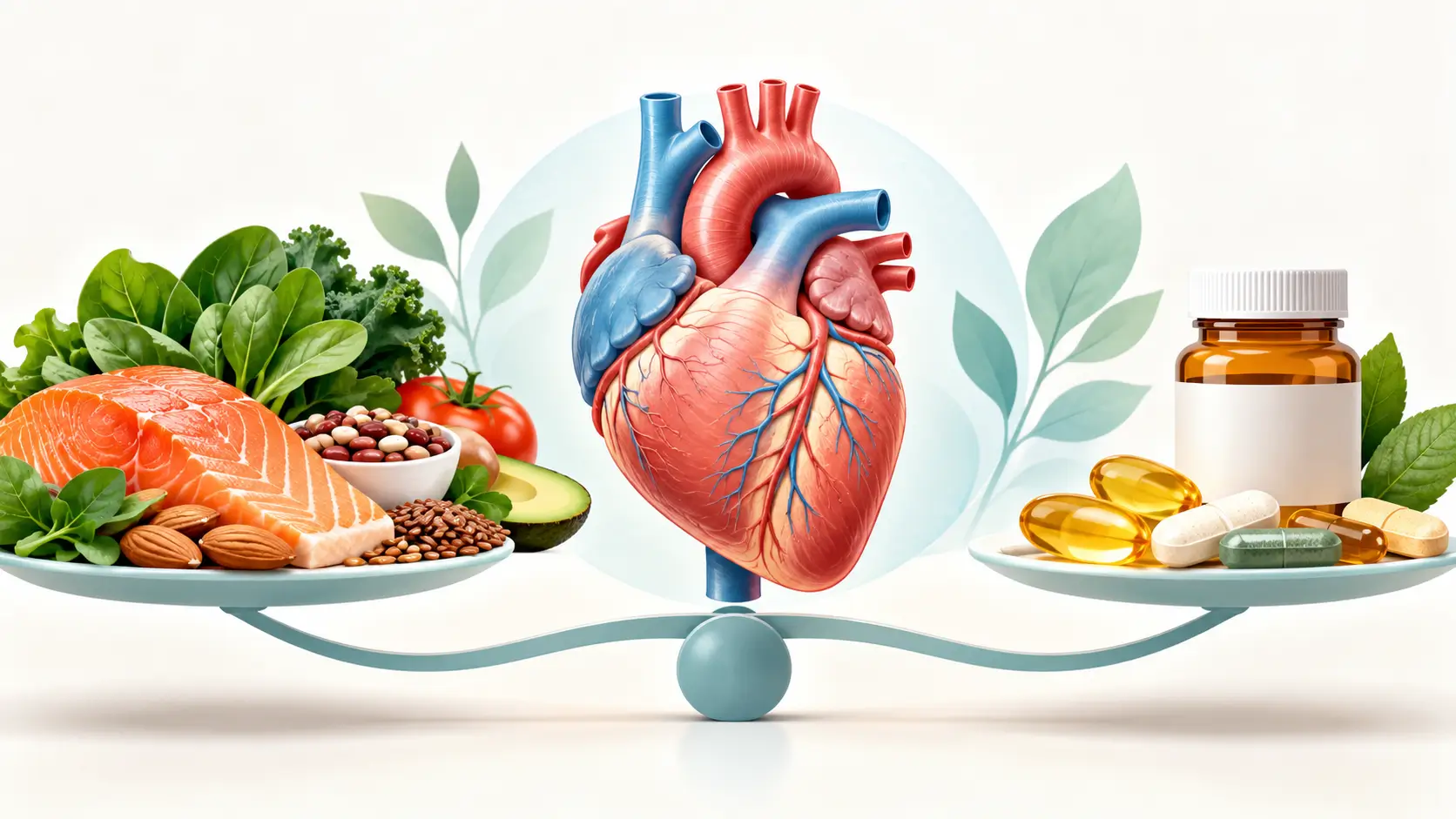
Studies of whole eating patterns are far stronger than studies of single pills. The AHA encourages vegetables, fruit, whole grains, beans, nuts, and fish, with less salt, added sugar, and saturated fat. A Mediterranean-style diet is one well-studied example.
Potassium is a good example of why food comes first. Foods like beans, potatoes, and bananas can help blood pressure. Potassium pills, however, can raise blood levels too high in people with kidney problems or in those taking certain blood pressure medicines.
Risks and Drug Interactions to Know
Supplements can act like drugs. Think about these pairings:
- Blood thinners (such as warfarin): CoQ10, garlic, vitamin K, and high-dose fish oil can change bleeding risk or drug effect.
- Statins: Red yeast rice and niacin can add to muscle and liver side effects.
- ACE inhibitors, ARBs, and some diuretics: Potassium supplements can push potassium too high.
- Kidney disease: Magnesium and potassium need medical supervision.
- Surgery planned: Tell your surgeon about every supplement, since some affect bleeding.
Quality matters too. Content can differ from the label. Look for a seal from an independent tester such as USP or NSF. Be wary of “proprietary blends,” miracle claims, or promises to replace medication.
Who Should Talk to a Doctor First
Check with a doctor or pharmacist before starting any heart supplement if you:
- Take prescription medicines, especially blood thinners, statins, or blood pressure drugs
- Have heart disease, high blood pressure, kidney disease, or liver disease
- Are pregnant, planning pregnancy, or breastfeeding
- Have surgery coming up
- Want to use a supplement in place of a prescribed medicine (do not stop prescribed medicine without medical advice)
How to Shop More Safely if You and Your Doctor Decide on One
- Name the goal. Is it a low nutrient, high triglycerides, or high LDL? A clear goal helps your doctor judge the choice.
- Ask about your medicines. Bring the bottle to a pharmacist.
- Read the label. Check the active ingredient and amount per serving.
- Choose third-party tested products when possible.
- Avoid megadoses. More is not safer or better.
- Recheck. If the goal is a lab number, repeat the test to see whether it helped.
When to Get Urgent Help
Supplements are not a safety net. Call your local emergency number (911 in the United States) if you have chest pain or pressure, pain spreading to the arm or jaw, severe shortness of breath, fainting, or sudden weakness, face drooping, or trouble speaking. Do not wait to see if a pill helps.
Frequently Asked Questions
What is the best supplement for heart health?
There is no single best one. For healthy people, none has been proven to prevent heart disease. The right choice depends on your situation. Omega-3s may help after a heart attack, and plant sterols may lower LDL. A doctor can match a product to a real need.
Can supplements lower cholesterol?
Some can nudge it down. Plant sterols and psyllium fiber modestly lower LDL. Red yeast rice may too, but its dose is unreliable and it can cause statin-like side effects. Lower cholesterol is not proof of fewer heart attacks, and none replace prescribed statins.
Is fish oil good for your heart?
It depends. In healthy adults, large trials did not show fewer heart attacks or strokes. It may help people with prior heart attack or heart failure, and prescription EPA helps some with high triglycerides. Some trials link fish oil to atrial fibrillation. Eating oily fish twice weekly is the usual advice.
Should I take CoQ10 for heart health?
Evidence is limited. Small studies in heart failure show possible benefit, but it is not proven to protect healthy hearts. CoQ10 may weaken warfarin. If you are thinking about it, ask your doctor first, particularly if you have heart failure or take a blood thinner.
Can I take a heart supplement with my prescription medicine?
Sometimes, but not always. Red yeast rice with a statin, potassium with some blood pressure drugs, and several products with warfarin can be risky. Show your pharmacist or doctor the exact label before you start.
Is a multivitamin good for the heart?
A multivitamin can cover nutrient gaps, but studies have not shown it prevents heart disease. The U.S. Preventive Services Task Force found the evidence insufficient. Spending effort on diet, activity, and blood pressure and cholesterol control is more likely to help.
Do supplements lower blood pressure?
A few, like magnesium and garlic, may lower it slightly in some studies, but results are inconsistent. Cutting salt, being active, limiting alcohol, and taking prescribed medicine work better. Potassium pills can be unsafe for some people, so do not self-treat high blood pressure.
Key Takeaway
A supplement for heart health is a tool for a specific need, not a shortcut. The strongest evidence points to food, movement, and treating blood pressure and cholesterol.
A few supplements help in narrow cases, and several carry real interaction risks. Before you buy one, ask a doctor or pharmacist whether it fits your health and your medicines.