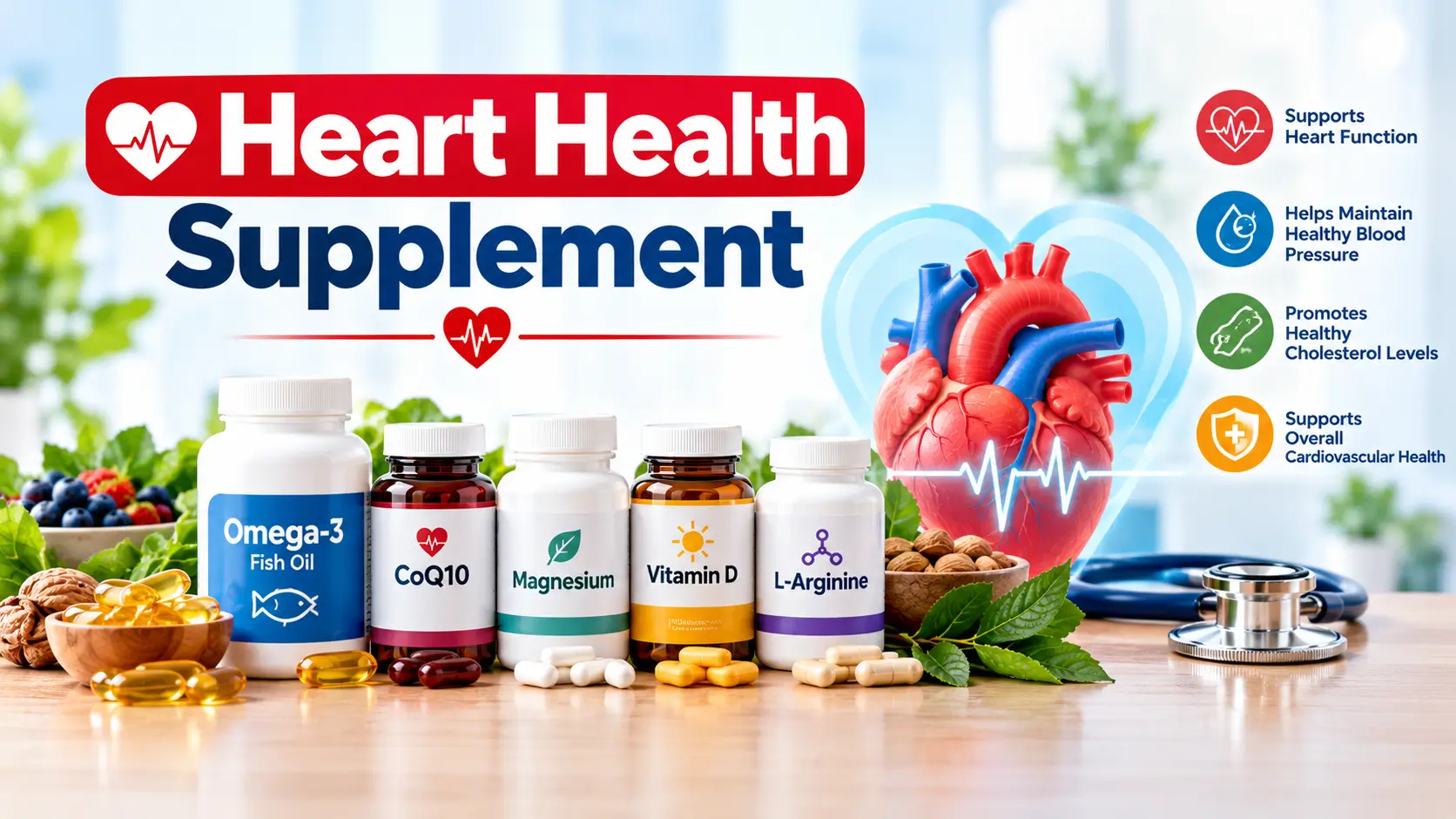

No single heart health supplement has been proven to prevent heart attacks or strokes in most people. A few products, such as omega-3s for very high triglycerides or fiber for LDL cholesterol, help specific lab numbers.
Food, exercise, and prescribed treatment remain the foundation of cardiovascular care.
Walk into any pharmacy and you will find a wall of bottles promising a stronger heart. Fish oil, CoQ10, garlic, red yeast rice, and many blends compete for attention. It is easy to assume that something sold for the heart must help it.
The reality is more careful. A heart health supplement can do four very different things: fix a shortage, shift a blood test result, lower the chance of a heart attack, or treat a diagnosed condition. Most products have evidence for, at best, one of these.
This guide explains how to judge any product on the shelf. You will see which ingredients have research behind them, which have disappointed in large trials, what risks and drug interactions matter, and who should speak with a clinician first. It is educational and does not replace personal medical advice.
What Counts as a Heart Health Supplement?
The term covers vitamins, minerals, plant extracts, oils, and combination formulas marketed for cardiovascular support. In many countries, supplements are not tested for effectiveness before sale. Regulators generally act only after a product is found to be unsafe or falsely labeled.
That means a bold label claim is not proof. Strength, purity, and even ingredient lists can vary between brands.
Four Different Goals, Four Different Levels of Proof
This distinction matters more than any brand name.
- Correcting a deficiency: A blood test shows low vitamin D, B12, or iron, and a supplement fixes it. This is real benefit, but it treats the shortage, not heart disease.
- Improving a biomarker: Some products lower LDL cholesterol, triglycerides, or blood pressure a little. A better number does not always mean fewer heart attacks.
- Reducing cardiovascular risk: This needs large, long human trials. Very few supplements have passed this test.
- Treating established disease: No over-the-counter supplement replaces medicine for heart failure, coronary artery disease, or high blood pressure.
Supplements With Some Supporting Evidence
Omega-3 fatty acids (fish oil)
High doses can lower triglycerides. One large trial of a purified prescription EPA product in people with raised triglycerides on statins found fewer cardiovascular events. Trials of ordinary over-the-counter fish oil in the general population have not shown clear protection. Higher doses have been linked to atrial fibrillation, an irregular heartbeat, and fish oil may add to bleeding risk with blood thinners.
Soluble fiber (psyllium)
Soluble fiber helps the body remove cholesterol-rich bile, which modestly lowers LDL cholesterol. Start slowly, drink plenty of fluid, and separate it from medicines by a couple of hours, since fiber can slow absorption.
Plant sterols and stanols
These compounds block some cholesterol absorption in the gut and can lower LDL by roughly 5 to 15 percent in trials. Long-term proof of fewer heart attacks is lacking. People with a rare condition called sitosterolemia should avoid them.
Magnesium
It may lower blood pressure slightly, mainly in people with low intake. Loose stools are common, and people with kidney disease can accumulate unsafe levels.
Coenzyme Q10
Some small studies suggest benefit in heart failure, but major guidelines do not broadly recommend it. It may reduce the effect of warfarin. Evidence in healthy adults is thin.
Popular Products With Weak or Mixed Evidence
- Multivitamins, vitamin E, and beta-carotene: Large reviews found no clear protection from heart disease, and beta-carotene raised lung cancer risk in smokers.
- Vitamin D and calcium: Helpful for bones and for people who are low, but not shown to prevent heart attacks or strokes.
- Garlic: Small blood pressure and cholesterol effects appear in some studies, but results are inconsistent. It can add to bleeding risk.
- Red yeast rice: It contains a natural statin-like compound in unpredictable amounts. Some products have been contaminated with a kidney-toxic substance, and it can cause the same muscle and liver side effects as statins.
- Niacin: It has not improved outcomes when added to statins and can cause flushing and liver problems.
- Resveratrol and similar antioxidants: Lab results have not been confirmed by human trials.
Safety Points Worth Knowing
Supplements are not automatically safe because they are “natural.”
- Drug interactions: Vitamin K and CoQ10 can affect warfarin. Fish oil, garlic, and ginkgo can raise bleeding risk. Some minerals interact with blood pressure medicine and diuretics.
- Kidney and liver: Magnesium, potassium, and certain herbs can build up or harm these organs.
- Pregnancy: Needs and risks differ, so ask your clinician before using anything beyond a prenatal vitamin.
- Quality: Look for an independent testing seal on the label, and avoid megadoses.
- Surgery: Tell your surgical team about every product you take.
Who Should Talk to a Clinician First
Speak with a doctor or pharmacist before starting a supplement if you:
- Take blood thinners, statins, or blood pressure medicine
- Have kidney or liver disease
- Have heart failure or an irregular heartbeat
- Are pregnant or breastfeeding
- Are planning surgery
Never stop a prescribed medicine to try a supplement.
What Protects Your Heart More Than Any Pill
- Eat vegetables, fruit, whole grains, beans, nuts, and fish, with less sodium, added sugar, and processed meat
- Aim for at least 150 minutes of moderate activity each week
- Stay tobacco-free
- Keep a healthy weight and sleep well
- Manage stress
- Get blood pressure, cholesterol, and blood sugar checked, and follow your treatment plan
Most nutrients with heart benefits, such as fiber, magnesium, and omega-3s, are available from everyday food.
How to Choose Carefully
- Ask what goal the product serves and whether a blood test shows a need.
- Check whether human trials, not just lab studies, support it.
- Choose moderate doses and independently tested brands.
- Show the bottle to your pharmacist.
- Recheck lab results after a few months to see whether anything changed.
- Be wary of promises to “cleanse” arteries or replace medication.
When to Seek Urgent Help
Call your local emergency number for chest pressure or pain, pain spreading to the arm, jaw, or back, sudden severe breathlessness, fainting, or stroke signs such as face drooping, arm weakness, or slurred speech. Do not wait for a supplement to work.
Frequently Asked Questions
What is the best heart health supplement?
No single product is best for everyone. The right option depends on your goal, such as triglycerides, LDL cholesterol, or a confirmed deficiency. Your clinician can match a product to a test result, or advise that none is needed.
Do heart supplements really work?
Some move lab numbers modestly, but few have proven they prevent heart attacks or strokes. Evidence differs widely by ingredient, dose, and the group studied. Treat marketing claims cautiously and look for human trial data.
Can supplements replace cholesterol medication?
No. Fiber and plant sterols lower LDL only modestly, while statins have strong proof of preventing heart attacks in suitable patients. Never stop a prescription without medical direction.
Are heart supplements safe with blood thinners?
Not always. Fish oil, garlic, and ginkgo may increase bleeding risk, and vitamin K or CoQ10 can alter warfarin’s effect. Ask a pharmacist to screen every product against your prescriptions.
Do I need a supplement if I eat well?
Probably not. A varied diet supplies fiber, magnesium, and omega-3s naturally. Supplements make more sense for a confirmed shortage or a diet that is hard to follow.
How long do supplements take to change cholesterol?
Fiber and plant sterols often show effects within several weeks. A repeat lipid panel after about one to three months, arranged by your clinician, shows whether anything changed.
How can I tell if a supplement is good quality?
Look for an independent testing seal, a clear ingredient list with amounts, and no extreme claims. Because supplements are not approved for effectiveness before sale, quality varies by brand.
Key Takeaway
A heart health supplement can fix a shortage or nudge a lab number, but few have shown they prevent heart attacks or strokes. Omega-3s, fiber, plant sterols, magnesium, and CoQ10 have the most support, each for a narrow purpose.
Food, activity, and prescribed care carry far more weight. Check with a clinician or pharmacist first, especially if you take regular medicine.