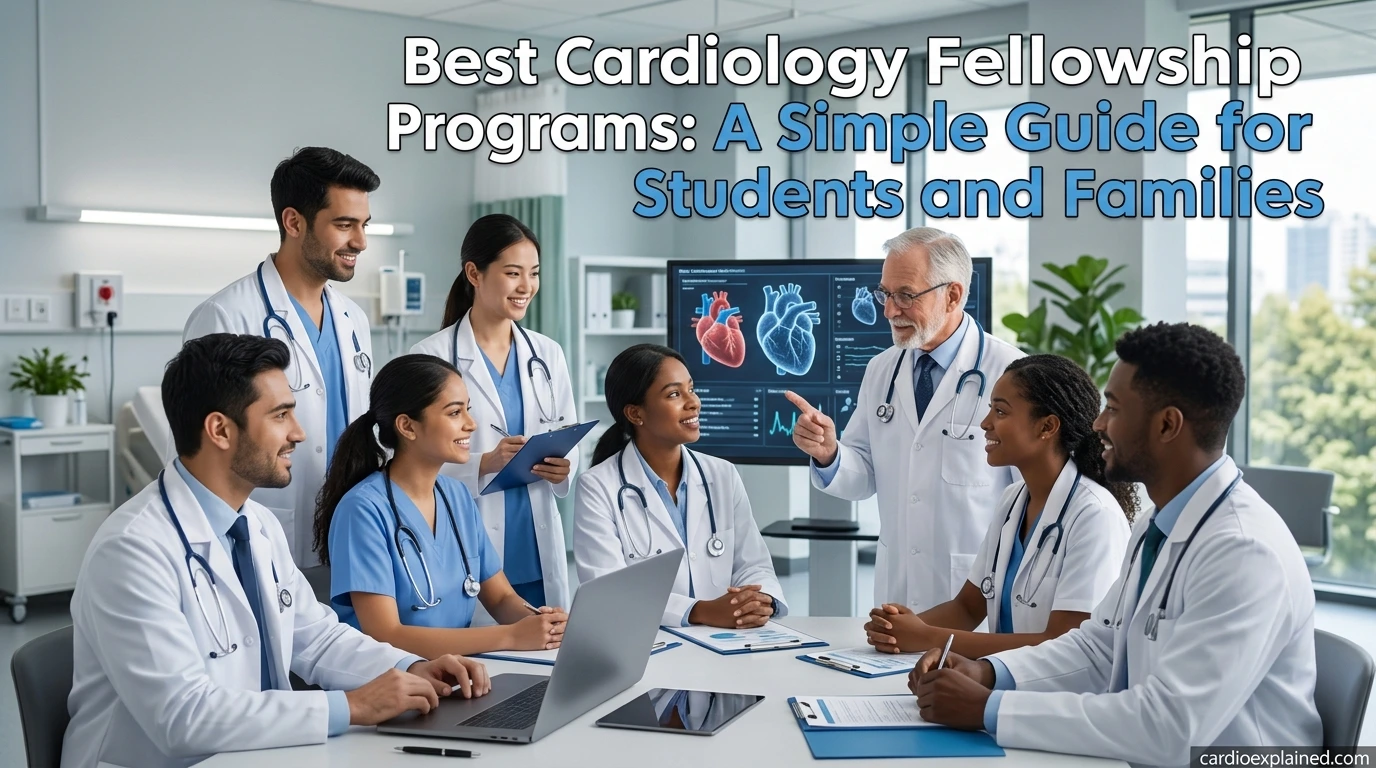
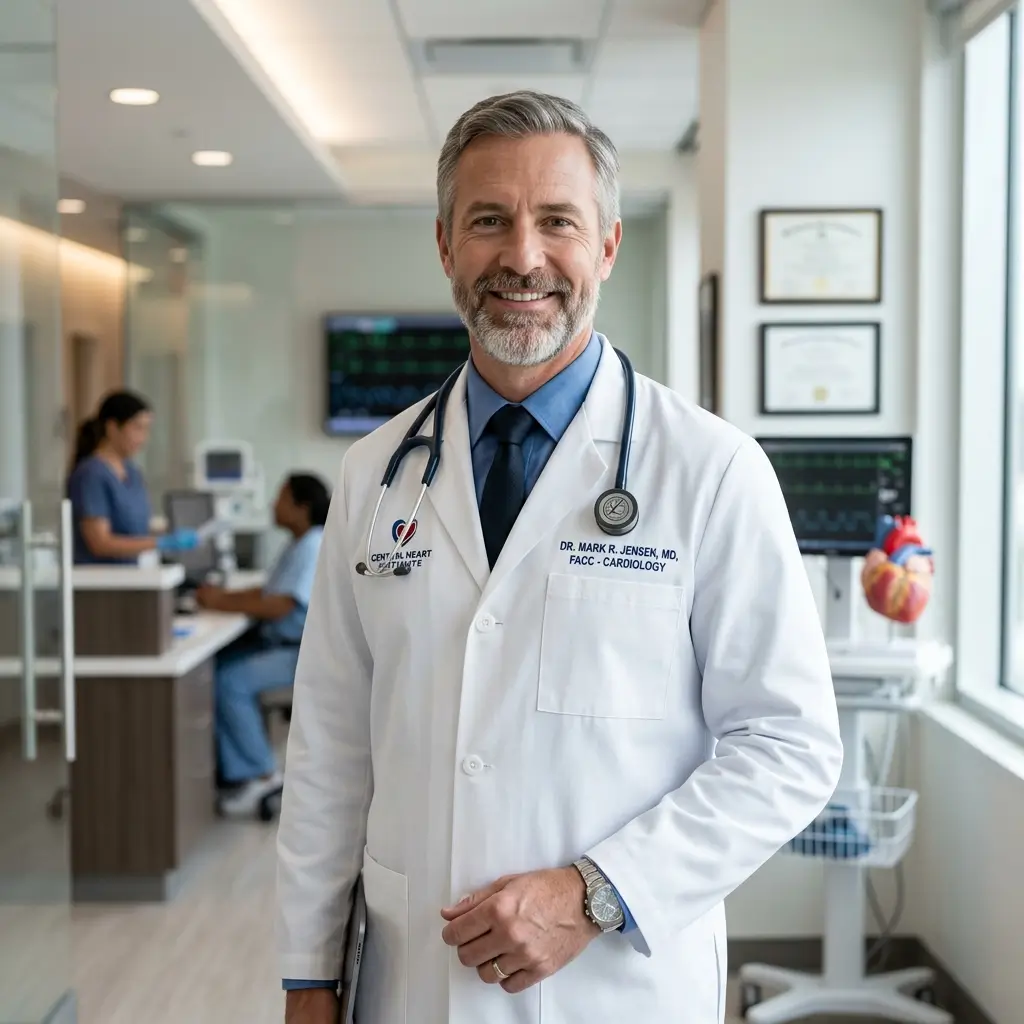
Best cardiology fellowship programs train doctors to become heart specialists after internal medicine residency. They offer strong teaching, hands-on patient care, and research chances. Choosing the right program depends on training quality, career goals, and personal fit.
Have you ever wondered how heart doctors become experts? Many people meet a cardiologist during a health scare. Others dream of becoming one. Learning about the best cardiology fellowship programs helps students, patients, and families understand how future heart doctors gain advanced skills. Good training matters because it shapes the care people receive every day. It also helps doctors learn new treatments, work with experienced teachers, and build confidence. Whether you plan a medical career or simply want to know more, this guide explains what makes a fellowship strong and why these programs matter for heart health.
❤️ What Are the Best Cardiology Fellowship Programs?
A cardiology fellowship is advanced training after medical school and residency. During fellowship, doctors focus only on heart and blood vessel care.
The best cardiology fellowship programs give fellows many learning chances. They care for different patients each day. They also learn from skilled heart doctors.
Many leading programs share common strengths.
- 🩺 Large hospitals with many heart patients
- 🩺 Expert teachers and mentors
- 🩺 Modern heart imaging and testing
- 🩺 Research projects and clinical trials
- 🩺 Strong teamwork across medical specialties
No single program fits everyone. The best choice depends on career goals, learning style, and personal needs.
What Fellows Learn
Training covers many heart conditions.
Doctors learn to care for people with:
- ❤️ Heart attacks
- ❤️ Heart failure, when the heart pumps weakly
- ❤️ Heart rhythm problems
- ❤️ Valve disease
- ❤️ High blood pressure
They also learn procedures that help diagnose and treat heart disease.
📋 What Makes a Fellowship Program Stand Out?
Many excellent programs look beyond classroom learning.
Strong Patient Experience
Doctors learn best by caring for many patients.
A busy hospital lets fellows see common and rare heart problems. This experience builds confidence over time.
For example, a fellow may care for someone with chest pain one morning. Later, they may help another patient with heart failure.
Skilled Mentors
Good teachers explain complex ideas with patience.
Mentors also guide research, career planning, and daily patient care.
Many graduates remember their mentors long after training ends.
Research Opportunities
Research helps doctors improve future care.
Some fellows study new medicines. Others test new heart devices or imaging methods.
Research also teaches careful thinking and teamwork.
Modern Technology
Heart care changes often.
Leading programs teach fellows to use advanced tools, including:
| Tool | Simple Purpose | Who Uses It |
| Echocardiogram | Uses sound waves to show the heart | Cardiologists |
| Cardiac MRI | Creates detailed heart pictures | Imaging specialists |
| Cardiac catheterization | Checks heart arteries with a thin tube | Heart specialists |
| Stress test | Shows how the heart works during activity | Cardiology team |
Programs follow guidance from organizations like the American Heart Association (AHA) and the American College of Cardiology (ACC). These groups help doctors provide safe, evidence-based care.
🩺 Well-Known Training Centers Across the United States
Several hospitals earn strong national respect for heart training. These centers often appear among the country’s leading heart programs.
Examples include:
- 🩺 Mayo Clinic
- 🩺 Cleveland Clinic
- 🩺 Johns Hopkins Hospital
- 🩺 Massachusetts General Hospital
- 🩺 Stanford Health Care
- 🩺 Duke University Hospital
- 🩺 NewYork-Presbyterian Hospital
- 🩺 University of Michigan Health
Each program offers unique strengths.
Some focus heavily on research.
Others offer large numbers of advanced heart procedures.
Students should compare programs carefully instead of chasing rankings alone.
⏱️ Choosing Among the Best Cardiology Fellowship Programs
Many students ask how doctors choose where to train.
The answer depends on several factors.
Think About Career Goals
Some fellows plan to become general cardiologists.
Others want extra training in:
- Heart rhythm care
- Heart imaging
- Heart failure
- Interventional cardiology, which treats blocked arteries with small tubes and balloons
Career goals help narrow the choices.
Consider Lifestyle
Training takes several years.
Students should think about:
- ✅ Family support
- ✅ Cost of living
- ✅ Work-life balance
- ✅ Wellness resources
- ✅ Location
A supportive learning environment often matters as much as reputation.
Ask Current Fellows
Current trainees know daily life best.
They can explain:
- Teaching quality
- Faculty support
- Patient volume
- Research time
- Team culture
These details may not appear on program websites.
❤️ What Patients Can Learn From Fellowship Training
Patients rarely think about medical training during an appointment.
Still, fellowship quality can affect daily care.
Doctors from strong programs learn to solve difficult problems with teamwork.
Many patients feel nervous before their first heart visit.
A well-trained cardiologist often explains each step clearly. They answer questions with patience. That simple conversation can reduce fear.
Another patient may arrive after a heart attack.
The care team works together quickly. Years of fellowship training prepare doctors for these moments.
Good training supports better decision-making. Still, every doctor continues learning throughout a career.
📋 Common Tests Fellows Learn to Use
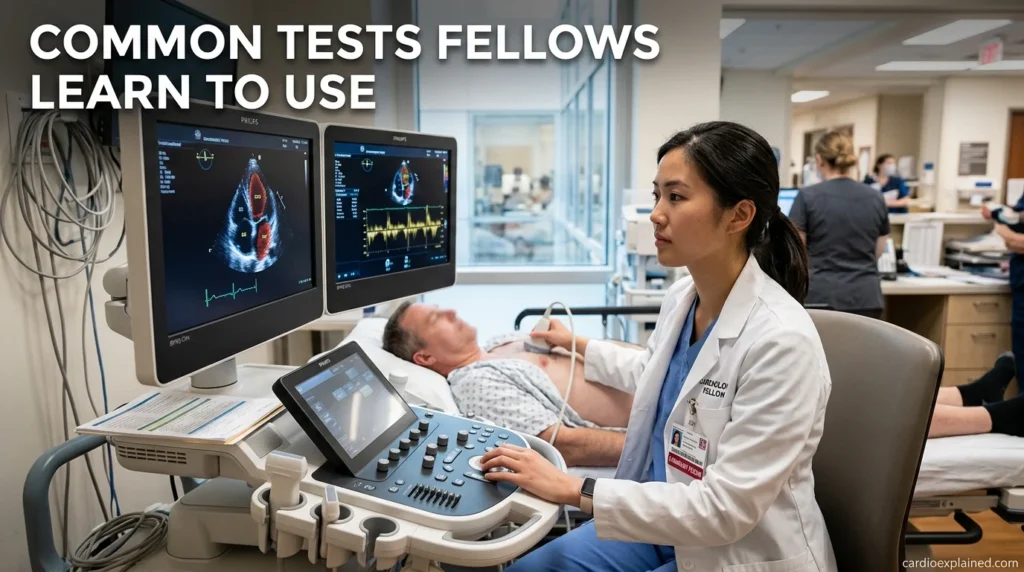
Heart specialists use several tests every day.
Each test answers a different question.
| Test | What It Shows | Why It Helps |
| Electrocardiogram (ECG) | Heart’s electrical signals | Finds rhythm problems |
| Echocardiogram | Heart structure and movement | Checks pumping strength |
| Stress test | Heart during exercise | Looks for reduced blood flow |
| Cardiac CT scan | Detailed heart pictures | Finds calcium or artery disease |
Doctors choose tests based on symptoms, health history, and physical exams.
Not every patient needs every test.
⚠️ How Students Prepare for Fellowship
Cardiology training begins long before fellowship.
Students first complete:
- Medical school
- Internal medicine residency
- Cardiology fellowship
Strong applicants often build experience through:
- 📋 Research
- 📋 Volunteer work
- 📋 Leadership
- 📋 Good communication skills
- 📋 Strong patient care
Good grades help.
Kindness, teamwork, and professionalism also matter.
📋 Salary and Career Outlook
Many students ask about future income.
Salary depends on experience, location, and specialty.
| Career Stage | Main Focus | General Income Trend |
| Fellow | Advanced training | Lower than attending physicians |
| General cardiologist | Broad heart care | Higher earning potential |
| Subspecialist | Advanced procedures or imaging | Often higher, depending on practice |
Many cardiologists also teach, conduct research, or lead hospital programs.
Job demand remains strong because heart disease affects many Americans.
❤️ Why Program Fit Matters More Than Rankings
Rankings attract attention.
Still, they tell only part of the story.
The best cardiology fellowship programs for one student may not fit another.
Some learners enjoy large academic hospitals.
Others prefer smaller programs with close mentoring.
A happy fellow often learns better and feels more supported.
Finding the right fit can shape a rewarding career.
❓ Frequently Asked Questions
Q: How long do the best cardiology fellowship programs last?
A: Most general cardiology fellowships last about three years. Extra specialty training may add one or two more years.
Q: Are the best cardiology fellowship programs very competitive?
A: Yes. Many strong students apply each year. Good grades, research, and patient care experience may improve an application.
Q: Can patients tell where their cardiologist trained?
A: Yes. Many doctors share their education on hospital websites. Training is helpful, but experience and communication also matter.
Q: Do fellows treat real patients?
A: Yes. Fellows care for patients every day. Experienced heart specialists closely supervise their work.
Q: Do fellowship programs include research?
A: Many do. Research helps doctors study better treatments and improve future patient care.
Q: Is a famous hospital always the best choice?
A: No. Many excellent programs offer outstanding education. A supportive environment and good mentoring may matter just as much.
Final Thoughts
The best cardiology fellowship programs help doctors become skilled heart specialists through patient care, research, and expert teaching. Strong programs also support teamwork, communication, and lifelong learning. Students should look beyond rankings and choose a program that matches personal goals and values. Patients can feel encouraged knowing heart specialists spend years preparing for complex care. If you have heart concerns, talk to a cardiologist. They can help explain your options and guide your next steps.