
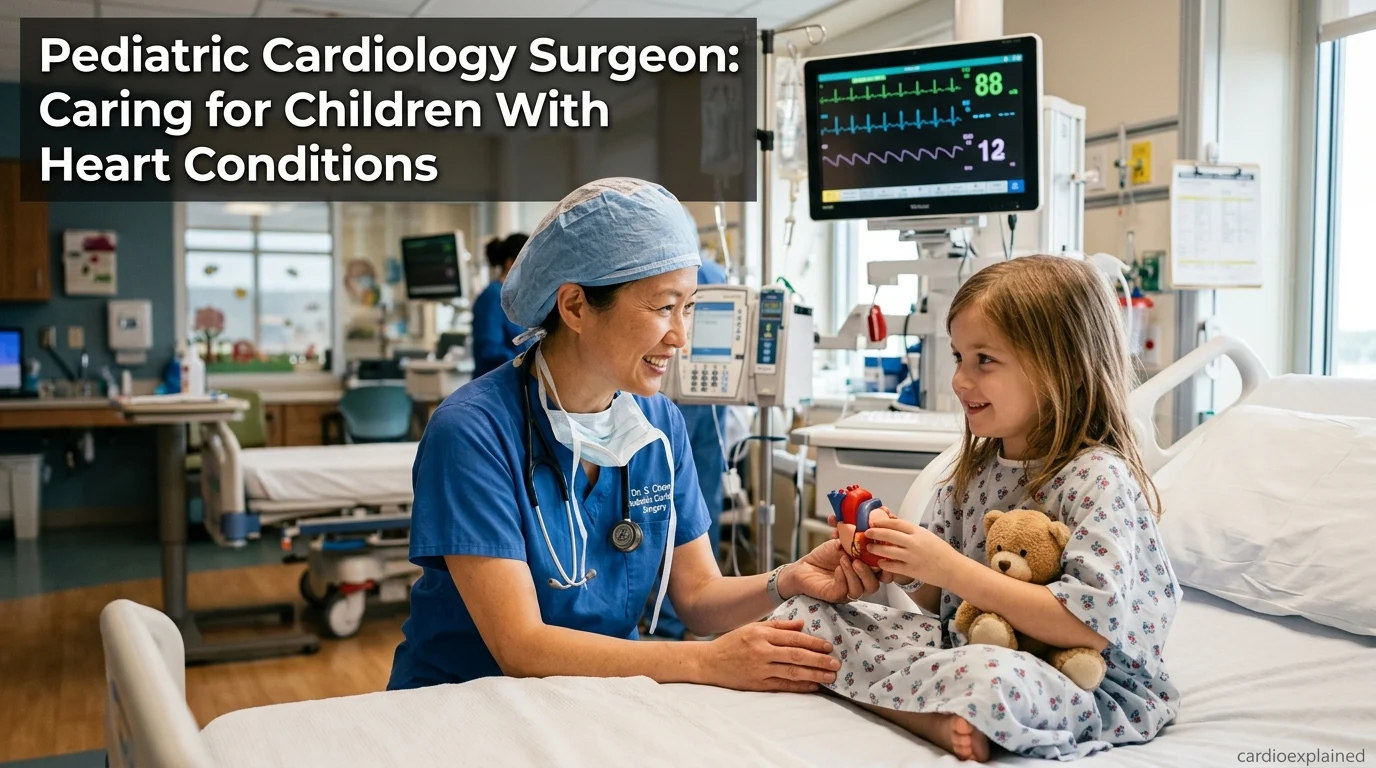

A pediatric cardiology surgeon is a doctor who performs heart surgery on babies, children, and teens. These specialists treat heart problems present at birth and other heart conditions that may develop later. Their work helps many children live healthier and more active lives.
Has your child been told they have a heart condition? That news can feel scary. Many parents have questions and worries right away.
A pediatric cardiology surgeon helps children who need heart surgery. These doctors work with heart specialists, nurses, and other care teams. Their goal is to improve heart function and support healthy growth.
Understanding what these surgeons do can ease some fears. You can learn about common heart conditions, surgery options, recovery, and training paths in heart care. You will also find information about cardiac sonography programs for students interested in this field.
❤️ What Does a Pediatric Cardiology Surgeon Do?
A pediatric heart surgeon treats heart problems in children. Many of these conditions are present at birth.
The heart may have a hole, a valve problem, or a blood vessel issue. Surgery can help fix these problems.
Common Conditions Treated
Some common conditions include:
- ❤️ Atrial septal defect (ASD), a hole between upper heart chambers
- ❤️ Ventricular septal defect (VSD), a hole between lower chambers
- ❤️ Tetralogy of Fallot, a group of heart defects
- ❤️ Heart valve problems
- ❤️ Coarctation of the aorta, a narrowed major blood vessel
Many children receive treatment soon after birth. Others may need care later.
Working With a Heart Care Team
A surgeon rarely works alone.
The care team may include:
- 🩺 Pediatric cardiologists
- 🩺 Cardiac sonographers
- 🩺 Anesthesiologists
- 🩺 Nurses
- 🩺 Intensive care specialists
Together, they create a treatment plan for each child.
🩺 When Might a Child Need Heart Surgery?
Not every heart condition needs surgery.
Doctors first perform tests to understand the problem.
Tests Often Used
| Test | What It Does | Simple Explanation |
| Echocardiogram | Creates heart images | Uses sound waves to see the heart |
| ECG | Records heart signals | Measures heart rhythm |
| Chest X-ray | Shows heart size | Creates pictures of the chest |
| MRI | Detailed imaging | Produces detailed heart pictures |
An echocardiogram is often very important. A cardiac sonographer performs this test.
Signs Parents May Notice
A child may have:
- ⚠️ Fast breathing
- ⚠️ Poor feeding
- ⚠️ Low energy
- ⚠️ Slow growth
- ⚠️ Blue skin color around lips
These signs do not always mean heart disease. A doctor should evaluate them.
A Real-Life Example
Many parents feel nervous before the first visit.
For example, a newborn may struggle during feeding. Testing may reveal a small heart defect. After treatment, many babies feed better and gain weight normally.
📋 How Pediatric Cardiology Surgeons Plan Treatment
Every child is different.
A pediatric cardiology surgeon reviews test results carefully. The surgeon then discusses options with the family.
Surgery Is Not Always the First Step
Some children need:
- 📋 Monitoring
- 📋 Medication
- 📋 Lifestyle guidance
Others may benefit from surgery sooner.
Following Trusted Guidelines
Heart specialists often follow guidance from groups such as the American Heart Association (AHA) and the American College of Cardiology (ACC).
These organizations support safe and evidence-based care.
Questions Families Often Ask
Parents may ask:
- What is the exact heart problem?
- Does surgery help now?
- What are the risks?
- How long is recovery?
- What follow-up care is needed?
Good communication helps families feel more confident.
⏱️ Recovery After Pediatric Heart Surgery

Recovery takes time.
Most children stay in the hospital after surgery. The care team watches them closely.
What Happens During Recovery?
Children may have:
- ⏱️ Pain control medicine
- ⏱️ Heart monitoring
- ⏱️ Breathing support if needed
- ⏱️ Follow-up imaging tests
The length of recovery varies.
Returning to Normal Activities
Many children return to:
- ✅ School
- ✅ Sports approved by doctors
- ✅ Playtime
- ✅ Family activities
The doctor provides activity guidelines.
Another Patient Example
A school-aged child may need repair for a heart valve problem.
After surgery and follow-up visits, many children return to regular activities. They often enjoy sports and play again after healing.
🎓 Education and Career Paths in Heart Imaging and Surgery
Many students become interested in heart care after meeting specialists.
While surgeons complete many years of medical training, other heart professionals follow different paths.
One important role is the cardiac sonographer.
What Is Cardiac Sonography?
Cardiac sonography uses sound waves to create heart images.
The test is called an echocardiogram.
These images help doctors diagnose heart conditions.
Accredited Cardiac Sonography Programs
Accreditation means a program meets quality standards.
Students often look for accredited programs because employers value them.
When reviewing schools, consider:
- 🎓 Accreditation status
- 🎓 Clinical training opportunities
- 🎓 Certification preparation
- 🎓 Graduation outcomes
Cardiology Sonography Programs Online
Online programs can offer flexibility.
Many include online classes plus local clinical training. Clinical training gives students hands-on experience with patients.
Students should confirm accreditation before enrolling.
Cardiology Sonography Programs in California
California offers several cardiac sonography training options.
Programs may be available through:
- Community colleges
- Universities
- Medical training centers
Requirements differ by school.
Johns Hopkins and UCSF Training Opportunities
Students often search for a Johns Hopkins cardiac sonography program or UCSF cardiac sonography program.
These respected medical institutions are known for strong healthcare education and research. Program offerings can change over time. Students should review current admission details directly through each institution.
❤️ Pediatric Cardiology Surgeon and Cardiac Sonographers: A Strong Partnership
Heart surgery depends on accurate information.
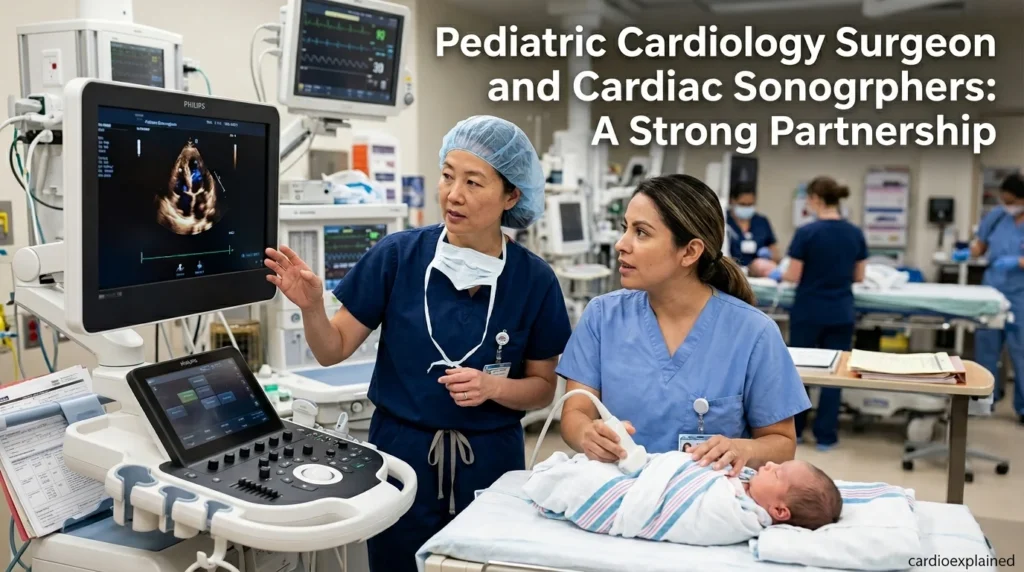
A pediatric cardiology surgeon often relies on imaging before surgery. Cardiac sonographers help provide that information.
How They Work Together
The sonographer:
- ❤️ Creates heart images
- ❤️ Measures heart structures
- ❤️ Helps track recovery
The surgeon:
- ❤️ Reviews the images
- ❤️ Plans treatment
- ❤️ Performs needed procedures
This teamwork supports safer care.
FAQ
Q: Are there cardiology sonography programs near Frankfurt am Main?
A: Yes. Several healthcare training and imaging programs may be available in and around Frankfurt. Students should review accreditation, clinical training, and admission requirements before applying.
Q: Can I find cardiology sonography programs near Offenbach?
A: Yes. Offenbach and nearby areas may offer healthcare education options. Availability can change, so checking directly with local schools is important.
Q: Are cardiology sonography programs online available?
A: Yes. Many programs offer online coursework. Most still require in-person clinical training for hands-on experience.
Q: How can I find cardiology sonography programs near me?
A: Start with accredited schools, hospitals, and community colleges in your area. Compare program length, costs, and clinical opportunities.
Q: What should I ask a pediatric cardiology surgeon before surgery?
A: Ask about the diagnosis, benefits, risks, recovery time, and follow-up care. Clear answers can help families feel prepared and informed.
Q: Why are accredited cardiac sonography programs important?
A: Accreditation shows that a program meets recognized educational standards. It may also support certification and future job opportunities.
Conclusion
A pediatric cardiology surgeon plays an important role in treating heart conditions in children. These specialists work with cardiologists, sonographers, nurses, and families to provide personalized care.
Heart surgery can sound overwhelming, but many children recover well and enjoy active lives. Early diagnosis, proper testing, and skilled treatment often make a big difference.
If your child has heart concerns, talk to a cardiologist or pediatric cardiology surgeon for guidance. They can explain the next steps and help you make informed decisions.