

A cardiology doctor is a medical doctor who finds, treats, and helps prevent heart and blood vessel problems. They use tests, exams, and proven treatments to help keep your heart healthy. A visit can help you understand your heart health and lower future risks.
Have you ever felt chest pain and wondered what it means? Maybe a loved one has high blood pressure. Heart concerns can feel scary.
A cardiology doctor helps people understand and care for their hearts. These doctors work with patients of all ages. They check heart health, find problems, and suggest treatments when needed.
Many people see a heart specialist after symptoms appear. Others visit because of family history or risk factors. Learning about heart care can help you feel more confident and prepared.
❤️ What Is Cardiology?
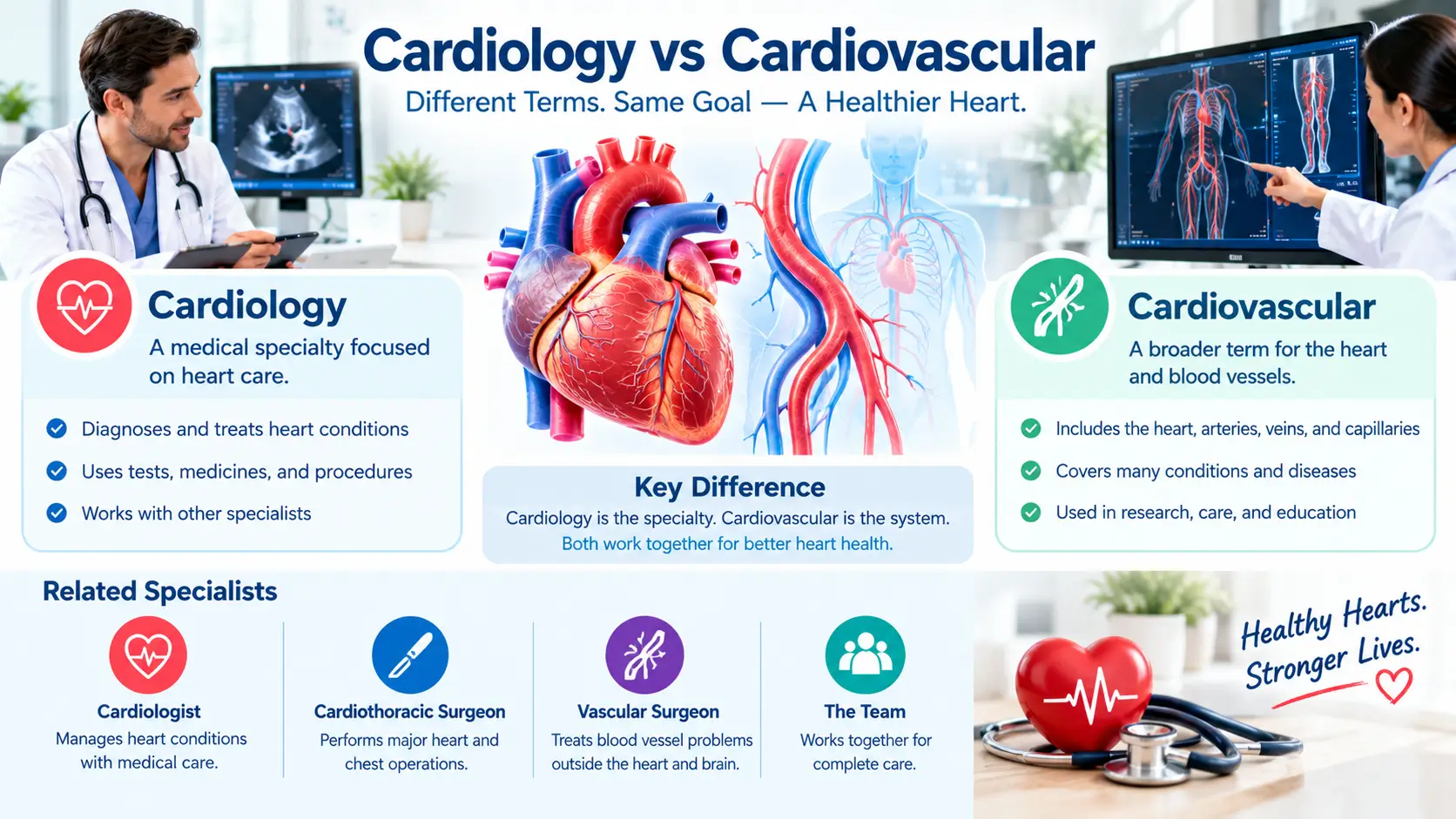
Cardiology is the medical field that focuses on the heart and blood vessels. It includes finding, treating, and helping prevent heart disease.
A simple cardiology definition in medical terms is the study and care of the cardiovascular system. The cardiovascular system includes the heart and blood vessels.
Heart disease remains a major health concern in the United States. Early care may help reduce risks in many cases.
People may see a heart specialist for:
- ❤️ Chest pain
- ❤️ High blood pressure
- ❤️ Irregular heartbeat
- ❤️ Shortness of breath
- ❤️ High cholesterol
- ❤️ Family history of heart disease
Many patients feel nervous before their first visit. That feeling is very common. Most appointments involve questions, exams, and simple tests.
🩺 What a Cardiology Doctor Does
A cardiology doctor focuses on heart and blood vessel health.
Their work often includes:
- 🩺 Reviewing symptoms
- 🩺 Checking medical history
- 🩺 Ordering heart tests
- 🩺 Explaining results
- 🩺 Creating treatment plans
- 🩺 Monitoring long-term health
They may work in clinics, hospitals, or heart centers.
Common Conditions They Treat
Heart specialists often care for people with:
- Coronary artery disease, which means narrowed heart arteries
- Heart failure, when the heart pumps less effectively
- Arrhythmia, which means an abnormal heartbeat
- High blood pressure
- High cholesterol
- Heart valve problems
A doctor may also help after a heart attack.
A Real-Life Example
A 58-year-old patient noticed shortness of breath while walking. A heart evaluation showed blocked arteries. After treatment and lifestyle changes, daily activities became easier.
Stories like this show why early evaluation matters.
📋 Types of Heart Doctors
Many people think all heart doctors do the same work. In reality, several specialties exist.
The Three Main Types of Cardiologists
People often ask about the three types of cardiologists. The most common groups include:
| Type | Main Focus | Common Work |
| General Cardiologist | Overall heart care | Exams, tests, treatment plans |
| Interventional Cardiologist | Artery procedures | Stents and catheter procedures |
| Electrophysiologist | Heart rhythm problems | Treats irregular heartbeats |
Each type has special training.
Other Heart Specialists
Additional specialists may include:
- ❤️ Heart failure specialists
- ❤️ Preventive cardiologists
- ❤️ Pediatric cardiologists for children
- ❤️ Cardiac imaging specialists
Your doctor may refer you to another specialist if needed.
🧪 Cardiology Tests and How They Help
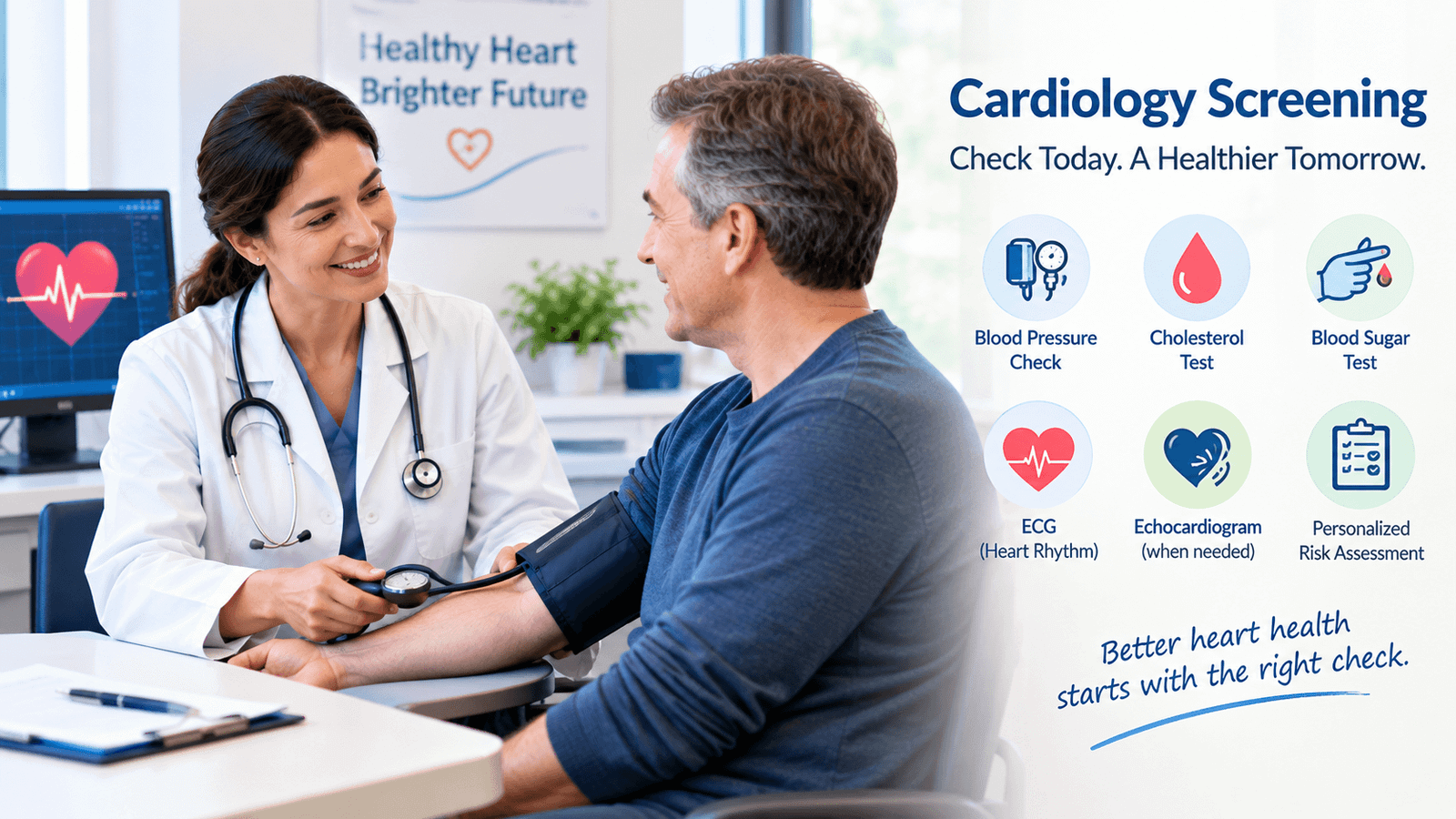
Heart tests help doctors learn how your heart works.
Most tests are safe and routine.
Common Cardiology Tests
| Test | Purpose | What Happens |
| Electrocardiogram (ECG) | Checks heart rhythm | Sticky patches record signals |
| Echocardiogram | Shows heart structure | Sound waves create images |
| Stress Test | Checks heart during activity | Walking or medicine raises heart rate |
| Holter Monitor | Records heart rhythm over time | Wearable monitor tracks activity |
| Cardiac CT Scan | Creates detailed images | Special scanner takes pictures |
What to Expect During Testing
Most tests do not require surgery.
Many take less than an hour.
A doctor explains results and answers questions. This helps patients understand their next steps.
✅ Cardiology Treatment Options
Heart treatment depends on the condition and the patient’s needs.
Doctors often start with lifestyle changes and medications.
Lifestyle Changes
Many treatment plans include:
- ✅ Healthier eating habits
- ✅ Regular physical activity
- ✅ Weight management
- ✅ Better sleep
- ✅ Quitting smoking
- ✅ Stress reduction
Small changes can add up over time.
Medications
Doctors may prescribe medicines to:
- Lower blood pressure
- Reduce cholesterol
- Control heart rhythm
- Prevent blood clots
Patients should take medicines exactly as directed.
Procedures and Advanced Care
Some patients need procedures.
Examples include:
- Balloon angioplasty
- Stent placement
- Pacemaker placement
- Heart valve repair
The American Heart Association (AHA) and the American College of Cardiology (ACC) provide widely used treatment guidance.
A cardiology doctor uses these evidence-based practices when creating care plans.
🏥 Understanding the Cardiology Department
A cardiology department is the hospital area that focuses on heart care.
Different team members work together there.
Who Works in a Cardiology Department?
You may meet:
- 🏥 Cardiologists
- 🏥 Nurses
- 🏥 Imaging technicians
- 🏥 Heart rehabilitation specialists
- 🏥 Physician assistants
Each team member supports patient care.
Services Often Provided
A cardiology department may offer:
- Heart screenings
- Diagnostic testing
- Emergency heart care
- Follow-up visits
- Rehabilitation programs
Heart rehabilitation helps patients recover after certain heart events or procedures.
Patient Example
Many patients worry before a stress test. After learning what to expect, they often feel calmer. Clear communication can make the experience easier.
FAQ
Q: What are the three types of cardiologists?
A: The three common types are general cardiologists, interventional cardiologists, and electrophysiologists. Each focuses on different areas of heart care. Your needs help determine which specialist you see.
Q: What is the medical definition of cardiology?
A: Cardiology is the branch of medicine that studies and treats heart and blood vessel conditions. It includes prevention, testing, diagnosis, and treatment.
Q: What tests does a cardiology doctor perform?
A: A cardiology doctor may order ECGs, echocardiograms, stress tests, or heart monitors. The exact test depends on your symptoms and health history.
Q: What happens during a first heart appointment?
A: The doctor reviews your medical history and symptoms. They may perform an exam and recommend testing if needed.
Q: What treatments do heart specialists provide?
A: Treatment may include lifestyle changes, medications, monitoring, or procedures. The approach depends on the specific condition.
Q: How can I find Baton Rouge cardiology doctors?
A: Many hospitals and medical groups in Baton Rouge offer heart care services. Check provider credentials, patient reviews, insurance coverage, and specialty areas before scheduling.
Conclusion
Heart health affects daily life in many ways. Knowing when to seek help can make a difference. A cardiology doctor can evaluate symptoms, explain test results, and guide treatment choices.
Remember three key points. Heart specialists diagnose and treat many heart conditions. Several types of cardiologists provide different forms of care. Tests and treatments help doctors create personalized plans.
If you have heart concerns, do not ignore them. Talk to a cardiologist if you have any heart concerns.
Medically reviewed for accuracy. Always consult a licensed cardiologist for personal advice.