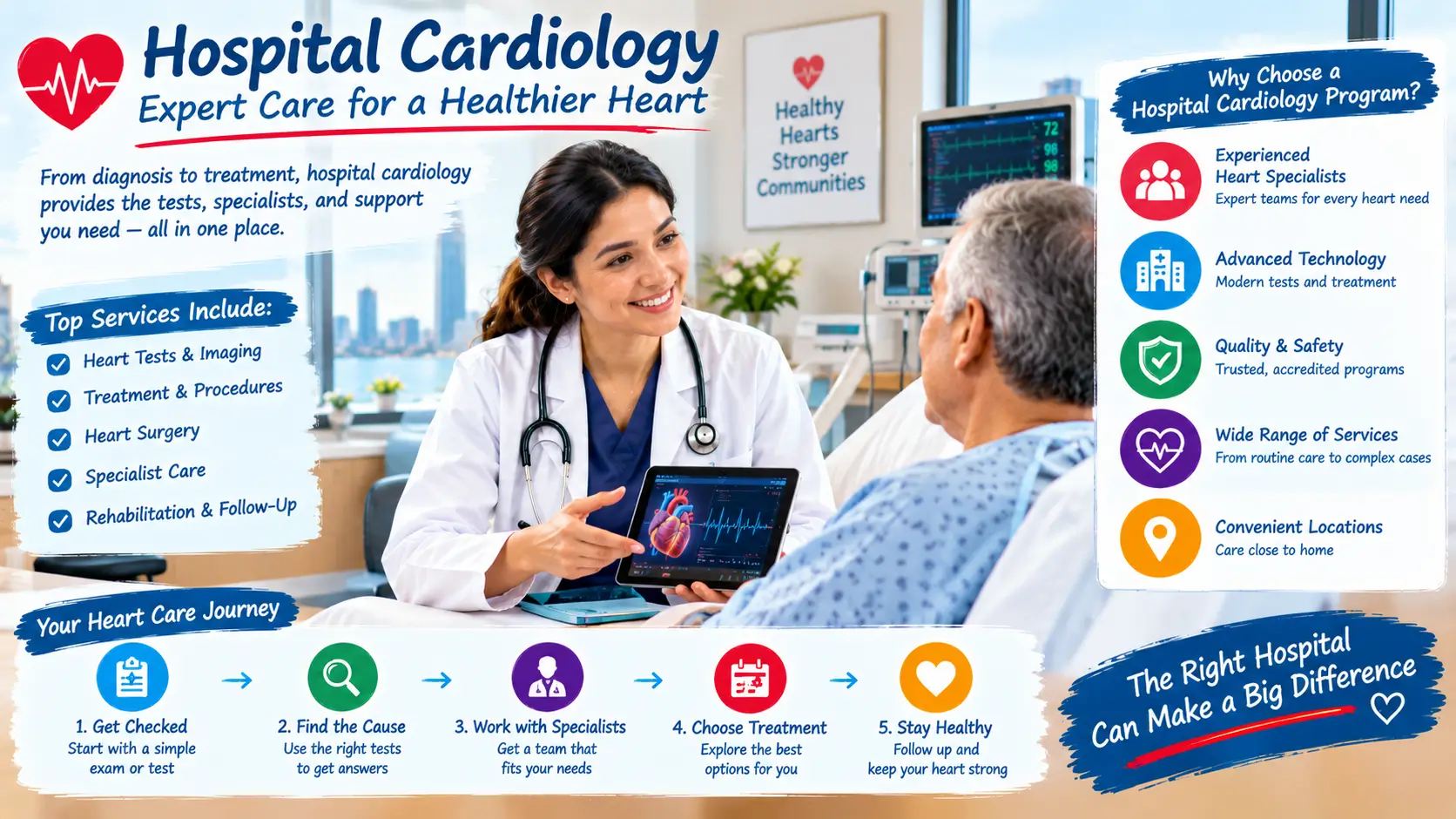

Hospital cardiology is heart care provided by a hospital or heart center. It may include heart tests, medicines, procedures, and surgery.
Hospital cardiology teams can care for common and complex heart problems. Your needs help decide which hospital services you may need.
Have you ever wondered what happens when a heart problem needs hospital care?
You may see a cardiologist in a clinic first. Some people later need hospital testing or treatment.
Hospital cardiology covers many parts of heart care. These include diagnosis, treatment, monitoring, and recovery.
The right care can depend on your symptoms, heart condition, age, and other health needs. Your location and insurance can also affect your options.
This guide explains how hospital heart care works in simple terms. You will learn about common services, tests, treatments, and warning signs.
We also discuss heart care options in Corpus Christi and nearby areas. These examples can help you understand what to ask before choosing care.
A hospital may offer general heart care or advanced specialty services. Knowing the difference can help you prepare for your next visit.
What Is Hospital Cardiology?
Hospital cardiology means heart care delivered through a hospital or hospital-linked heart program.
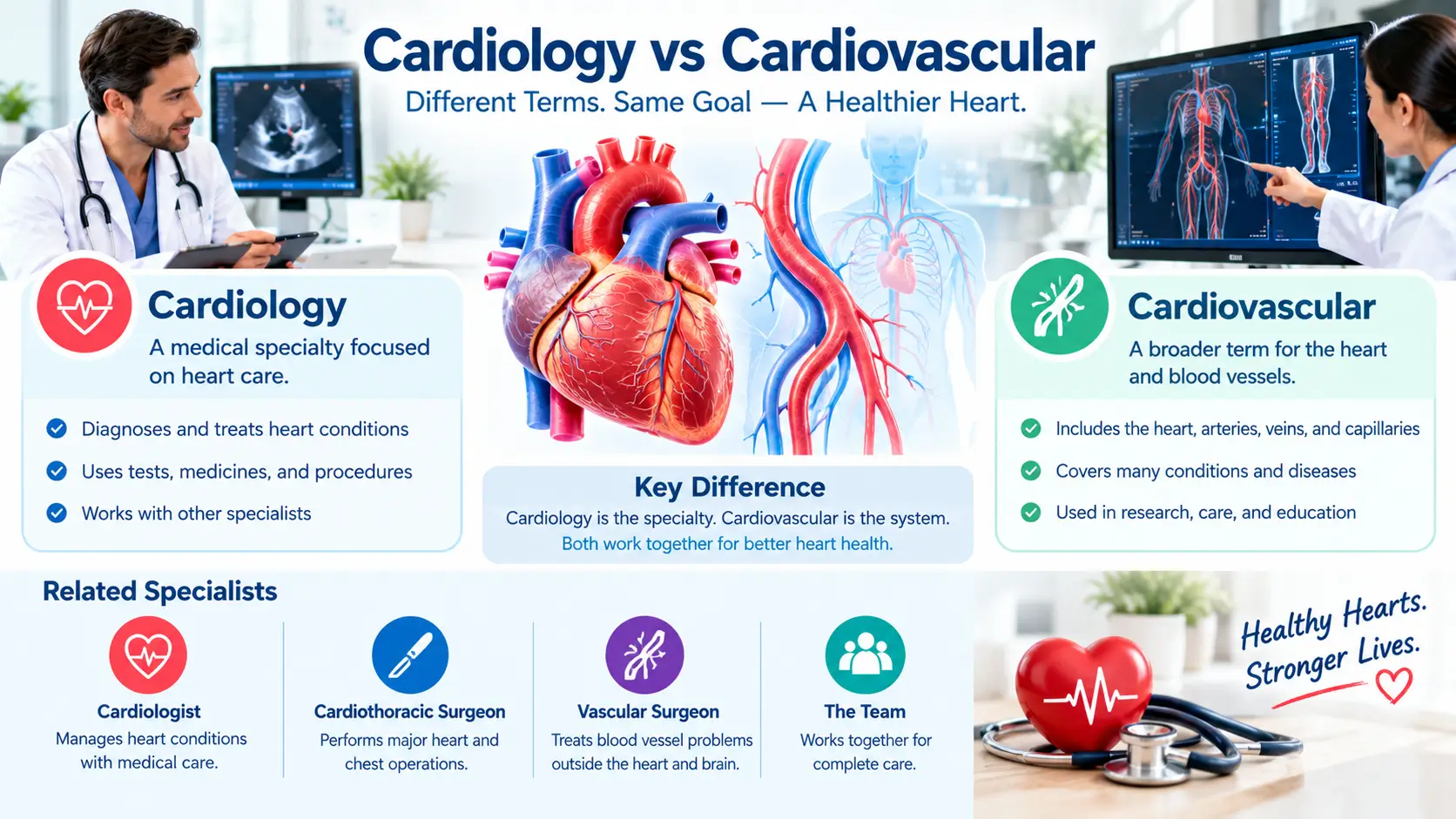
A cardiologist is a doctor who focuses on the heart and blood vessels. Some cardiologists work mainly in offices. Others also treat people in hospitals.
Hospital teams can manage both planned and urgent heart needs.
Common hospital cardiology services
A hospital heart program may provide:
- Heart screenings and exams
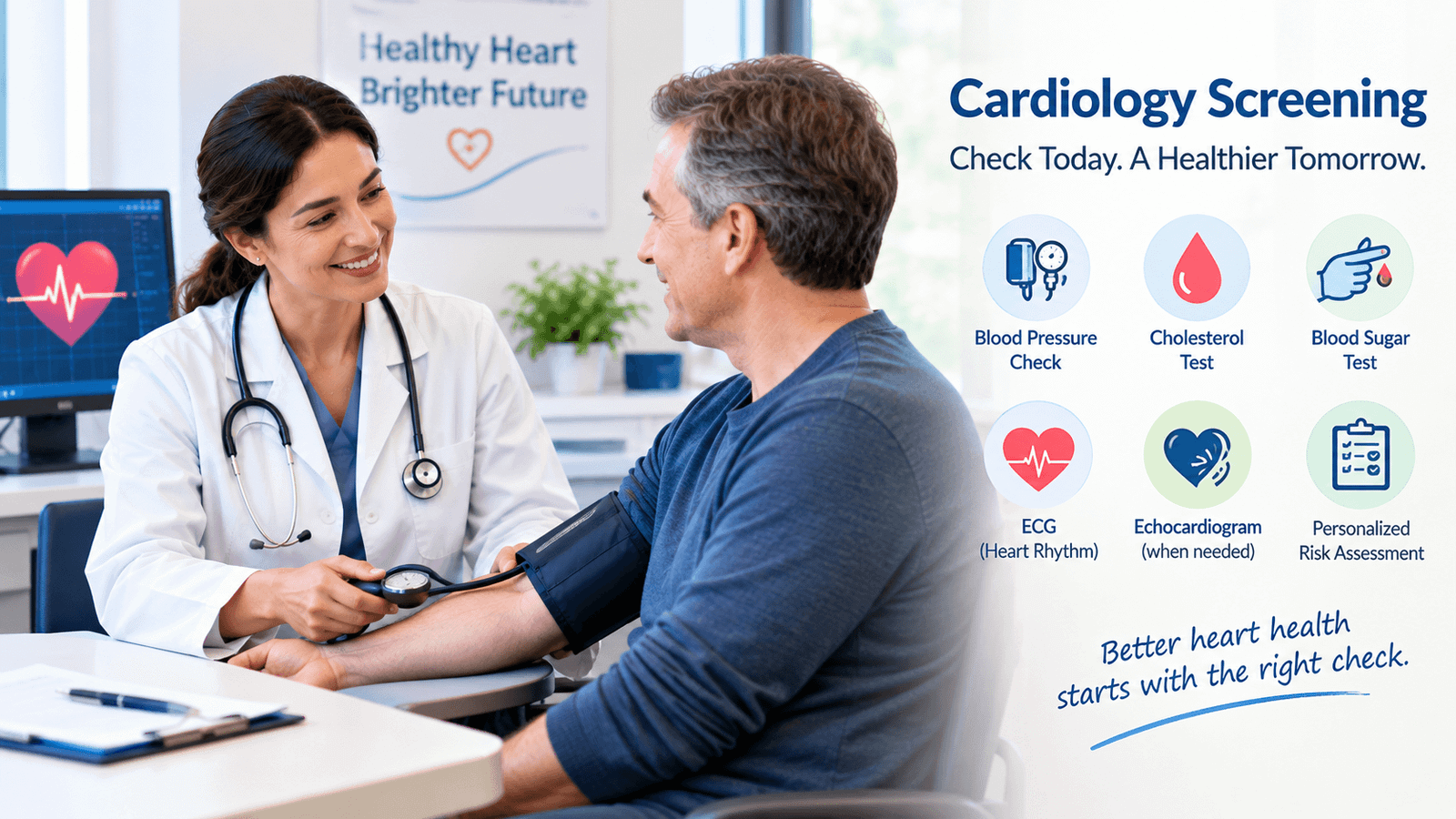
- ECG or EKG testing
- Echocardiograms
- Stress testing
- Heart rhythm monitoring
- Cardiac catheterization
- Stent procedures
- Pacemaker care
- Heart surgery
- Heart failure care
- Cardiac rehabilitation
An ECG records the heart’s electrical activity. An echocardiogram uses sound waves to create heart pictures.
Some hospitals also offer electrophysiology. This field focuses on heart rhythm problems.
Other programs focus on valves, heart failure, blood vessels, or congenital heart conditions.
Hospital care versus office care
Many heart visits happen outside the hospital. Your cardiologist may manage blood pressure or cholesterol in an office.
Hospital care may become important when you need closer monitoring. It may also help when a test or procedure needs hospital equipment.
For example, someone with stable high blood pressure may use office care. Someone with a serious heart problem may need hospital treatment.
The two settings often work together. Your office cardiologist may send records to the hospital team.
Why Might Someone Need Hospital Heart Care?
People may enter hospital heart care for many reasons. Some needs are planned, while others happen suddenly.
Common reasons for hospital care
A doctor may recommend hospital care for:
- New or severe chest symptoms
- Heart rhythm problems
- Heart failure symptoms
- Valve problems
- Blocked heart arteries
- Heart attack concerns
- Severe shortness of breath
- Certain heart procedures
- Heart surgery
- Close monitoring after treatment
The reason for hospital care can change the type of team you need.
Someone with a rhythm problem may see an electrophysiology team. Another person may need an interventional cardiologist.
Interventional cardiology uses thin tubes to treat some heart blood vessel problems.
A simple patient scenario
John has ongoing shortness of breath. His doctor orders heart tests.
The results may show a need for more detailed hospital testing. His doctor may then refer him to a heart center.
Another person may have stable symptoms and need only routine office visits. Hospital care may not be needed at that time.
Local care can still be useful
You do not always need a large hospital for heart care. Many community hospitals provide cardiology services.
A local hospital can make follow-up easier. It can also reduce travel time for you and your family.
Complex conditions may sometimes need a larger center. Your cardiologist can help decide when a referral makes sense.
What Symptoms May Lead to Hospital Cardiology?
Heart symptoms can look different from person to person. Some signs may be mild, while others need emergency help.
Common symptoms
People may seek heart care because of:
- Chest pressure or discomfort
- Shortness of breath
- Fast or irregular heartbeat
- Dizziness
- Fainting
- Unusual tiredness
- Leg or ankle swelling
- Reduced ability to exercise
- Repeated heart palpitations
Palpitations mean you can feel your heartbeat. It may feel fast, strong, or uneven.
These symptoms can have many possible causes. A symptom alone does not confirm a heart condition.
Symptoms can be easy to miss
Some people may have less typical warning signs. Women may have nausea, unusual tiredness, or back discomfort.
Older adults may also have less typical symptoms. People with diabetes may have fewer warning signs.
That does not mean every symptom needs hospital care. A healthcare professional can help decide what level of care fits.
A real-world example
Maria notices shortness of breath while walking. She also feels tired more often.
She tells her doctor instead of ignoring the changes. Her doctor may order an ECG and other heart tests.
If the symptoms become sudden or severe, emergency care may be needed.
How Does Hospital Cardiology Check the Heart?
Doctors use your symptoms, health history, exam, and test results together.
No single test answers every heart question. The test choice depends on what your care team needs to learn.
Common heart tests
| Test | What it shows | Why doctors use it |
| ECG or EKG | Heart electrical activity | Checks rhythm and some heart problems |
| Echocardiogram | Heart structure and movement | Looks at valves and heart function |
| Stress test | Heart response during activity | Checks certain blood flow concerns |
| Cardiac CT or MRI | Detailed heart images | Gives more detail about heart structure |
An ECG records electrical signals from your heart. An echo uses sound waves to create heart images.
A stress test checks how your heart responds during exercise or another form of stress.
The American College of Cardiology lists ECG, echo, stress tests, and blood tests.
Hospital procedures
Some patients need procedures after testing. Cardiac catheterization uses a thin tube to examine or treat heart blood vessels.
Doctors may use catheter procedures to place stents in certain cases. A stent helps keep a narrowed blood vessel open.
Other patients may need pacemaker or defibrillator care. These devices help manage certain heart rhythm problems.
The American Heart Association also lists ECG, echo, angiography, CT, MRI, and stress testing.
What Treatment Can Hospital Cardiology Provide?
Treatment depends on the heart problem and the patient’s overall health.
Some people need medicines and lifestyle changes. Others may need a procedure or surgery.
Medicines and monitoring
Doctors may use medicines for blood pressure, cholesterol, heart rhythm, or heart failure.
The hospital team may monitor your heart rate, blood pressure, oxygen, and symptoms.
Your medicines can change after testing. Never stop a heart medicine without medical advice.
Procedures and surgery
Hospital heart teams may perform procedures when medicines alone are not enough.
Examples can include:
- Cardiac catheterization
- Angioplasty and stent placement
- Pacemaker placement
- Defibrillator placement
- Valve procedures
- Heart surgery
- Electrical rhythm procedures
The exact choice depends on your diagnosis and test results.
A cardiologist may work with surgeons and other specialists. This team approach can help when care becomes more complex.
Recovery after treatment
Recovery does not always end when you leave the hospital.
Some people need follow-up visits or cardiac rehabilitation. Cardiac rehabilitation is a supervised program for people recovering from certain heart problems.
It may include exercise, education, and support for healthier habits.
Your care team should explain your medicines, follow-up visits, and warning signs before discharge.
How Can You Prepare for Better Hospital Heart Care?
Good preparation can make hospital visits less stressful.
Bring your health information
Keep a current list of your medicines. Include doses, vitamins, and nonprescription products.
Bring recent test reports when possible. These may include ECGs, scans, blood tests, and procedure records.
Also bring your insurance card and identification.
Prepare questions
Write your questions before the visit. This can help you remember important concerns.
You can ask:
- What heart problem are you checking?
- Which test do I need?
- Why do I need this test?
- What could the results mean?
- What treatments may help?
- Do I need a heart specialist?
- Will I need hospital care?
- Where will my follow-up happen?
A family member can also help take notes.
Check insurance and referrals
Insurance rules can affect where you receive care. Some plans require referrals before specialist visits.
Coastal Cardiology in Corpus Christi currently says some patients need a primary care referral. The practice says this became an insurance requirement in May 2026.
Call your health plan before scheduling when possible. Ask about network status, referrals, and expected costs.
A simple preparation example
David has an upcoming cardiology appointment. He brings his medicine list and past ECG reports.
He writes down three questions before leaving home. This helps him stay focused during the visit.
Small steps like these can make medical visits easier.
When Should You Seek Emergency Heart Care?
Some heart symptoms need immediate help. Do not wait for a regular cardiology appointment.
Call 911 for possible heart attack symptoms
The American Heart Association recommends calling 911 when heart attack warning signs appear.
Warning signs can include:
- Chest pressure, squeezing, or pain
- Pain in the arm, back, neck, or jaw
- Shortness of breath
- Cold sweat
- Nausea
- Lightheadedness
- Sudden unusual weakness
Symptoms may start slowly or come and go. Do not assume mild symptoms are always safe.
Emergency medical teams can begin care before reaching the hospital. Calling 911 can also speed hospital coordination.
What about less urgent symptoms?
Make a medical appointment for ongoing or repeated symptoms. These may include unusual tiredness, swelling, or frequent palpitations.
A primary care doctor can help decide your next step. They may refer you to a cardiologist.
If symptoms suddenly become severe, switch from routine care to emergency care.
Know the difference
Hospital cardiology supports many levels of heart care. Emergency departments handle urgent and life-threatening problems.
Outpatient cardiology handles many planned visits and follow-up needs.
Knowing where to go can save time. When in doubt about severe symptoms, seek emergency help.
Frequently Asked Questions
Q: What does hospital cardiology include?
A: Hospital cardiology includes many heart services. These can include testing, monitoring, procedures, and heart surgery. The services vary by hospital.
Q: Can I find a cardiologist in Corpus Christi?
A: Yes. Corpus Christi has several cardiology practices and heart centers. Options include Cardiology Associates of Corpus Christi and Coastal Cardiology.
Q: What services does Cardiology Associates of Corpus Christi offer?
A: The practice lists ECGs, echocardiograms, stress tests, rhythm monitoring, and several procedures. It also lists heart failure and anticoagulation clinics.
Q: Does Driscoll offer cardiology care in Corpus Christi?
A: Yes, but Driscoll focuses on pediatric heart care. Its Corpus Christi campus has a pediatric cardiology program. It also lists fetal cardiology and advanced heart imaging services.
Q: What is Hillcrest Heart Hospital in Utica?
A: The search term refers to heart care connected with Hillcrest in Tulsa, Oklahoma. Oklahoma Heart Institute operates on the Hillcrest campus at 1120 S. Utica Avenue. It provides cardiovascular services, including heart testing and advanced care.
Q: Does Corpus Christi Medical Center have a heart hospital?
A: Yes. Corpus Christi Medical Center lists The Heart Hospital at 7002 Williams Drive. Its services include cardiac diagnosis, treatment, surgery, and rehabilitation.
Q: How do I choose a hospital cardiology program?
A: Start with your heart needs and your doctor’s advice. Then check services, specialist access, insurance, travel, and follow-up care. Ask questions before making a major care decision.
Conclusion
Hospital cardiology covers many parts of heart care. These include testing, treatment, procedures, monitoring, and recovery.
The right care depends on your symptoms and medical needs. Your local cardiologist may provide routine care or arrange hospital treatment.
Corpus Christi has several heart care options. These include adult cardiology practices, a dedicated heart hospital, and pediatric cardiology services.
Prepare for visits by bringing medicine lists and past test records. Ask about referrals, insurance, costs, and follow-up care.
Do not wait for an appointment when severe heart symptoms appear. Call 911 for possible heart attack warning signs.
Talk to a qualified cardiologist if you have ongoing heart concerns.
Medically reviewed for accuracy. Always consult a licensed cardiologist for personal advice.