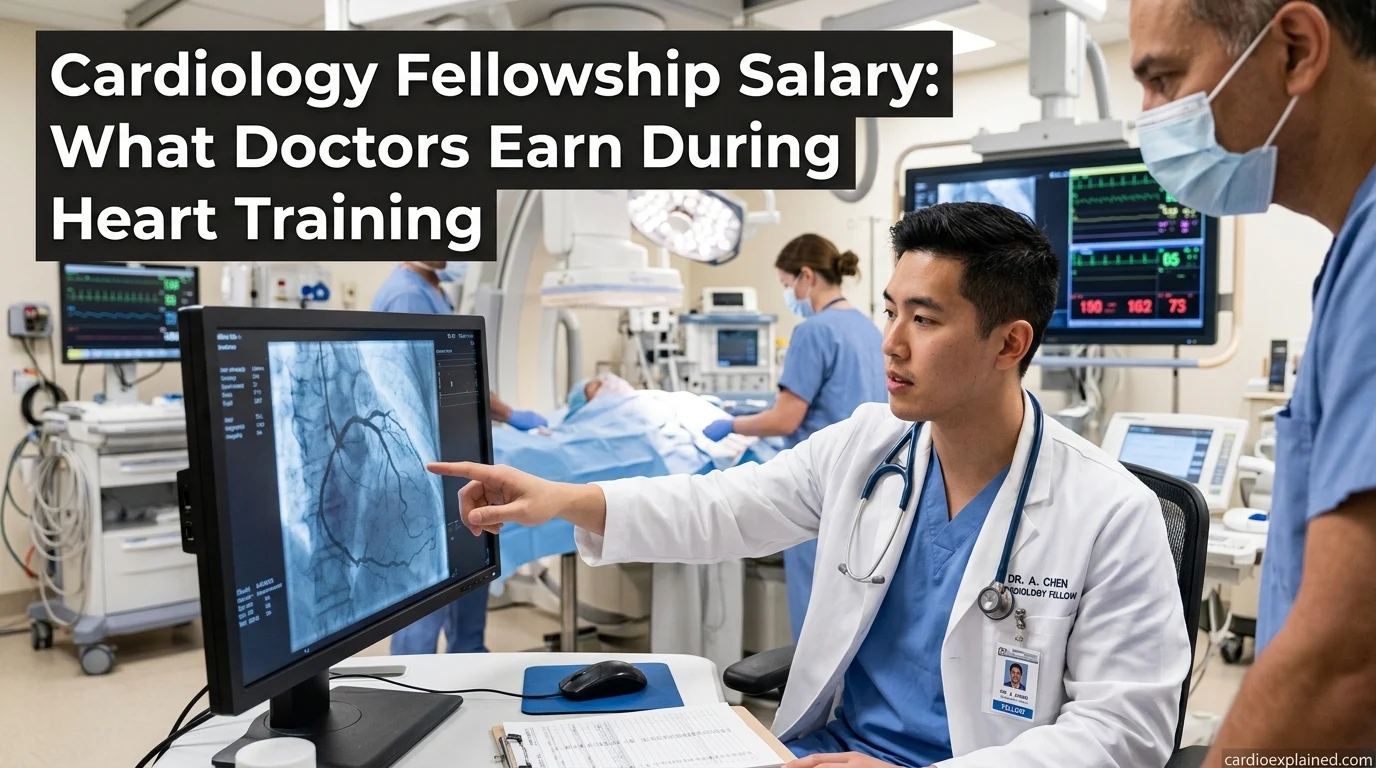

Cardiology fellowship salary is the yearly pay doctors receive while they train in advanced heart care after medical school and residency. It often ranges from about $70,000 to $100,000 per year in the United States. The amount depends on the hospital, location, and training year.
❤️ What Is a Cardiology Fellowship and Why Does It Matter?
Have you ever wondered how doctors become heart specialists? Many people know about doctors and nurses, but fewer know about the training behind heart care.
A cardiology fellowship salary helps support doctors during advanced training. These doctors already finished medical school and internal medicine residency.
A cardiology fellowship teaches doctors how to care for heart problems. They learn about heart tests, treatments, and procedures.
Cardiology fellows train in hospitals and clinics. They work with expert heart doctors every day.
During this time, they learn skills such as:
- ❤️ Reading heart tests like electrocardiograms (ECGs)
- Checking heart images from tests like echocardiograms
- Managing heart disease and heart rhythm problems
- Helping with heart procedures
The American Heart Association (AHA) and the American College of Cardiology (ACC) support education standards for heart care. These groups help guide quality care for patients.
Many patients feel nervous before their first heart visit. A patient may worry about tests or treatments. A skilled cardiologist can help explain each step in simple words.
A cardiology fellowship builds the skills doctors need to support patients with heart concerns.
💰 Cardiology Fellowship Salary in the United States
A cardiology fellowship salary can vary across the United States. Most cardiology fellows earn a yearly training salary from their hospital or medical center.
The pay is usually similar to other medical fellowship salaries. It is lower than the income of a fully trained cardiologist.
Many fellows earn between $70,000 and $100,000 each year. The exact amount depends on several factors.
Factors that affect fellowship pay
Several things can change how much a cardiology fellow earns:
- Location: Large cities may offer different pay than smaller towns.
- Hospital system: Academic centers and private hospitals may have different salary plans.
- Training year: Later years may include small pay increases.
- Benefits: Health insurance, retirement plans, and paid time off add value.
A fellow may also receive extra support. Some programs offer meal benefits, education funds, or moving help.
Here is a simple look at typical salary differences:
| Training role | Typical yearly pay | Main focus |
| Internal medicine resident | $60,000–$80,000 | General adult care training |
| Cardiology fellow | $70,000–$100,000 | Advanced heart care training |
| Early-career cardiologist | $300,000+ | Independent heart care |
These numbers are general estimates. Each hospital creates its own pay plan.
Why fellows earn less than cardiologists
Cardiology fellows are doctors, but they are still in training. They work under supervision from experienced cardiologists.
They spend many hours learning advanced skills. This includes patient care, research, and hospital duties.
After fellowship, many doctors earn a much higher salary. However, they also take on more responsibility.
🩺 How Long Is Cardiology Fellowship Training?
Cardiology training takes many years. Doctors first complete medical school and residency before starting fellowship.
A common path looks like this:
- Complete four years of medical school.
- Finish three years of internal medicine residency.
- Complete three years of general cardiology fellowship.
Some doctors continue with extra training. This may add one or more years.
Types of cardiology training programs
Cardiology has several focus areas. Each one helps doctors treat different heart needs.
| Training type | What doctors learn | Common patient needs |
| General cardiology | Overall heart care | High blood pressure and heart disease |
| Interventional cardiology | Heart procedures using small tools | Blocked heart arteries |
| Electrophysiology | Heart rhythm care | Irregular heartbeats |
| Heart failure care | Weak heart muscle treatment | Long-term heart support |
A cardiology fellow learns through real patient care. They may help evaluate chest pain, shortness of breath, or abnormal heart tests.
Doctors also study medical research and follow clinical guidelines. These guidelines help them make safe care choices.
📋 What Do Cardiology Fellows Do During Training?
Cardiology fellows have many duties during their hospital training. They care for patients while working with senior doctors.
Their daily work may include:
- Reviewing patient health histories
- Performing physical exams
- Ordering and reading heart tests
- Discussing treatment plans
- Teaching medical students and residents
Common tests they learn include:
- Electrocardiogram (ECG): A test that records the heart’s electrical activity.
- Echocardiogram: An ultrasound test that shows the heart’s structure and movement.
- Stress test: A test that checks how the heart works during activity.
- Cardiac catheterization: A procedure that uses a thin tube to look at heart blood vessels.
These tests help doctors understand what may be happening with the heart.
A patient example shows why this training matters. A person with chest discomfort may feel scared before testing. A cardiology fellow can explain the test and work with the care team.
Another patient may have an irregular heartbeat. The fellow may help review heart rhythm records and discuss possible treatments.
Fellows do not work alone. They receive guidance from licensed cardiologists throughout training.
⏱️ How Much Do Cardiologists Earn After Fellowship?
After fellowship, doctors usually earn much more than during training. A cardiologist’s income depends on many factors.
These factors include:
- Location
- Years of experience
- Type of cardiology practice
- Work setting
- Additional training
A cardiologist who completes extra training may focus on procedures or special heart conditions.
The difference between training pay and doctor pay is large. Fellowship years focus on learning and skill building.
Many students choose cardiology because they enjoy helping people with heart health. They also value the science behind heart care.
The financial side of becoming a cardiologist
Medical training requires many years of school. Some doctors graduate with student loans.
Future income can help doctors manage these costs. However, many people choose cardiology because of patient care, not only salary.
The work can be rewarding. Cardiologists often build long-term relationships with patients and families.
⚠️ What Should Students Know About Cardiology Careers?
Students interested in cardiology should understand the full training path. Becoming a heart doctor takes commitment and patience.
The path includes:
- Strong science skills
- Medical school training
- Residency experience
- Fellowship education
- Lifelong learning
Cardiology changes as new research becomes available. Doctors continue learning throughout their careers.
Students should also understand the daily work. Cardiologists often manage serious health concerns. They must communicate clearly with patients and families.
Good communication is just as important as medical knowledge.
A future cardiologist may spend time explaining test results. They may help patients understand lifestyle changes and treatment choices.
For many doctors, the chance to improve heart health makes the long training years meaningful.
Frequently Asked Questions
Q: How much does a cardiology fellow make per month?
A: A cardiology fellow may earn about $5,800 to $8,300 per month before taxes. The exact amount depends on the hospital, location, and benefits.
Q: Is a cardiology fellowship salary higher than a residency salary?
A: Yes, in many cases a fellowship salary may be slightly higher than residency pay. Both are training salaries, so they remain lower than a cardiologist’s income.
Q: How many years does it take to become a cardiologist?
A: It usually takes about 10 years or more after college. This includes medical school, residency, and cardiology fellowship training.
Q: Do cardiology fellows work in hospitals?
A: Yes, most cardiology fellows work in hospitals and clinics. They care for patients under the guidance of experienced cardiologists.
Q: Can cardiologists earn more after fellowship?
A: Yes, many cardiologists earn more after completing training. Income may vary based on specialty focus, location, and experience.
Q: Is a cardiology fellowship salary enough for living costs?
A: It may support basic living costs in many areas. Fellows often plan budgets because training pay is lower than independent doctor income.
Conclusion
Cardiology fellowship salary helps doctors during years of advanced heart training. Most fellows earn a training income that depends on their program and location.
Becoming a cardiologist requires many years of education and practice. The training helps doctors provide better heart care for patients.
The journey can be demanding, but it allows doctors to support people with heart concerns. Talk to a cardiologist if you have any heart concerns or questions about your care.