
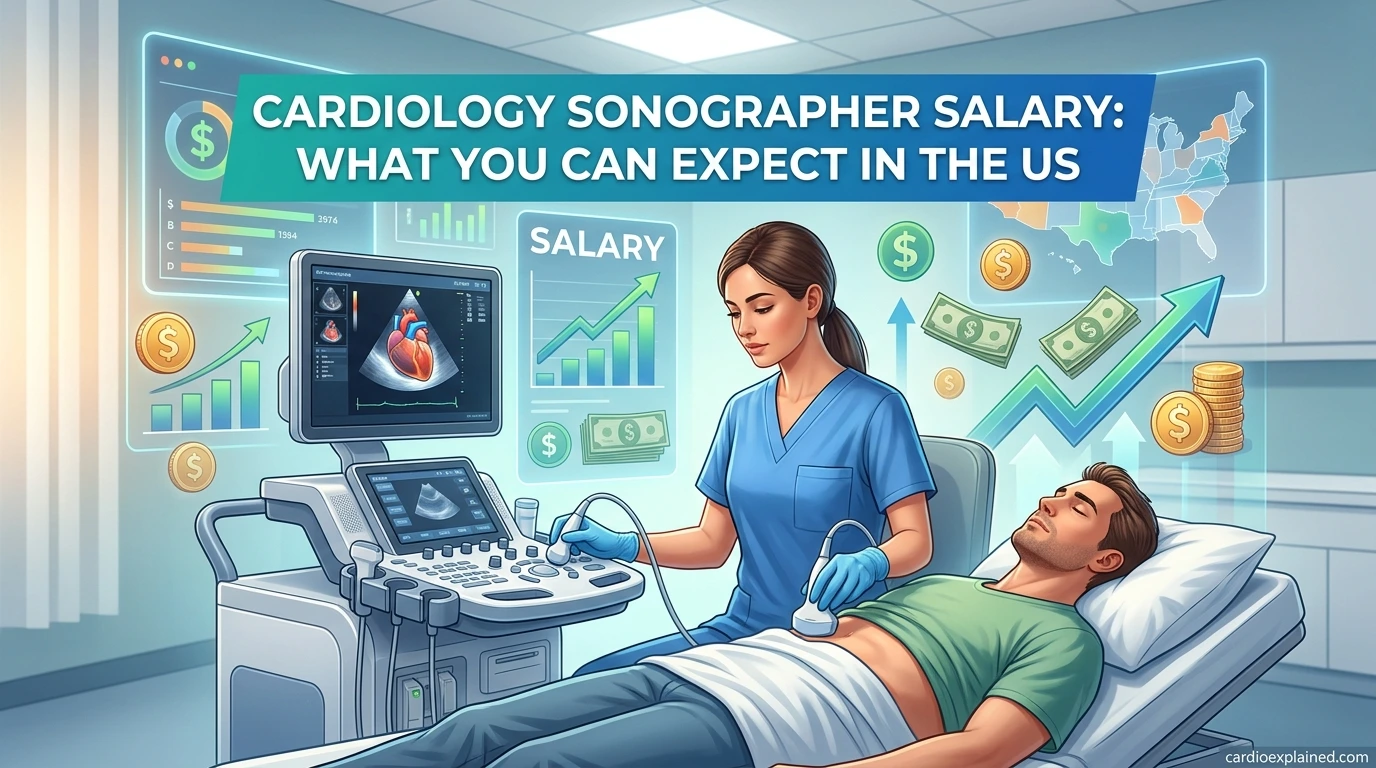

Cardiology sonographer salary is the pay earned by professionals who create heart images using ultrasound tools. It often ranges from about $60,000 to over $100,000 each year in the United States. Pay depends on training, location, experience, and workplace type.
❤️ What Does a Cardiology Sonographer Do?
A cardiology sonographer helps doctors look at the heart. They use a tool called an ultrasound machine. This tool uses sound waves to create heart pictures.
Many people meet a sonographer before a heart test. They may feel worried or unsure. A kind sonographer explains each step and helps them feel calm.
The sonographer places a small device on the chest. The device captures moving images of the heart. These images help doctors check heart structure and function.
The job includes more than taking pictures. Sonographers also prepare patients and record test details. They help the care team understand what the images show.
A cardiology sonographer may work in:
- Hospitals
- Heart clinics
- Imaging centers
- Doctor offices
They often work with cardiologists. A cardiologist is a doctor who treats heart problems. The sonographer supports the doctor with clear heart images.
Common tests include an echocardiogram. This test uses ultrasound to show the heart chambers and valves. Heart valves help blood move through the heart.
The American Heart Association (AHA) and the American College of Cardiology (ACC) support the use of heart imaging tests in modern care. These groups share guidance that helps improve heart health practices.
💰 Cardiology Sonographer Salary: Average Pay and Factors
The cardiology sonographer salary can vary across the United States. Many workers earn a strong income after proper training and certification.
Pay may change based on several factors. Location, education, work setting, and experience all matter.
Here is a simple look at common pay ranges.
| Experience level | Typical yearly pay range | Main factors |
| Entry level | About $55,000–$70,000 | Training, location, first job |
| Mid-career | About $70,000–$90,000 | Skills, workplace, years worked |
| Experienced | About $90,000–$110,000+ | Advanced skills, leadership roles |
Some areas pay more because living costs are higher. Large cities may offer higher wages. Rural areas may have different pay levels.
A hospital job may offer benefits too. These can include health coverage, paid time off, and retirement plans.
A sonographer with extra skills may find more job choices. Advanced heart imaging skills may lead to better pay options.
Many patients never see the work behind their heart tests. Yet these professionals play an important role. Their work helps doctors gather information for care decisions.
🩺 Education, Training, and Certification Requirements
Most cardiology sonographers complete a formal training program. These programs teach heart anatomy and imaging skills.
Students often study:
- Human body basics
- Heart function
- Ultrasound methods
- Patient care
- Medical safety
Programs may take about two to four years. The time depends on the type of program.
Many employers prefer certification. Certification shows that a person has met certain skill standards.
Common certification groups include recognized ultrasound organizations. They test knowledge and scanning skills.
A student may complete clinical training too. This means working with real patients under supervision.
Many students feel nervous during their first clinical experience. With practice, they often become more comfortable.
A strong sonographer needs both technical and people skills. They must handle equipment and support patients.
Important skills include:
- Clear communication
- Careful attention
- Gentle patient support
- Problem solving
- Teamwork
These skills can help create a better patient experience.
📋 Different Types of Heart Ultrasound Work
Heart imaging has several areas. Each area focuses on different patient needs.
Echocardiography
Echocardiography is the most common heart ultrasound test. It creates moving pictures of the heart.
Doctors may use this test to look at:
- Heart size
- Heart movement
- Blood flow
- Valve activity
The test does not use radiation. Many people find the process simple and comfortable.
Stress Echocardiography
A stress echocardiogram looks at the heart during activity. The patient may walk on a treadmill or use medicine.
The test shows how the heart responds under stress. Doctors may use this information with other health details.
Pediatric Echocardiography
Some sonographers work with children. Pediatric heart imaging requires special training.
Children may need extra comfort during testing. Sonographers often use simple words and gentle steps.
Specialty Areas and Career Growth
Some sonographers gain more training over time. They may focus on special heart imaging areas.
| Specialty | Main focus | Common workplace |
| Adult echocardiography | Adult heart images | Hospitals and clinics |
| Pediatric echocardiography | Children’s heart images | Children’s hospitals |
| Stress testing | Heart response during activity | Heart centers |
Career growth may come from experience and more training. Some professionals move into education or management roles.
⏱️ Daily Work Life and Job Outlook
A cardiology sonographer often starts the day by preparing equipment. They review schedules and patient needs.
During each test, they explain what will happen. They help patients stay comfortable.
The work can be busy. Some days include many patient appointments.
A typical day may include:
- Preparing the exam room
- Meeting patients
- Performing heart scans
- Saving images
- Sharing results with doctors
The job also requires standing for long periods. Sonographers may help position patients during exams.
Many healthcare workers choose this field because they enjoy helping people. They also like science and technology.
The need for heart care continues as many people live longer lives. More people may need heart tests as part of their care.
Job openings can vary by region. Training, certification, and experience may help someone find opportunities.
One patient example shows the human side of this work. A person facing a first heart test may feel afraid. A caring sonographer can explain the process and provide comfort.
Another example involves a caregiver helping an older family member. A calm sonographer can make the visit easier for both people.
❤️ How This Career Connects With Patient Care

Heart tests are important tools for doctors. They help doctors learn more about heart health.
A sonographer does not decide treatment. Instead, they collect images for the medical team.
The doctor reviews the images and patient information. The doctor then explains possible next steps.
Patients often have questions before a test. They may ask if the test hurts or how long it takes.
Most heart ultrasound exams are simple procedures. A patient may feel light pressure from the ultrasound device.
Doctors follow medical standards when using these tests. The AHA and ACC provide education and guidance for heart care teams.
For students thinking about this career, the work can be rewarding. It combines science, technology, and patient support.
The cardiology sonographer salary can be one reason students consider this path. Many also choose it because they want meaningful healthcare work.
Frequently Asked Questions
Q: How much education does a cardiology sonographer need?
A: Most cardiology sonographers complete a two-year or four-year training program. Many employers prefer professional certification. Training includes classroom learning and patient practice.
Q: Is a cardiology sonographer salary higher in hospitals?
A: It can be higher in some hospitals. Pay depends on location, experience, and job duties. Some hospitals also offer extra benefits.
Q: Do heart ultrasound tests hurt patients?
A: No, heart ultrasound tests are usually not painful. Patients may feel mild pressure during the exam. The sonographer explains each step.
Q: Can a sonographer tell me if I have a heart problem?
A: No, a sonographer does not make the final medical decision. A cardiologist reviews test results and explains what they mean.
Q: What skills help someone become a good heart sonographer?
A: Good communication, patience, and careful work habits help. Technical skills are also important for accurate imaging.
Q: Does a cardiology sonographer salary change with experience?
A: Yes, pay often changes as workers gain skills and experience. Extra training may also create more career options.
Conclusion
A cardiology sonographer helps doctors understand the heart through ultrasound images. The job combines science, technology, and patient care.
Training, location, and experience can affect career opportunities. Many people choose this field because they enjoy helping others.
The cardiology sonographer salary may attract students who want a healthcare career. Talk to a cardiologist if you have any heart concerns.