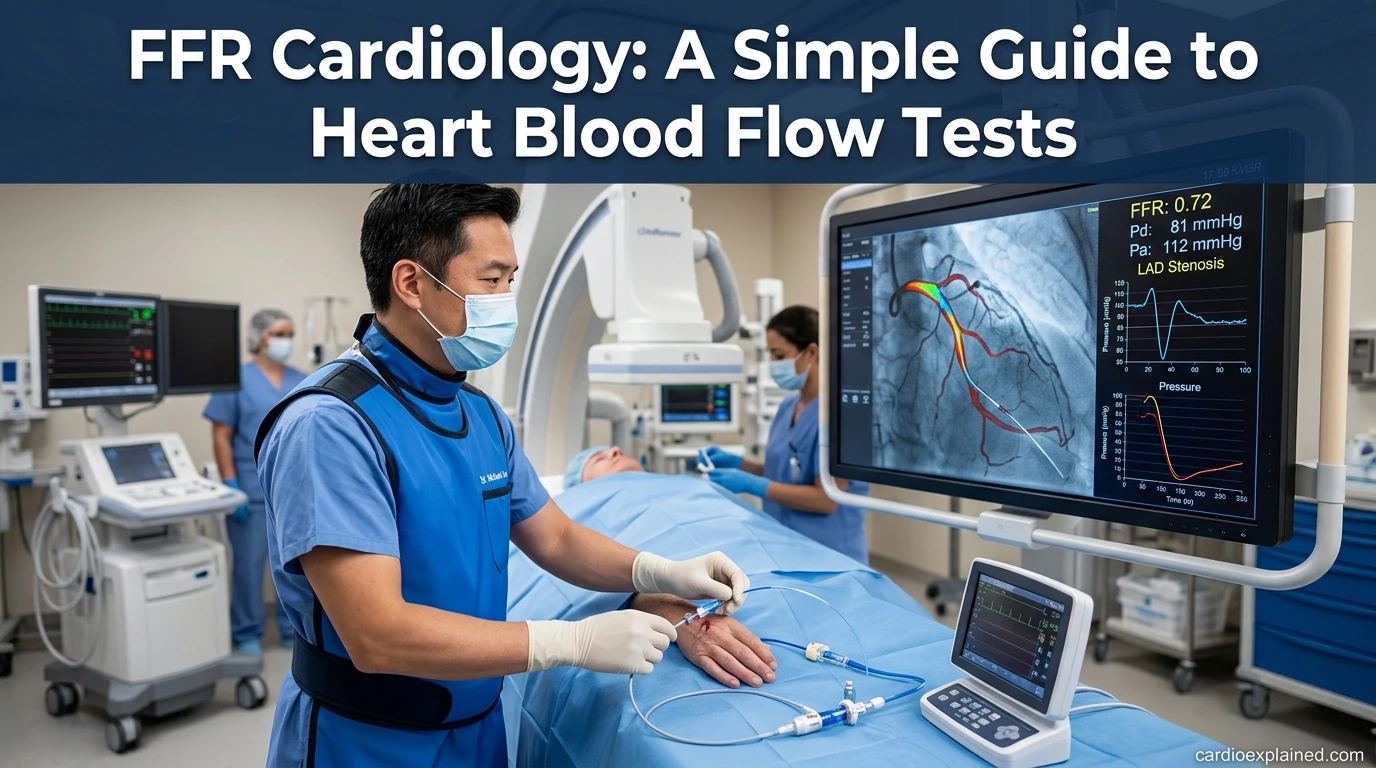

FFR cardiology is a heart test that shows if a blocked heart artery limits blood flow. Doctors use it during a heart catheter procedure to decide if a stent may help. The test gives clear information and may help avoid treatments you do not need.
Have you ever heard that you have a heart blockage and wondered what comes next? Many people feel worried after hearing that news. A heart scan may show a narrow artery, but that does not always mean it blocks enough blood to cause trouble. That is where ffr cardiology helps. This test gives doctors more facts before making a treatment plan.
Many patients want simple answers before a heart procedure. They want to know what the test does, if it hurts, and what the results mean. Caregivers often have the same questions. Students also look for easy ways to understand heart care. Learning the basics can make the process feel less scary. With the right information, you can feel more prepared when talking with your heart doctor.
❤️ What Is FFR Cardiology?
Understanding the test
FFR cardiology stands for Fractional Flow Reserve. That name sounds hard. The idea is simple.
The test measures how well blood moves through a heart artery. A heart artery carries oxygen-rich blood to the heart muscle. If plaque narrows the artery, blood may not flow well.
Doctors perform the test during a heart catheter procedure. A catheter is a thin, flexible tube. The doctor guides it through a blood vessel to the heart.
A tiny pressure wire passes through the narrowed area. The wire measures blood pressure before and after the blockage. A computer compares those numbers.
The result helps show if the blockage truly limits blood flow.
Why doctors use it
A heart scan may show a narrow artery. Still, not every narrow artery needs a stent.
The test answers one main question.
Does this blockage reduce blood flow enough to need treatment?
If the answer is yes, a stent may help. A stent is a small metal tube that keeps an artery open.
If the answer is no, medicine and healthy habits may be the better choice.
The American Heart Association (AHA) and the American College of Cardiology (ACC) support using this test in many patients. It helps doctors make treatment choices based on blood flow instead of pictures alone.
A patient example
Many patients feel nervous before their first catheter procedure.
For example, Tom, age 64, learned he had a heart artery blockage. His scan looked serious. His doctor performed this pressure test. The result showed enough blood still reached his heart. Tom avoided a stent and started medicine, exercise, and healthy eating instead.
🩺 How Does Poor Blood Flow Happen?
Heart arteries change over many years.
Most blockages happen because of plaque. Plaque is a mix of fat, cholesterol, calcium, and other materials.
Over time, plaque builds inside artery walls.
The opening becomes smaller. Blood has less space to move.
Some blockages look large but still allow good blood flow. Others look smaller but greatly reduce flow.
That difference explains why doctors sometimes need extra testing.
Risk factors
Some things raise the chance of plaque buildup.
- ✅ Smoking
- ✅ High blood pressure
- ✅ High cholesterol
- ✅ Diabetes
- ✅ Family history of heart disease
- ✅ Older age
- ✅ Little physical activity
- ✅ Extra body weight
These factors often work together.
Healthy habits may slow plaque growth. Medicine may also lower risk.
Blood flow matters most
Doctors care about more than the size of a blockage.
They also want to know how the blockage affects the heart muscle.
That is why blood flow testing has become an important part of modern heart care.
📋 Signs That May Point to a Heart Artery Problem
Many people have no warning signs.
Others notice symptoms during activity because the heart needs more oxygen.
Common signs include:
- ❤️ Chest pain or pressure
- ❤️ Chest tightness
- ❤️ Shortness of breath
- ❤️ Pain in the jaw
- ❤️ Pain in the arm
- ❤️ Pain in the neck
- ❤️ Feeling very tired during exercise
Symptoms often improve with rest.
Some people, especially those with diabetes, may have mild symptoms.
Symptoms need careful review
Chest pain does not always mean heart disease.
Heartburn, muscle strain, and lung problems may cause similar pain.
Doctors look at your whole health picture.
They ask about symptoms, family history, and risk factors.
They also order tests when needed.
A caregiver story
Maria noticed her father stopped walking after only one block.
He blamed old age.
His doctor found a narrowed heart artery. More testing showed poor blood flow. A stent improved his symptoms, along with medicine and cardiac rehabilitation.
Cardiac rehabilitation is a supervised exercise and education program after heart treatment.
⏱️ How Doctors Check Heart Blood Flow
Regular heart tests
Doctors often begin with simple tests.
These may include:
| Test | Purpose | What it shows |
| EKG | Checks heart rhythm | Electrical activity |
| Stress test | Checks the heart during exercise | Blood flow changes |
| CT heart scan | Looks at heart arteries | Plaque and narrowing |
| Coronary angiogram | Uses dye and X-rays | Pictures of arteries |
An angiogram shows where arteries become narrow.
Still, pictures alone cannot always tell how much blood reaches the heart muscle.
Why doctors may recommend ffr cardiology
Sometimes an angiogram leaves questions.
The narrowing may seem moderate.
Doctors may not know if a stent will help.
At that point, ffr cardiology provides more answers.
The pressure wire measures blood flow during the procedure.
Doctors often give medicine that briefly widens heart arteries. This helps produce accurate results.
The test usually adds only a short time to the procedure.
Understanding the results
The computer gives a number.
A lower number suggests less blood reaches the heart muscle.
A higher number suggests blood flow remains good.
Doctors combine that result with symptoms, other test findings, and your overall health.
No single test decides everything.
✅ Treatment Options After the Test
Treatment depends on your results.
It also depends on your symptoms and overall health.
Medicine
Many people improve with medicine alone.
Your doctor may suggest:
- ✅ Cholesterol-lowering medicine
- ✅ Blood pressure medicine
- ✅ Aspirin or other blood-thinning medicine when appropriate
- ✅ Medicine that helps prevent chest pain
Take medicine exactly as prescribed.
Never stop it without medical advice.
Stents
Some patients benefit from a stent.
The doctor places the small metal tube inside the artery.
The stent helps keep the artery open.
This may improve blood flow and reduce symptoms.
Bypass surgery
Some people have several blocked arteries.
Others have blockages in important areas.
Heart bypass surgery creates a new path around blocked arteries.
Doctors recommend surgery only when it offers the best chance for improved heart health.
A patient example
James loved hiking.
Chest pain forced him to stop often.
Testing showed poor blood flow. His doctor placed a stent. After recovery and cardiac rehabilitation, James slowly returned to walking longer distances.
❤️ Healthy Habits That Protect Your Heart

Good habits help before and after treatment.
Even people with stents need healthy daily choices.
Eat heart-friendly foods
Choose more:
- 🥗 Fruits
- 🥗 Vegetables
- 🥗 Whole grains
- 🥗 Beans
- 🥗 Fish
- 🥗 Nuts
Limit foods high in salt, added sugar, and unhealthy fats.
Stay active
Aim for regular movement.
Walking works well for many people.
Always ask your doctor before starting a new exercise plan if you have heart disease.
Stop smoking
Smoking damages blood vessels.
Quitting helps almost every part of your body.
Your healthcare team can suggest medicines or programs that support quitting.
Manage long-term health
Keep diabetes under control.
Check your blood pressure.
Know your cholesterol numbers.
Attend follow-up visits.
These steps may lower the chance of future heart problems.
⚠️ When Should You See a Doctor?
Do not ignore heart symptoms.
Call your healthcare provider if you notice:
- ⚠️ Chest pain during activity
- ⚠️ Shortness of breath that keeps returning
- ⚠️ Less ability to exercise
- ⚠️ New pain in the arm, jaw, or neck
Get emergency help right away
Call 911 if you have:
- ⚠️ Chest pain lasting several minutes
- ⚠️ Trouble breathing
- ⚠️ Fainting
- ⚠️ Cold sweat with chest pain
- ⚠️ Sudden severe pressure in the chest
Fast treatment may save heart muscle.
Never try to diagnose yourself.
Doctors use symptoms, exams, and testing to decide the next step.
Frequently Asked Questions
❓ Q: Is ffr cardiology painful?
A: Most people say no. You may feel a small pinch when the catheter enters the blood vessel. You may also feel warmth from medicine or dye. The team works to keep you comfortable.
❓ Q: How long does the test take?
A: The pressure test often adds only several minutes to a heart catheter procedure. Your total visit depends on your overall care plan. Recovery time also varies.
❓ Q: Does every heart blockage need a stent?
A: No. Many blockages respond well to medicine and healthy habits. Doctors choose treatment after looking at blood flow, symptoms, and other test results.
❓ Q: Is the test safe?
A: Yes. It is widely used and has a strong safety record when trained heart teams perform it. Like all procedures, small risks may exist. Your doctor will explain those risks before the procedure.
❓ Q: Can I go home the same day?
A: Many people do. Your doctor decides based on your health, the procedure, and whether you also received a stent. Some patients stay overnight for observation.
❓ Q: What does a low FFR result mean?
A: A low result suggests the narrowed artery limits blood flow to the heart muscle. Your doctor may recommend a stent or another treatment. The decision also depends on your symptoms and overall health.
❓ Q: Can healthy habits replace treatment?
A: Sometimes they can be part of the plan. Healthy eating, exercise, and medicine help many people. Some patients still need a stent or surgery because of reduced blood flow.
Final Thoughts
FFR cardiology gives doctors a better way to understand heart artery blockages. It measures blood flow instead of relying only on pictures. That information may help avoid unnecessary procedures or guide treatment when a blockage truly affects the heart. Healthy habits, regular medical care, and the right treatment plan all support long-term heart health. If you have chest pain, shortness of breath, or questions about your heart, talk to a cardiologist. Early care can make a meaningful difference.
Medically reviewed for accuracy. Always consult a licensed cardiologist for personal advice.