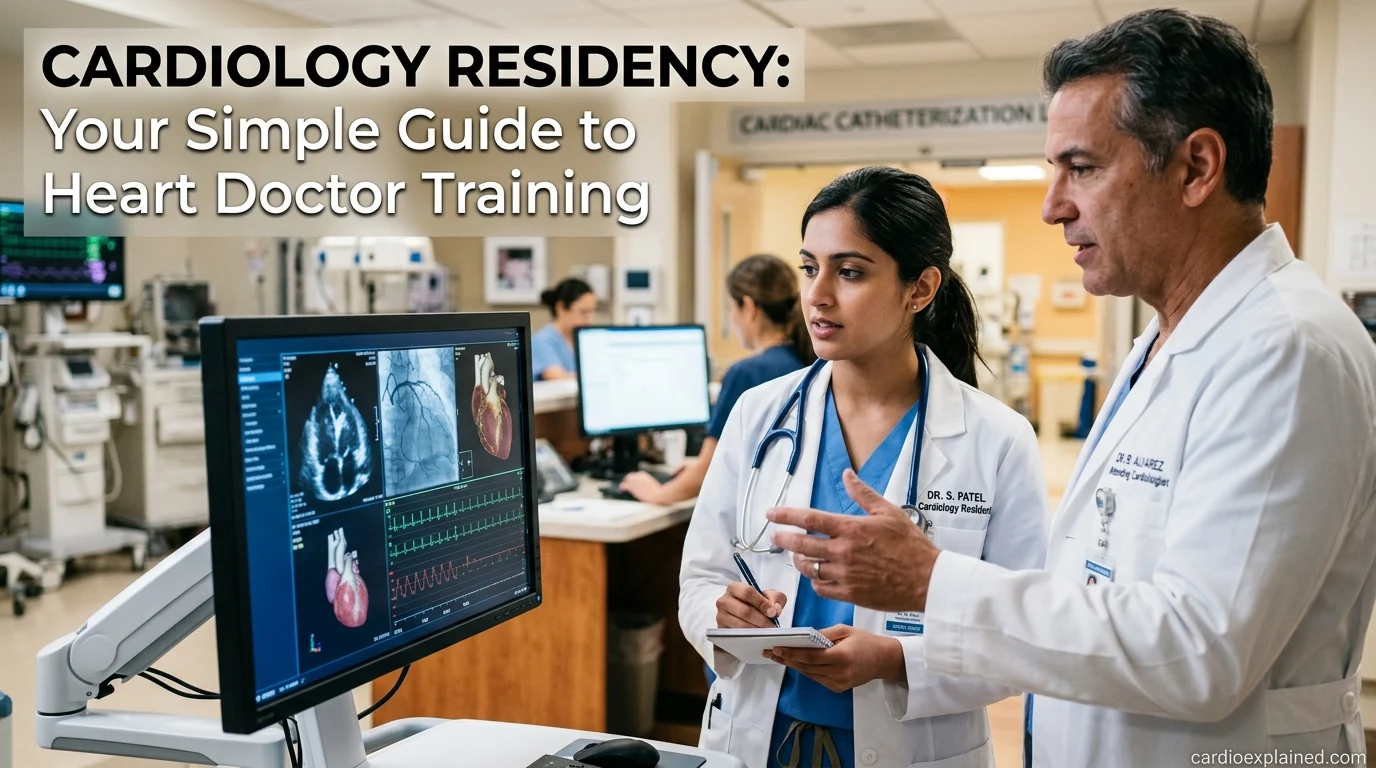

Cardiology residency is the training path that helps doctors learn to care for people with heart problems. It starts with internal medicine training, then moves into heart-focused fellowship training. Doctors build skills through patient care, testing, and supervised practice.
Many people hear about heart doctors. Few know how much training they complete. You may wonder how someone becomes a heart specialist. You may also want to know if the path fits your own career goals. Cardiology residency is a common search because many people use this phrase for the full training journey. The path includes internal medicine residency first. Then doctors enter a cardiology fellowship. Along the way, they learn to diagnose, treat, and help prevent heart disease. This guide explains each step in simple words. You will also learn about training length, salary, programs, and common questions.
❤️ Understanding Cardiology Residency
Many people say cardiology residency when they mean the full path to becoming a heart doctor.
In the United States, the journey has two main parts:
- 🩺 Medical school for four years
- 🩺 Internal medicine residency for three years
- 🩺 General cardiology fellowship for three years
After fellowship, some doctors complete extra training. They may study heart rhythm problems, heart failure, or heart procedures.
The training helps doctors care for many heart conditions. These include high blood pressure, heart failure, heart attacks, and heart valve disease.
Doctors work under close supervision. They slowly gain more skill and confidence.
The American Heart Association (AHA) and the American College of Cardiology (ACC) publish guidance that helps doctors give safe, evidence-based care.
What happens during training?
Doctors spend time in many settings.
- 📋 Hospital care
- 📋 Heart clinics
- 📋 Emergency care
- 📋 Intensive care units
- 📋 Heart testing labs
They also learn to read common heart tests.
| Test | Simple purpose |
| Electrocardiogram (ECG or EKG) | Checks the heart’s electrical signals |
| Echocardiogram | Uses sound waves to show heart movement |
| Stress test | Shows how the heart works during exercise or medicine |
| Heart catheterization | Checks blood flow inside heart arteries |
🩺 How Long Does the Training Take?
Many people ask about cardiology residency length.
The full journey usually takes about ten years after college.
| Training stage | Typical length |
| College | 4 years |
| Medical school | 4 years |
| Internal medicine residency | 3 years |
| Cardiology fellowship | 3 years |
Some doctors train even longer.
Extra fellowships often last one to three more years.
Examples include:
- ❤️ Interventional cardiology
- ❤️ Electrophysiology, which treats heart rhythm problems
- ❤️ Heart failure and transplant care
The exact schedule may differ between programs.
⏱️ Cardiology Residency Programs and Daily Life
Many hospitals across the United States offer strong training.
Large academic medical centers often provide many research and learning chances. Community hospitals may offer close mentoring and broad patient care.
Students often compare cardiology residency programs by looking at:
- ✅ Faculty experience
- ✅ Patient volume
- ✅ Research chances
- ✅ Fellowship match success
- ✅ Wellness support
- ✅ Teaching quality
A typical day starts early.
Doctors may visit patients before morning rounds. Rounds are group visits with senior doctors. They discuss care plans together.
The day may also include:
- Reading heart tests
- Seeing clinic patients
- Joining medical teaching sessions
- Responding to urgent hospital calls
Many trainees work long hours. Programs also follow work-hour rules that help support safety and rest.
A real-life example
A patient arrives with chest pain.
The trainee listens carefully. The supervising doctor reviews every finding. Together they order an ECG and blood tests. They explain each step to the patient and family.
This teamwork helps patients receive safe care while doctors learn.
❤️ Salary, Career Outlook, and Growth
Doctors earn different salaries during training and after graduation.
Residents receive a yearly salary from their hospital. Fellows usually earn slightly more.
| Career stage | Typical annual pay |
| Internal medicine resident | About $65,000–$80,000 |
| Cardiology fellow | About $75,000–$95,000 |
| Practicing cardiologist | Often $400,000 or more, depending on location and practice |
These numbers vary by hospital, region, and experience.
Many heart specialists also receive benefits such as health insurance, retirement plans, and paid leave.
Demand for heart doctors remains strong.
The United States has an aging population. Heart disease also remains a leading health concern. Because of this, trained cardiologists may continue to find many job opportunities.
📋 Fellowship, Professional Titles, and Helpful Resources
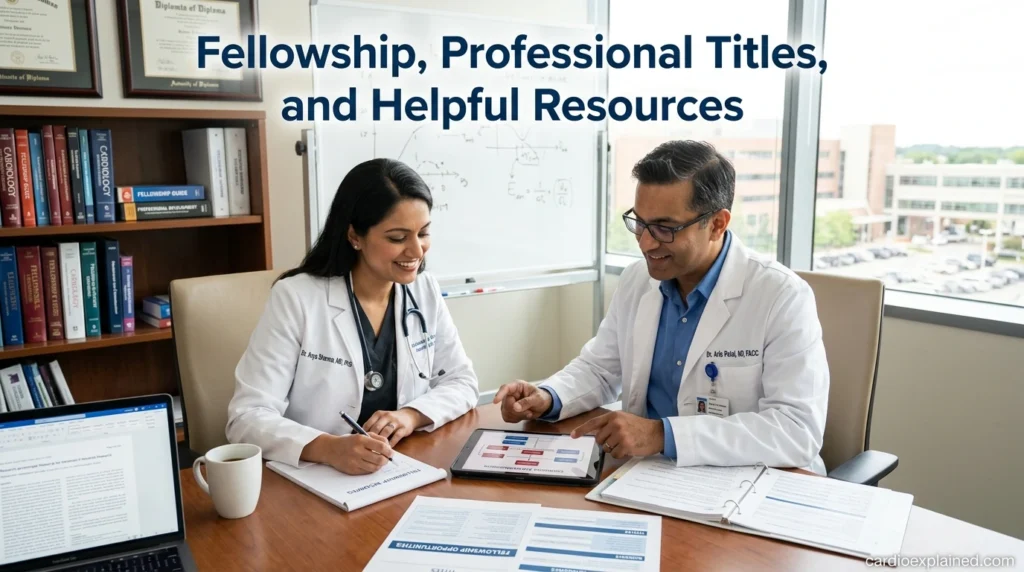
After internal medicine residency, doctors apply for cardiology fellowship.
Cardiology fellowship duration
General cardiology fellowship usually lasts three years.
Some doctors continue into advanced fellowship training afterward.
Can you complete a cardiology fellowship online?
No.
There is no fully online fellowship in cardiology in the United States.
Doctors must care for real patients under supervision. They also perform procedures and learn hands-on skills.
Some online courses help doctors continue learning. These courses do not replace accredited fellowship training.
What does FACC mean?
FACC stands for Fellow of the American College of Cardiology.
Doctors earn this professional title after meeting specific standards set by the ACC.
The title shows commitment to education, ethics, and patient care.
What does FESC mean?
FESC stands for Fellow of the European Society of Cardiology.
It recognizes doctors who meet standards from the European Society of Cardiology.
Some cardiologists hold both FACC and FESC titles.
Learning from online communities
Many students read discussions about “Cardiology residency reddit.”
These conversations may share personal experiences.
They can offer helpful tips about interviews, daily work, and study habits.
Still, online opinions differ. Always compare them with trusted guidance from medical schools, training programs, and professional organizations.
Another patient story
Many patients feel nervous before their first heart visit.
One older man worried about a stress test. His doctor explained every step using simple words. The clear explanation helped him feel calmer before testing began.
Good communication remains an important part of heart care.
❓ Frequently Asked Questions
Q: Is cardiology residency the same as cardiology fellowship?
A: No. Many people use the term loosely. In the United States, doctors complete internal medicine residency first. They then enter cardiology fellowship for heart-focused training.
Q: How long is cardiology fellowship?
A: Most general cardiology fellowships last three years. Some doctors complete one to three more years for advanced specialties.
Q: What is the typical cardiology residency salary?
A: Doctors in residency usually earn a hospital salary. Fellows often earn slightly more. Pay varies by hospital and location.
Q: Can I complete a fellowship in cardiology online?
A: No. Accredited fellowship training requires direct patient care and supervised clinical work. Online courses only support learning.
Q: What does FACC mean in cardiology?
A: FACC means Fellow of the American College of Cardiology. It is a professional honor that recognizes education, ethics, and achievement.
Q: Is Cardiology Residency Reddit a good place for advice?
A: It can provide personal stories and study tips. Still, confirm important information with official training programs and trusted medical organizations.
Final Thoughts
Cardiology residency is part of a long learning journey that prepares doctors to care for heart patients. The path includes internal medicine residency, cardiology fellowship, and sometimes extra specialty training. Doctors build knowledge through daily patient care, testing, and close guidance from experienced mentors. Professional groups such as the AHA and ACC support high standards for education and care. If you have heart concerns, talk with a licensed cardiologist. They can explain your options and recommend the right next steps for your health.