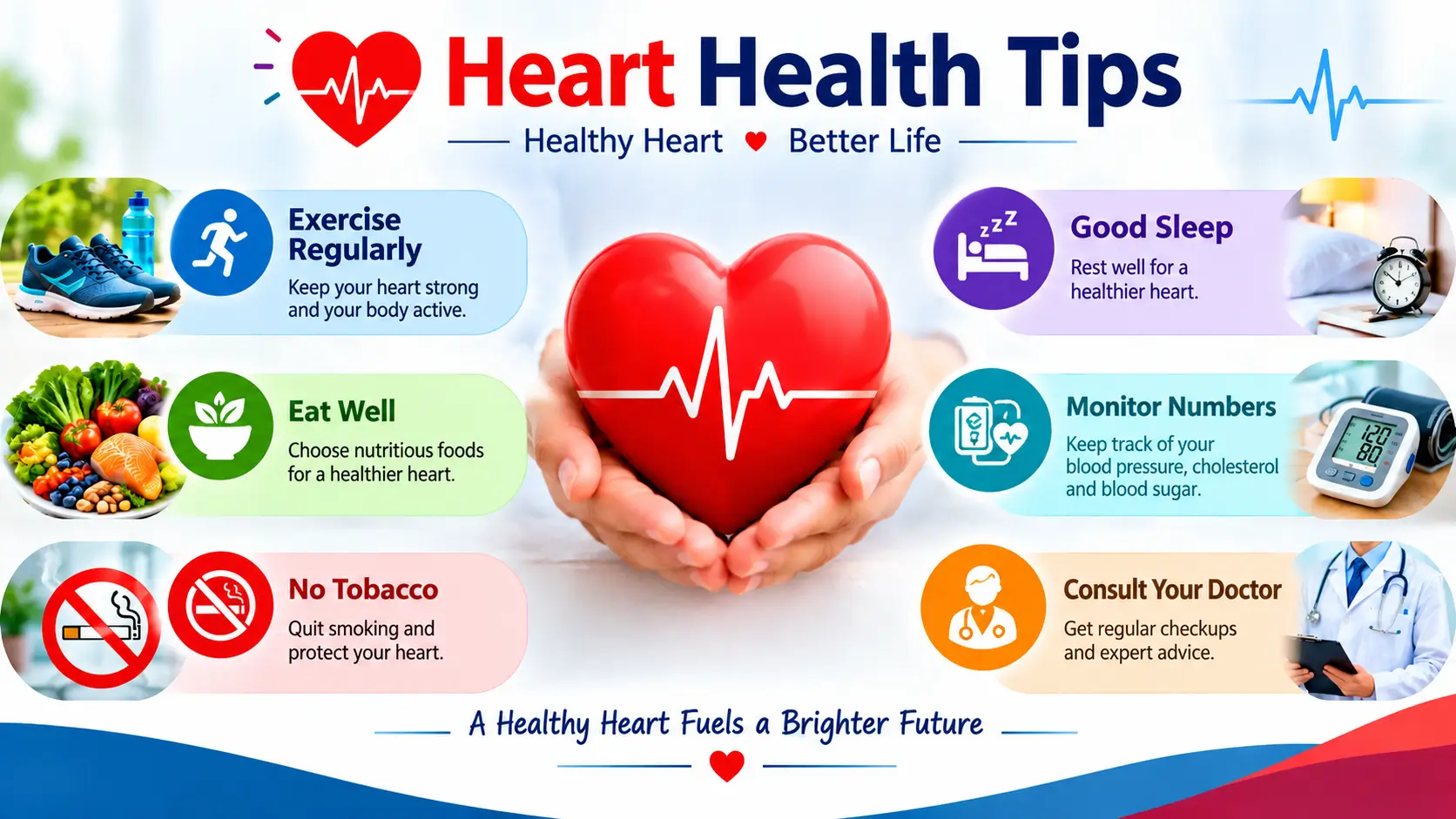

The most useful heart health tips are to stay active, eat mostly plants and whole foods, avoid tobacco, sleep 7 to 9 hours, keep a healthy weight, and know and control your blood pressure, cholesterol, and blood sugar.
Together these habits lower the risk of heart attack and stroke for most people.
Most lists of heart health tips sound familiar: eat well, move more, don’t smoke. The reason they keep repeating is that they work. Heart disease is a leading cause of death, yet a large share of it is linked to habits and risk factors that people can change or treat.
The challenge is not knowing the advice. It is knowing where to start, what really matters, and what is just noise. Small, steady changes beat big, short-lived ones.
This guide gives eight practical tips, each with why it helps and how to begin. It also lists the key numbers to know, clears up common myths, and explains when to talk to a doctor. The tips follow the American Heart Association’s framework for heart health, called Life’s Essential 8.
The Big Picture: Habits Plus Numbers
Heart health comes from two things working together: daily habits and the health numbers they affect. The American Heart Association’s Life’s Essential 8 groups them this way.
| Group | Essential | What it covers |
| Habits | Eat better | A heart-healthy eating pattern |
| Habits | Be more active | Regular physical activity |
| Habits | Quit tobacco | Smoking, vaping, secondhand smoke |
| Habits | Get healthy sleep | Enough good-quality sleep |
| Health numbers | Manage weight | Body mass index and waist size |
| Health numbers | Control cholesterol | LDL (“bad”) and non-HDL cholesterol |
| Health numbers | Manage blood sugar | Glucose and A1C |
| Health numbers | Manage blood pressure | Pressure in your arteries |
Habits help improve the numbers, and some people also need medicine to reach healthy levels. Both count. The tips below follow this list, plus three extras: managing stress, limiting alcohol, and keeping up with checkups.
Heart Health Tips: The Daily Habits
1. Move more, and sit less
Why: Regular activity strengthens the heart, helps lower blood pressure and blood sugar, and supports a healthy weight.
How to start: Health agencies recommend at least 150 minutes a week of moderate activity for most adults, plus muscle-strengthening on two days. That is about 30 minutes on five days. Brisk walking counts, and so do short bouts of 10 minutes. Break up long stretches of sitting. If you have heart disease or symptoms, check with your doctor first.
2. Eat a heart-healthy pattern
Why: Your overall diet affects blood pressure, cholesterol, blood sugar, and weight. No single food does the work alone.
How to start:
- Fill half your plate with vegetables and fruit.
- Choose whole grains, beans, nuts, and fish over refined grains and processed meat.
- Cook with olive or other liquid plant oils instead of butter.
- Cut back on salt, sugary drinks, and packaged snacks. Read labels for sodium and added sugar.
3. Do not use tobacco, and avoid secondhand smoke
Why: Smoking damages blood vessels and raises the risk of heart attack and stroke. Quitting lowers that risk over time.
How to start: Ask your doctor or pharmacist about proven quit aids, such as counseling and medicines. In the United States, the national quitline is 1-800-QUIT-NOW. Vaping nicotine is not a safe alternative for heart health.
4. Get enough good sleep
Why: Poor or short sleep is linked with higher blood pressure, weight gain, and higher heart disease risk.
How to start: Most adults need about 7 to 9 hours. Keep a regular schedule, limit screens and caffeine late in the day, and keep the bedroom dark and cool. If you snore loudly, stop breathing at night, or feel very tired by day, ask about sleep apnea, a condition linked to heart rhythm problems and high blood pressure.
Heart Health Tips: Weight, Numbers, Stress, and Checkups
5. Aim for a healthy weight
Why: Extra body fat, especially around the waist, raises blood pressure, cholesterol, and blood sugar. Even modest weight loss may help.
How to start: Focus on habits, not crash diets: more movement, less sugary drink and snack food, and smaller portions of calorie-dense foods. Ask your doctor what a healthy goal is for you. If weight is hard to change, medical treatments exist and a clinician can discuss them.
6. Know and manage your numbers
Why: High blood pressure, high LDL cholesterol, and high blood sugar often have no symptoms but damage arteries over time.
How to start: Get them checked, and ask what your targets should be. The table shows common reference ranges for adults. Your own goals may differ, especially if you have diabetes, kidney disease, or heart disease.
| Measure | Commonly cited healthy range | When to ask for help |
| Blood pressure | Below 120/80 mm Hg | 130/80 or higher on repeated checks is considered high blood pressure by U.S. guidelines |
| Fasting blood sugar | Below 100 mg/dL | 100 to 125 suggests prediabetes; 126 or higher on repeat tests suggests diabetes |
| A1C (3-month blood sugar average) | Below 5.7% | 5.7% to 6.4% suggests prediabetes; 6.5% or higher suggests diabetes |
| LDL cholesterol | Lower is generally better; goals depend on your risk | Ask your doctor for your personal target |
| Body mass index (BMI) | 18.5 to 24.9 | A rough guide only; waist size and health history also matter |
A reading above 180/120 with chest pain, shortness of breath, vision changes, or weakness is an emergency. Call your local emergency number.
7. Manage stress
Why: Long-term stress is linked with higher blood pressure and with habits like poor sleep, overeating, and smoking. The direct effect on heart disease is still being studied.
How to start: Build in physical activity, time outdoors, and time with people you trust. Try breathing exercises or mindfulness. If you feel sad, anxious, or hopeless for weeks, talk to a clinician. Depression is also linked with heart disease and is treatable.
8. Limit alcohol
Why: Heavy drinking raises blood pressure, can cause heart rhythm problems and heart muscle damage, and adds calories.
How to start: If you do not drink, do not start for your heart. If you drink, keep it low and ask your doctor what is safe for you, especially if you take medicines or have heart disease.
Bonus: Take medicines as prescribed, and keep up with checkups
Many people need medicine to control blood pressure, cholesterol, or blood sugar. Take it as prescribed and do not stop because you feel well. Ask your doctor how often you need blood pressure, cholesterol, and blood sugar checks. If you check blood pressure at home, ask a clinician or pharmacist to help you choose a validated monitor and show you how to use it.
Myths, Supplements, and a Simple Starter Plan
Common myths
| Myth | What is closer to the truth |
| “Heart disease only affects older men.” | It affects women and younger adults too, and risk builds over many years. |
| “I feel fine, so my blood pressure must be fine.” | High blood pressure and high cholesterol often cause no symptoms. Only a test shows them. |
| “A heart-healthy supplement can make up for a poor diet.” | Most supplements have not been shown to prevent heart attacks or strokes in healthy people. Food and habits matter more. |
| “A little alcohol is good for the heart.” | Do not start drinking for heart benefits. Alcohol has risks. |
| “If I take a statin, I can eat anything.” | Medicine and healthy habits work together. Neither replaces the other. |
| “Heart attacks always start with crushing chest pain.” | Signs can be milder or different, such as shortness of breath, nausea, or back or jaw pain, and may differ in women. |
A word on supplements
Fish oil, multivitamins, and similar products are heavily marketed for the heart. Large trials have mostly not shown that they prevent heart attacks or strokes in healthy people, and some interact with medicines. Fixing a true deficiency or treating a specific condition under medical care is different. Ask a doctor or pharmacist before you start one.
A starter plan for the next four weeks
This is an example, not a personal prescription.
- Week 1: Check your blood pressure, and ask when you last had cholesterol and blood sugar tests. Take a 10-minute walk on most days.
- Week 2: Swap one sugary drink a day for water. Add one serving of vegetables to dinner.
- Week 3: Raise walking to 20 to 30 minutes on most days. Set a regular bedtime.
- Week 4: Replace one processed meat meal with beans or fish. Pick one stress habit you will keep, such as a walk after dinner.
If you smoke, make a quit plan with your clinician in week one.
Who needs extra care
People with diabetes, kidney disease, high blood pressure, high cholesterol, a family history of early heart disease, a history of preeclampsia, or inflammatory conditions such as rheumatoid arthritis may have higher heart risk. If this is you, ask your doctor about a personal plan and how often to be checked.
When to Talk to a Doctor
Book a visit if you have not had your blood pressure, cholesterol, and blood sugar checked recently, if you have risk factors, or before starting a new exercise program if you have known heart disease or symptoms. Bring a list of your medicines and supplements.
Get emergency help right away for chest pain or pressure, pain spreading to the arm, jaw, neck, or back, severe shortness of breath, fainting, or signs of a stroke such as face drooping, arm weakness, or trouble speaking. Call your local emergency number (911 in the United States). Do not drive yourself, and do not wait to see if it passes.
Frequently Asked Questions
What is the single most important thing for heart health?
There is no single answer, but not smoking and controlling blood pressure are near the top. High blood pressure is a leading risk factor for heart attack and stroke, and it often has no symptoms. Regular activity and a healthy eating pattern add to the benefit.
How can I improve my heart health quickly?
No habit changes the heart overnight, but some changes help within weeks, such as walking daily, cutting salt and sugary drinks, and getting better sleep. Steady changes work best. Check your blood pressure and ask your doctor if you need testing or medicine.
How much exercise do I need for a healthy heart?
Most adults should aim for at least 150 minutes of moderate activity a week, plus muscle-strengthening on two days. Shorter sessions count. If you have heart disease or symptoms, talk to your doctor about a safe starting point.
What foods should I avoid for heart health?
Limit sugary drinks, processed meats, salty packaged foods, and foods high in saturated fat, such as fatty meat and butter. No single food is a villain. Your overall pattern matters most, so build meals around vegetables, whole grains, beans, fish, and nuts.
How often should I get my heart health checked?
It depends on your age, risk factors, and past results. Many adults need blood pressure, cholesterol, and blood sugar checks regularly, and more often with risk factors. Ask your clinician what schedule fits you rather than relying on a general rule.
Can stress hurt my heart?
Long-term stress is linked with higher blood pressure and with habits that harm the heart, such as poor sleep and smoking. Scientists are still working out the direct effects. Managing stress through activity, sleep, social support, and, if needed, professional help is a reasonable part of heart care.
Key Takeaway
The best heart health tips are simple and proven: move more, eat a mostly plant-based pattern, avoid tobacco, sleep well, keep a healthy weight, and know and manage your blood pressure, cholesterol, and blood sugar.
Start with one or two changes and build up. Supplements are not a shortcut, and medicine may be needed alongside habits.
Talk to your doctor about your personal risk, and call emergency services for chest pain, severe shortness of breath, fainting, or stroke signs.