
How long is interventional cardiology fellowship? In the United States, it usually takes one extra year after a general cardiology fellowship. Most doctors spend about 14 to 16 years in training after high school before they practice as interventional cardiologists.
Have you ever wondered how doctors learn to treat blocked heart arteries? Maybe you met one after a heart procedure. Or perhaps you want to become one yourself. Many people ask how long is interventional cardiology fellowship because the training seems long. The path takes years, but each step builds new skills. These doctors care for people during heart emergencies and planned procedures. They also work closely with other heart experts. Knowing the timeline helps patients, families, and students understand the work behind this important career. You will also learn what happens during training, why it matters, and what doctors do each day.
⏱️ How Long Is Interventional Cardiology Fellowship and the Full Training Path
The fellowship itself usually lasts one year.
Still, doctors must finish many training steps first. The full journey often takes 14 to 16 years after high school.
Here is the usual path.
| Training Step | Typical Length | Main Goal |
| College | 4 years | Learn science and earn a bachelor’s degree |
| Medical school | 4 years | Become a medical doctor |
| Internal medicine residency | 3 years | Learn to care for adult patients |
| General cardiology fellowship | 3 years | Train in heart disease care |
| Interventional cardiology fellowship | 1 year | Learn heart procedures |
Some doctors continue with even more training.
They may study:
- 🩺 Structural heart disease, such as heart valve repair
- 🩺 Complex coronary procedures for difficult artery blockages
- 🩺 Research or teaching
These extra programs often last one more year.
❤️ What Does an Interventional Cardiologist Do?
An interventional cardiologist treats heart problems with small tubes called catheters. A catheter is a thin, flexible tube that travels through a blood vessel.
These doctors often fix blocked heart arteries without open-heart surgery.
Common procedures include:
- 📋 Coronary angiography, which uses dye to show heart arteries
- 📋 Angioplasty, which opens a blocked artery with a tiny balloon
- 📋 Stent placement, which keeps an artery open with a small metal mesh tube
- 📋 Emergency treatment during a heart attack
Many patients meet these doctors during stressful moments.
For example, a person may arrive with chest pain. The doctor quickly finds a blocked artery. Minutes later, a stent restores blood flow. Fast treatment may help save heart muscle.
Interventional cardiologists also care for patients before and after procedures. They explain risks, answer questions, and help with recovery.
Many follow guidance from the American Heart Association (AHA) and the American College of Cardiology (ACC). These groups publish trusted recommendations for heart care.
🩺 What Happens During Fellowship Training?
The fellowship year is busy.
Doctors spend long hours learning new procedures under expert supervision. They slowly gain more independence as their skills grow.
Learning in the Cardiac Catheterization Lab
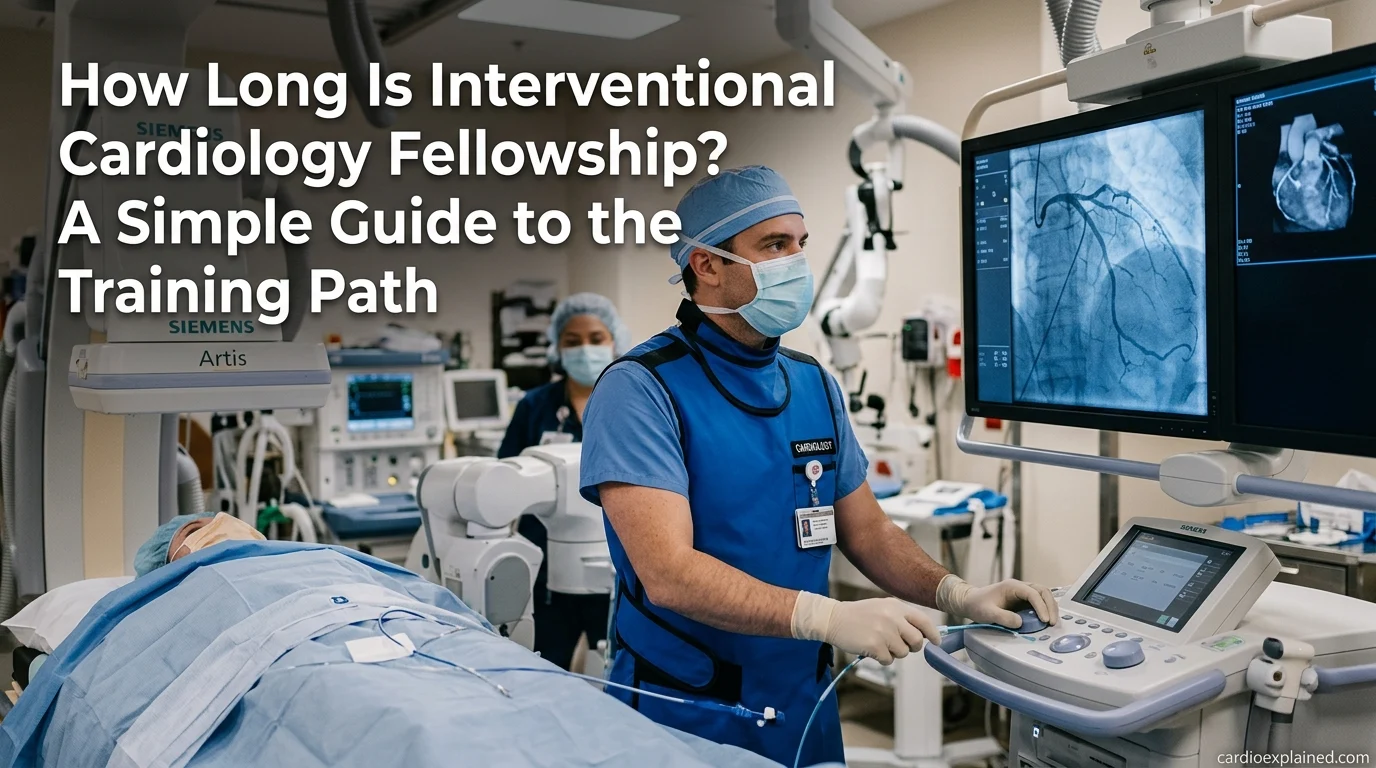
The cardiac catheterization lab, often called the cath lab, is where many procedures happen.
Fellows learn how to:
- ✅ Insert catheters safely
- ✅ Read heart imaging
- ✅ Place balloons and stents
- ✅ Handle emergencies
- ✅ Work with nurses and other specialists
Every patient is different.
Some cases are simple. Others need careful planning and teamwork.
Building Technical Skills
The fellowship teaches more than hand skills.
Doctors also learn to:
- Read medical images
- Choose the best treatment
- Talk with patients and families
- Prevent problems after procedures
Teachers watch every step. Fellows receive feedback after each case.
📋 Why Does the Training Take So Long?
Heart disease can become life-threatening within minutes.
Doctors need years of practice before treating patients on their own.
Each training stage builds new knowledge.
College teaches science.
Medical school explains how the body works.
Residency develops strong patient care skills.
General cardiology fellowship focuses on heart diseases.
The final fellowship teaches advanced procedures.
This step-by-step approach helps protect patients.
Experience also matters.
A doctor who has completed hundreds of supervised procedures often develops better judgment than someone with little experience.
❤️ Daily Life During Fellowship
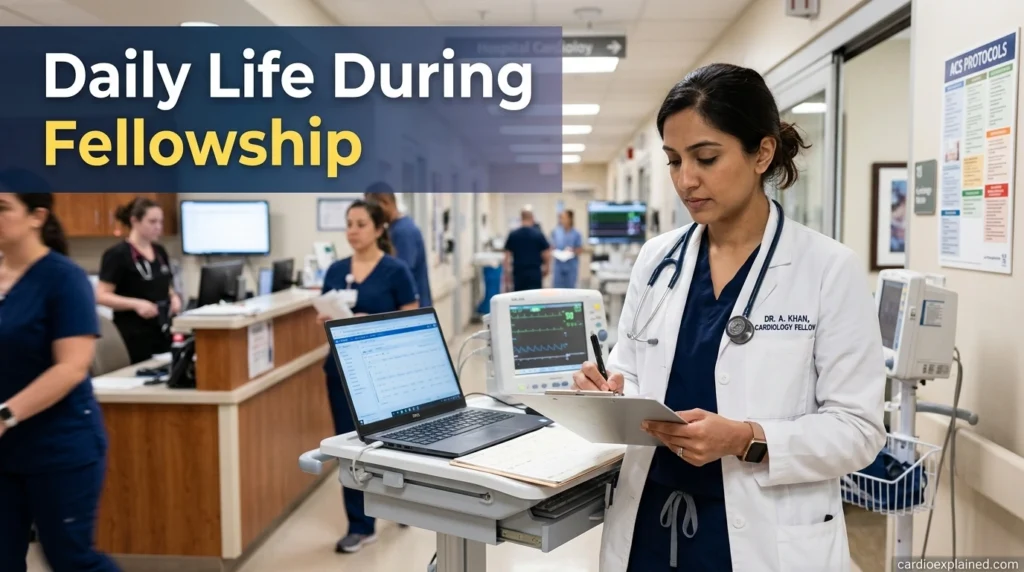
Many people imagine doctors only performing procedures.
The job includes much more.
A fellow’s day may begin before sunrise.
They often:
- 📋 Visit hospitalized patients
- 📋 Review heart scans
- 📋 Join procedures
- 📋 Attend teaching sessions
- 📋 Discuss difficult cases
- 📋 Complete medical records
Some days stay calm.
Others become busy without warning.
A heart attack patient may arrive at any hour.
The care team must act quickly.
Many fellows also spend time reading medical research. They learn about new treatments and better ways to care for patients.
🩺 Skills That Make a Good Interventional Cardiologist
Technical skills matter.
People skills matter just as much.
Strong doctors often show these qualities:
- ✅ Calm under pressure
- ✅ Careful attention to detail
- ✅ Good communication
- ✅ Quick decision-making
- ✅ Teamwork
- ✅ Compassion
Patients often remember kindness as much as medical skill.
One patient may feel scared before a stent procedure.
A doctor who explains each step in simple words can reduce that fear.
Small conversations often build trust.
📋 Board Certification and Ongoing Learning
Training does not stop after fellowship.
Doctors usually seek board certification.
Board certification shows they meet national standards in their specialty.
Many also complete continuing medical education.
This means they keep learning throughout their careers.
Medicine changes over time.
New devices appear.
Research improves treatments.
Doctors study these updates to give patients safe care.
❤️ Career Opportunities After Fellowship
After finishing training, many doctors work in hospitals.
Others join private medical groups.
Some teach future doctors at medical schools.
Their work may include:
- Emergency heart attack care
- Planned artery procedures
- Patient follow-up visits
- Medical research
- Teaching students and fellows
Some doctors later train in structural heart procedures. These include treatments for damaged heart valves.
Others focus on difficult coronary artery disease.
Career paths can vary based on personal goals.
🩺 Salary and Job Outlook
Many students wonder if the long training pays off.
Interventional cardiologists often earn higher incomes than many other doctors. Income varies by location, experience, employer, and workload.
| Career Factor | General Information | What Changes It |
| Salary | Often among higher-paid medical specialties | Experience, region, practice type |
| Job demand | Strong in many areas | Local healthcare needs |
| Work hours | Often long | Emergency call schedules |
Most people choose this field because they enjoy helping patients during serious heart problems.
The work can feel demanding.
It can also feel deeply rewarding.
⚠️ Challenges of the Career
Every medical specialty has challenges.
Interventional cardiology is no different.
Doctors may face:
- ✅ Long training
- ✅ Overnight emergency calls
- ✅ Stress during urgent cases
- ✅ Long hours standing during procedures
Many doctors still enjoy the specialty.
They often value teamwork and the chance to improve lives.
One caregiver shared relief after a loved one received fast treatment for a heart attack. Seeing quick recovery reminded the family why years of medical training matter.
📋 Is This Specialty Right for Medical Students?
Students often ask whether the long path is worth it.
The answer depends on personal goals.
People who enjoy science, problem-solving, and patient care may enjoy this field.
It also helps to like hands-on work.
Doctors spend much of their time performing procedures instead of only prescribing medicine.
Shadowing a cardiologist can help students understand daily life before choosing this path.
FAQ
❓ Q: How long is interventional cardiology fellowship after general cardiology?
A: It usually lasts one year. Doctors begin this training after finishing a three-year general cardiology fellowship.
❓ Q: Can doctors practice without completing an interventional cardiology fellowship?
A: Yes, many cardiologists practice without it. They can care for heart patients but usually do not perform advanced catheter procedures.
❓ Q: Do interventional cardiologists perform open-heart surgery?
A: No. They treat many heart problems through blood vessels using catheters. Heart surgeons perform open-heart operations.
❓ Q: Is interventional cardiology fellowship hard?
A: Yes, it is challenging. Fellows learn complex procedures while caring for patients with serious heart conditions.
❓ Q: How many years does it take to become an interventional cardiologist?
A: Most doctors spend about 14 to 16 years training after high school. The exact time may vary with research or extra fellowships.
❓ Q: Do interventional cardiologists still see patients in the clinic?
A: Yes. Many care for patients before procedures and during follow-up visits. They also help patients manage long-term heart health.
Final Thoughts
Knowing how long is interventional cardiology fellowship helps explain the years of learning behind heart care. The fellowship usually lasts one year, but doctors complete many training steps before reaching that stage. They develop medical knowledge, technical skills, and good judgment through supervised practice. Patients benefit from that careful preparation every day. If you have heart concerns, talk to a cardiologist. They can explain your options and guide you toward the care that fits your needs.