Pediatric cardiology fellowship is advanced medical training for doctors who treat heart conditions in babies, children, and teens. It helps doctors gain special skills in testing, diagnosing, and caring for young patients with heart problems. Doctors complete this training after a pediatric residency before working as pediatric heart specialists.
Have you ever wondered who cares for babies born with heart problems? Many families ask this question after hearing unexpected news. A pediatric cardiology fellowship helps doctors learn the skills needed to care for children with heart conditions. This training takes years and includes hands-on patient care. It also teaches doctors how to work with families during hard moments. Parents, students, and future doctors often want to know what this path includes. Learning about it can make the journey feel less confusing. It also helps families understand the training behind the doctor caring for their child.
❤️ What Is a Pediatric Cardiology Fellowship?
A pediatric cardiologist treats heart problems in children. These doctors first finish medical school. Then they complete a pediatric residency. After that, they begin a pediatric cardiology fellowship.
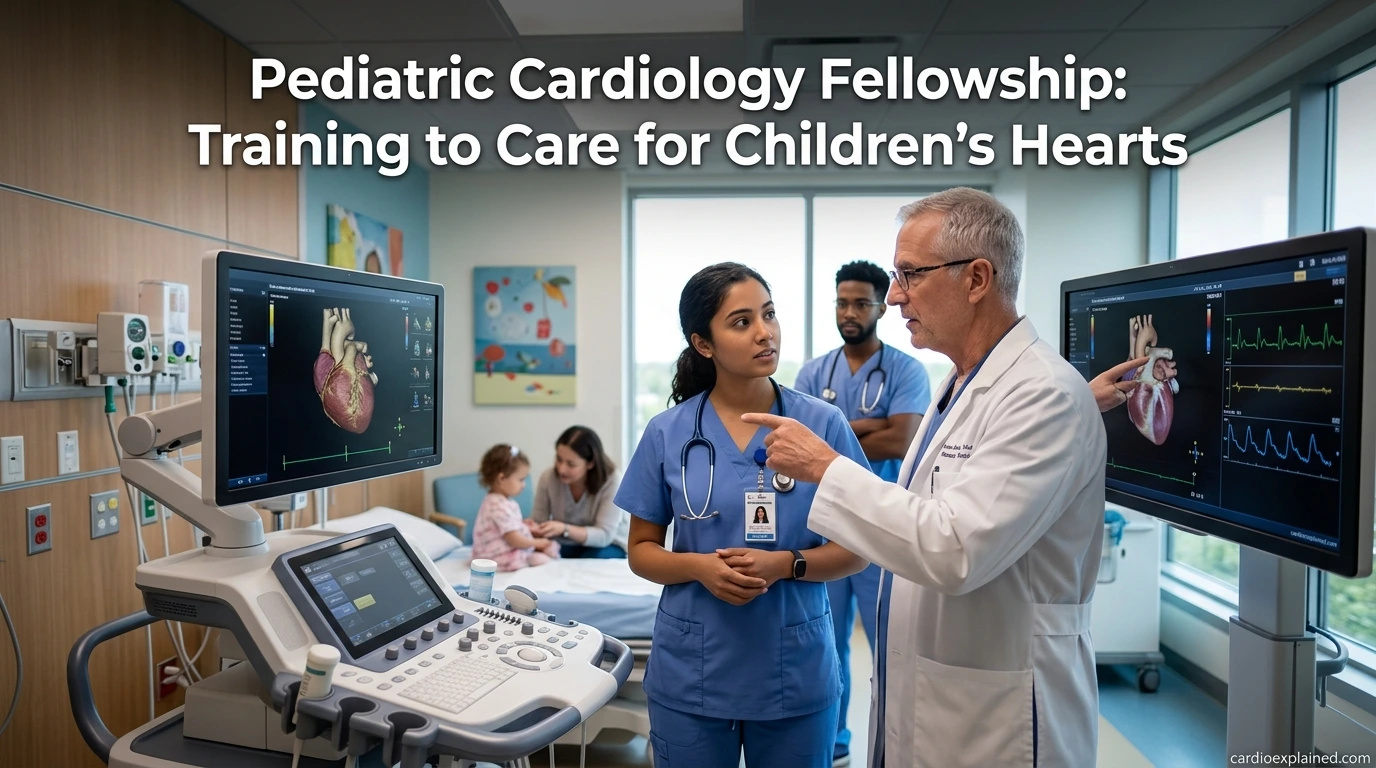
A fellowship gives doctors deeper training in children’s heart care. They learn from experienced heart specialists every day.
During fellowship, doctors care for:
- ❤️ Babies with heart defects present at birth
- ❤️ Children with heart rhythm problems
- ❤️ Teens with heart disease
- ❤️ Young patients before and after heart surgery
Many children improve because trained teams work together. Every child receives care based on personal needs.
What Fellows Learn
Doctors build skills in many areas, including:
- 🩺 Reading heart ultrasound scans called echocardiograms
- 🩺 Reading electrocardiograms, also called ECGs, which record heart signals
- 🩺 Managing heart failure, when the heart cannot pump well
- 🩺 Treating heart rhythm problems
- 🩺 Caring for patients in intensive care
They also learn how to explain medical information in simple words.
📋 How Long Does the Training Take?
Training takes time because children’s heart care is very specialized.
Most doctors complete:
| Training Step | Typical Length | Main Focus |
|---|---|---|
| Medical school | 4 years | Basic medical education |
| Pediatric residency | 3 years | General child health |
| Pediatric cardiology fellowship | 3 years | Children’s heart care |
Some doctors continue with another one to two years of advanced training. They may focus on heart imaging, heart rhythm care, or heart procedures.
Learning continues throughout a doctor’s career. Many attend classes and meetings every year.
🩺 What Happens During Fellowship?
Every day looks different.
One morning may begin with newborn rounds. Another day may include clinic visits. Fellows also help during emergency cases.
Patient Care
Doctors spend much of their time with patients.
They may:
- ✅ Listen to heart sounds
- ✅ Review test results
- ✅ Explain treatment plans
- ✅ Meet with families
- ✅ Work with surgeons and nurses
Many parents feel nervous before the first visit. Fellows learn how to answer questions with patience and kindness.
Learning New Skills
Doctors also practice procedures safely.
Some learn cardiac catheterization. This procedure uses a thin tube to look inside the heart or fix certain problems.
Others focus on heart imaging.
Common tests include:
| Test | What It Shows | Why Doctors Use It |
|---|---|---|
| Echocardiogram | Heart structure and movement | Finds many heart problems |
| ECG | Heart’s electrical activity | Checks heart rhythm |
| Holter monitor | Heart rhythm over one or more days | Finds rhythm changes during daily life |
The American Heart Association (AHA) and the American College of Cardiology (ACC) support careful testing based on each patient’s needs.
⏱️ What Skills Make a Good Pediatric Cardiologist?
Medical knowledge matters. So do kindness and clear communication.
Doctors often need to:
- ❤️ Stay calm during emergencies
- ❤️ Explain complex ideas simply
- ❤️ Work well with healthcare teams
- ❤️ Listen carefully to families
- ❤️ Keep learning new research
Children may feel scared during visits. A friendly smile and calm voice can help.
One young child may fear an ultrasound. A fellow may first show the probe on a stuffed animal. That simple step often eases worry.
✅ Career Paths After Fellowship
After finishing training, doctors have several choices.
Many work in:
- Children’s hospitals
- University medical centers
- Large medical groups
- Specialty heart centers
Some doctors teach medical students.
Others spend more time doing research. Research helps doctors find better ways to care for children.
Some specialists focus on:
- Heart imaging
- Heart rhythm disorders
- Heart failure
- Adult congenital heart disease
- Cardiac catheterization
Each area supports children with different needs.
📚 Research and Education
Research plays a big role during training.
Fellows may study:
- Better heart treatments
- New imaging methods
- Long-term patient outcomes
- Safer procedures
Research does not always happen in a laboratory.
Sometimes doctors review patient records. Other times they help with national studies.
These projects may improve future care for many children.
❤️ Family-Centered Care
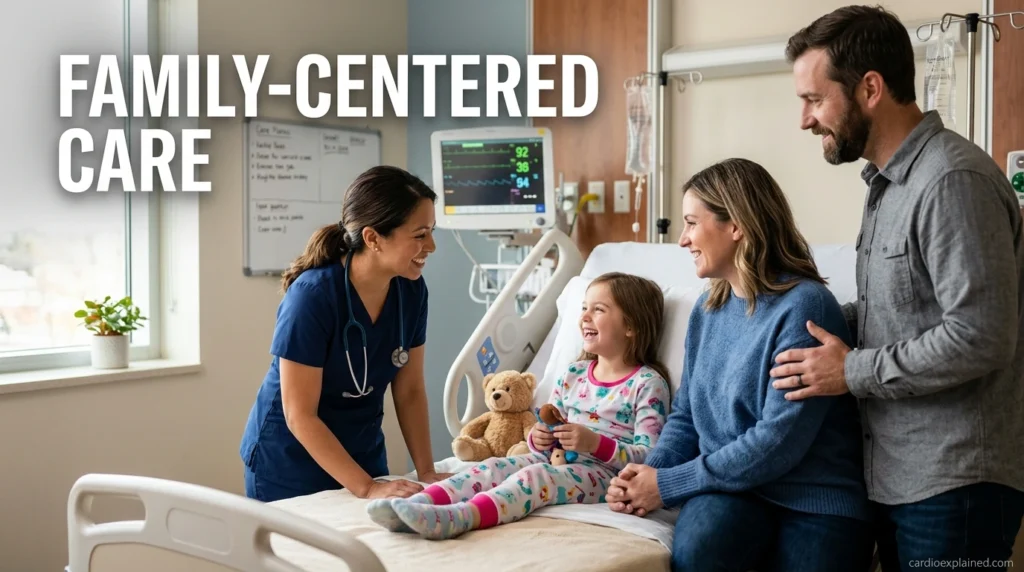
Parents are important members of the care team.
Doctors encourage families to ask questions.
Common topics include:
- ✅ Test results
- ✅ Medicines
- ✅ Activity limits
- ✅ School attendance
- ✅ Follow-up visits
Many hospitals also offer child life specialists. These team members help children feel more comfortable during care.
A teenager with a heart condition may worry about sports. The doctor can explain safe activities after reviewing test results.
⚠️ Choosing a Fellowship Program
Future doctors compare many programs.
They often look at:
- Patient experience
- Faculty support
- Research options
- Procedure training
- Hospital size
Some programs care for thousands of children every year.
Others focus on rare heart conditions.
Every program follows national training standards. These standards help ensure high-quality education.
Frequently Asked Questions
❓ Q: How long is a pediatric cardiology fellowship?
A: Most programs last three years. Some doctors complete extra specialty training afterward.
❓ Q: Is pediatric cardiology fellowship difficult?
A: Yes. The training is demanding because children may have complex heart conditions. Doctors also spend many hours learning and caring for patients.
❓ Q: What patients does a pediatric cardiologist treat?
A: Pediatric cardiologists care for babies, children, teens, and sometimes adults born with heart defects.
❓ Q: Do fellows perform heart procedures?
A: Yes. Fellows learn procedures under close supervision. Experienced specialists guide every step.
❓ Q: Can families ask questions during visits?
A: Yes. Doctors encourage questions. Good communication helps families understand care plans and next steps.
❓ Q: Why does a pediatric cardiology fellowship take several years?
A: Children’s heart conditions can be very different from adult heart problems. Doctors need extra training to safely diagnose, treat, and support young patients.
Final Thoughts
A pediatric cardiology fellowship prepares doctors to care for children with heart conditions through years of focused learning. Fellows gain medical skills, practical experience, and strong communication habits. They also work closely with families and healthcare teams every day. This training supports safer care and better long-term health for young patients. If your child has heart concerns, talk with a pediatric cardiologist. They can explain tests, answer questions, and guide your family with care.