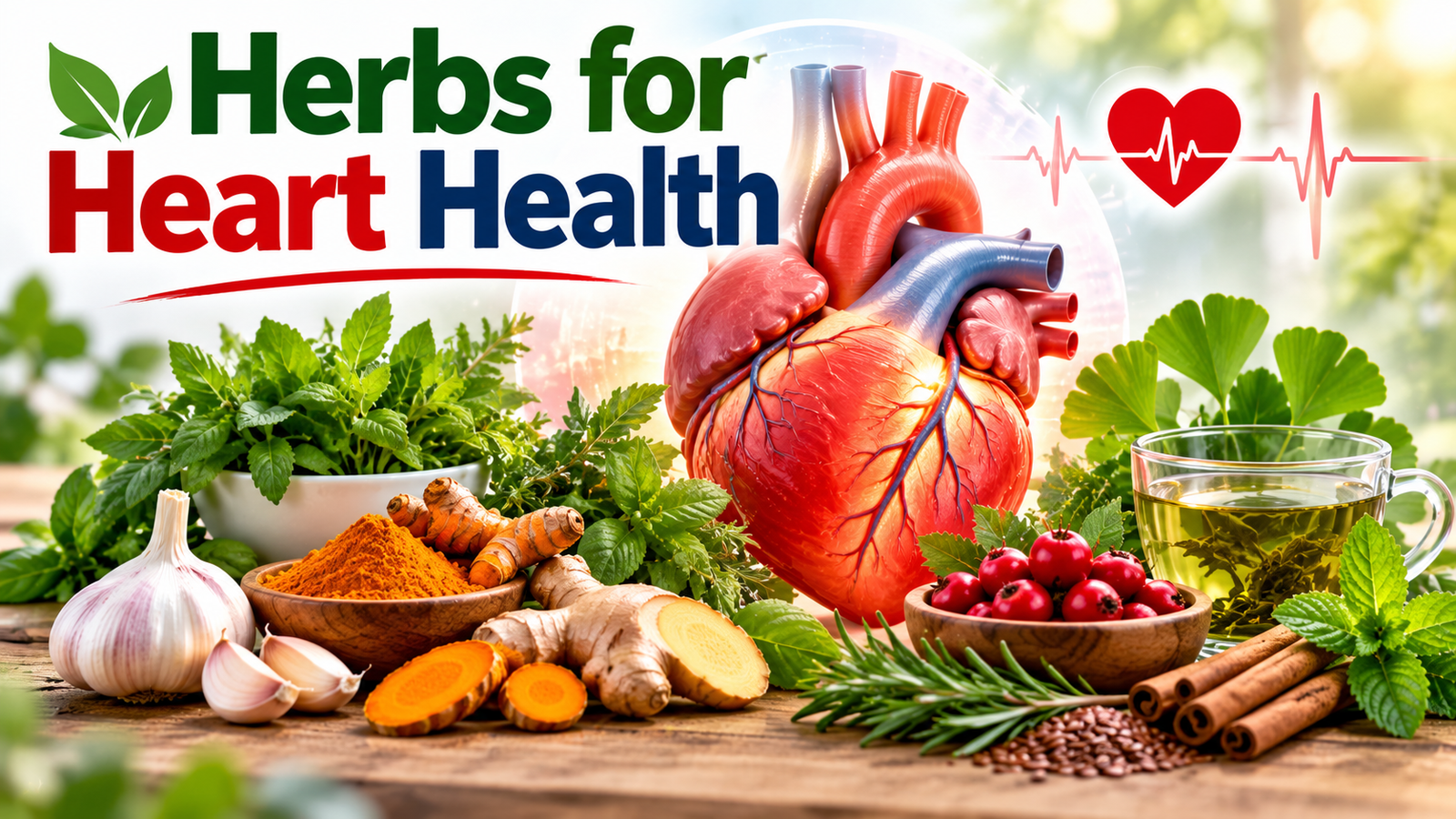

Some herbs, especially garlic, may lower blood pressure and cholesterol in some studies, but evidence is mixed. There is no evidence that herbal remedies alone can lower cholesterol. Herbs can interact with heart medicines, so talk to a doctor or pharmacist first.
Walk into any health store and you will find shelves of herbs for heart health. The labels promise “support” for blood pressure, cholesterol, and circulation. Some of that interest has a basis in research. Much of it runs ahead of the evidence.
This article separates the two. You will see which herbs have been studied, what the research actually found, and where the results conflict. You will also learn which herbs can cause problems with common heart drugs, and how to use culinary herbs in everyday cooking.
One point matters from the start. An herb that nudges a number on a lab test is not the same as an herb that prevents a heart attack. Most herbal research looks at numbers like blood pressure and cholesterol, not at heart attacks or strokes.
Culinary Herbs vs. Herbal Supplements
These are two different things.
Culinary herbs are the ones in your kitchen: garlic, basil, oregano, parsley, rosemary. You use small amounts in food. They are very unlikely to cause harm, and they can help you cut back on salt.
Herbal supplements are capsules, extracts, powders, and teas. They deliver concentrated amounts of plant compounds. They can act like drugs in the body, which is why they can cause side effects and interactions.
Most “herbs for heart health” research tests supplements, not the amount you would sprinkle on dinner.
What Research Can and Cannot Show
Researchers measure different outcomes. They are not interchangeable:
- Correcting a deficiency: Fixing a missing nutrient. Herbs rarely do this.
- Improving a biomarker: Moving a number like blood pressure or LDL cholesterol (the “bad” cholesterol).
- Reducing cardiovascular risk: Fewer heart attacks, strokes, or deaths. This needs large, long trials.
- Treating established disease: Managing heart failure or coronary artery disease. This needs strong evidence and medical supervision.
Most herbs have, at best, some evidence for the second item.
Herbs for Heart Health: A Quick Look
| Herb | What research suggests | Main caution |
| Garlic | A review of randomized trials found lower blood pressure and cholesterol, with the most consistent results from aged garlic extract. | Can raise bleeding risk with some drugs |
| Hawthorn | Results are conflicting, and evidence is not enough for other heart problems. | Can interact with many prescription drugs and other herbs. |
| Astragalus | Limited studies suggest possible benefit, but high-quality human trials are generally lacking. | Evidence too weak to guide use |
| Flaxseed | Research on heart benefits has produced mixed results. | Adds fiber, so increase gradually Garlic and Heart Disease +4 |
Garlic: The Best-Studied Option
Garlic has the most research behind it. A 2016 review in The Journal of Nutrition looked only at double-blind randomized trials and meta-analyses. It found garlic supplements reduced systolic blood pressure by 7 to 16 mm Hg and diastolic pressure by 5 to 9 mm Hg in the studies reviewed. The authors concluded that garlic has potential for cardiovascular protection through lowering risk factors. nih
That sounds promising, but there are limits:
- Results vary by product. The most consistent benefits came from aged garlic extract. Raw garlic and other forms may not act the same way. nih
- Cholesterol results are mixed. An NCCIH-funded study of three garlic preparations found no long-term effect on blood cholesterol. healthline
- Lower numbers are not proof of fewer heart attacks. The review looked at risk factors and markers, not at heart attack or stroke rates.
Garlic in food is a reasonable part of a heart-healthy diet. A garlic supplement is a bigger decision, especially if you take blood thinners (see below).
Hawthorn: Used Often, Studied Unevenly
Hawthorn is a shrub related to the rose. People have long used its berries, leaves, and flowers in traditional remedies for the heart. Research results are conflicting, and there is not enough evidence to know whether it works for other heart problems. healthline
Hawthorn can also interact with many prescription medicines and other herbs. Anyone with heart failure, an irregular heartbeat, or high blood pressure should not self-treat with it. These conditions need medical care. healthline
Cooking With Herbs: A Practical Approach
You do not need supplements to use herbs well. Here are some realistic steps:
- Season with garlic, basil, oregano, rosemary, thyme, or parsley instead of extra salt. Lower sodium helps blood pressure.
- Use fresh or dried herbs generously in soups, beans, vegetables, fish, and whole grains.
- Combine herbs with other habits that have strong evidence: regular physical activity, not smoking, healthy sleep, a diet rich in vegetables and fiber, and managing stress.
These habits are well supported by major heart organizations such as the American Heart Association. No herb has been shown to replace them.
Safety: Interactions and Side Effects
“Natural” does not mean safe for everyone. Some herbs affect how the body handles medicine.
- Bleeding risk: Garlic supplements and ginkgo may increase bleeding, which matters with warfarin, aspirin, or other blood thinners. Tell your doctor before any planned surgery.
- St. John’s wort: It can lower the effect of many drugs, including some heart medicines and blood thinners.
- Licorice root: It can raise blood pressure and lower potassium. This is a concern for anyone with high blood pressure or heart rhythm problems.
- Hawthorn: It may add to the effect of blood pressure drugs or other heart medicines, including digoxin.
- Quality: In the United States, the FDA does not approve dietary supplements before they are sold. Strength and purity can vary. Look for products that have been tested by an independent group, such as USP or NSF.
Pregnancy and breastfeeding need extra care with most herbal supplements. Kidney or liver disease also calls for medical advice first.
Who Should Talk to a Doctor First
Check with a doctor or pharmacist before trying herbal supplements if you:
- Take any prescription medicine, especially for blood pressure, cholesterol, heart rhythm, or blood thinning
- Have heart disease, heart failure, or high blood pressure
- Are pregnant, breastfeeding, or planning surgery
- Have kidney or liver disease
Bring the actual bottle. Your pharmacist can check the ingredients against your medicines.
Never stop or swap a prescribed heart medicine for an herb. That can be dangerous.
When Symptoms Need Urgent Care
Herbs are not a substitute for emergency care. Call your local emergency number if you have chest pain or pressure, severe shortness of breath, fainting, or sudden weakness or trouble speaking.
Frequently Asked Questions
What is the best herb for heart health?
No single herb is proven best. Garlic has the most research, with some trials showing lower blood pressure and cholesterol. Even so, results vary by product, and none shows it prevents heart attacks. Daily habits such as exercise, diet, and not smoking have far stronger evidence.
Can herbs lower blood pressure?
Some may modestly. Garlic supplements lowered blood pressure in several trials, especially aged garlic extract. But herbs should not replace blood pressure medicine. If you take medicine, ask your doctor before adding an herb, since combining them can sometimes lower pressure too much.
Can herbal teas help the heart?
Herbal teas are generally low risk and can replace sugary drinks, which helps overall health. But research on specific teas improving heart outcomes is limited. Some blends contain licorice or other active herbs, so read labels if you have high blood pressure or take medicine.
Is it safe to take herbs with heart medication?
Not always. Some herbs change how drugs work or increase side effects like bleeding. St. John’s wort, ginkgo, garlic supplements, and hawthorn are common examples. Ask your pharmacist or doctor to check every herb and supplement against your prescription list.
Can herbs reverse heart disease or clear clogged arteries?
No herb has been shown to reverse heart disease or clear blocked arteries. Treatment of established disease relies on medicines, procedures, and lifestyle changes guided by a doctor. Herbs may be discussed as an add-on, but never as a replacement.
How can I choose a safe herbal supplement?
Choose products tested by an independent group, such as USP or NSF. Avoid ones promising cures or quick results. Check the ingredient list, stick to the label directions, and share the product with your doctor or pharmacist. Supplements are not approved by the FDA before sale.
Key Takeaway
Garlic has the strongest evidence among herbs for heart health, with some trials showing lower blood pressure and cholesterol.
Other herbs, like hawthorn and astragalus, have mixed or limited evidence. No herb has been shown to prevent or treat heart disease on its own.
Use culinary herbs freely, treat supplements with caution, and check with a doctor or pharmacist about interactions before starting any.