
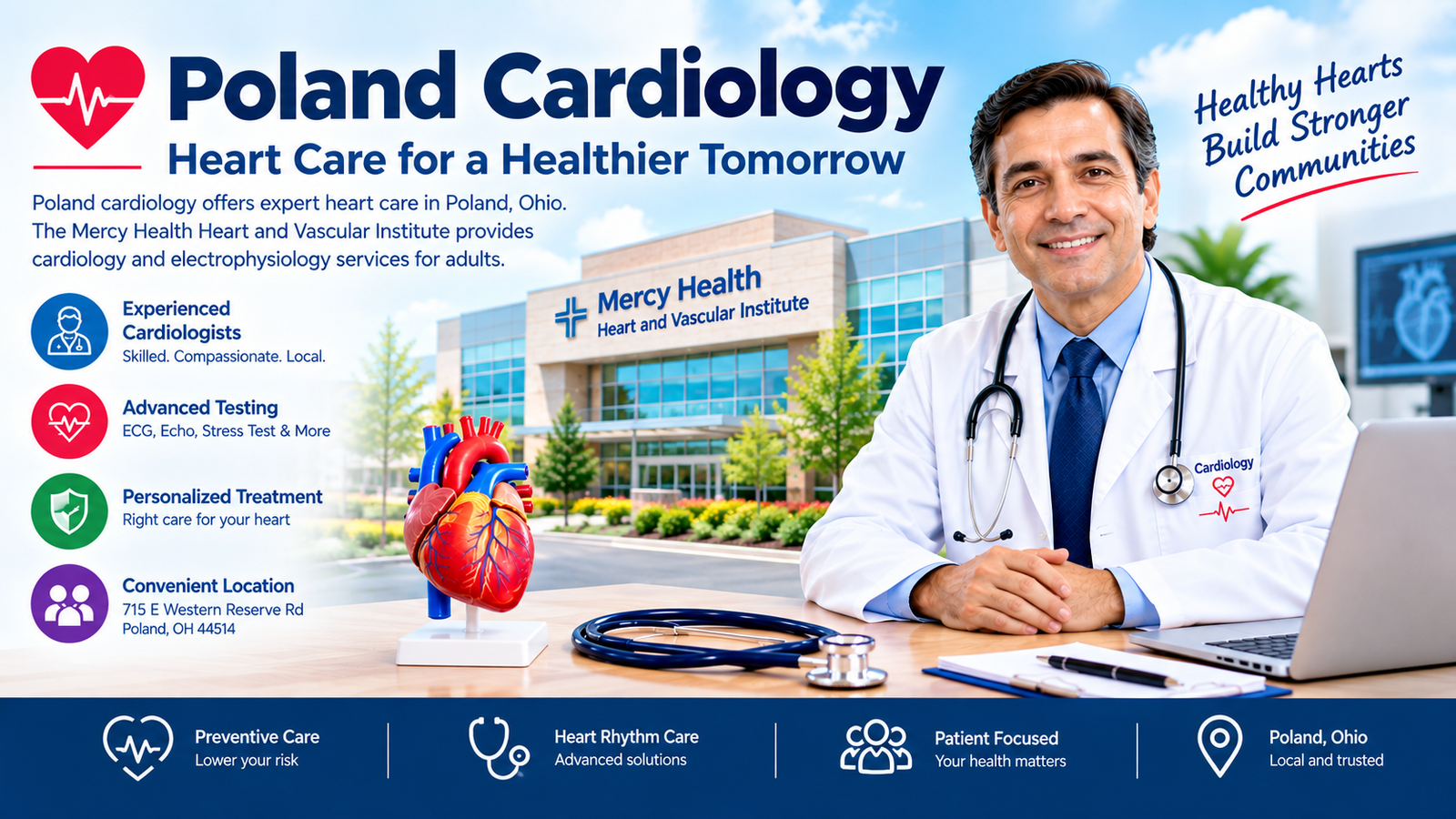

Poland cardiology refers to heart care available in Poland, Ohio. Mercy Health operates a Heart and Vascular Institute there. The center provides cardiology and electrophysiology services for adults.
Have you searched for heart care near Poland, Ohio? You may find many names and services online. Choosing the right heart clinic can feel confusing.
Poland cardiology is linked with Mercy Health’s Heart and Vascular Institute. The center sits at 715 E Western Reserve Road. It serves patients in Poland and nearby Youngstown communities.
This guide explains the services you may find there. It also covers doctors, heart tests, treatment, and prevention. You will learn what to ask before your first visit.
Heart care can cover simple checks and complex heart problems. Some patients need routine follow-up after a heart test. Others need care for an ongoing heart condition.
Your symptoms should guide your next step. A primary doctor may also refer you to cardiology. Emergency symptoms need faster action.
❤️ What Is Poland Cardiology?
Poland cardiology is not one single medical treatment. It describes cardiology care available in Poland, Ohio. The Mercy Health Heart and Vascular Institute is located there.
Cardiology is the medical field focused on the heart and blood vessels. Cardiologists diagnose, treat, and monitor many heart conditions.
The Poland location offers heart and vascular care. Mercy Health also lists a separate electrophysiology service there. Electrophysiology focuses on the heart’s electrical system.
The center’s listed address is 715 E Western Reserve Road. The listed phone number is 330-726-3204. Hours shown by Mercy Health run Monday through Friday.
Doctors at Poland Cardiology
Several providers appear in current online records for this location. Their roles can differ by cardiology subspecialty.
Kweku Appau, MD, practices cardiology at the Poland location. Mercy Health lists him as board certified in cardiovascular disease. He also holds adult echocardiography board certification.
Rahul Sinha, MD, also practices cardiology in Poland, Ohio. Mercy Health lists cardiovascular disease fellowship training for him. His listed hospital affiliations include several nearby Mercy hospitals.
Chotikorn Khunnawat, MD, practices cardiac electrophysiology there. His training includes clinical cardiac electrophysiology fellowship work. Mercy Health lists him as board certified in electrophysiology.
Other providers may serve the same center. Provider lists can change over time. Always confirm current availability before booking.
🩺 What Heart Problems Can Cardiology Help With?
A cardiologist may help with many types of heart concerns. Your exact care depends on your symptoms and health history.
Common areas include:
- High blood pressure
- High cholesterol
- Irregular heart rhythms
- Atrial fibrillation
- Heart failure
- Chest pain
- Coronary artery disease
- Heart valve problems
- Pacemaker care
- Defibrillator care
- Heart disease prevention
High blood pressure means blood pushes too hard against artery walls. High cholesterol can contribute to fatty buildup inside arteries.
An irregular rhythm means the heart beats too fast, slowly, or unevenly. Atrial fibrillation is one common irregular rhythm.
Heart failure means the heart cannot pump enough blood for body needs. Treatment can help manage symptoms and reduce future risks.
Some patients visit after an abnormal ECG. Others come because of chest pressure or shortness of breath. Some need long-term care after a previous heart problem.
A patient may feel nervous before the first visit. That feeling is common and understandable. Writing questions down can make the visit easier.
Bring your medicine list and recent test reports. Also share allergies and important family heart history. These details can help your care team understand your health.
Electrophysiology and Heart Rhythm Care
Electrophysiology focuses on electrical signals inside the heart. These signals control how the heart beats.
A cardiac electrophysiologist may treat rhythm problems. Treatment can include medicine, monitoring, or procedures.
Mercy Health lists electrophysiology services at the Poland location. The service is located on the second floor.
Some patients may need a heart rhythm monitor. Others may need care for a pacemaker or implanted defibrillator. Your doctor decides based on your symptoms and test results.
📋 Risk Factors That May Affect Heart Health
Heart disease can develop for many reasons. Some risks come from health conditions or family history. Others relate to daily habits.
Common heart risk factors include:
- High blood pressure
- High LDL cholesterol
- Diabetes
- Smoking
- Physical inactivity
- Excess body weight
- Poor sleep
- Family history
- Older age
- Chronic kidney disease
LDL is often called “bad cholesterol.” High LDL can contribute to artery plaque.
The 2026 ACC/AHA cholesterol guideline supports early risk reduction. It stresses healthy habits and cholesterol treatment when appropriate.
The guideline also discusses newer risk tests. These include lipoprotein(a) and apolipoprotein B. Doctors may use them for selected patients.
High blood pressure also matters. The 2025 AHA/ACC guideline addresses prevention and treatment. It supports lifestyle changes as part of blood pressure care.
How Risk Can Build Over Time
Heart risk can increase when several factors occur together. For example, diabetes and high blood pressure may raise risk.
Smoking can also harm blood vessels. Lack of activity may make weight and blood pressure harder to control.
A patient may have high cholesterol without any symptoms. That is why routine checks can matter.
Your doctor may estimate your heart disease risk. The result can guide lifestyle changes and medicine decisions.
South Asian adults in North America may face higher cardiometabolic risk. ACC guidance highlights diabetes, blood pressure, and cholesterol concerns.
Risk differs from person to person. Do not compare your numbers with another patient’s numbers.
⚠️ Symptoms and Signs to Watch For
Heart symptoms can appear in many ways. Some symptoms may come from the heart. Others may have a different cause.
Possible heart-related symptoms include:
- Chest pressure
- Chest pain
- Shortness of breath
- Fast heartbeat
- Irregular heartbeat
- Dizziness
- Fainting
- Unusual tiredness
- Leg swelling
- Lower exercise ability
Chest discomfort needs special attention. Heart attack symptoms may start suddenly or slowly. Symptoms can also come and go.
The American Heart Association says chest discomfort is a major warning sign. It may feel like pressure, squeezing, fullness, or pain.
Pain can spread to the arm, back, neck, jaw, or stomach. Shortness of breath can happen with or without chest discomfort. Cold sweat, nausea, or lightheadedness may also occur.
Women may have less typical symptoms. These can include nausea, unusual tiredness, or back pain. Sudden symptoms still need prompt medical attention.
A Real-World Example
Imagine someone develops chest pressure while walking. They stop and rest, and the pressure improves. That person should still seek medical advice.
Another patient may notice a racing heartbeat. The episodes last only a few minutes. A rhythm monitor may help capture the heartbeat during symptoms.
A third patient may feel short of breath when climbing stairs. The cause may involve the heart, lungs, fitness, or other factors.
These examples show why testing matters. Symptoms alone cannot confirm a heart diagnosis.
🔎 Tests Used in Poland Cardiology
Doctors use different tests for different concerns. Your symptoms and medical history guide test choices.
Common tests include:
| Test | Main purpose | What to expect |
| ECG | Checks heart electrical signals | Small stickers on your skin |
| Echocardiogram | Shows heart structure and motion | Gel and a handheld probe |
| Stress test | Checks heart response during activity | Walking or another exercise |
| Holter monitor | Records heart rhythm over time | Small wearable device |
An ECG can show changes in heart rhythm. It usually takes only a short time.
An echocardiogram uses sound waves to create heart images. It can show valves, chambers, and pumping action.
A stress test watches your heart during exercise. Some patients cannot exercise enough for a standard test. Doctors may then consider other testing methods.
A Holter monitor records your heart rhythm during normal daily activity. It can help when symptoms happen only sometimes.
More Advanced Testing
Some patients need additional heart imaging. Doctors may use CT scans, nuclear imaging, or other tests.
Coronary calcium scoring is one possible risk assessment tool. It can show calcium buildup in coronary arteries.
The 2026 ACC/AHA cholesterol guideline supports selective use of coronary calcium scoring. Doctors may use it when risk remains uncertain.
Not everyone needs advanced testing. Extra tests should have a clear medical reason.
Your cardiologist may explain why a test is needed. Ask what the test can show and what happens next.
💊 Treatment and Management Options
Treatment depends on the condition being treated. Your doctor may recommend lifestyle changes, medicine, procedures, or follow-up.
Common management areas include:
- Blood pressure treatment
- Cholesterol management
- Rhythm control
- Heart failure care
- Chest pain evaluation
- Device follow-up
- Exercise planning
- Nutrition support
- Smoking cessation
Medicines can help control blood pressure and cholesterol. Other medicines may help control heart rhythm.
Never stop prescribed heart medicine without medical advice. Ask your doctor about side effects or missed doses.
Some patients may need a pacemaker. A pacemaker helps control certain slow heart rhythms.
Others may need an implantable defibrillator. This device can help treat certain dangerous heart rhythms.
Electrophysiology specialists may perform procedures for some rhythm problems. These procedures can include catheter ablation.
Ablation uses heat or cold to change a small area causing abnormal signals. It may be an option for selected rhythm conditions.
What Treatment May Look Like
Imagine a patient with repeated heart racing. The doctor may start with an ECG. A longer monitor may follow if the ECG looks normal.
Another patient may have high LDL cholesterol. The doctor may discuss food, activity, and cholesterol medicine.
The 2026 ACC/AHA guideline supports personalized cholesterol treatment. It also stresses healthy weight, exercise, sleep, and tobacco avoidance.
Treatment should fit your personal health risks. One plan cannot fit every patient.
Ask these simple questions during your visit:
- What problem are we treating?
- Why do I need this test?
- What are my treatment choices?
- What side effects should I watch for?
- When should I return?
Clear questions can help you understand your care.
✅ Prevention and Healthy Heart Habits
Prevention starts with daily choices. Small changes can support heart health over time.
Helpful habits include:
- Eat more vegetables and fruits.
- Choose whole grains more often.
- Stay physically active.
- Avoid tobacco products.
- Sleep on a regular schedule.
- Manage blood pressure.
- Check cholesterol when advised.
- Take medicines as prescribed.
- Keep regular health visits.
The ACC recommends regular physical activity for cardiovascular prevention. Its prevention tools also focus on diet, tobacco, blood pressure, and cholesterol.
Adults should discuss safe activity levels with their doctors. This matters if you already have heart symptoms.
Food choices can also support heart health. Choose foods rich in vegetables, fruits, beans, nuts, and whole grains.
Limit foods high in saturated fat and excess sodium. Your doctor may suggest different limits for specific health needs.
Smoking remains an important heart risk. Quitting can reduce cardiovascular risk over time.
Sleep also matters. Poor sleep can affect blood pressure, weight, and daily energy.
Prevention Is Personal
A patient with diabetes may need closer risk monitoring. Another patient may focus on blood pressure control.
Someone with a strong family history may need earlier risk checks. Another person may need help stopping tobacco use.
The best prevention plan depends on your health history. Your doctor can help set realistic goals.
Poland cardiology can be part of that process when a heart specialist is needed. A primary doctor may also manage many basic risk factors.
You do not need to change everything in one day. Start with one practical goal. Then build from there.
🚨 When to See a Cardiologist
You may need cardiology care when symptoms keep returning. Your primary doctor may also recommend a referral.
Consider a medical visit for:
- Repeated chest discomfort
- New shortness of breath
- Repeated racing heartbeat
- Fainting or near-fainting
- New leg swelling
- High blood pressure
- High cholesterol
- A strong family heart history
- An abnormal heart test
A cardiologist can review your symptoms and risk factors. The doctor may then decide whether testing is needed.
Some symptoms require emergency care instead. Do not wait for a routine appointment during a possible heart attack.
The American Heart Association says to call 911 for heart attack warning signs. Fast emergency care can save time and lives.
Emergency Warning Signs
Call 911 if you have possible heart attack symptoms. These include chest pressure or pain that lasts several minutes.
Also seek emergency help for sudden shortness of breath. Pain in the arm, back, neck, jaw, or stomach can occur too.
Cold sweating, nausea, lightheadedness, or unusual tiredness can also occur. Women may have some symptoms without strong chest pain.
Do not drive yourself during a possible heart attack. Emergency medical teams can begin care during transport.
What About Reviews?
Online reviews can offer information about patient experiences. They should not replace medical advice or quality checks.
Mercy Health provider pages show ratings and patient reviews. For example, current pages list ratings for providers at the Poland location.
Reviews can mention communication, wait times, and staff experiences. Individual reviews do not predict your own medical outcome.
Provider ratings can also change. Review counts may differ between websites.
When researching a doctor, check several details. Confirm the doctor’s name, specialty, location, and current practice.
Frequently Asked Questions
Q: Who are the doctors at Poland Cardiology?
A: Several providers work across cardiology and heart rhythm services. Current Mercy listings include Kweku Appau, MD, Rahul Sinha, MD, and Chotikorn Khunnawat, MD. Other providers may also serve the location.
Q: Where is Poland Cardiology located?
A: The Mercy Health Heart and Vascular Institute is at 715 E Western Reserve Road. The address is in Poland, Ohio 44514. Mercy lists 330-726-3204 as the location phone number.
Q: Does Poland Cardiology offer electrophysiology?
A: Yes, Mercy Health lists electrophysiology at the Poland location. The service focuses on heart rhythm problems. Chotikorn Khunnawat, MD, is listed for electrophysiology there.
Q: Can I find Poland Cardiology reviews online?
A: Yes, Mercy Health publishes ratings and patient reviews for some providers. Review numbers can change over time. Use reviews as one source of information, not medical proof.
Q: What services can I expect from Poland cardiology?
A: Services can include general cardiology and heart rhythm care. Doctors may evaluate blood pressure, chest symptoms, heart rhythms, and other concerns. Testing depends on your symptoms and medical history.
Q: Is 715 E Western Reserve Road the cardiology location?
A: Yes, Mercy Health lists the Heart and Vascular Institute at that address. The same site also lists electrophysiology services. Always confirm appointment details before visiting.
Q: When should I call 911 instead of a cardiology office?
A: Call 911 for possible heart attack symptoms. These include chest pressure, shortness of breath, or pain spreading to other areas. Emergency care should not wait for a regular appointment.
Conclusion
Poland cardiology offers access to heart care in Poland, Ohio. Mercy Health lists a Heart and Vascular Institute at 715 E Western Reserve Road. The location provides cardiology and electrophysiology services.
Heart care can include tests, medicines, lifestyle support, and follow-up. Your symptoms and health history guide the care plan. Different patients may need very different tests.
Prevention also plays an important role. Healthy food, regular activity, good sleep, and tobacco avoidance can help. Blood pressure and cholesterol checks can also support early risk control.
Online reviews can help you research providers. They should not replace medical advice or personal care needs. Always confirm the provider, location, insurance, and appointment details.
Call 911 for possible heart attack symptoms. For non-emergency concerns, talk to your doctor or cardiologist. Poland cardiology may be one local option to discuss with your care team.
Medically reviewed for accuracy. Always consult a licensed cardiologist for personal advice.