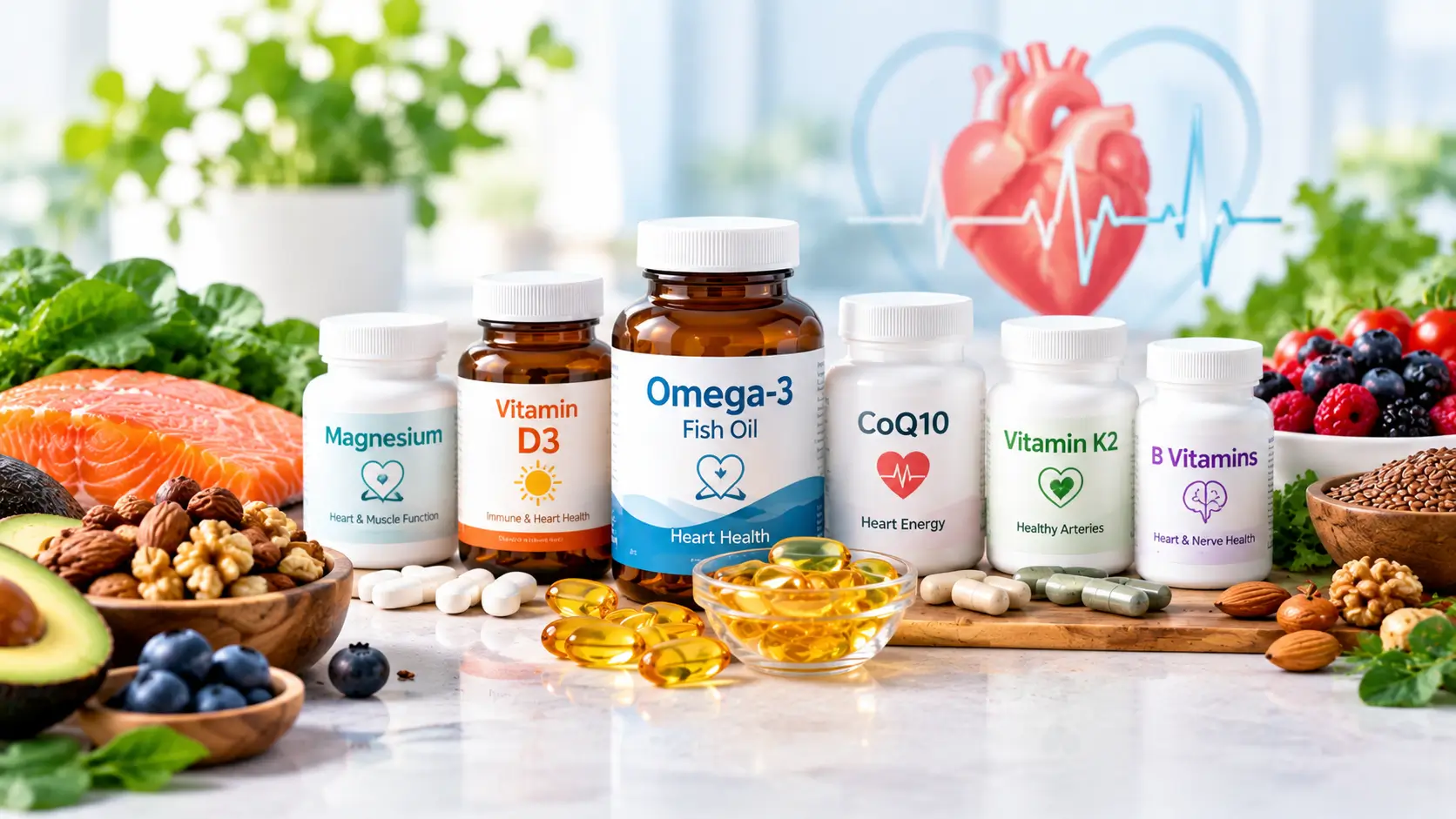

The best vitamins for heart health come from food, not pills. No vitamin supplement has been proven to prevent heart disease in healthy adults, and the American Heart Association does not recommend multivitamins or mineral supplements for that purpose. Supplements help mainly when a test shows a deficiency.
Search for the best vitamins for heart health and you will find long lists of pills that promise protection. The research tells a different story. Large studies keep finding that most vitamin supplements do not lower the risk of heart attack or stroke in people who are not deficient.
That does not mean vitamins do not matter. Your body needs them to work, and some people truly do need a supplement. The problem is the leap from “you need this nutrient” to “extra pills protect your heart.”
This article explains what the evidence shows for each major vitamin, where food beats a capsule, and when a supplement makes sense. It also covers safety and interactions, because some supplements carry real risks. Use it to prepare for a conversation with your doctor, not to replace one.
What Does “Best” Mean for Vitamins and Heart Health?
When people ask about the best vitamins for heart health, “best” could mean three very different things:
- Fixes a deficiency: Corrects a low nutrient level. This is where vitamins clearly help.
- Improves a biomarker: Moves a number like blood pressure or cholesterol. This does not always translate into fewer heart attacks.
- Lowers cardiovascular risk: Means fewer heart attacks, strokes, or deaths. This is the hardest bar to clear, and most vitamin supplements have not cleared it.
Keep these apart as you read. A vitamin that helps one does not automatically help the others.
What the Research Says About Vitamin Supplements
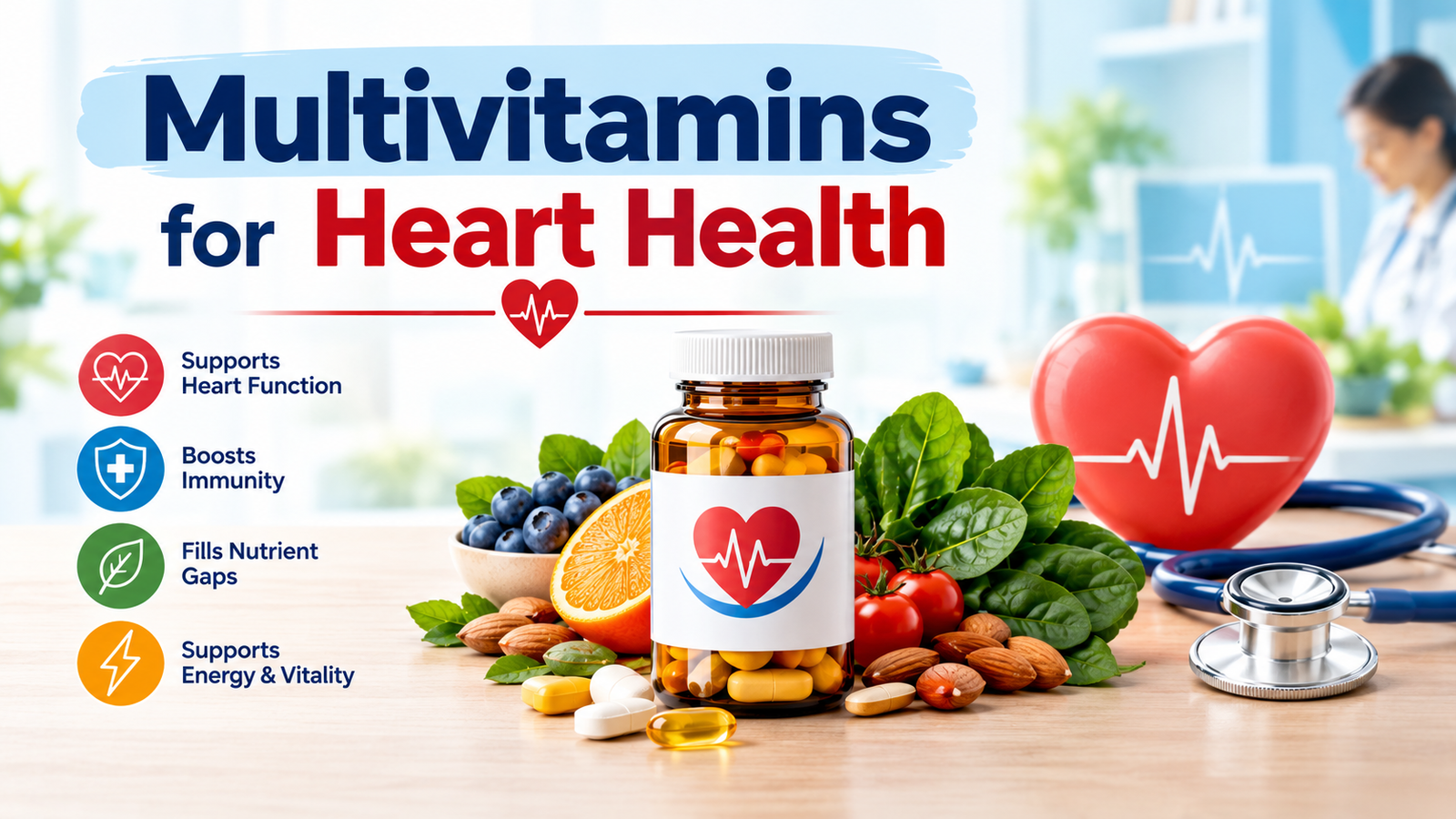
Multivitamins
An analysis of 18 studies involving over 2 million people found no protection from cardiovascular disease, coronary heart disease, or stroke from supplements. The researchers followed the people in these studies for an average of 12 years.
Single vitamins and minerals
The U.S. Preventive Services Task Force reviewed 24 studies of individual vitamins, minerals, and nutrient pairs. Across all the supplements studied, it found no evidence of benefit for cardiovascular disease, cancer, or death from any cause.
There is also evidence that taking too many vitamins may be harmful.
What does help
Researchers say the evidence is clear that fruits, vegetables, whole grains, low-fat dairy products, and seafood may help prevent cardiovascular disease. The strongest evidence points to the overall eating pattern, not to any one nutrient pulled out as a pill.
Best Vitamins for Heart Health: A Vitamin-by-Vitamin Guide
| Vitamin | What research suggests | Main caution |
|---|---|---|
| Vitamin D | The VITAL trial found no difference in major cardiovascular events between vitamin D and placebo. | Too much can raise blood calcium |
| B vitamins (B12, folic acid) | A study found B12 and folic acid did not prevent heart disease. | Folic acid matters in pregnancy; B12 deficiency is real in some people |
| Vitamin C | A large study found vitamins C and E did not prevent heart disease in men. | High doses can upset the stomach |
| Vitamin E | Same study: no heart benefit. | Some trials raised concern about harm at high doses |
| Vitamin K | Little evidence of heart benefit from supplements | Interacts with warfarin |
| Niacin (B3) | Added to statins, prescription-strength niacin did not reduce heart events in trials | Flushing, liver and blood sugar concerns |
Vitamin D
Low vitamin D levels show up in people with heart disease, which led many to assume that supplements would help. The best test of this idea was the VITAL trial. It randomly assigned 25,871 people to 2,000 IU of vitamin D3 daily or placebo.
In the vitamin D group, 396 people had a heart attack, stroke, or cardiovascular death, compared with 409 on placebo. That is not a meaningful difference.
Vitamin D still matters for bones. If your doctor finds a low level, treating it is reasonable. That is correcting a deficiency, not preventing heart disease.
B vitamins and folate
B vitamins can lower homocysteine, an amino acid linked to heart disease. But lowering it with pills did not translate into fewer heart events. Studies found B12 and folic acid did not prevent heart disease.
Folate remains essential in pregnancy, and some people, such as older adults and those who take certain medicines, may need B12. Those are separate reasons from heart protection.
Vitamins C and E (antioxidants)
Antioxidants sounded promising because inflammation and damaged cholesterol play a role in clogged arteries. The trials did not deliver. The large study of male doctors found no difference in heart attack, stroke, or heart-related death after an average of eight years.
High-dose vitamin E has even raised safety concerns in some research. Foods rich in these vitamins, like citrus, berries, nuts, and seeds, remain a good choice.
Vitamin K
Leafy greens supply vitamin K, and a heart-healthy diet includes them. Vitamin K supplements are another matter. If you take warfarin, a steady vitamin K intake matters, and sudden changes can affect how the drug works. Talk to your care team before adding a supplement.
Often Sold With Vitamins, But Not Vitamins
Omega-3 (fish oil): The American Heart Association has separate recommendations on fish oil. Studies show it does not reduce heart disease risk for average people, though prescription fish oil may help some people with specific heart risks. The VITAL trial also tested 1 gram of omega-3 daily and did not find fewer major cardiovascular events in the overall group.
CoQ10 and similar products: Evidence for preventing heart disease is limited, and they are not vitamins. Ask a clinician before using them, especially if you take blood thinners or blood pressure medicine.
Getting the Best Vitamins for Heart Health From Food
Food delivers vitamins along with fiber, healthy fats, and other compounds that pills lack. Some practical examples:
- Leafy greens (spinach, kale): vitamin K and folate
- Citrus fruit and berries: vitamin C
- Nuts and seeds: vitamin E, plus healthy fats
- Beans and lentils: folate and fiber
- Fatty fish (salmon, sardines): vitamin D and omega-3 fats
- Fortified foods and dairy: vitamin D and B12 for people who need them
- Whole grains: B vitamins and fiber
The American Heart Association recommends a diet rich in fruits, vegetables, whole grains, and low-fat dairy products to prevent cardiovascular disease. Aim for variety across the week rather than perfection each day.
Other habits have strong evidence too: regular physical activity, not smoking, healthy sleep, and keeping blood pressure, cholesterol, and blood sugar in check.
When a Supplement Makes Sense
Exceptions to the “no benefit” finding include pregnant people who need prenatal vitamins, as well as individuals with vitamin deficiencies or heart disease who need prescription supplements.
Other situations where a doctor may recommend one:
- A blood test shows a low level of vitamin D, B12, or another nutrient
- You follow a vegan diet, which can lack B12
- A health condition or medicine affects nutrient absorption
- You have limited food access or very restricted eating
In each case, the supplement treats a specific need. It is not general heart insurance.
Safety, Interactions, and Quality
“Natural” and “over the counter” do not mean risk free.
- Too much can hurt. Very high doses of vitamin D can raise blood calcium. High-dose vitamin E has raised concerns in research. Beta-carotene supplements raised lung cancer risk in smokers in past trials.
- Drug interactions exist. Vitamin K affects warfarin. Niacin can affect liver function and blood sugar. Some supplements change how blood pressure and cholesterol medicines work.
- Quality varies. The FDA does not approve supplements for safety or effectiveness before companies sell them. Look for products tested by an independent group, such as USP or NSF.
- Never replace medicine. Do not stop or swap a prescribed heart medicine for a vitamin.
Who Should Talk to a Doctor First
Check with a doctor or pharmacist before starting a supplement if you:
- Take any prescription medicine, especially a blood thinner, statin, or blood pressure drug
- Have heart disease, kidney disease, or liver disease
- Are pregnant, breastfeeding, or planning surgery
- Are considering high-dose products
Bring the bottle to your appointment so your clinician can check the label against your medicines.
When Symptoms Need Urgent Care
Call your local emergency number for chest pain or pressure, pain spreading to the arm, jaw, or back, severe shortness of breath, fainting, or signs of stroke such as face drooping, arm weakness, or trouble speaking. Do not try to treat these with supplements.
Frequently Asked Questions
Which are the best vitamins for heart health?
No single vitamin has been proven to protect the heart in healthy people. Research on vitamins D, C, E, and B12 has not shown fewer heart attacks or strokes. The best approach is getting vitamins from a varied diet, and using supplements only for a diagnosed deficiency.
Should I take a multivitamin for heart health?
Probably not for that reason. Research summarized by the American Heart Association found multivitamins do not prevent heart disease or stroke. A multivitamin may still help if you have a nutrient gap or dietary restriction. Talk to your doctor about your specific situation.
Does vitamin D help the heart?
Vitamin D supports bones and overall health. But in a large trial of 25,871 people, daily vitamin D did not reduce heart attacks, strokes, or cardiovascular deaths in healthy adults. If a blood test shows low vitamin D, treatment is reasonable under medical guidance.
Can vitamins lower blood pressure or cholesterol?
Most vitamins have not been shown to lower either in a reliable way. Diet, exercise, weight management, limiting sodium, and medicine when needed have much stronger evidence. Ask your doctor before trying a supplement for either problem.
Is it safe to take vitamins with heart medication?
Not always. Vitamin K affects warfarin, and niacin can interact with some drugs. High doses of certain vitamins may cause harm. Share every supplement with your pharmacist or doctor so they can check it against your prescriptions.
How can I choose a trustworthy supplement?
Pick products tested by an independent group, such as USP or NSF. Avoid labels promising cures or fast results. Stay within label directions and share the product with your doctor. Remember that the FDA does not approve supplements for safety or effectiveness before sale.
Key Takeaway
The best vitamins for heart health come from food, not capsules. Large studies of multivitamins and single vitamins, including vitamin D, C, E, and B vitamins, have not shown that supplements prevent heart attacks or strokes in people without a deficiency.
Supplements make sense when a doctor finds a specific need, such as a low level or pregnancy. Check for drug interactions before starting any, and never replace prescribed treatment with a vitamin.