

Peripheral interventional cardiology is a medical specialty that treats blocked or narrowed blood vessels outside the heart. It helps improve blood flow, reduce pain, and protect limbs with small tubes and special tools instead of major surgery. Doctors use these treatments to help many people recover faster and return to daily life.
Have you ever felt pain in your legs while walking? Maybe your feet stay cold or wounds heal slowly. These signs may point to poor blood flow. Peripheral interventional cardiology helps treat these problems with small procedures. Many people avoid large surgery through these treatments. You can learn how these procedures work, who may need them, and what recovery looks like. You will also learn about training, common devices, and trusted care guidelines.
❤️ What Is Peripheral Interventional Cardiology?
Peripheral interventional cardiology focuses on blood vessels outside the heart.
These blood vessels carry blood to your arms, legs, kidneys, and other organs. When fat and cholesterol build up inside them, blood cannot flow well.
Doctors treat these blockages with small tubes called catheters. A catheter is a thin, flexible tube. The doctor places it through a small opening, often near the wrist or groin.
Many procedures do not need large cuts. Most people go home the same day or after one night.
This field is different from heart procedures. Heart procedures treat the arteries that feed the heart. Peripheral care treats blood vessels in other parts of the body.
Common conditions doctors treat
✅ Doctors may treat:
- Peripheral vascular disease
- Narrow leg arteries
- Blocked kidney arteries
- Poor blood flow to the arms
- Some blood clots
Many patients feel nervous before their first visit. After learning each step, they often feel more relaxed.
🩺 Understanding Peripheral Vascular Disease
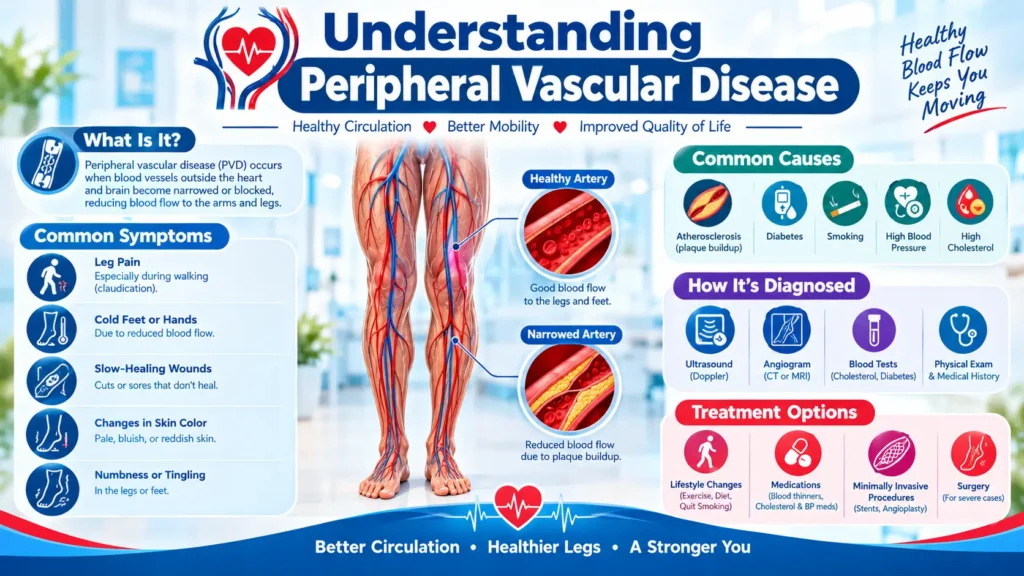
Peripheral vascular disease means blood vessels outside the heart become narrow or blocked.
The most common cause is plaque. Plaque is a mix of fat, cholesterol, and other materials.
Poor blood flow may cause:
- Pain while walking
- Cold feet
- Slow healing sores
- Weak pulses
- Leg cramps
Some people have no warning signs.
Doctors often check:
| Test | Purpose |
| Blood pressure check | Looks for health risks |
| Ankle-brachial index | Compares blood pressure in the arm and ankle |
| Ultrasound | Shows blood flow |
| CT scan | Creates detailed pictures of blood vessels |
The American Heart Association and the American College of Cardiology support early testing for people with symptoms or high risk.
Risk factors
Your risk may rise if you:
- Smoke
- Have diabetes
- Have high blood pressure
- Have high cholesterol
- Have kidney disease
- Are older
Healthy habits may lower your risk.
📋 How a Peripheral Intervention Procedure Works
A peripheral intervention procedure treats narrowed blood vessels without major surgery.
The doctor first gives medicine to help you relax.
Next, the doctor places a small catheter into an artery.
Special pictures guide the catheter to the blockage.
The doctor may use:
- A balloon to open the artery
- A stent, which is a tiny metal tube
- Medicine-coated balloons
- Devices that remove plaque
The procedure often lasts one to three hours.
Many people walk within hours.
One patient worried about missing work. His doctor explained the recovery plan. He returned to light work within a few days after a smooth recovery.
Recovery
Recovery depends on your health.
Most people should:
- Drink water
- Walk as advised
- Take medicines as directed
- Avoid heavy lifting for several days
- Keep follow-up visits
Call your doctor if you notice heavy bleeding, chest pain, or severe swelling.
⏱️ Peripheral Interventional Cardiology Compared With Coronary Intervention
Peripheral interventional cardiology and coronary intervention both improve blood flow.
They treat different blood vessels.
| Feature | Peripheral Care | Coronary Care |
| Main target | Blood vessels outside the heart | Heart arteries |
| Common symptoms | Leg pain, poor healing | Chest pain |
| Goal | Restore blood flow to limbs and organs | Restore blood flow to the heart |
Doctors may perform both types in the same hospital.
The tools often look similar.
The treatment plan depends on your symptoms and test results.
✅ Training, Technology, and Trusted Care

Doctors spend many years learning these skills.
Peripheral vascular intervention fellowship
A peripheral vascular intervention fellowship gives doctors advanced training after medical school and heart training.
During fellowship, doctors learn:
- Catheter skills
- Reading scans
- Emergency care
- Patient safety
- New treatment methods
This extra training helps doctors treat complex blood vessel problems.
Boston Scientific and BD
Several medical companies make devices for these procedures.
Boston Scientific develops balloons, stents, and other tools.
BD also makes devices that support blood vessel treatment.
Doctors choose equipment based on each patient’s needs.
No single device works best for everyone.
UCSD Interventional Cardiology
Many hospitals offer advanced care and training.
UCSD Interventional Cardiology is one example of a program that provides patient care, research, and physician education.
Large centers often care for people with difficult cases.
Some patients also join research studies when they qualify.
⚠️ Living Well After Treatment
Treatment is only one step.
Healthy habits help protect your blood vessels.
Try to:
- Stop smoking
- Walk each day
- Eat more fruits and vegetables
- Control blood sugar
- Take medicines as directed
- Keep regular checkups
Small changes often make a big difference over time.
Your doctor may also recommend cholesterol medicine or blood-thinning medicine when needed.
These medicines help lower future risks for many people.
Frequently Asked Questions
Q: What does peripheral intervention meaning refer to?
A: Peripheral intervention means treating blocked blood vessels outside the heart. Doctors often use catheters instead of large surgery.
Q: Is peripheral interventional cardiology only for older adults?
A: No. While older adults often need it, younger people with diabetes, smoking history, or inherited conditions may also need evaluation.
Q: What is Peripheral Intervention Boston Scientific?
A: It refers to blood vessel treatment devices made by Boston Scientific. Doctors may use these tools during certain procedures when they fit the patient’s needs.
Q: What is Peripheral Intervention BD?
A: BD makes medical devices used during some blood vessel procedures. Your doctor selects devices based on your condition and treatment goals.
Q: What happens during a peripheral vascular intervention fellowship?
A: Doctors receive advanced hands-on training after cardiology training. They learn complex procedures, patient care, and safety skills.
Q: How is peripheral interventional cardiology different from coronary intervention?
A: Peripheral interventional cardiology treats blood vessels outside the heart. Coronary intervention treats the arteries that supply blood to the heart muscle.
Conclusion
Peripheral interventional cardiology helps restore healthy blood flow without major surgery in many cases. Early care may reduce pain, improve walking, and support better healing. Healthy habits and regular follow-up also play an important role. If you notice leg pain, slow-healing wounds, or other signs of poor blood flow, talk to a cardiologist. Early evaluation may help you find the best treatment plan.