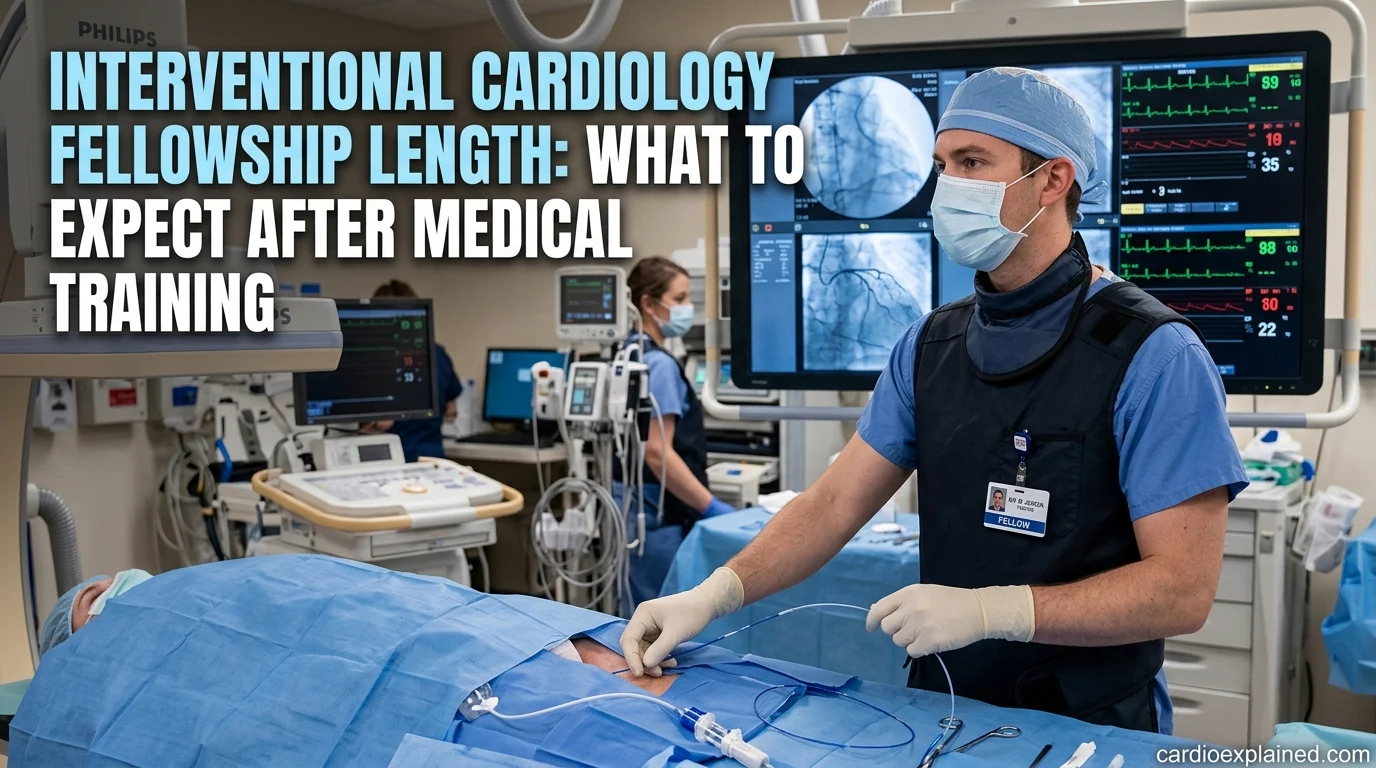

Interventional cardiology fellowship length is usually one year after a doctor finishes a general cardiology fellowship. It gives heart doctors extra training in procedures that open blocked heart arteries. This added year helps doctors learn safe, skilled care for people with heart disease.
Have you ever wondered how long it takes to become a heart doctor who performs life-saving procedures? Many patients ask this question before choosing a doctor. Students also want to know what the training looks like. The interventional cardiology fellowship length often surprises people because it comes after many years of school and medical training. Each step helps doctors build skills before treating patients on their own. Learning about this path can help you understand your doctor’s experience. It can also make medical care feel less confusing. Knowing how specialists train often brings peace of mind before a heart procedure or clinic visit.
❤️ What Is Interventional Cardiology?
Interventional cardiology is a part of heart care. It focuses on treating heart problems with small tubes called catheters. A catheter is a thin, flexible tube.
Doctors guide the catheter through a blood vessel. They often enter through the wrist or groin. This method avoids large surgery in many cases.
These doctors may perform procedures like:
- ❤️ Coronary angioplasty to open blocked arteries
- ❤️ Stent placement to keep arteries open
- ❤️ Heart catheterization to check blood flow
- ❤️ Emergency treatment during a heart attack
Many people recover faster after these procedures. They often spend less time in the hospital than after open-heart surgery.
Many patients feel nervous before their first heart procedure. After speaking with their care team, they often feel calmer because they know what will happen.
The American College of Cardiology (ACC) and the American Heart Association (AHA) support high standards for heart care and training. Doctors follow these standards throughout their education.
⏱️ Interventional Cardiology Fellowship Length Explained
The interventional cardiology fellowship length is usually one year in the United States.
This year begins after several earlier training steps. Doctors must finish each step before moving forward.
The Full Training Path
| Training Stage | Typical Length | Main Goal |
| Medical school | 4 years | Learn medicine |
| Internal medicine residency | 3 years | Care for adult patients |
| General cardiology fellowship | 3 years | Learn heart disease care |
| Interventional cardiology fellowship | 1 year | Learn catheter procedures |
Most doctors spend about 11 years in training after college before working as independent interventional cardiologists.
The fellowship includes long workdays. Doctors care for patients in clinics, hospitals, and emergency settings.
What Fellows Learn
During the fellowship, doctors learn to:
- 📋 Read heart imaging
- 📋 Perform angioplasty
- 📋 Place heart stents
- 📋 Handle emergency heart attacks
- 📋 Prevent and manage procedure risks
- 📋 Talk with patients and families
Experienced specialists closely supervise every step.
🩺 What Happens During Fellowship Training?
The fellowship mixes classroom learning with patient care.
Doctors spend many hours performing procedures. They also study medical research and attend teaching sessions.
Hands-On Learning
Fellows slowly gain more responsibility.
At first, they watch skilled doctors. Next, they help during procedures. Later, they perform many procedures under supervision.
This careful process builds skill and confidence.
Working With Patients
Doctors also learn how to:
- ✅ Explain treatment choices
- ✅ Answer patient questions
- ✅ Discuss risks and benefits
- ✅ Plan follow-up care
Good communication matters as much as technical skill.
For example, an older patient may worry about getting a stent. The fellow explains the procedure using simple words. That conversation often helps the patient feel more comfortable.
Common Tests They Learn
Doctors become skilled at reading several heart tests.
| Test | Purpose |
| Electrocardiogram (ECG) | Checks the heart’s electrical signals |
| Echocardiogram | Uses sound waves to show heart movement |
| Cardiac catheterization | Measures blood flow and finds blockages |
| Coronary angiogram | Uses dye and X-rays to show heart arteries |
Each test helps doctors choose the best treatment.
📋 Why Does This Training Take So Long?
Many people wonder why doctors need so many years.
Heart procedures require great skill. Small mistakes may lead to serious problems.
Doctors first learn general medicine. Next, they study heart disease. Then they focus on advanced procedures.
The interventional cardiology fellowship length gives doctors time to safely practice complex procedures before working alone.
Training also helps doctors learn to make quick decisions during emergencies.
Medical knowledge changes often. Fellows also learn new research, updated techniques, and current care standards.
The ACC and AHA regularly publish guidance that helps doctors provide safe care.
✅ Career, Skills, and Life After Fellowship
After training ends, doctors may join:
- ✅ Hospitals
- ✅ Heart centers
- ✅ University medical centers
- ✅ Private medical groups
Some doctors continue learning through extra training. They may study structural heart disease. This area treats heart valve problems with catheter procedures.
Others focus on research or teaching future doctors.
Daily Work
Interventional cardiologists often:
- Review patient records
- Meet patients in clinic
- Perform scheduled procedures
- Treat emergency heart attacks
- Work with nurses and other specialists
Some days become very busy because heart emergencies happen at any hour.
Salary Expectations
Income depends on many factors.
These include:
- Practice location
- Years of experience
- Hospital type
- Work schedule
Doctors who perform more complex procedures may earn higher salaries. Exact pay varies widely across the United States.
Job Outlook
Heart disease remains common.
Many hospitals continue hiring trained heart specialists. An aging population also increases the need for experienced doctors.
⚠️ Choosing an Interventional Cardiologist
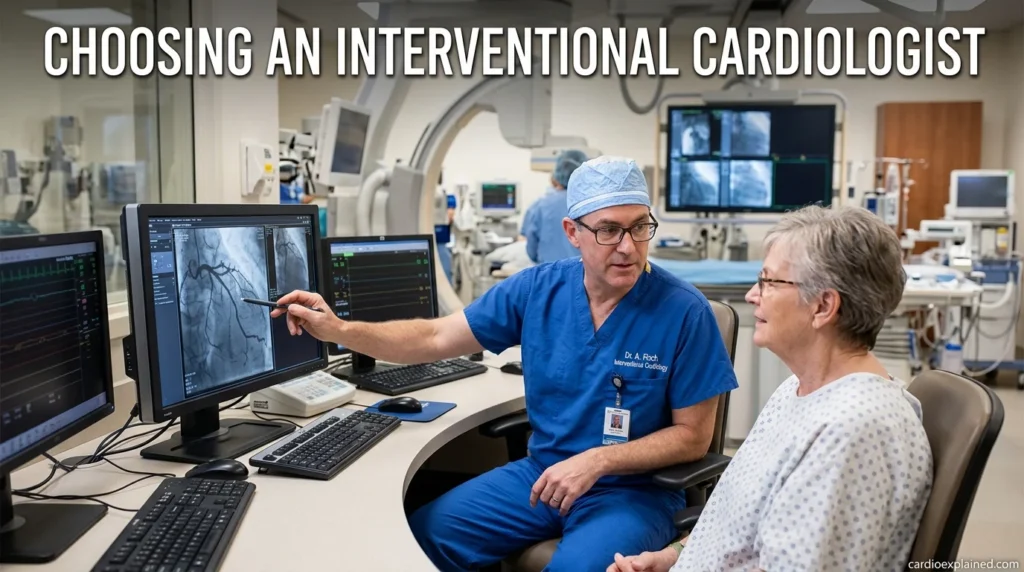
Patients often wonder how to choose the right doctor.
Training is one helpful factor.
Ask questions like:
- ❤️ Are you board certified?
- ❤️ Where did you complete your fellowship?
- ❤️ How often do you perform this procedure?
- ❤️ What risks should I know?
A good doctor welcomes questions.
Clear communication helps patients feel more confident before treatment.
Experience also grows after fellowship. Many doctors continue learning throughout their careers by attending education programs and reviewing new research.
Frequently Asked Questions
❓ Q: Is the interventional cardiology fellowship length always one year?
A: Usually, yes. The interventional cardiology fellowship length is one year in most accredited United States programs. Some doctors choose extra specialty training afterward.
❓ Q: Can a doctor perform heart stents without this fellowship?
A: No, not in standard practice. Doctors usually complete this extra fellowship before performing these advanced procedures independently.
❓ Q: Is becoming an interventional cardiologist difficult?
A: Yes. The training takes many years and requires hard work. Doctors must pass several exams and gain supervised experience.
❓ Q: What is the difference between a cardiologist and an interventional cardiologist?
A: A cardiologist treats many heart conditions. An interventional cardiologist also performs catheter-based procedures to open blocked arteries.
❓ Q: Do interventional cardiologists perform open-heart surgery?
A: No. Heart surgeons perform open-heart surgery. Interventional cardiologists treat many heart problems through small tubes placed inside blood vessels.
❓ Q: How can patients prepare for a heart catheter procedure?
A: Follow your doctor’s instructions closely. Ask questions about medicines, eating, and recovery before your appointment.
Conclusion
The interventional cardiology fellowship length is usually one year after general cardiology training. That year builds advanced skills for treating blocked heart arteries with catheter procedures. Doctors also learn patient communication, emergency care, and safe decision-making. This long training helps protect patients and supports high-quality care. If you or a loved one needs a heart procedure, asking about your doctor’s training can help you feel more informed. Talk to a cardiologist if you have any heart concerns or questions about your care.