
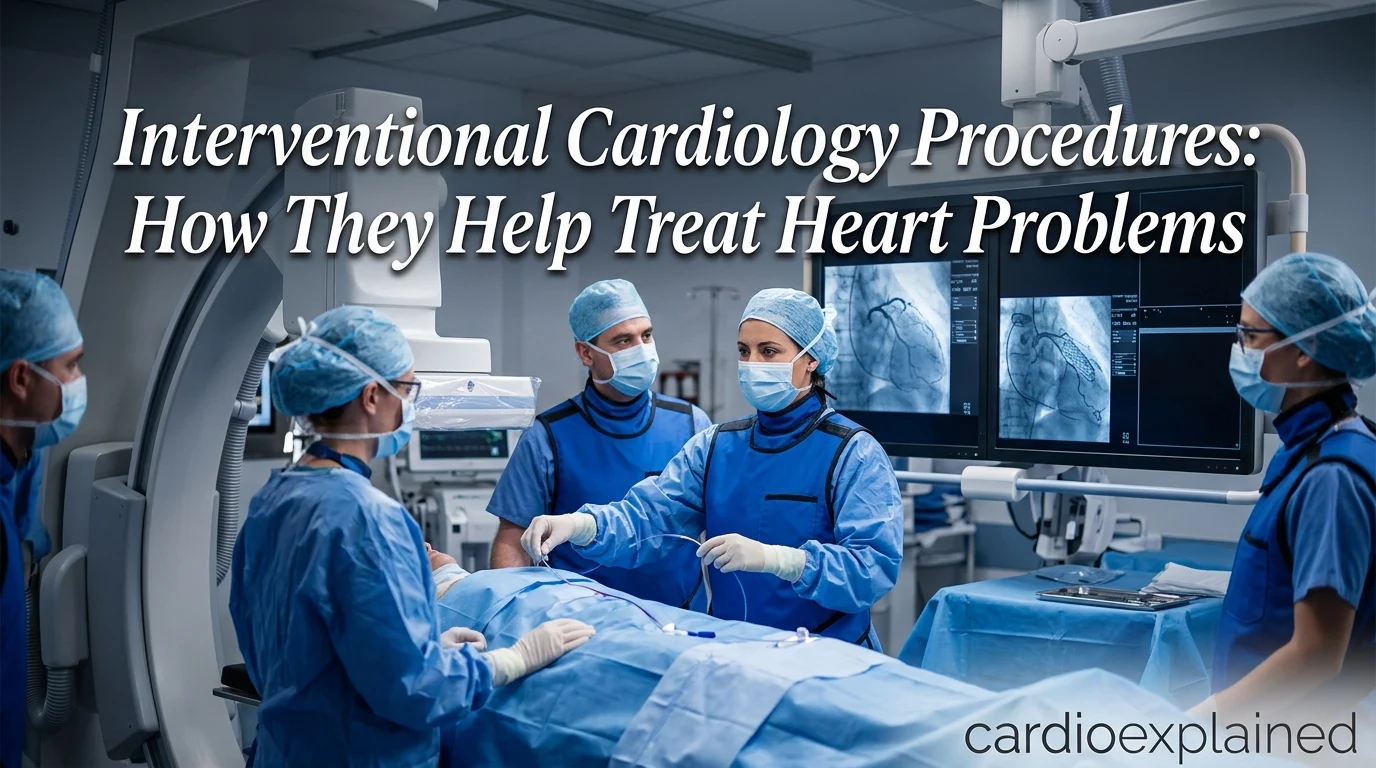

Interventional cardiology procedures are treatments that help doctors fix some heart and blood vessel problems without major surgery. They often use thin tubes called catheters to reach the heart. Doctors use these procedures to improve blood flow, reduce symptoms, and help patients recover faster.
Have you or a loved one ever heard the words “heart procedure” and felt worried?
That feeling is common. Many people fear long hospital stays and large surgeries. The good news is that many heart conditions can now be treated with less invasive options. Interventional cardiology procedures give doctors a way to reach the heart through small openings in the skin.
These treatments can help open blocked arteries, repair some heart valves, and improve blood flow. They often lead to shorter recovery times than open-heart surgery. Knowing what to expect can ease fear and help you feel more prepared. Whether you are a patient, caregiver, or student, learning the basics can make heart care easier to understand.
❤️ What Are Interventional Cardiology Procedures?
Interventional cardiology is a branch of heart care. It focuses on treating certain heart problems without large surgical cuts.
Doctors use special tools and imaging. Imaging means pictures taken inside the body. A thin tube called a catheter travels through a blood vessel to the heart.
Common goals include:
- ✅ Opening blocked arteries
- ✅ Improving blood flow
- ✅ Repairing some heart structures
- ✅ Reducing chest pain
- ✅ Lowering the risk of heart damage
Many interventional cardiology procedures take place in a cardiac catheterization lab. This room has advanced imaging equipment that guides the doctor during treatment.
How Does a Catheter Work?
A catheter is a long, thin tube. Doctors often place it through the wrist or groin.
The catheter moves through blood vessels until it reaches the heart. The doctor then uses small tools through the catheter to perform treatment.
This method avoids the large chest incision used in open-heart surgery.
Who May Need These Procedures?
A doctor may suggest treatment if you have:
- Chest pain from narrowed arteries
- A heart attack
- Certain heart valve problems
- Poor blood flow to the heart
- Some birth-related heart defects
Your care team will review your health history first.
🩺 Common Types of Heart Procedures
Several treatments fall under this area of care. Each serves a different purpose.
Angioplasty
Angioplasty opens a narrowed artery.
The doctor places a tiny balloon inside the blocked area. The balloon expands and pushes plaque aside. Plaque is a buildup of fat, cholesterol, and other materials.
Better blood flow can help reduce symptoms.
Stent Placement
A stent is a small metal mesh tube.
Doctors often place a stent after angioplasty. The stent helps keep the artery open.
Many patients receive a stent during the same visit.
Coronary Angiography
Coronary angiography is a test rather than a treatment.
Doctors inject a special dye into the arteries. X-ray images then show blood flow and blockages.
This test helps doctors decide on the best treatment plan.
Transcatheter Aortic Valve Replacement (TAVR)
Some people have a narrowed aortic valve. This condition is called aortic stenosis.
TAVR allows doctors to replace the valve without open-heart surgery in many cases.
The new valve travels through a catheter and moves into place.
Closure of Heart Defects
Some people are born with small openings between heart chambers.
Doctors can sometimes close these openings using catheter-based devices.
This approach may avoid traditional surgery.
📋 Conditions Treated With Interventional Cardiology Procedures
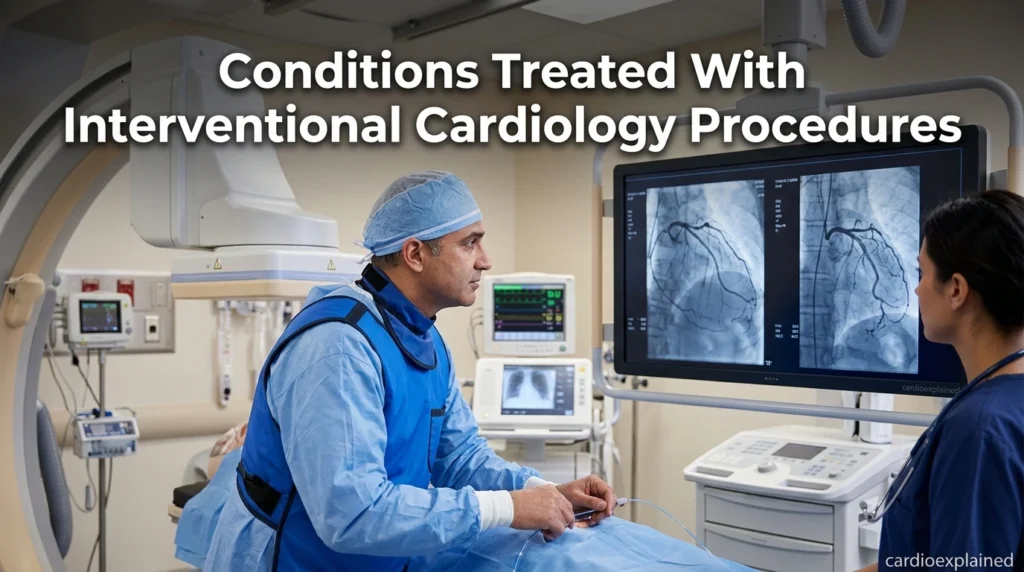
Doctors use these treatments for several heart conditions.
Coronary Artery Disease
This condition develops when arteries become narrow.
Less blood reaches the heart muscle. Patients may feel chest pain or shortness of breath.
Angioplasty and stents often help improve blood flow.
Heart Attack
A heart attack happens when blood flow becomes blocked.
Doctors may quickly open the blocked artery. Fast treatment can limit heart damage.
Heart Valve Disease
Heart valves control blood flow direction.
When valves become narrow or leaky, symptoms may appear. Some catheter-based treatments can repair or replace certain valves.
Congenital Heart Defects
Congenital means present at birth.
Some defects can be treated through a catheter. This may reduce recovery time.
⏱️ What Happens Before, During, and After Treatment?
Knowing the process can reduce anxiety.
Before the Procedure
Your doctor may order tests such as:
| Test | Purpose |
| Electrocardiogram (ECG) | Checks heart rhythm |
| Blood Tests | Looks at overall health |
| Echocardiogram | Uses sound waves to view the heart |
| Coronary Angiography | Shows artery blockages |
The American Heart Association (AHA) and the American College of Cardiology (ACC) support careful testing before treatment when needed.
Your care team will explain:
- ✅ When to stop eating
- ✅ Which medicines to take
- ✅ What to bring to the hospital
During the Procedure
Most patients receive medicine to help them relax.
The doctor numbs the treatment area first.
Many procedures take one to several hours. The exact time depends on the treatment.
You may feel pressure. Most people do not feel sharp pain.
After the Procedure
Recovery varies from person to person.
Many patients return home the same day. Others stay overnight for observation.
Doctors often recommend:
- ✅ Walking as directed
- ✅ Drinking fluids
- ✅ Taking prescribed medicines
- ✅ Attending follow-up visits
A Real-World Example
Many patients feel nervous before their first visit.
For example, a 68-year-old man with chest pain learned he had a blocked artery. His doctor placed a stent through his wrist. He went home the next day and gradually returned to normal activities.
Every case differs, but stories like this are common.
✅ Benefits, Risks, and Recovery
Like all medical treatments, these procedures have benefits and risks.
Benefits
Many interventional cardiology procedures offer:
- ✅ Smaller openings in the skin
- ✅ Less pain after treatment
- ✅ Shorter hospital stays
- ✅ Faster recovery
- ✅ Improved blood flow
For many people, these benefits improve daily life.
Possible Risks
No procedure is risk-free.
Possible risks may include:
- ⚠️ Bleeding
- ⚠️ Infection
- ⚠️ Blood vessel injury
- ⚠️ Allergic reaction to dye
- ⚠️ Heart rhythm changes
Doctors work carefully to reduce these risks.
Recovery Tips
A healthy recovery often includes:
- Take medicines exactly as directed.
- Attend follow-up appointments.
- Eat heart-healthy foods.
- Stay physically active when approved.
- Avoid smoking.
Another Patient Example
A woman with severe valve disease worried about surgery.
Her doctor recommended TAVR. She walked the day after treatment and recovered faster than she expected. Her experience shows why less invasive options appeal to many patients.
❤️ Living Well After Heart Treatment

Treatment is only one part of heart health.
Daily habits matter too.
Heart-Healthy Choices
Focus on simple steps:
- ✅ Eat more fruits and vegetables
- ✅ Choose whole grains
- ✅ Limit foods high in salt
- ✅ Stay active most days
- ✅ Manage stress
- ✅ Get enough sleep
Follow Your Care Plan
Keep regular appointments.
Tell your doctor about new symptoms. Early action may help prevent problems.
Emotional Recovery Matters
Some people feel worried after a heart procedure.
Talking with family, friends, or a healthcare professional can help. Cardiac rehabilitation programs may also support recovery. These programs combine exercise, education, and guidance.
Frequently Asked Questions
Q: Are interventional cardiology procedures safer than open-heart surgery?
A: They may be safer for some patients. Many use smaller openings and often require less recovery time. Your doctor will recommend the option that best fits your condition.
Q: Do interventional cardiology procedures hurt?
A: Most patients report little pain during treatment. Doctors use numbing medicine and other medications to improve comfort. You may feel pressure during the procedure.
Q: How long does recovery take after a stent procedure?
A: Recovery is often quick. Many people return to normal activities within days. Your doctor will provide instructions based on your health.
Q: Will I need to stay overnight in the hospital?
A: Sometimes. Many patients go home the same day. Others stay overnight so doctors can monitor recovery.
Q: Can a blocked artery come back after treatment?
A: Yes, it can happen in some cases. Healthy habits and prescribed medicines help lower that risk.
Q: Who performs these heart procedures?
A: A specially trained cardiologist performs them. This doctor has advanced training in catheter-based heart treatments.
Conclusion
Interventional cardiology procedures help treat many heart conditions without major surgery. They can open blocked arteries, repair some heart problems, and improve blood flow. Many patients benefit from shorter recovery times and smaller treatment sites.
Learning about these treatments can make heart care feel less intimidating. Ask questions and discuss your options with your healthcare team. Talk to a cardiologist if you have any heart concerns. Early evaluation may help you understand the best path forward.