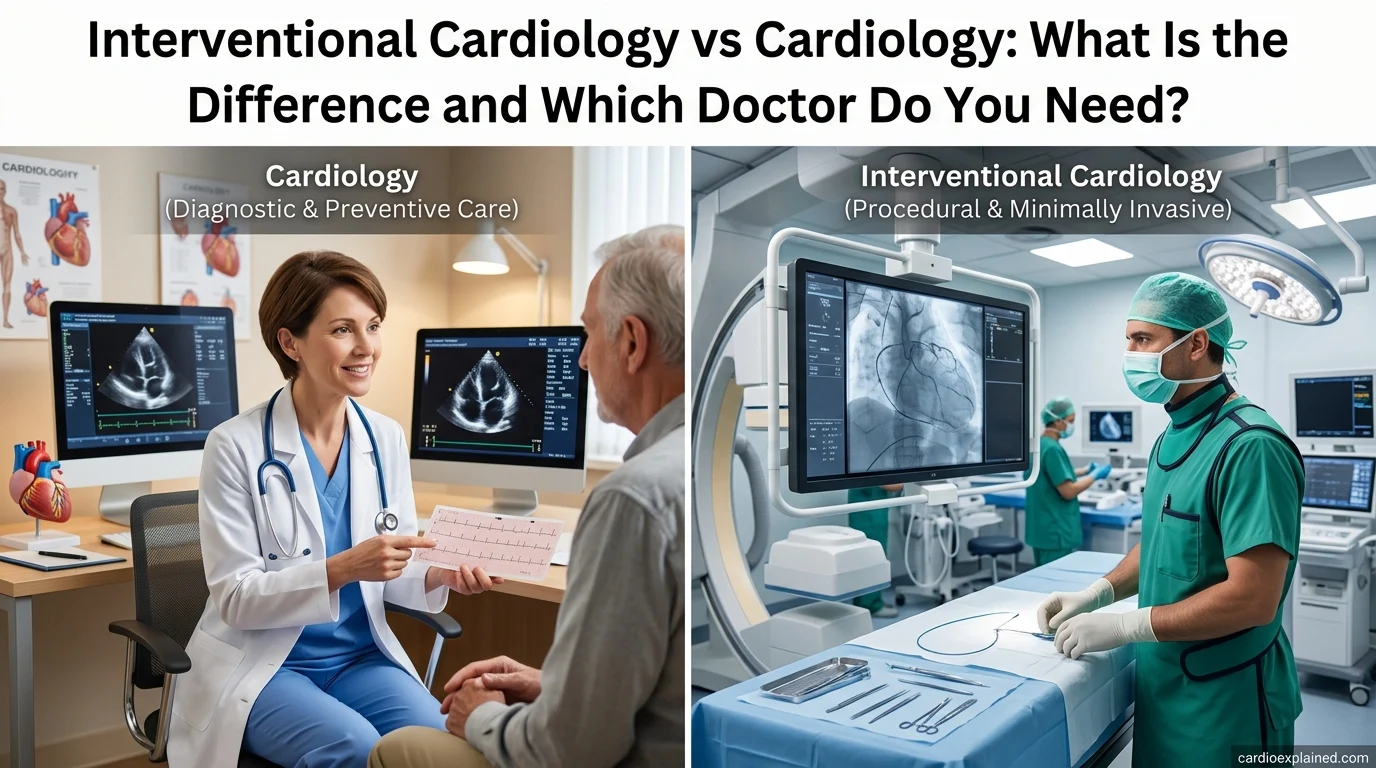

Interventional cardiology vs cardiology comes down to how heart doctors care for patients. A cardiologist finds, treats, and helps prevent heart disease. An interventional cardiologist also performs special procedures that open blocked blood vessels without major surgery.
Have you ever wondered why one heart doctor orders tests while another performs a procedure? Many people feel confused after hearing different medical titles. The good news is that both doctors care for your heart. Understanding interventional cardiology vs cardiology helps you know what each specialist does. It also makes doctor visits less stressful. Whether you have chest pain, high blood pressure, or a family history of heart disease, knowing the difference can help you ask better questions and feel more confident about your care.
❤️ Understanding Interventional Cardiology vs Cardiology
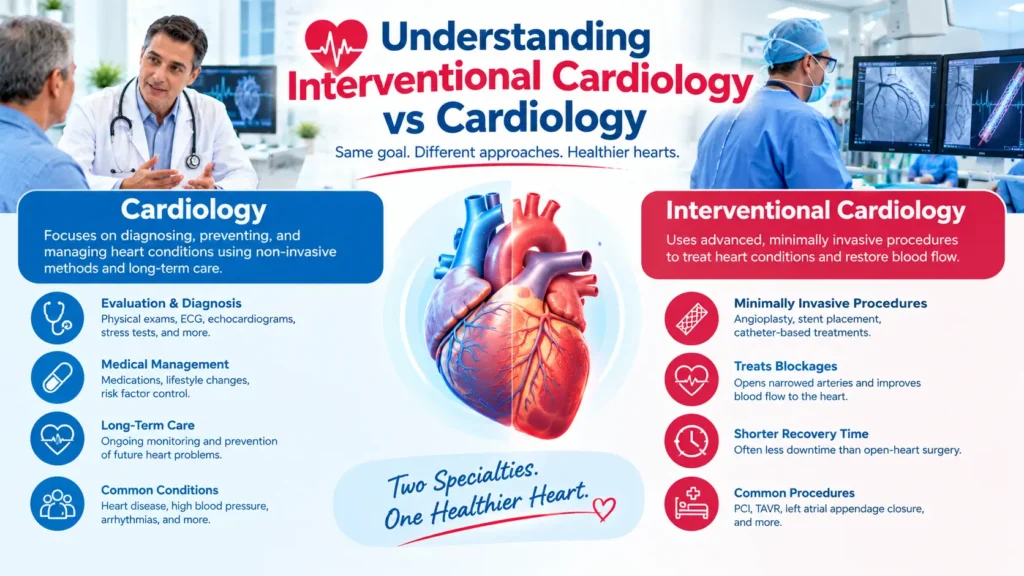
Heart disease affects millions of Americans each year. Many people first meet a general cardiologist. Some later see an interventional cardiologist if they need a procedure.
Both doctors complete medical school and years of special training. They work together to protect your heart.
Here is a simple comparison.
| Feature | Cardiologist | Interventional Cardiologist |
|---|---|---|
| Main focus | Finds and treats heart disease | Performs heart procedures |
| Office visits | Yes | Yes |
| Medicines | Yes | Yes |
| Heart catheter procedures | No | Yes |
| Stent placement | No | Yes |
A general cardiologist often manages long-term heart health. An interventional cardiologist steps in when a blocked artery needs treatment.
What Does a Cardiologist Do?
A cardiologist studies diseases of the heart and blood vessels.
They may:
- ❤️ Check chest pain
- ❤️ Treat high blood pressure
- ❤️ Manage high cholesterol
- ❤️ Care for heart failure
- ❤️ Watch irregular heartbeats
They often order tests such as:
| Test | Purpose |
|---|---|
| Electrocardiogram (ECG) | Checks heart rhythm |
| Echocardiogram | Uses sound waves to show heart movement |
| Stress test | Shows how the heart works during exercise |
| Heart monitor | Records heart rhythm over time |
The American Heart Association (AHA) and the American College of Cardiology (ACC) support these common tests when they fit a patient’s needs.
What Does an Interventional Cardiologist Do?
An interventional cardiologist has extra training.
They perform procedures through small tubes called catheters. A catheter is a thin, flexible tube.
Common procedures include:
- 🩺 Coronary angiography, which uses dye to show blocked arteries
- 🩺 Angioplasty, which opens a narrowed artery
- 🩺 Stent placement, which keeps an artery open
- 🩺 Some valve repair procedures without open-heart surgery
These procedures often need only a small opening in the wrist or groin.
🩺 When Do You Need Each Specialist?
Many people only need a cardiologist.
Your doctor may send you to one if you have:
- ❤️ Chest discomfort
- ❤️ Shortness of breath
- ❤️ High blood pressure
- ❤️ High cholesterol
- ❤️ A strong family history of heart disease
You may need an interventional cardiologist if tests show blocked heart arteries.
Your care team decides this after reviewing your symptoms and test results.
A Real Patient Example
Many patients feel nervous before their first heart visit.
For example, Maria had chest pressure while walking. Her cardiologist ordered an ECG and a stress test. Those tests suggested poor blood flow. She then saw an interventional cardiologist, who placed a stent during a catheter procedure. After recovery, her regular cardiologist continued her long-term care.
This teamwork happens every day.
📋 How Doctors Work Together

Many people think these doctors compete.
They do not.
They often share care.
A general cardiologist may:
- ❤️ Find the problem
- ❤️ Order tests
- ❤️ Prescribe medicines
- ❤️ Follow your progress
An interventional cardiologist may:
- 🩺 Perform the needed procedure
- 🩺 Check recovery
- 🩺 Return your care to your regular cardiologist
This team approach helps many patients receive safe care.
Another Patient Story
James had high blood pressure for years.
His cardiologist helped control it with medicine and healthy habits. Years later, James developed severe chest pain. An interventional cardiologist opened one blocked artery with a stent. After healing, James returned to his regular cardiologist for follow-up visits.
⏱️ Common Heart Procedures Explained
People often worry when they hear medical words.
Simple explanations can help.
Angiography
This test uses dye and X-rays.
It shows blood flow inside the heart arteries.
Angioplasty
Doctors inflate a tiny balloon.
The balloon opens a narrow artery.
Stent
A stent is a small metal mesh tube.
It helps keep an artery open after angioplasty.
Cardiac Catheterization
This procedure guides a thin tube through a blood vessel.
Doctors use it to measure pressure, check blood flow, or treat blockages.
Many patients go home the same day, depending on their condition.
✅ Choosing the Right Heart Doctor
You do not have to choose alone.
Your primary care doctor often starts the process.
Ask these questions during your visit:
- ✅ What heart problem do you think I have?
- ✅ Do I need more testing?
- ✅ Will medicine help first?
- ✅ Do I need a heart procedure?
- ✅ Should I see an interventional cardiologist?
These questions help you understand your care plan.
Remember, interventional cardiology vs cardiology is not about one doctor being better. Each doctor has a different job.
❤️ Finding Heart Care at Henry Ford Health

Many people search for heart care locations before making an appointment.
Henry Ford Health has cardiology services at several locations across Michigan.
You may find care through:
- Henry Ford Cardiology West Bloomfield
- Henry Ford Cardiology Macomb
- Henry Ford Cardiology Jackson
- Henry Ford Cardiology Grand Blanc
- Henry Ford Cardiology Brownstown, Michigan
Patients looking for Henry Ford Cardiology doctors can review physician profiles, training, and accepted insurance through the health system’s official website.
Some people also search for the best cardiologist at Henry Ford Hospital. The right doctor depends on your health needs, insurance, location, and the condition being treated. Your primary doctor can often help you choose.
Henry Ford also offers cardiology fellowship training. Henry Ford cardiology fellows are licensed doctors completing advanced heart specialty education under experienced cardiologists.
📋 Tips for Your First Heart Visit
Bring useful information with you.
- ✅ A list of medicines
- ✅ Your recent test results
- ✅ Family heart history
- ✅ Questions you want answered
Wear comfortable clothing if testing is planned.
Arrive early to complete paperwork.
Frequently Asked Questions
❓ Q: What is the main difference in interventional cardiology vs cardiology?
A: A cardiologist diagnoses and treats heart disease with tests, medicines, and long-term care. An interventional cardiologist also performs catheter-based procedures like angioplasty and stent placement when needed.
❓ Q: Are Henry Ford Cardiology doctors board certified?
A: Many are board certified or board eligible in cardiology and related specialties. You can review each doctor’s training and certifications on the Henry Ford Health physician directory.
❓ Q: How do I find the best cardiologist at Henry Ford Hospital?
A: There is no single best doctor for everyone. The right choice depends on your condition, insurance, location, and personal preferences. Your primary care doctor may also recommend a specialist.
❓ Q: Does Henry Ford Cardiology West Bloomfield offer heart testing?
A: Yes. Many Henry Ford cardiology locations offer office visits and common heart tests. Available services may differ by location.
❓ Q: What do Henry Ford cardiology fellows do?
A: Fellows are licensed doctors receiving advanced heart training. Experienced cardiologists supervise their work while they gain specialty experience.
❓ Q: Can I visit a cardiologist without seeing an interventional cardiologist?
A: Yes. Most patients only need a cardiologist. Your doctor will refer you to an interventional specialist only if a procedure may help.
Conclusion
Understanding interventional cardiology vs cardiology makes heart care easier to understand. A cardiologist helps prevent, find, and manage heart disease. An interventional cardiologist performs special procedures when blocked arteries or other problems need treatment.
Both specialists work together to give patients the best care possible. If you notice heart symptoms or have risk factors, talk to a cardiologist. Early care may help protect your heart and improve your quality of life.
Medically reviewed for accuracy. Always consult a licensed cardiologist for personal advice.